Can you believe it’s been over a decade since Suzuki sold its cars in the US? Neither do I; In fact, I had to watch it again to make sure when it happened. Suzuki had announced in 2012 that it would no longer sell cars in America. While they’re quite popular in many other markets, we’re having no such luck on this side of the pond.
Still, that doesn’t mean Suzuki has abandoned America entirely. Of course, we still get their motorcycles, as well as their quads. Apparently, this doesn’t stop Suzuki from teaming up with another US firm to bring a new public transit solution to India, where it already sells both its motorcycles and cars.
Public transportation, you say? Like in buses or trains? No; However if the plan goes ahead as is currently being discussed, it will include the use of a multimodal transit hub Which connects to the proposed bullet train. The project, called Sabarmati Multimodal Hub, is currently in the process of construction, and is planned to include a variety of rail systems (long-distance bullet trains, metro systems, and more), as well as road transit options to help commuters get where they need to go.
How is Suzuki involved? On July 1, 2026, Suzuki Motors Corporation announced that it has signed a memorandum of understanding (MOU) to begin work on studies towards the goal of bringing a private public transportation system to Ahmedabad, Gujarat, India, where the Sabarmati Multimodal Hub is currently planned to be built. The MOU also includes Thoth Infrastructure Pvt Ltdwhich is an India-based transit development firm, as well as San Francisco-based GlidewaysA self-driving robocar firm Supported by Sam Altman.
If you’re not familiar with multimodal transit hubs, the whole point is that you, as a user, can access different types of transit from one convenient station. Instead of needing to go to this station to catch a local train across the city or walk a few blocks away to catch a particular bus, you can do it all in one place.
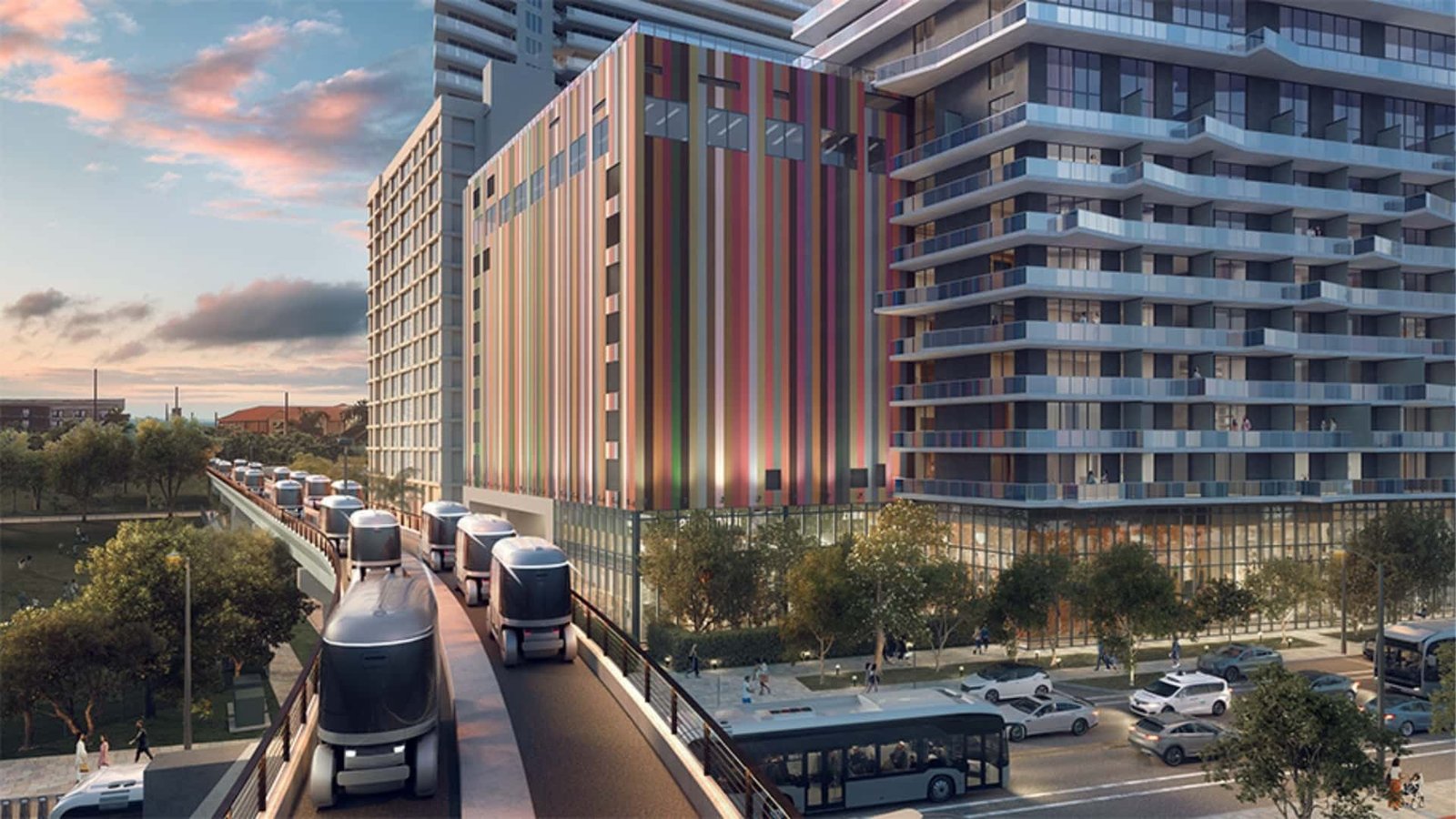
Sabarmati plans to go beyond the usual mix of public transportation options by including Glideways self-driving robocars; At least, that depends on how the transit studies go. As explained in the press release, the proposed system “will enable the transportation of multiple passengers through the efficient autonomous operation of mini-vehicle-sized compact electric vehicles on dedicated lanes. The system can be introduced at low cost, while also contributing to reducing traffic congestion and reducing environmental impact.”
cost less than WhatAbsolutely? What about existing private transit options, such as buses and auto-rickshaws? Obviously, if you’re going to build a new system that involves long-distance, high-speed travel, such as a bullet train, you have to take into account how to get large amounts of people to more local destinations. I definitely get it.
How the program will evolve remains to be seen. While Suzuki has an investment in Glideways dating back to 2024, it’s also an incredibly young (and untested) company. A startup if you will. Going back through its own archives, you can find lots of optimistic press releases about its plans to bring its self-driving pod system to multiple locations: San Jose Airport, metro Atlanta, Miami, Abu Dhabi, Dubai, Newark Liberty International Airport, etc.
But all those projects are still in the early stages, and at the time of writing none of them have been completed. And even in discussions on these forward-looking projects, most are referred to as pilot projects; In other words, things should be tested and tried, and then hopefully improved as the glitches are ironed out.
That’s why the image provided with this press release, which you can see above, is clearly a rendering of a utopian vision of Sabarmati Glideways implementation, and not a photo of tangible objects (or indeed a design schematic). What consequences it will have, how well its systems will work, what kind of privacy concerns they might have in our age of almost constant global surveillance; That all remains to be seen.