Ensuring access to safe drinking water requires reliable treatment technologies that meet recognized safety and performance standards.
Among these technologies, reverse osmosis (RO) systems are widely used for point-of-use water treatment. To verify their safety and effectiveness, many RO systems are evaluated under NSF/ANSI 58, the American national standard developed specifically for point-of-use reverse osmosis drinking water treatment systems.
Systems certified to this standard undergo independent testing to confirm that they meet stringent requirements for contaminant reduction, material safety and structural performance. Many reverse osmosis systems manufactured by iSpring Water Systems are certified under NSF/ANSI 58, indicating that they comply with these established standards for water filtration performance and system safety.
Addressing emerging drinking water contaminants
The increasing focus on drinking water quality has increased the importance of reliable filtration technologies. In recent years, regulatory agencies have introduced more stringent standards to address emerging contaminants. In 2026, the United States Environmental Protection Agency implemented updated regulations setting stricter limits for per‑ and polyfluoroalkyl substances (PFAS) in drinking water supplies.
PFAS are a group of synthetic chemicals used in industrial and consumer products that can persist in the environment and accumulate in water sources. Due to their stability and resistance to degradation, PFAS have been detected in various drinking water systems around the world.
Reverse osmosis technology is widely recognized as an effective treatment method for reducing a wide range of pollutants. RO systems operate by forcing water through a semi-permeable membrane that traps dissolved solids, chemicals, and microorganisms while allowing pure water to pass through. Under proper operating conditions, RO membranes are capable of removing more than 99 percent of many soluble contaminants, including heavy metals, chlorine byproducts, and some emerging contaminants such as PFAS.
Certified RO systems that meet NSF/ANSI 58 standards provide verified performance for contaminant reduction and improved water quality, helping to ensure consistent and safe drinking water for home use.
Understanding NSF/ANSI 58 Certification
What is NSF/ANSI 58?
NSF/ANSI 58 is the American national standard for point-of-use reverse osmosis drinking water treatment systems. The standard was developed by a joint committee with equal representation from regulators, manufacturers and end users. This collaborative approach ensures that the requirements address both safety and performance considerations for residential RO systems.
Certification to NSF/ANSI 58 indicates that a system has undergone independent testing and evaluation by recognized organizations such as NSF International to verify compliance with the criteria of the standard.
Key Elements of NSF/ANSI 58 Certification
tds deduction performance
The standard requires testing for the reduction of total dissolved solids (TDS), which represents the combined concentration of minerals, salts and metals dissolved in water. Measuring TDS reduction helps evaluate how effectively an RO system removes dissolved impurities and improves overall water quality.
pollutant reduction
NSF/ANSI 58 also evaluates the system’s ability to reduce specific contaminants that may pose a risk to human health. These include cyste, hexavalent and trivalent chromium, arsenic, nitrate and nitrite, cadmium and lead. Testing confirms that certified systems achieve verified reduction levels under controlled laboratory conditions.
content security
Another key component of the certification process is the evaluation of the materials used in the system. All components that come in contact with drinking water must meet safety requirements to ensure that they do not leach harmful substances into the treated water.
structural integrity
NSF/ANSI 58 includes mechanical testing designed to confirm that the system maintains structural stability under operating pressure. These tests verify that the housing, fittings and other structural components can withstand specific residential water pressure without leakage or failure under specific use conditions.
Official Certification vs. “Meets NSF Standards” Claims
When evaluating reverse osmosis systems, consumers should understand the difference between official certification and claims based solely on testing against NSF/ANSI standards. Some products may reference NSF standards or indicate that individual components have been tested by third-party laboratories; However, these claims do not necessarily represent certification of the entire water treatment system.
Importance of NSF/ANSI 58 Certification
Certification under NSF/ANSI 58 provides independent verification that the reverse osmosis system meets established safety and performance standards. The testing process confirms both pollutant reduction performance and material safety, helping to ensure system reliability in real-world applications.
This standard is widely recognized internationally and is referenced as a reliable benchmark for drinking water treatment technologies by regulatory agencies and public health organizations, including the World Health Organization.
NSF-Certified iSpring System
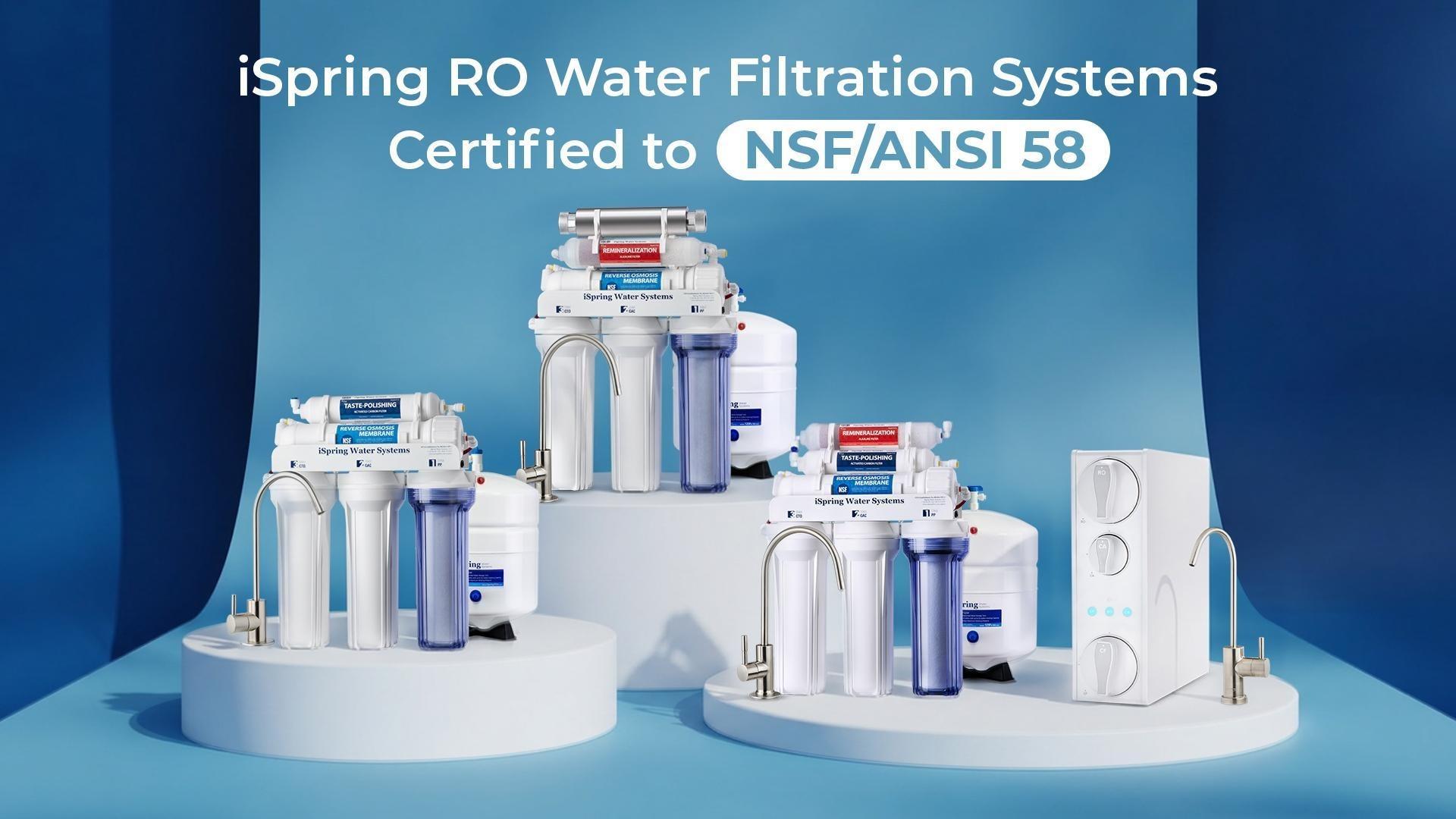
iSpring’s NSF/ANSI 58 certified systems have undergone NSF’s rigorous certification process, which evaluates the entire RO system for key factors including contaminant reduction performance, material safety and structural integrity. This official certification provides consumers with verified assurance that the entire system meets established requirements for residential reverse osmosis water treatment.
5-Stage Certified RO System – Classic Under-Sink Model
6-Stage Certified RO System – with Alkaline Remineralization
7-Stage Certified RO System – with Alkaline Remineralization and UV Sterilization
Tankless Certified RO System – High Efficiency Filtration
- RO500-BN
- RO500-ORB
- RO500AK-BN
- RO500AK-ORB
Each of these systems has been evaluated under the NSF/ANSI 58 certification process to verify compliance with requirements related to pollutant reduction, material safety and system durability.
Commitment to water security and innovation
As water quality challenges evolve, the role of verified filtration technologies is increasing. Manufacturers and regulatory organizations cooperate to develop and maintain standards that ensure reliable performance and public health protection.
Through certification under NSF/ANSI 58, reverse osmosis systems produced by iSpring Water Systems are tested against established benchmarks for safety and effectiveness. Continued adherence to recognized standards supports the overarching goal of delivering safe, reliable drinking water through advanced point-of-use filtration technologies.
media Contact
For additional information regarding certified systems and water filtration standards, media inquiries may contact:
iSpring Water System
Media Relations Department
Email: info@ispringfIlter.com
Website: www.ispringfilter.com