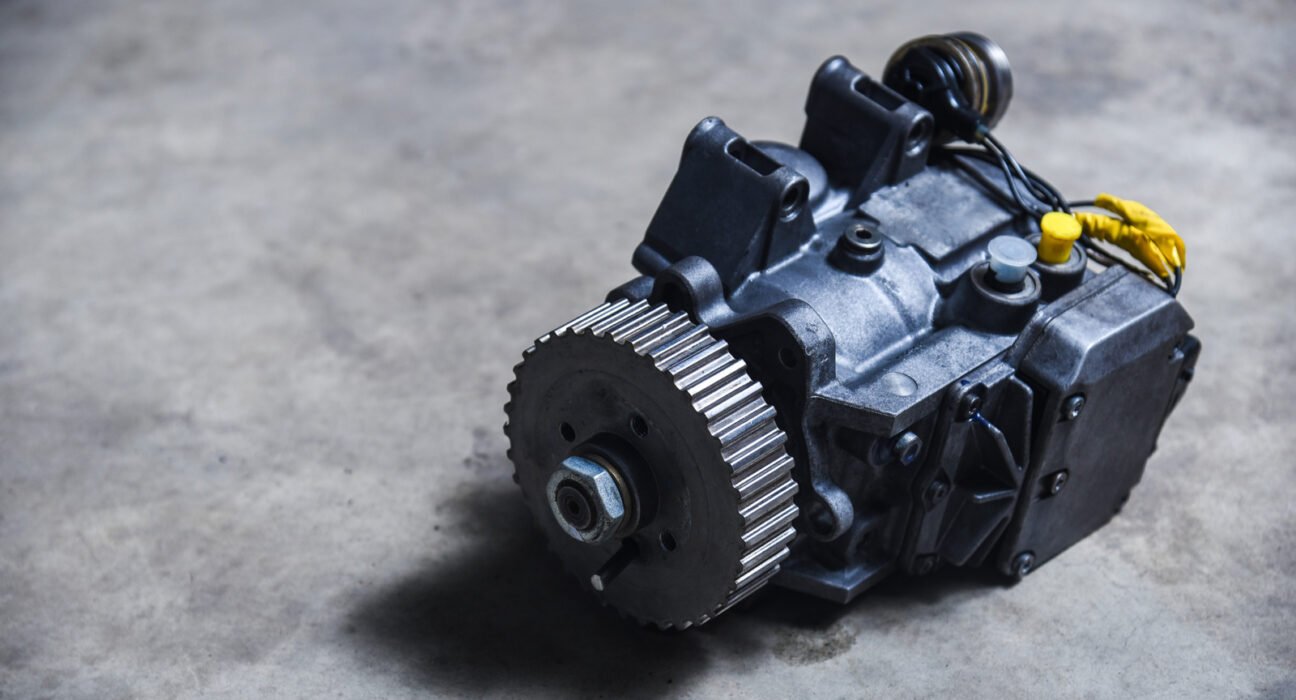
Most people never think about their cars’ fuel pumps until they fail, but they actually play a major role in getting you around: If gasoline is the lifeblood of your vehicle, the fuel pump is its beating heart. With this in mind, if the fuel pump is not caught quickly it can be fatal to your ride. The good news is that a faulty pump can often tell you when its usable lifespan is about to end, and it does so in two basic ways.
The obvious thing is that it can prevent enough gasoline from reaching your engine, reduce power and cause problems starting the car, difficulty accelerating or maintaining a steady speed, and various irritating noises from under the hood. These can range from backfires to popping and coughing, and these are all sounds that your motor makes when it’s struggling with a lean air-fuel mixture. Of course, another way you can tell when the fuel pump is bad is that the check engine light may come on – and come back on after you clear it.
Yet some fuel pump problems create the opposite situation, where your engine gets too much fuel. An example would be a problem with the pump’s fuel pressure sensor. You will now be dealing with a rich air-fuel mixture which can cause a sudden increase in speed or engine speed, as well as a sudden drop in fuel economy due to excess fuel being wasted. Needless to say, if your fuel pump stops working completely, so will your engine.
How do fuel pumps work?
Obviously, we’re focusing on the modern electric fuel pumps found in nearly all new vehicles sold today. There is nothing complicated about how these work, as they are essentially electric pumps that pump fuel from the tank to the engine. What controls them, however, is a bit more sophisticated. They are tied to a fuel pump control module, which regulates their pressure based on signals from the ECU, which are in turn based on engine demands. The result is that the more work the engine is being asked to do, the longer the fuel pump will last in a given scenario.
However, before Bosch introduced electric fuel pumps in 1966, pumps were mechanically operated by driving them from the engine’s camshaft. As the cam lobes rotate, they apply pressure to an actuated rod attached to the diaphragm, causing the diaphragm to move back and forth. When the diaphragm is pulled back, it creates a vacuum that is used to draw fuel from the tank – think of a doctor pulling back the plunger of a syringe to put medicine in. Anyway, a notable drawback of these systems is that a mechanical fuel pump only changes speed as the engine RPM changes. Meanwhile, before mechanical pumps came into use, most cars did not have fuel pumps at all. They had fuel tanks mounted above the level of the motor, allowing gravity to work its magic. Unfortunately, this often means storing highly flammable gasoline too close to a hot engine – a sometimes explosive combination.
How long do fuel pumps usually last?

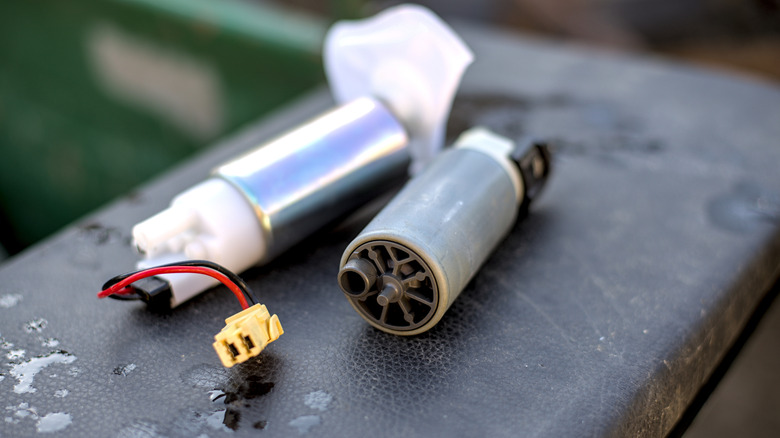
Fuel pumps are relatively robust components that can easily last over 100,000 miles. This means that many drivers will never have to worry about fuel-pump problems. But they don’t last that long by chance. Many of the most common causes of fuel pump failure can be avoided by following a few tips. One of the most important is to never fill your gas tank less than ¼ full. The issue here is that modern electric fuel pumps are actually located in the tank, and they rely on surrounding gasoline for coolant and lubrication. Without sufficient quantity, there is a risk of the pump overheating. Knowing how often to change your fuel filter can also make a difference. After all, a clogged filter makes the pump work harder to push fuel through, again increasing the risk of overheating. Materials capable of blocking your filter may also block the pump, as any contaminants in the gas must first pass through the pump to reach the filter.
All that being said – and despite their ability to last up to 100,000 miles – fuel pumps can wear out due to regular use. Nor can they usually be repaired. If your fuel pump is going bad most experts recommend a complete replacement. For one thing, a pump is made up of many small, complex and interdependent parts, and a problem with one of them can immediately put harmful stress on the others. In fact, they are often engineered from the outset to be replaced as a single unit – modern cars typically cost $1,000 to $1,300.