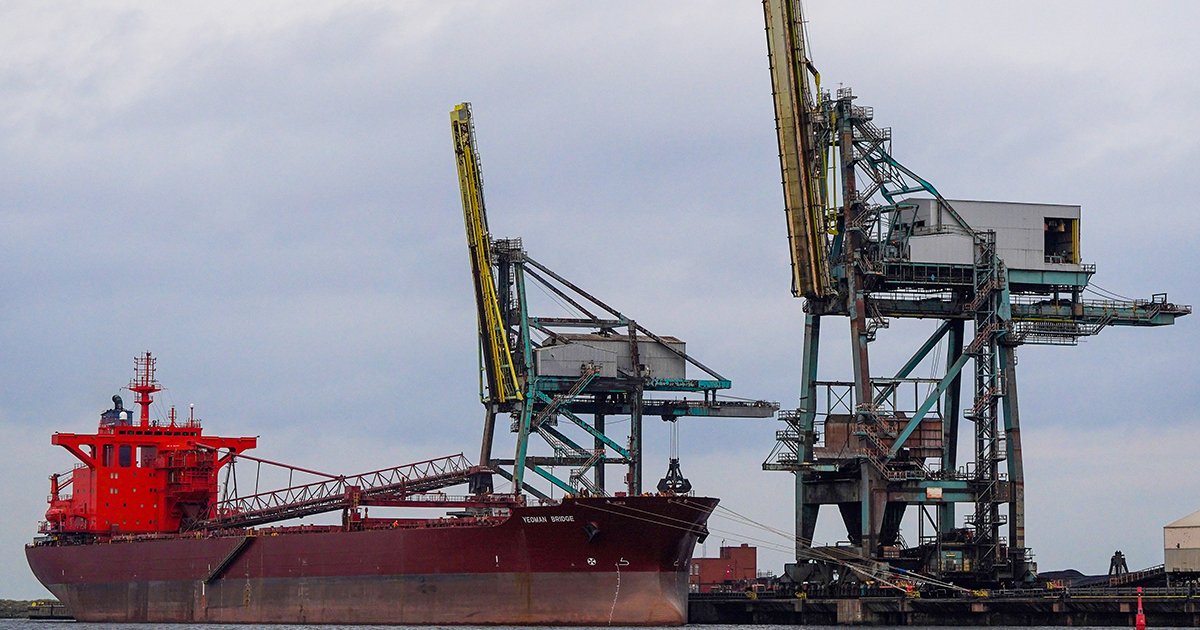
Yeoman Bridge, a self-discharging bulk carrier, loads cargo at a potash berth in Teesside, UK (Ian Forsyth/Bloomberg)
key takeaways:
- An interim US-Iran agreement to reopen the Strait of Hormuz is unlikely to immediately restore fertilizer shipments as shipowners assess security conditions after months of conflict.
- Data shows that more than 40 ships carrying almost 1 million tonnes are stranded and weekly exports are down 90% from pre-conflict levels, heavily disrupting the fertilizer trade.
- Analysts expect oil and LNG shipments to be prioritized first, meaning fertilizer flows and market adjustments will gradually resume as ships clear out and trade stabilizes.
An interim US-Iran agreement to end their months-long war and fully reopen the Strait of Hormuz is unlikely to immediately reduce fertilizer flows as shipowners wait for more details to assess the safety of transit.
The Strait of Hormuz, a vital channel for global commodities trade, has been effectively closed since Iran’s first attack in late February. Even as there is greater clarity on the resumption of trade through the waterway, market watchers expect the movement of crop nutrients to be slow as hundreds of ships stranded in the area – carrying a variety of cargo – compete for access.
The Gulf region is home to some of the world’s largest fertilizer plants, and the waterway handles about one-third of the global trade in urea – one of the world’s most important crop nutrients. Months of disruption have left large quantities of urea and other fertilizer products stuck behind the strait, sitting on ships unable or unwilling to transit the waterway.
There are more than 40 ships laden with fertilizer in the strait, according to tanker-tracking data compiled by Bloomberg and Kpler. A larger number of ships have moved out since the conflict began, but Kpler data shows weekly exports have fallen 90% from pre-conflict levels, falling from about 600,000 tonnes per week in late February to 60,000 tonnes in early June.
Furthermore, fertilizer cargo is unlikely to be in the first consignment to move. Hormuz is vital to global energy flows and analysts expect oil and LNG tankers to receive priority.
“When it comes to moving ships through the Strait of Hormuz, oil tankers and LNG carriers will be at the top of the list as traffic moves toward a more normal flow,” said Alexis Ellender, senior dry bulk lead at Kpler. “Fertilizer is not as high a priority.”
Nevertheless, there have been continued delays as much of the Iran war premium has disappeared from the fertilizer market. Urea prices have fallen more than 30% since mid-April after China eased export restrictions and the planting season ended in much of the Northern Hemisphere.
However, prices in the US are still 10% higher than a year ago.
According to CRU senior analyst Pranshi Goyal, the ships stranded in the Gulf region are carrying about 1 million tonnes of fertilizer. About 40% of this is already committed to India, but the remainder may return to the market once transit resumes, potentially further impacting prices.