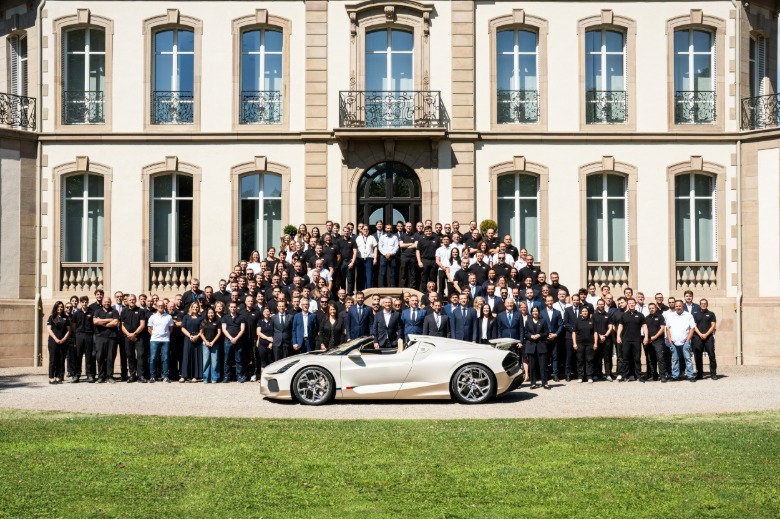
Having built over 1,140 cars with its W16 engine, not including various test cars and prototypes, Bugatti is almost ready to end production of the iconic sixteen-cylinder motor. Apart from an upcoming one-off that has not yet been completed, this W16 Mistral is the last series-production Bugatti to use Piech’s Moonshot engine, and the last of the roadster’s 99-unit production run to be completed in Molsheim.
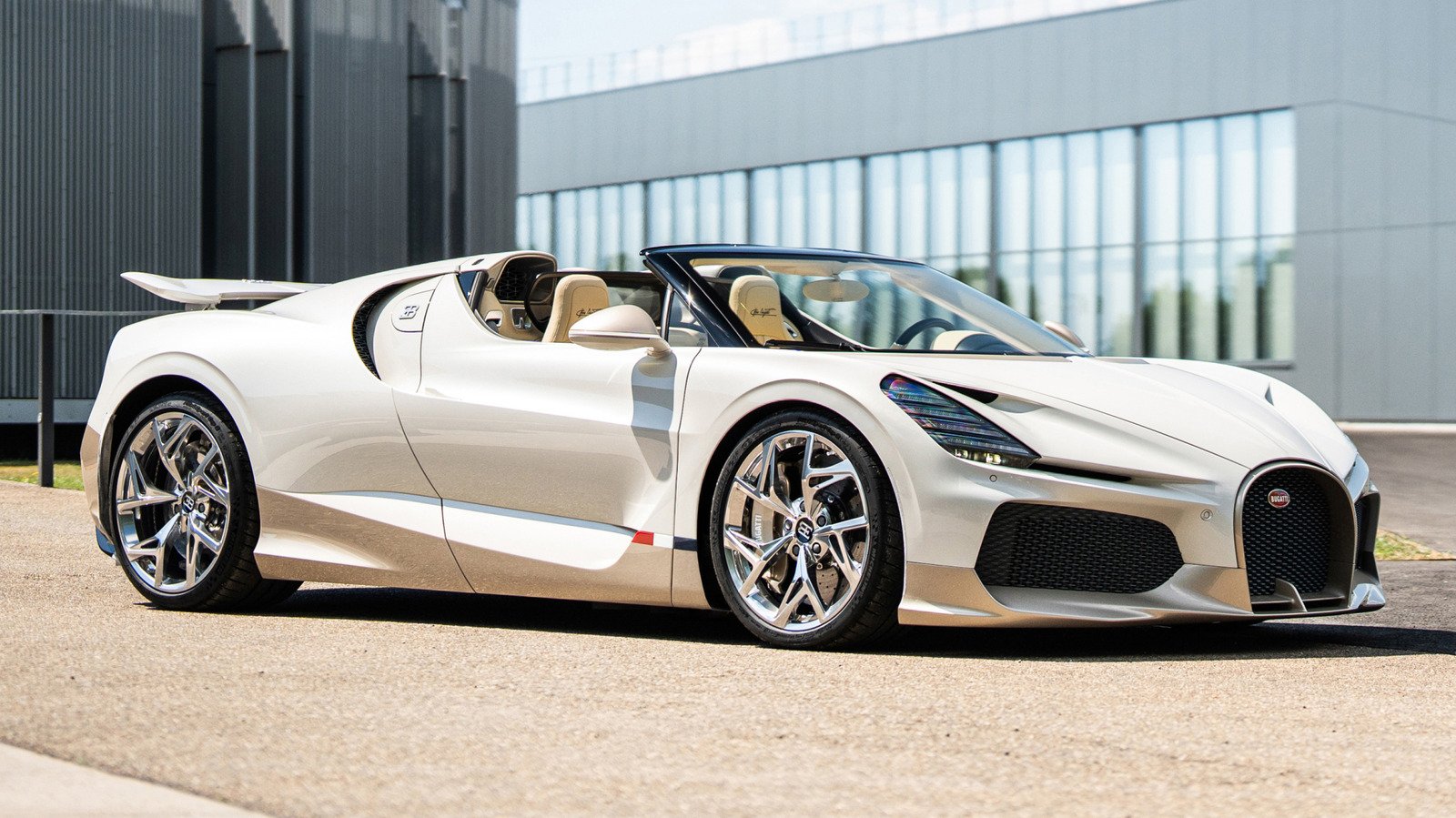
The last Chiron that was built had an amazing hand-painted livery that is hard to top. Although this final Mistral is not so extravagant, it is a beautiful specification with a creamy color scheme and lots of beautiful details. Besides just looking good, this Mistral may have the funniest, best paint color name ever: one of the exterior colors is simply called ‘Sparkle’. I like that. There is also a falcon head sculpture in the shifter, a piece of crystal glass in the center console and embroidered sketches on the door panels. Yes, there is a statue of a falcon.
More hypercars need chrome trim
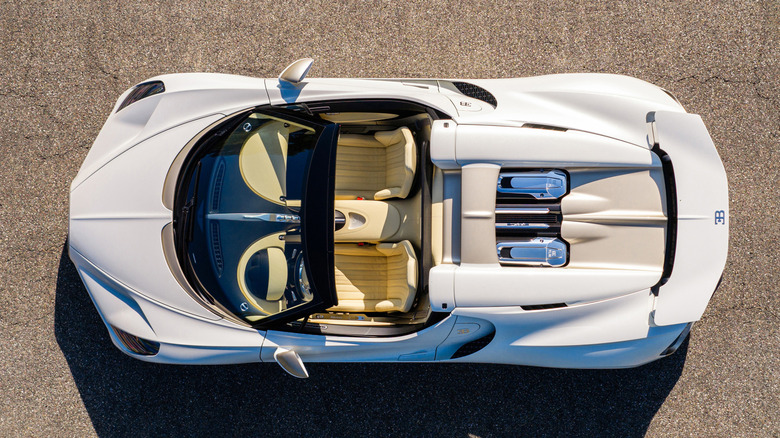
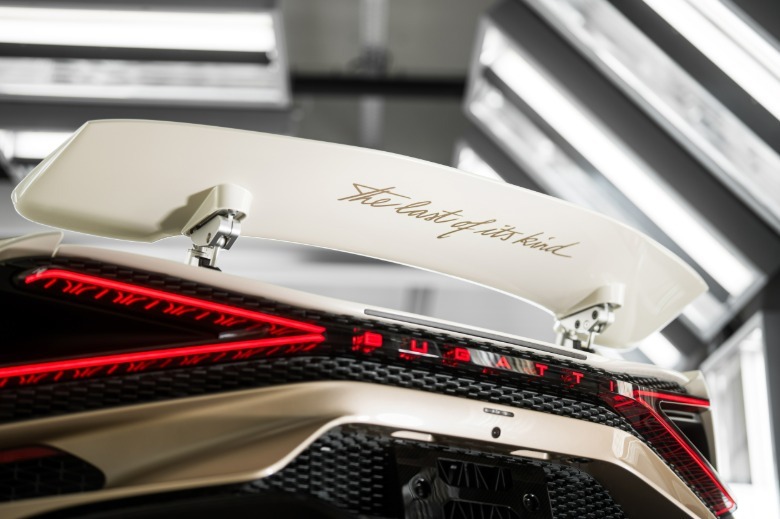
I’m still stuck on considering sparkle is a color name, but that lovely gold actually creates a subtle two-tone outfit, where the other color is the pearly white, aptly named Pearl, which is used on most of the exterior. The sparkle is primarily found on the bottom of the Mistral, but is also used as an accent on the side mirrors, hood, and engine bay. The phrase “last of its kind” is written in sparkles under the wing – imagine the employee is hand-painting and you accidentally write “it” instead of “its” – and that script is also found on the aluminum strips on the sides of the center console.
 Bugatti
The wheels on this Mistral are finished in bright polished chrome, an option that unfortunately you don’t see on many new Bugattis, and the badges are also chrome. It also features perhaps the rarest option on modern Bugattis: the polished aluminum engine cover. Almost every Bugatti since the Veyron has an open engine bay, and most customers either keep the standard finish or paint the cover a single color. Jascha Straub, Bugatti’s longtime designer and manager of the Sur Mesure customization division, tells me that a low single-digit percentage of buyers have gone for the polished option, as it becomes more visibly dirty and grimy over time. That’s exactly why I want it.
Because undoubtedly there are luxury French glass manufacturers
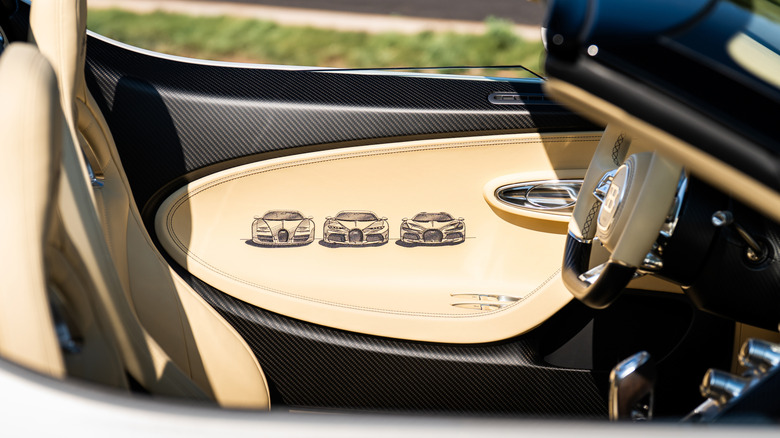
Apart from the gray carbon fiber used on the door panels and dashboard, the interior is covered entirely in Magnolia leather. Ettore Bugatti’s signature is stitched into the headrests, and is used on the aluminum door sills. The signature is also used in place of the usual Bugatti script on the engine cover. The graphics of the front ends of the Veyron Super Sport, Chiron Super Sport and Mistral are stitched in black into each door panel.
 Bugatti
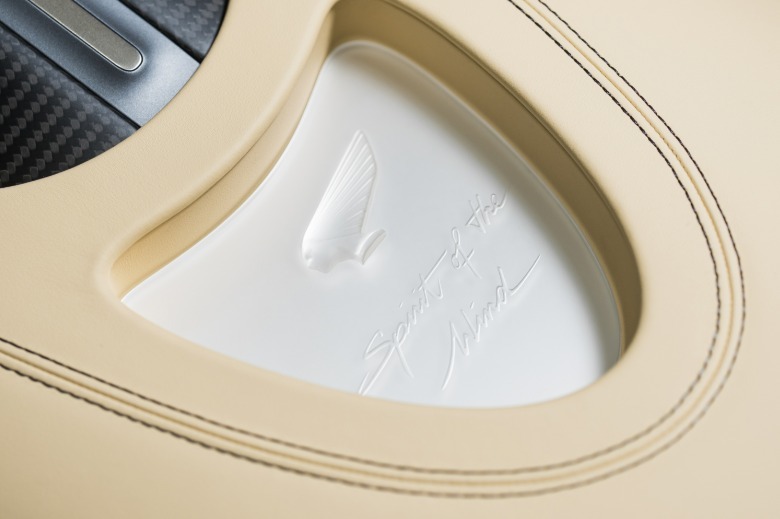
Okay, now for the really wild stuff. Bugatti has a long history with 138-year-old French glass maker Lalique, dating back 100 years to when the founders of both companies were close friends and business partners. Lalique began creating jewelery and art in the 1950s using crystal, which was the material used in this Mistral. A plaque installed in the center console was cast in frozen crystal glass, resembling an old American hood ornament (a similar sculpture was given to Mistral buyers when they spec’d their cars) and with the phrase “Spirit of the Wind” written beneath it. This is a reference to the name Mistral, the fierce wind found in the south of France.
i would put a dinosaur in there
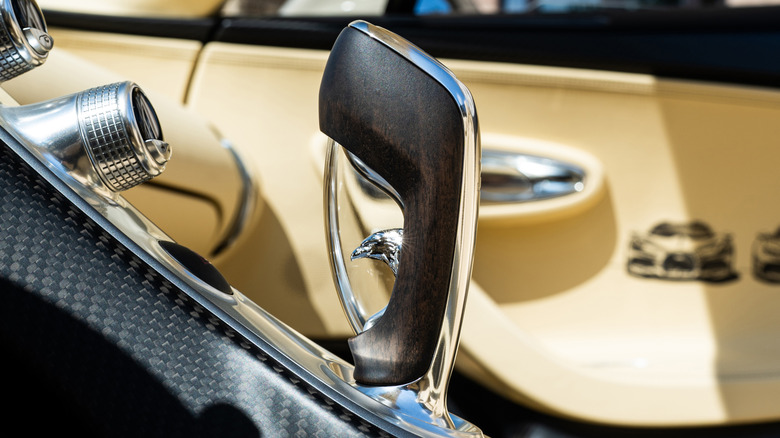
When Bugatti first unveiled the Mistral show car, it featured a small elephant figurine wrapped in amber and placed in the shifter, which was made of wood. Production Mistrals used glass instead of amber, and some bored customers got a plain leather shifter without any sculpting. However, some creative customers have come up with their own ideas for installing their shifters. One person found a mini Statue of Liberty there, another found a 3D-printed metal rose, and a Swiss collector had an original 100-year-old Bugatti screw stuck in the shifter of his mint green Mistral.
 Bugatti
This final Mistral features a falcon’s head placed inside the wooden shifter, which Bugatti says is “a nod to an animal of particular significance in their home region in the Middle East.” I think if I was going to order a Mistral, I’d put a dinosaur fossil in there. Maybe a shark’s tooth. An old Roman coin? How about a piece of moon rock? There are lots of good possible options.
Just days after the completion of Mistral production, Bugatti officially opened its new factory, La Manufacture, which will produce the V16-powered Tourbillon. Although we do not know exactly when the first of them will be delivered to its owner, seemingly well-groomed prototypes have recently been running in France and Croatia. With that new feature, Bugatti will be able to create even more spectacular custom works of art, and I can’t wait to see them.