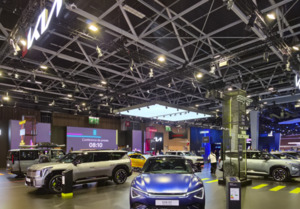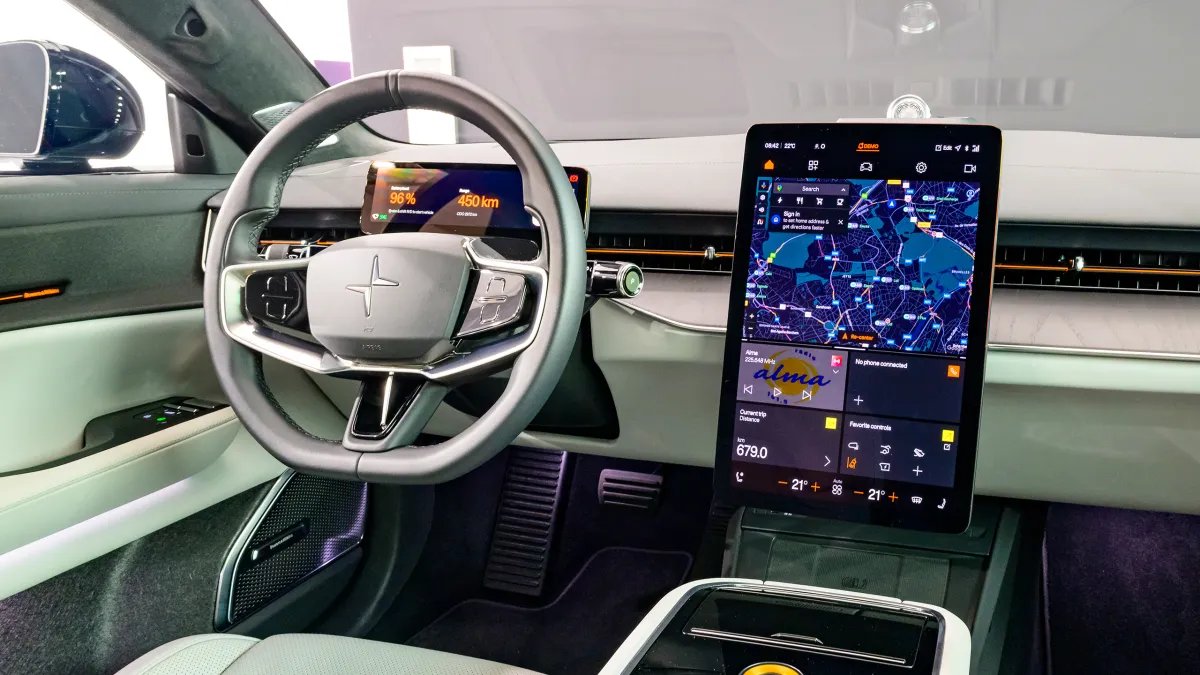
There is a lot of movement in the government right now to exclude vehicles having links with China through investment or technology from the American market. Yesterday, a Senate committee approved a bill to impose sanctions on manufacturers that are more than 15% owned by Chinese entities. Meanwhile, a separate measure aims to eliminate components made in China from cars sold here. That’s why Polestar is packing and leaving. Unfortunately, this makes those cars even more expensive.
A new report from reuters Explores the efforts of an automotive electronics startup based in Ohio to rapidly expand to meet the demand that will surely come if carmakers can no longer turn to China for many parts. They’re called Eagle Wireless, and if the government sticks to its plan to remove some China-made hardware from cars sold in the US by 2030, companies like theirs will become increasingly valuable. (A separate restriction on software, which goes into effect next year, is the reason for Polestar’s exit and Volvo’s exemption.)
Eagle recognizes the opportunity in front of it, but there is still a lot of work to do – not only to scale up manufacturing, but also to reach some degree of cost parity. According to the company, its modules are still priced 5% to 15% higher than equivalent parts in China. The components the law will target are mostly related to communications and location tracking. A former auto executive from Detroit told reuters, “I was shocked when I saw the price increase” when I compared the bill for an ADAS system produced outside China with an ADAS system imported from China.
As you might guess, this is likely to push up new car prices in the US, which have certainly already seen huge increases since the start of the decade and post-Covid. Cox Automotive The average transaction price of a new car last May was reported to be $49,456.
Some automakers will be at greater risk than others. For example, Rivian’s software chief pointed out reuters He believes the electric truck maker can weather this storm better than some, because it can shift between suppliers more deftly. Naturally, the number of cars you sell affects the importance of this challenge, which may explain why Ford sought authorization to continue importing models like the Lincoln Nautilus, which is manufactured in China.
However, that effort may fail, as Republican Senator Bernie Moreno of Ohio, who co-authored the investment ban bill, said on wednesday Eventually Ford agreed to move production of such vehicles to the United States.
Complicating the problem is that even locally manufactured parts are sometimes dependent on licenses from elsewhere – such as from Chinese companies – and hardware restrictions apply to them as well. Just last month, Ford began producing batteries from a plant in Michigan Using technology licensed from CATLWhich is located in China. Completely isolating China from the supply chain of today’s complex vehicles presents an obvious struggle, but the trouble is that we won’t really know how bad it will be until we’re years into the middle of it.
Got any tips? Contact us at tips@thedrive.com