Some guys have training logs so old they ought to be registered as historic relics. Monday is chest, Tuesday is back, and somewhere in there are three sets of ten with the same dumbbells they’ve been using since the Clinton administration. They sweat, they grunt, they look in the mirror, and they wonder why nothing much changes.
Two studies published this month have given that old problem another going-over. Both looked at progressive overload, the practice of increasing resistance as you adapt to training. Not exactly a revolutionary concept. Six-hundred years ago, Milo of Croton slung a calf over his shoulder and walked the hills behind his farm every day until the calf became a bull. Guess what happened to Milo? He grew. Six-hundred years later Joe Weider called it his progressive overload system. The new research doesn’t prove the legend. It does suggest that the basic idea is still worth considering.
What Do New Studies Reveal About Progressive Overload and Muscle Hypertrophy?
The first study, published October 14 in the Journal of Strength and Conditioning Research, involved 41 previously untrained young women. Researchers assigned their arms to different conditions and had them perform one-arm curls three times a week for eight weeks. One training condition added weight when the participants reached the top of an eight-to-12-repetition range. Another kept the weight and repetitions fixed. There was also a nontraining comparison condition. Both exercising conditions built muscle, but the progressive group gained more thickness in the elbow flexors.
Notice what that doesn’t say. It doesn’t say the women who stayed with the same weight grew nothing. They did grow. A beginner can make progress on a stimulus that would put an experienced lifter to sleep. And the researchers weren’t comparing entire bodybuilding programs, just a tightly controlled exercise. If somebody tells you this proves you must add five pounds to every lift every Tuesday, he’s selling certainty the study doesn’t contain.
A second paper, published October 15 in theInternational Journal of Sports Medicine, put 31 untrained adults through twelve weeks of leg extensions. Each person trained one leg with increasing loads and the other without increasing the load, twice weekly. Both legs gained muscle. Across the full study, the groups weren’t significantly different at the individual measurement points. But during the final three weeks, growth was greater in the progressively loaded legs. The researchers also found that the fixed-load legs ended up working further from failure. In other words, what had once been hard became relatively easy.
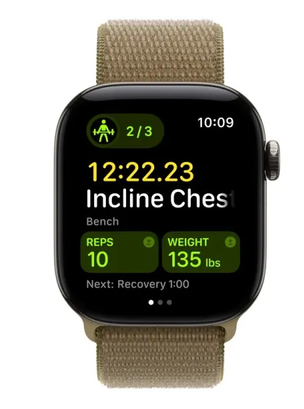
Aha! That’s worth dragging back into the gym. Progressive overload isn’t a religious requirement to put more iron on the bar at every workout. It’s a way of preventing yesterday’s challenge from becoming today’s warm-up. You can progress by adding repetitions, improving control, increasing useful range of motion, or eventually increasing weight. The particular method depends on the exercise, the person, and what they’re trying to accomplish. Keeping a record helps because memory has a remarkable talent for turning a mediocre set into a personal record by the time you get home.
Progress Is More Than Just Adding Weight
There’s another wrinkle. A separate study in The Journal of Physiology, published at the end of 2025, found similar muscle growth with heavier and lighter loads when sets were taken to voluntary fatigue. Is that a contradiction? The question there was how heavy the weight had to be when effort was comparable. These October studies asked what happens when the weight is allowed to progress or is deliberately held back. Load, effort, and progression are related, but they aren’t interchangeable.
I wouldn’t build a national training policy around two small studies of beginners doing curls and leg extensions. They don’t tell us exactly how a seasoned bodybuilder should manage a twenty-year training career, and they certainly don’t justify grinding every set into the floor. Joints, recovery, and the occasional week when life kicks your ass still count.
But they do make a decent case against autopilot. If you’re getting stronger, doing more quality work, or making the same weight harder through better execution, you’re giving your muscles a reason to pay attention. If you’re doing the identical thing indefinitely and expecting a different result, don’t blame your genetics, your supplements, or start thinking your drugs are fake. The weights aren’t holding you back. Your imagination is.