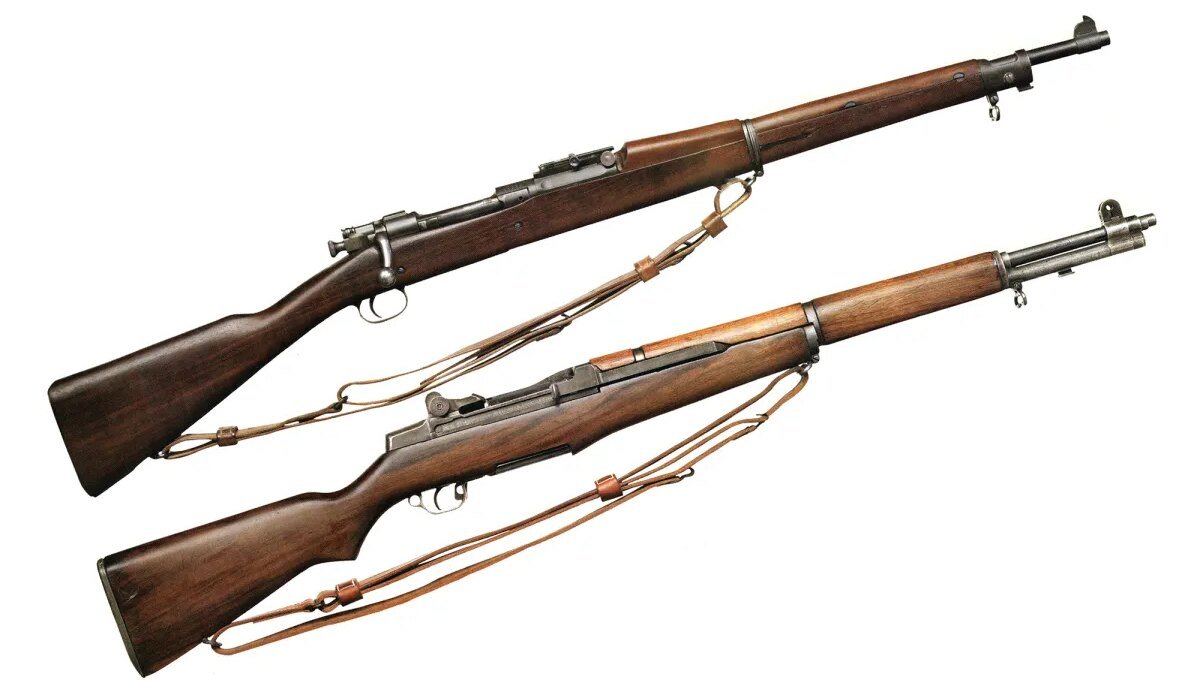
This story, “The American Rifle,” appeared in the August 2007 issue outdoor Life.
Since early colonial times, Americans have maintained a love affair with their guns. But a singular historical event in 1903 made our undying love affair with military rifles unique among the nations of the world. Of course, that 1903 was the year of the Springfield rifle’s birth, and also the year of the first national rifle championship. But far more influential that year was the creation of the National Board for the Promotion of Rifle Practice (NBPRP) by the US Congress.*
Supported by President Theodore Roosevelt, himself an accomplished rifleman, the NBPRP, among other things, authorized further cooperation between the Army and the National Rifle Association (NRA), which had been founded in the 1870s when two former Union officers, Colonel William Church and General George Wingate, worked to do something about the extremely poor marksmanship seen during the Civil War.
Of key importance in the NBPRP deal was the delivery of rifles and ammo to civilians for practice and target shooting. This resulted in the creation of a cadre of skilled civilian marksmen – Church and Wingate’s original intention – at no cost to the US government other than the supply of arms and ammunition, the benefits of which became apparent when we entered World War I. A large number of newly recruited American soldiers not only knew how to shoot well, but they could also teach others. And the ’03 Springfield gave them the best gun on the battlefield.
Even after the First World War, NBRP continued to enjoy huge profits. Thousands of returning doughboys who had fallen in love with the ’03 and wanted to keep shooting it took to the target range and the “whole course” type, high-powered rifle target shooting blossomed.
Springfield Armory, with nothing much to do after the war, supplied refined versions of the ’03 on loan to target shooters or for sale to civilians.
Given the almost universal love and respect given to the ’03 Springfield in all its forms, America’s shooters were probably horrified the day in 1936 when word spread that it would be discontinued and replaced by – gasp – an autoloader!
very nice garand
Developed by John Garand of Springfield Armory, the M-1, as it was known, could fire eight shots as fast as the trigger was pulled. It was fine on the battlefield, but target range forecasters believed that such a rifle had no place in the polite company of good bolt-action rifles. Like the ’03 Springfield, it fired the .30 US (.30/06) cartridge, but there the similarity ended. It certainly did not have the look and feel of a target rifle, its sight lacked the good adjustments needed for bull’s-eye accuracy and, worse, it actually had a hole in the barrel to vent gas to power its autoloading mechanism.
It was common knowledge that autoloaders were far from accurate. It was predicted that the barn doors would be safe from attack by the clumsy-looking Garand. There was no way it could compete at target range with the finely adjusted ’03’. But these concerns were temporarily put aside when America went to war again, during which the ugly M-1 rifle won praise as “the greatest instrument of war ever devised” from no military strategist better than General Omar Bradley.
At the end of World War II, America’s large-bore target shooters, now strengthened by returning GIs and supported by the NBPRP, again took to the target range. Old-timers are still attached to their beloved ’03, and commercial rifles such as the target version of Winchester’s M-70 bolt rifle have gained popularity. But just as World War I veterans had a fondness for the ’03, World War II veterans also came home with similar affection for the Garand. The matter became more bitter when the NBPRP issued M-LS and ammo to NRA-affiliated clubs and members. Shooters old and young – especially young families and experienced ones with tight budgets – can spend an almost free weekend at the shooting range. America’s love for its service rifles has never been greater.
Nevertheless, M-1 and its devotees faced what they considered an insurmountable challenge. The major event in rifle competition, known as the Leg Match (where “legs” can be won to earn the much-coveted elite marksmanship prize), had to be fired from the service rifle – the wrong M-1 Garand!
As it turned out, the prediction that the Garand would never be a suitable target rifle was far off the mark. Just as the accuracy experts at Springfield Armory fine-tuned the ’03 a generation ago, the same magic was worked with Garands, resulting in a National Match M-LS that rivaled the old ’03 for accuracy and then some. The records that were set 03 years ago started falling at the hands of a new generation of shooters armed with Garands.
In 1957, after two decades of service, including two major wars, the aging battleship Garand was retired and officially replaced by the M-14. From an accuracy standpoint, getting target-quality performance from the new rifle was almost an easy task. What was known about making the Garand more accurate was only applied to the M-14, whose design already eliminated some of the Garand’s specifications. This latest service rifle also fired a new round called 7.62x51mm, known in civilian circles as the .308 Winchester, and soon proved itself extremely accurate, winning Olympic gold among other awards. Just as the Garand had surpassed the range records of ’03, the M-14 set even higher standards of accuracy and performance. Yet, for whatever reason, the M-14 never achieved the affection and loyalty that American shooters gave to the old ’03s and Garands.
Today’s AR
In 1964, the M-14 was phased out and replaced by a strange-looking rifle, known in military parlance as the AR-15 or M-16. Not developed at Springfield Armory, this latest weapon represented a radical change in Pentagon policy – it wasn’t even .30 caliber. A new era had begun.

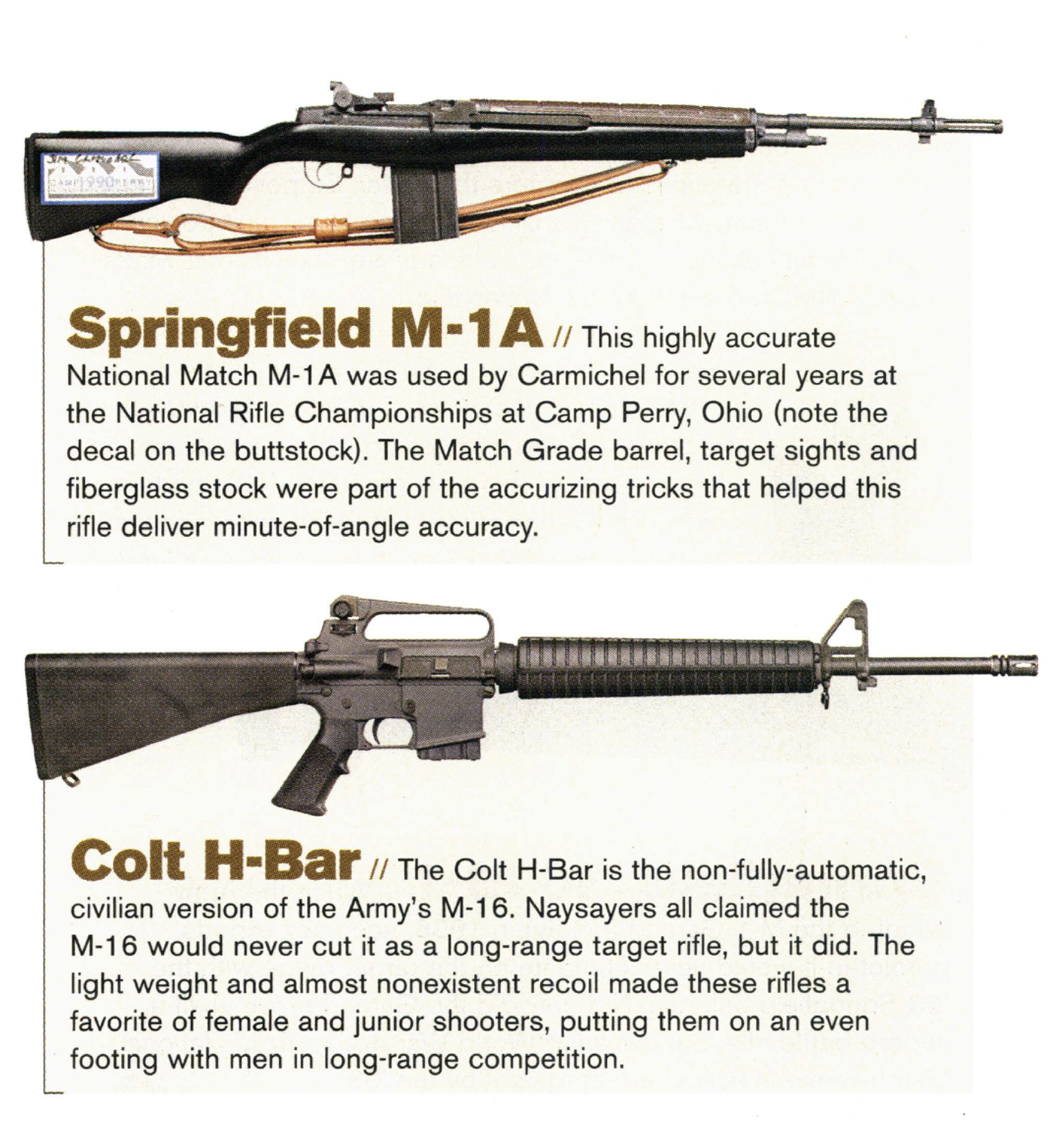
One and a half pounds lighter than the M-14, the AR was perfect for the jungles of Vietnam, where it was first used in combat. Furthermore, its cartridge, the smaller 5.56x45mm (.223 Remington), could be packed and carried in greater numbers per weight than the earlier .30 US caliber.
These and other features seemed to bode well for the autoloading M-16, which was capable of fully automatic fire. But reports of rifle failure at critical times came from the jungles of South-East Asia. Additionally, for better or worse, badly misguided – or highly imaginative – reports from correspondents described how the M-16’s small but sharp bullets flew by, ripping through enemy flesh like “buzz saws”. Over time the M-16’s functional problems were resolved by design changes and better maintenance, but like other foolish rumors this discussion persists to this day.
Connected: 27 Vintage Gun Ads That Introduced Some of America’s Most Iconic Firearms
Like the Garand of six decades earlier, it was once again a disappointing situation, with learned declarations of the AR-15 being ill-suited to target range. The shorter 55-grain bullet might be fine for the NMC’s 200- or even 300-yard stages, but at 600 yards it was like tossing chaff in the wind. And at 1,000 yards? forget about it.
I admit that I have also succumbed to this thinking. In my 1975 book, modern rifleI said: “So far the M-16 has had only mixed success as a target rifle. Despite its Buck Rogers profile, it can be aimed and fired accurately, and no recoil makes it pleasant and easy to control in rapid-fire phases. But the short, 55-grain bullet, despite its nearly 3,200 fps muzzle velocity, can’t get the job done on a 600-yard target—much of the velocity beyond that. “Does damage fast. 300 yards just takes the guts out of a slug.”

However, even as these short-sighted ideas were being put to paper, solutions were being sought for the long-range shortcomings of the M-16. For example, downrange accuracy and wind resistance were greatly improved by ballistic sleight of hand such as the combination of fast-turning, heavy bullets with target-grade barrels, making some ARs reliable performers even out to 1,000 yards. As these and other improvements began to prove their value on the target range, ARs and AR-types came to dominate the competition. Women and junior shooters, previously frustrated by the weight and recoil of .30-caliber service-type rifles, could now compete on an equal footing with men.
Today, ARs not only rule high-powered target ranges, but have become the 800-pound gorilla of the gun industry, with more companies making these types of rifles than listed here. In an otherwise flat gun business, dozens of manufacturers are kept busy supplying insatiable demands for a seemingly endless variety of barrels, stocks, sights, mounts, magazines, and an astonishing array of accessories and add-ons for ARs and their similar counterparts.
Read further: M1 Garand, the service rifle of the greatest generation
In addition to target shooters who rely on their tournament-winning ARs and plinkers who use their kicks to hit tin cans, hunters are taking a closer look at heavier caliber versions, and a growing number of varmint shooters are discovering that heavy-barreled, scope-sight ARs rival the accuracy of bolt-action varmint rifles and are a lot of fun for shooting at prairie dogs.
Of course, there are still a lot of traditionally minded hunters and shooters who are disenchanted with “black rifles,” ignoring them in the hope that they are an old fad and will eventually go away. But it’s like ignoring an intense tsunami, because AR-types, like the ’03 Springfields of the last century, are winning the hearts of American shooters.
*The NBPRP has since been replaced civilian shooting program.