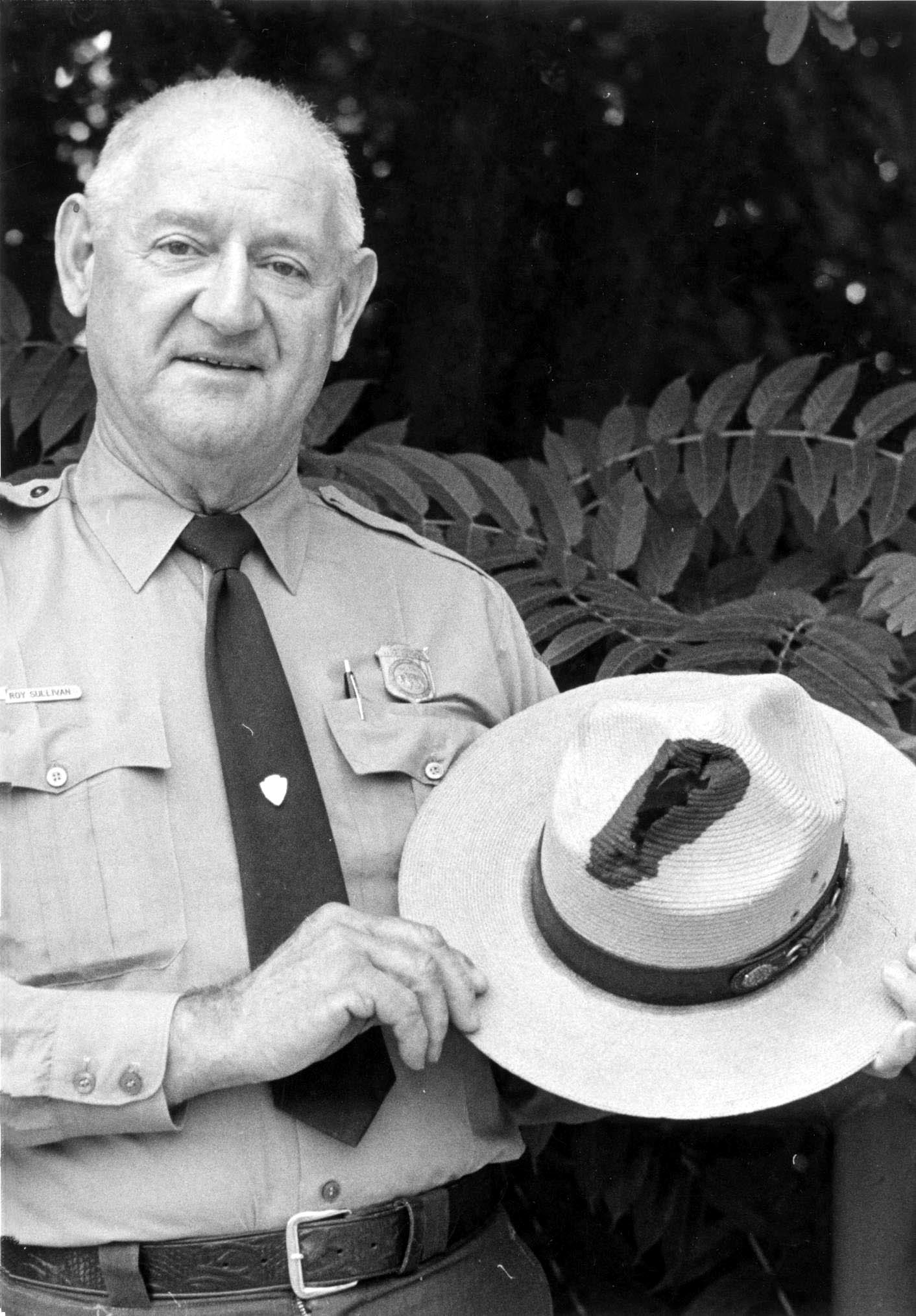
Roy C. Sullivan, a Shenandoah National Park ranger in Virginia, survived seven recorded lightning strikes between 1942 and 1977, a record still recognized by Guinness World Records. Population-wide lightning odds cannot describe his personal exposure: NOAA says strike risk varies with geography, local climatology, time and activity, while people who spend substantial periods working outdoors face greater exposure.
The first recorded strike came in April 1942 while Sullivan was working at Shenandoah National Park in Virginia’s Blue Ridge Mountains. Guinness World Records says lightning struck a fire lookout tower during a storm and Sullivan was hit in the right leg while escaping from the structure. The strike scorched his leg and caused him to lose the nail on his big toe.
Twenty-seven years passed before the second recorded incident. Guinness says Sullivan was struck while driving his truck in July 1969, leaving him unconscious with burned eyebrows and a destroyed wristwatch. Later accounts add further details to the incident, but the exact electrical pathway into or through the vehicle cannot be independently reconstructed from the surviving record.
A third strike followed in July 1970 while
A third strike followed in July 1970 while Sullivan was in his garden and left his left shoulder seared. In April 1972, another strike occurred while he was in a guardhouse at work and set his hair on fire.
Guinness records another hair fire and injuries to Sullivan’s legs during an August 1973 strike. A sixth incident in June 1976 injured his ankle and again burned his hair. The seventh recorded strike came on June 25, 1977, during a fishing trip and caused burns to his chest and stomach.
The seven-strike total is more firmly established than every detail attached to the individual incidents. Guinness continues to recognize Sullivan as the record holder for the most lightning strikes survived, and contemporary reporting in 1983 said the Guinness Book of World Records still carried the seven-strike tally.
The detailed chronology is less uniform
The detailed chronology is less uniform. Guinness’s current long-form account explicitly describes Sullivan’s hair burning in 1972, 1973 and 1976. The Washington Post’s 2013 reconstruction also describes hair involvement in additional incidents. The available accounts therefore support saying that Sullivan’s hair burned several times, but they do not support treating one exact lifetime count as uncontested.
The evidentiary distinction also applies to the strikes themselves. The Washington Post reported that nobody witnessed any of Sullivan’s seven strikes. Newspaper accounts credited his family doctor and former park superintendent R. Taylor Hoskins with verifying injuries rather than witnessing the electrical discharges. Retired National Park Service historian Reed Engle nevertheless told the newspaper that he regarded the Guinness record as well documented, while another former ranger expressed reservations about some later incidents.
The difference between population-average probability and Sullivan’s individual exposure is central to understanding the record. NOAA states that there is no single probability of being struck by lightning that applies equally to everyone. Geography and local climatology matter, as do the time of day and year and the amount of time a person spends in exposed environments.
Using U.S. averages for 2013–2022, NOAA gives
Using U.S. averages for 2013–2022, NOAA gives an estimated annual probability of about 1 in 1 509 000 for becoming a lightning victim and an estimated lifetime probability of about 1 in 18 864 over an 80-year lifetime. NOAA cautions that these are population estimates rather than individual forecasts.
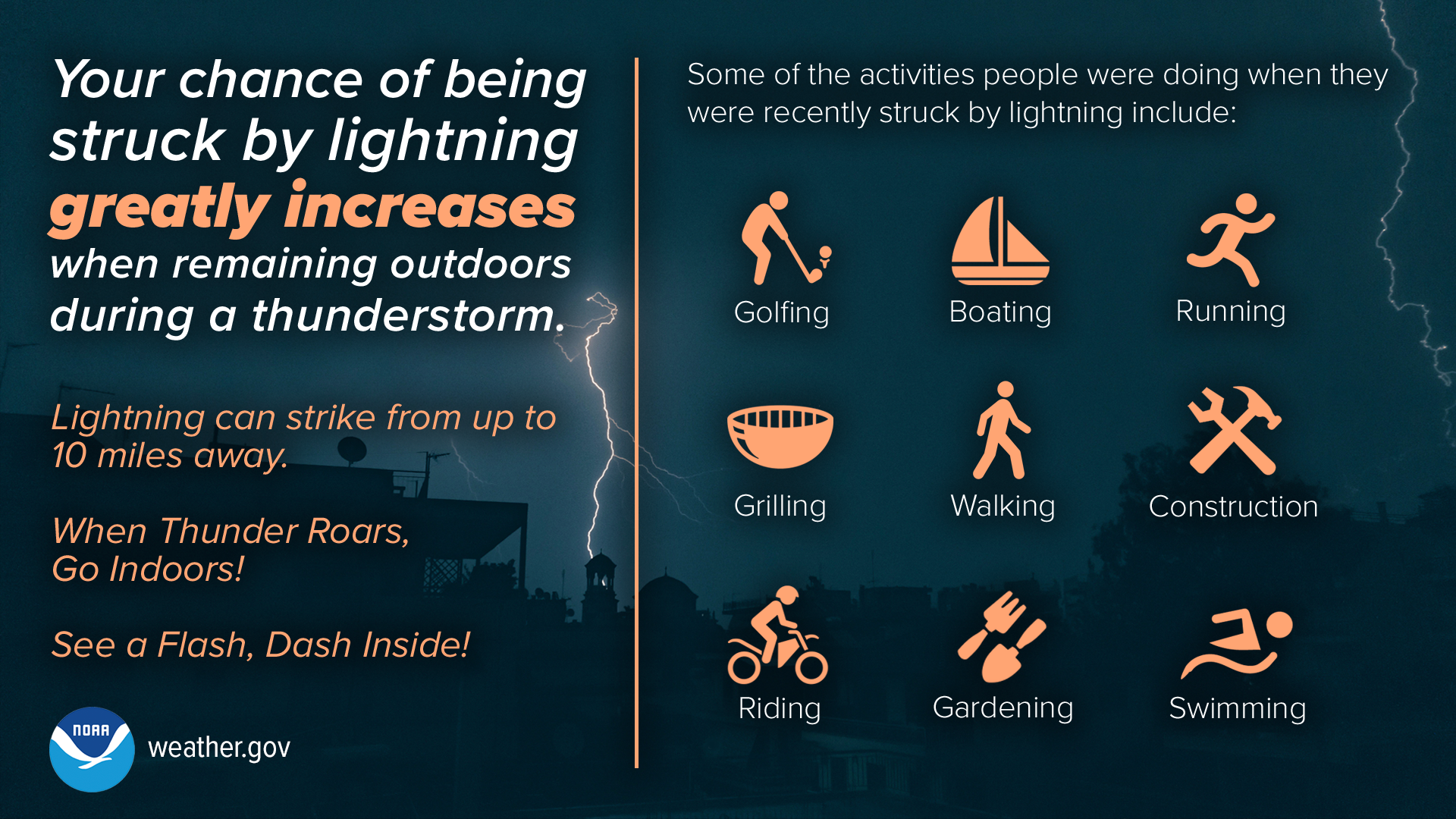
Sullivan’s occupation fits that exposure principle. The National Weather Service states that people who work outdoors in open spaces, on or near tall objects, or around conductive materials face greater exposure to lightning. Construction workers, farmers, logging crews, utility workers and people operating heavy equipment are among the occupations identified as higher risk.
That does not mean Sullivan’s occupation mathematically explains seven strikes. Multiplying a national-average probability by itself seven times assumes a sequence of identical independent trials with the same exposure conditions. Sullivan instead spent decades working outdoors in a mountainous national park, so his individual history cannot be represented by a population-average probability alone.
A 2008 National Parks Traveler analysis made
A 2008 National Parks Traveler analysis made the same statistical distinction. It examined the enormous numbers produced by repeated multiplication of generalized lightning probabilities, then noted that those calculations fail to account for Sullivan’s occupation and unusually high outdoor exposure. No verified probability model specific to Sullivan’s seven recorded strikes has been identified.
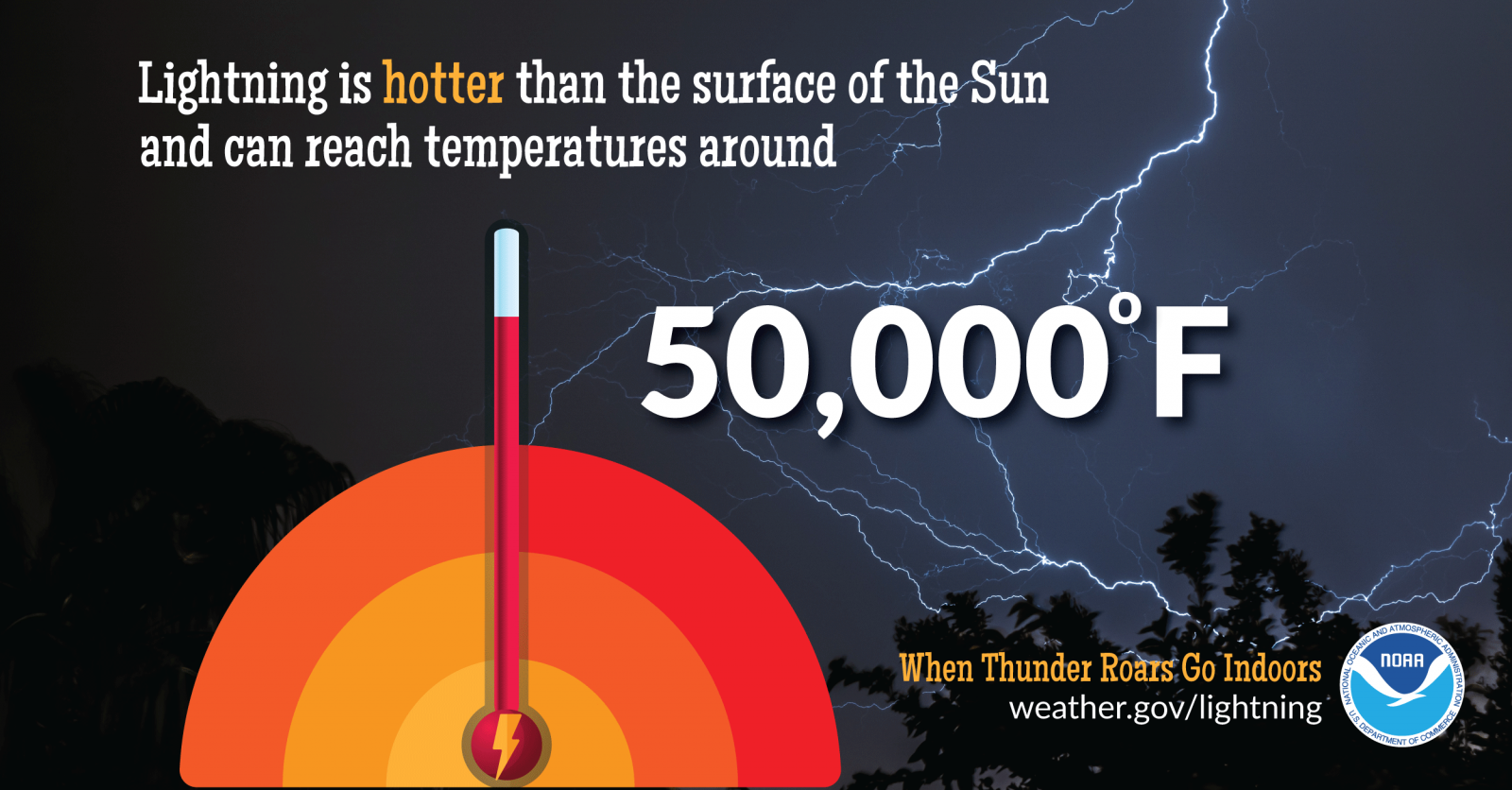
Lightning forms as electrical charges separate within a thunderstorm and the resulting electric field becomes strong enough to overcome the insulating properties of air. The discharge can occur inside a cloud, between clouds, from a cloud into surrounding air or between a cloud and the ground.
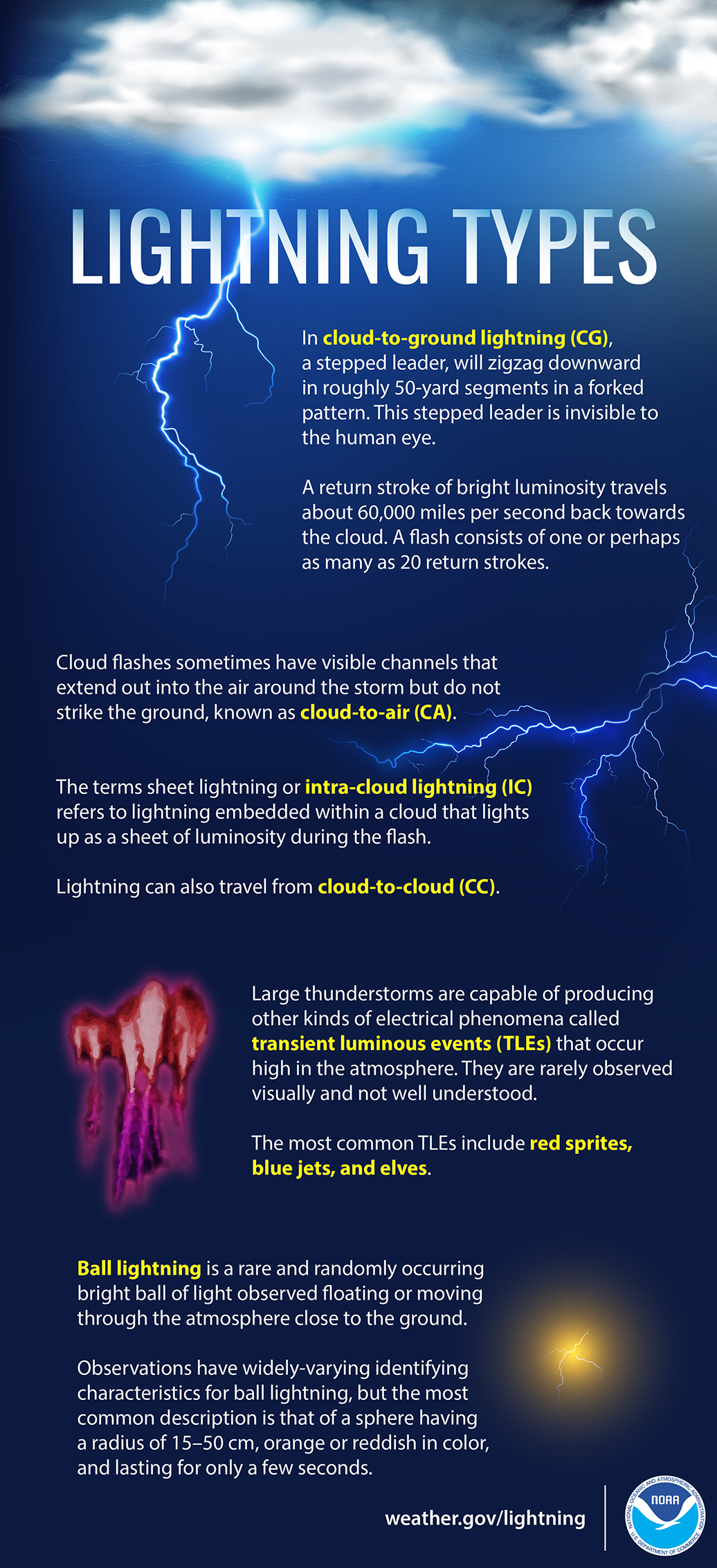
The lightning channel can heat the surrounding air to around 27 760°C (50 000°F), according to the National Weather Service. The rapid heating and expansion of that air produces the shock wave heard as thunder.

A direct strike is only one way lightning
A direct strike is only one way lightning can injure a person. The National Weather Service identifies five principal mechanisms: a direct strike, a side flash from another object, current spreading through the ground, conduction through wires or other conductive materials, and electrical streamers associated with a developing discharge.
Ground current affects a larger area than the other mechanisms and accounts for many lightning deaths and injuries. Conduction can carry electrical current over wires, plumbing and metal surfaces, while a side flash can jump from a taller object to a nearby person.
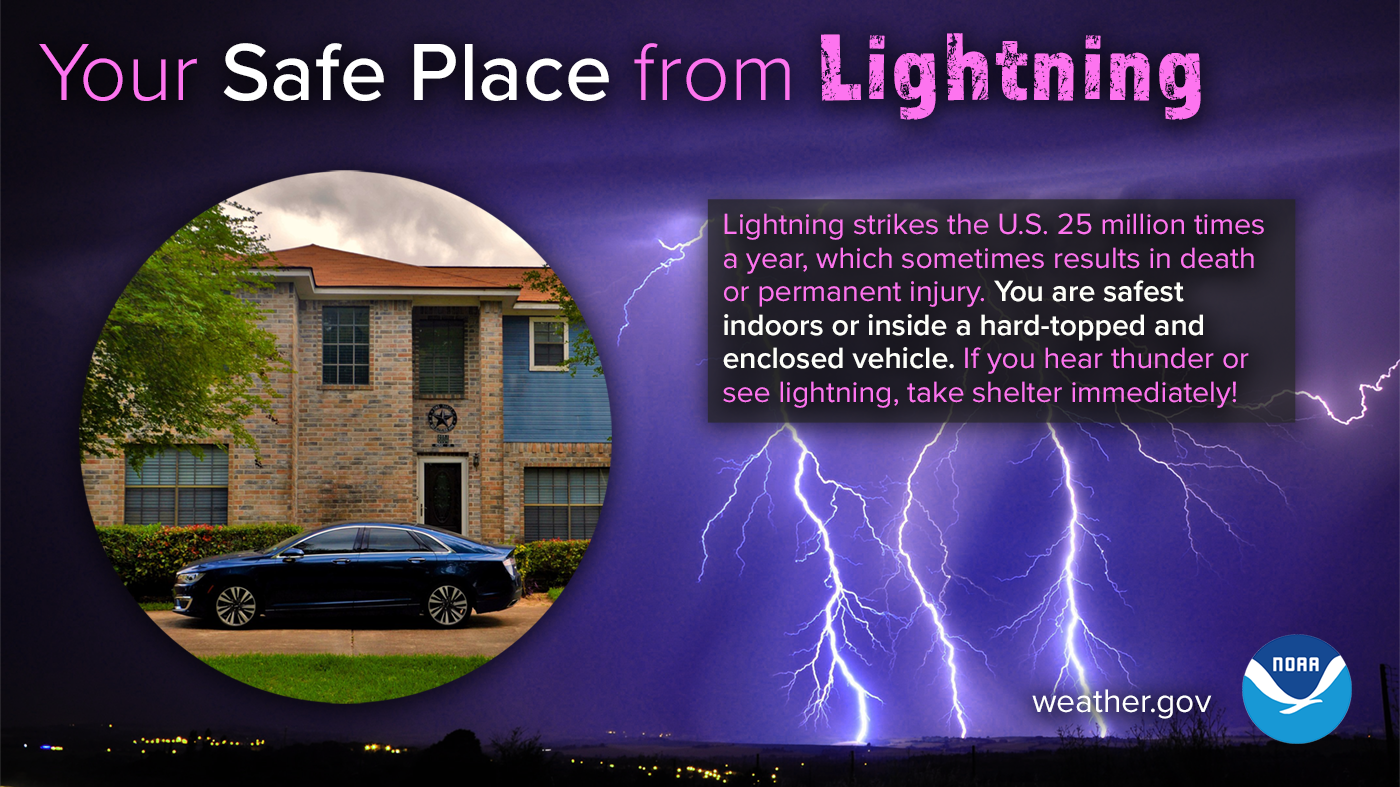
Modern safety guidance provides context for Sullivan’s reported encounters in vehicles and structures without establishing the exact pathway taken by any historical strike. CDC lists a fully enclosed hard-top vehicle with the windows rolled up as a safe shelter. Convertibles, motorcycles, golf carts and other open vehicles do not provide the same protection.
Buildings greatly reduce exposure but do not eliminate
Buildings greatly reduce exposure but do not eliminate every electrical pathway. Lightning can enter a structure through a direct strike, through wiring or pipes extending outdoors, or through the ground. Once inside, current can move through electrical systems, plumbing, corded communications equipment and other conductive materials.
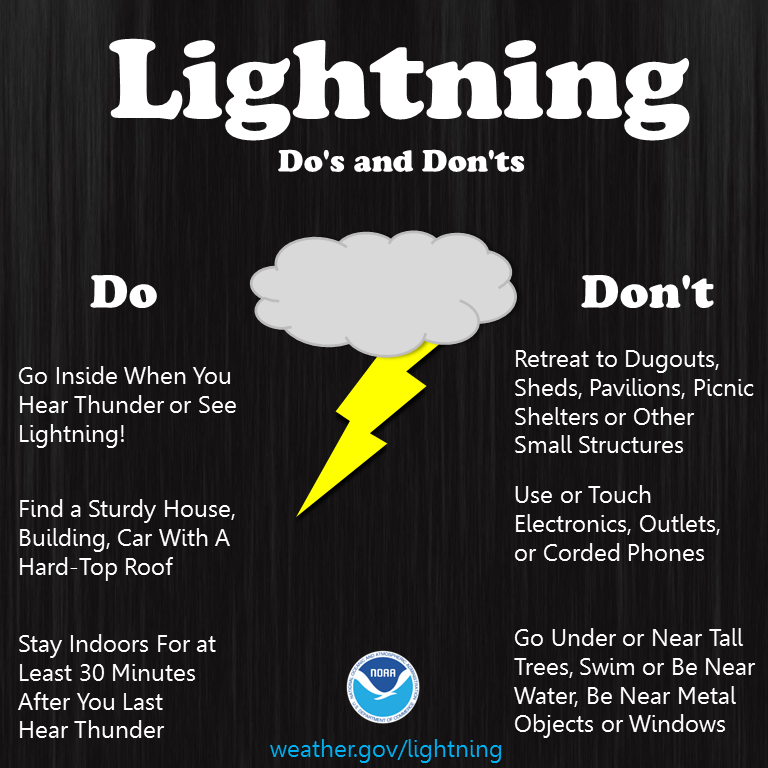
Lightning can also strike far from the area of heaviest rain. CDC states that lightning can occur more than 16 km (10 miles) from rainfall. Hearing thunder is therefore enough to establish that lightning is close enough to pose a threat, even when rain has not yet reached a location.
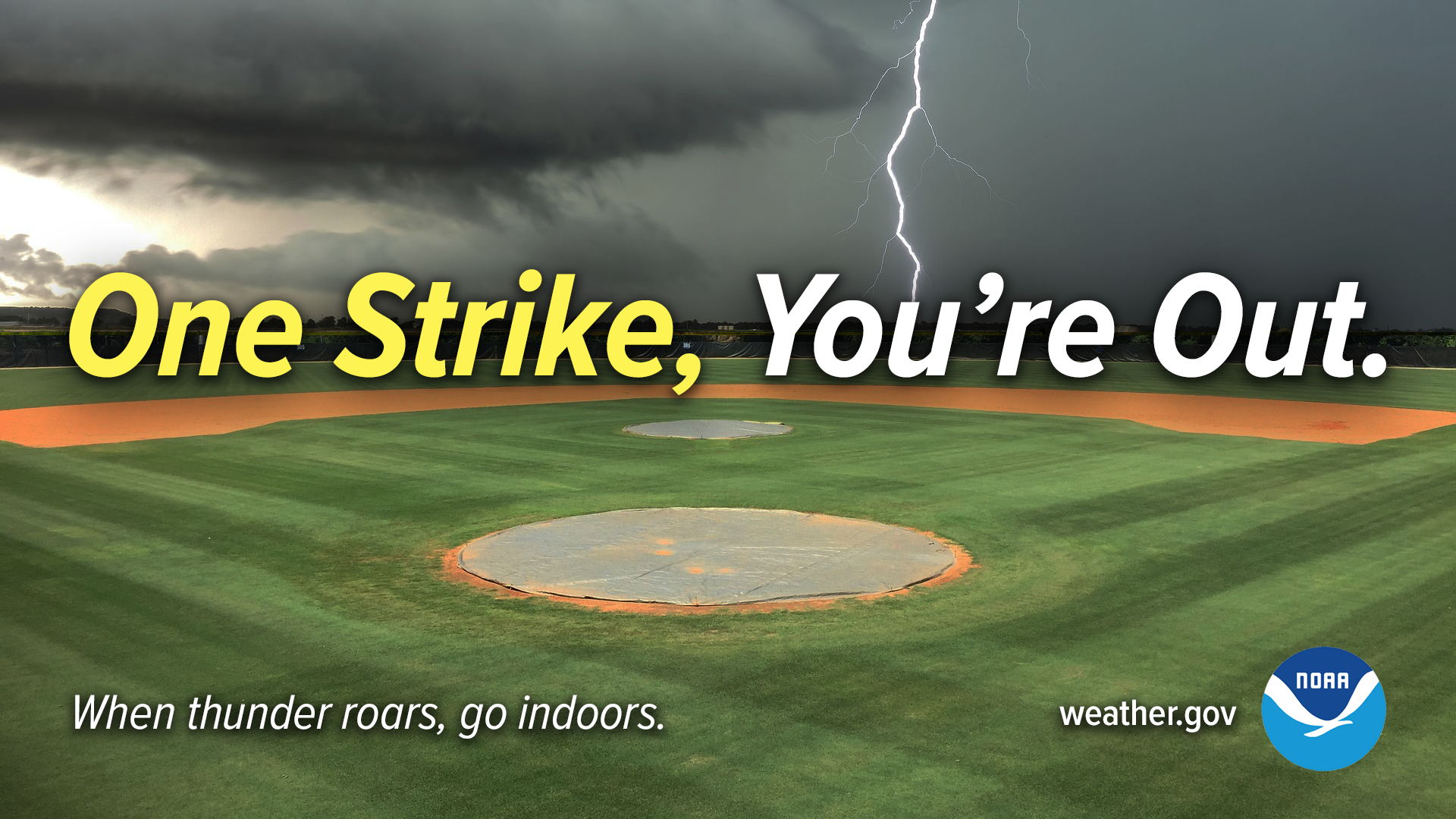
No place outdoors is considered safe during a thunderstorm. Current guidance calls for immediate shelter in a substantial building or enclosed hard-top vehicle when thunder is heard and recommends remaining inside for at least 30 minutes after the last thunder.

The consequences of lightning in the United States
The consequences of lightning in the United States have changed considerably since Sullivan’s years as a ranger. A peer-reviewed study published in Natural Hazards in 2026 examined U.S. lightning mortality from 1979 through 2023 using CDC and National Weather Service data. The mortality rate fell from 4.32 deaths per 10 million people in 1982 to 0.53 per 10 million in 2023.
Jason W. Marion, Eli Lanning and D. Gary Brown identified improved warning and risk communication, public education, urbanization, mechanization of outdoor work, access to safer buildings and advances in emergency medical care as possible contributors to the long-term decline. Their study also cautioned that lightning remains an active hazard despite the reduction in deaths.
Sullivan began his 36-year National Park Service career in 1940, according to a contemporary UPI report. He retired in 1976, five months after the sixth recorded strike. The seventh came the following year during a fishing trip.
The historical evidence does not establish that lightning
The historical evidence does not establish that lightning was physically attracted to Sullivan. The National Weather Service states that metal does not attract lightning, although conductive material can provide a path for electrical current. No known physical mechanism causes a person to attract later lightning strikes because that person has been struck before.
Sullivan’s record remains extraordinary without requiring a supernatural explanation or a falsely precise probability. Guinness supports the seven-strike tally, while NOAA, the National Weather Service and CDC show why lightning risk changes with exposure and why one individual’s history cannot be reduced to a universal set of odds.
1Most lightning strikes survived – Guinness World Records
2Incredible story of man who survived being struck by lightning seven times – Guinness World Records – January 26, 2023
3Lightning strikes: A man hit seven times – The Washington Post – August 15, 2013
4Roy Sullivan, a retired park ranger who
4Roy Sullivan, a retired park ranger who was struck by lightning seven times and survived – UPI – September 29, 1983
5Marion, J. W., Lanning, E., & Brown, D. G. (2026). Assessment of lightning mortality in the United States from 1979 to 2023. Natural Hazards, 122, 246. DOI: 10.1007/s11069-025-07899-5
6Frequently Asked Questions – National Oceanic and Atmospheric Administration
7Lightning Safety on the Job – National Weather Service
8Lightning and Worker Safety Recommendations – Centers for Disease Control and Prevention – April 15, 2024
9Safety Guidelines: Lightning – Centers for Disease Control and Prevention – June 16, 2026
10Lightning Science: Five Ways Lightning Strikes People – National Weather Service
11Lightning Infographics – National Weather Service
12Social Media: Lightning Safety – National Weather Service
Published in the last 24 hours
- Male toads abandoned a pond in Italy five days before a deadly 2009 earthquake, while a scientist was counting themFriday, November 20, 2026
Epicenter - A wave up to 3 m (10 feet) high rose out of Lake Michigan on a sunny June morning in 1954 and swept fishermen off Chicago’s piers, and when a second came 10 days later, warnings had cleared the shoreFriday, November 20, 2026
Epicenter - Just 12 inches of rushing water can carry away most cars, and more than half of US flood drownings happen to people who drive into flood waterFriday, November 20, 2026
Epicenter - People who hid under an Oklahoma highway overpass from a 1999 tornado lost fingers, ears and noses, and three people died near or under overpasses that dayFriday, November 20, 2026
Epicenter