ByMikie Hayes
Oct. 30, 2026
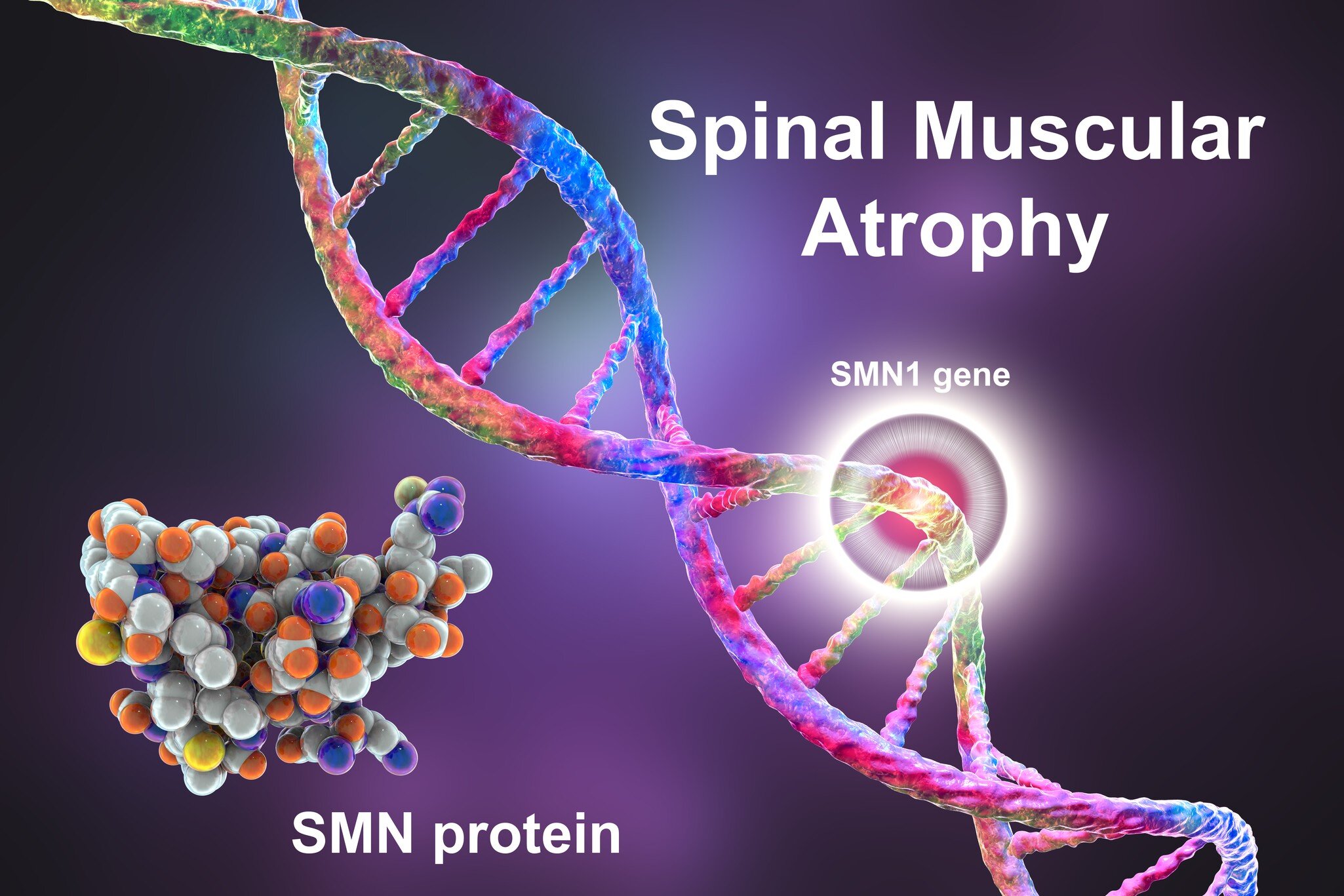
A conceptual illustration of spinal muscular atrophy, a genetic neuromuscular disorder with progressive muscle wasting
For more than 20 years, Kat Jones saw little reason to visit a neurologist. Diagnosed with spinal muscular atrophy (SMA) as a toddler, she had spent much of her life managing a progressive disease with few treatment options. Eventually, she just stopped looking for answers.
What was the point?
“You weren’t really told anything negative, but you weren’t told anything positive either,” said Jones, now 48.
SMA is a rare genetic disease most often caused by the loss or mutation of the SMN1 gene. Without a functioning SMN1 gene, the body doesn’t produce enough survival motor neuron (SMN) protein,causing the nerve cells that control voluntary movement to degenerate. The resulting muscle weakness and atrophy can affect mobility, swallowing and breathing.
Jones was diagnosed with SMA at 18 months old after she began showing developmental delays. At the time, treatments that could alter the course of the disease weren’t available.
Today, newborn screening can identify SMA before symptoms emerge, allowing treatment to begin while more of the motor neurons that control movement are still preserved. Early detection and treatment can significantly change the course of the disease. But for adults like Jones, who lived with SMA long before these advances, the experience has been very different.
As she grew older and considered what the future might hold, Jones decided to return to neurological care.
“I got back into the loop,” Jones said, “and I’m really glad I did because it was a much different experience.”
A new approach to care
When Jones returned to MUSC’s Muscular Dystrophy Association (MDA) clinic, she met Sarah Breevoort, M.D., Ph.D., associate professor in the Department of Neurology.
The experience marked a turning point for Jones.
“That first time I met her was like a night-and-day experience. It felt hopeful to be seen again,” Jones said. “To be able to relate to her patients, whether they’re 3 years old, 30 years old or 60 years old, is a testament to her and who she is. She actually motivates me not to be scared and try new things.”

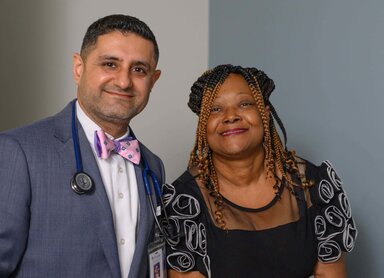
Dr. Sarah Breevoort, M.D., Ph.D., an associate professor of Neurology at MUSC who specializes in neuromuscular medicine.
Breevoort referred Jones to the MUSC Health Neurologic Rehabilitation Institute in West Ashley, where specialists developed an individualized therapy plan to help her to maintain strength, flexibility and endurance while minimizing the risks of overexertion and injury.
Jones also attends aquatic therapy sessions at the MUSC Wellness Center four to five days a week. Exercising in the water helps her to stay active and maintain mobility and cardiovascular conditioning while reducing stress on her joints.
But physical therapy is just one component of her treatment plan.
When Jones re-established care, Breevoort also discussed medications that could help to manage her SMA. She initially prescribed risdiplam, an oral treatment that increases production of a protein essential to motor neuron survival.
For Jones, the availability of disease-modifying treatment represented a significant change from the years when managing symptoms was largely the focus of care.
Expanding treatment options
Breevoort also worked with Neena Champaigne, M.D., a clinical geneticist, and colleagues in pharmacy and interventional radiology to establish the processes needed to offer Spinraza, another disease-modifying treatment for SMA, at MUSC Health.
Unlike risdiplam, which is taken orally, Spinraza (nusinersen) is administered by injection into the fluid surrounding the spinal cord. The medication works by increasing the production of functional SMN protein. Studies have shown that it can improve or stabilize motor function in some patients, although individual responses vary.
MUSC began offering Spinraza in 2025, with Jones becoming the first patient to receive the treatment at the institution.
The development expanded the treatment options available to adults with SMA receiving care at MUSC.
Earlier this year, a higher-dose regimen of Spinraza emerged as an additional treatment option. Clinical research has examined whether increased dosing can provide further benefits in motor function, including upper-limb strength. The extent of those benefits, particularly for adults with longstanding SMA, remains an important consideration in treatment decisions.
Although disease-modifying treatments can slow progression and may improve motor function, they cannot restore motor neurons that have already been lost. For adults who have lived with SMA for decades, meaningful treatment goals may include maintaining independence, endurance, respiratory function and quality of life – not simply achieving measurable gains in strength.
Jones said the combination of medication, rehabilitation and coordinated care has given her renewed confidence and a more hopeful outlook.
“It’s so great – with MUSC being a teaching facility and all the different technologies that they have that they are expanding. I feel like I finally have my little team on my side instead of having to communicate all over the place, which can be exhausting. That’s why I didn’t really go to the doctors for 20 years,” Jones said.
Looking toward the future
For Jones, the changes in her care have been about more than access to medication. Having a team that understands her condition and helps her to navigate treatment has changed how she thinks about living with SMA.
You can tell that they really care, and they can relate to you as – not just a person but also an expert at what they do – and make you see, instead of a dark tunnel, a nice bright light.
Despite the challenges she has faced, Jones said she wouldn’t change the experiences that have shaped her.
“It’s made me slow down a lot and appreciate the simple things in life,” she said. “It’s okay to be who you are a’nd also to take advantage of the treatment so that way, you can really be the best version of yourself.”
After decades of uncertainty, Jones now sees possibilities she once thought were out of reach.
Intern Sarah Majer contributed to this story.

Mikie Hayes
Mikie Hayes is director of writing services and enterprise copy editor at MUSC. A seasoned communications, crisis management and development professional, she has served as a trusted speechwriter to three MUSC presidents, numerous deans and department chairs. She has written and edited extensively for MUSC’s publications. She previously led a U.S.-based organization with global reach that worked closely with global media outlets and government partners worldwide, developing a range of complex strategies and specialized publications to support high-level initiatives. With experience spanning health care, scientific research, higher education and national and international security, she brings more than 35 years of experience in writing, editing, strategy and program development. An experienced public speaker, she has presented to audiences nationally and internationally.
Recent MUSC News stories

MUSC News + Heart and Vascular Care
Extraordinary measures, including an SC first, bring woman with heart failure home

Cancer Community Outreach + Cancer Prevention
Hollings takes prostate cancer screening statewide
MUSC News + Nephrology
MUSC Health Lancaster kidney transplant program emerges as a regional success
See All MUSC News Stories