Have You Checked to See if Your Car Has an Active Safety Recall Lately? If Not, Here’s How
Every year, tens of millions of vehicles are flagged with safety recalls across nearly every major manufacturer. It seems like only a few days go by between headlines warning owners about fire hazards, faulty software, or urgent “park outside” notices urging a dealership visit immediately.
What is a safety recall? Thankfully, the concept is straightforward: a car is recalled when an automaker or safety regulator discovers a defect that poses a safety risk or fails to meet federal standards. That could mean faulty materials, bad software code, or poorly attached hardware—like recent recall for the Toyota Sequoia where exterior trim panels fall off at highway speeds, creating road hazards for cars behind it.
There’s something serious important to note here, though: just because your car hasn’t made national news recently doesn’t mean it hasn’t been recalled. Active recalls often linger unaddressed for years. If you bought your car pre-owned—whether from a private seller or an independent lot—the odds of driving around with an open recall shoot up significantly.
Checking to see if your car has an active safety recall takes only a couple of minutes and requires zero mechanical know-how. And, thankfully, it’s free. Here is a quick, no-nonsense guide to finding open recalls on your car, understanding what the notices mean, and what to do next.
Our stories, inboxed. Subscribe to our newsletter here!
This story is 100% human-researched and written based on actual first-person knowledge, extensive experience and expertise on the subject of cars and trucks.
How to Check if Your Car Has an Active Safety Recall
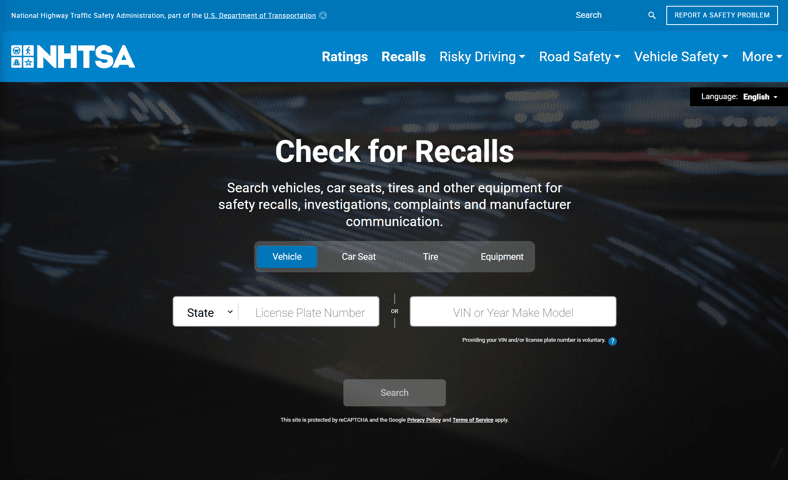
The quickest, most reliable way to find out whether or not your car has an active safety recall is to visit the National Highway Traffic Safety Administration (NHTSA)’s website and utilize their free VIN checker. Your 17-digit VIN, or Vehicle Identification Number, can be found in a few easy-to-find places:
- The door panel on the driver’s side, either on the driver’s door, on the frame close to the dashboard, or on the inside of the door panel close to the seat.
- Behind the windshield on the driver’s side
- Your car’s registration paperwork
- Car insurance policy card
- Vehicle title
If you can’t find it, you can use your car’s license plate number. Make sure you’re entering these numbers correctly. And be sure you’re using the NHTSA’s website, and their website only. Do not ever enter your license plate or VIN on any other free VIN checker.
Step 2: Interpret the Results
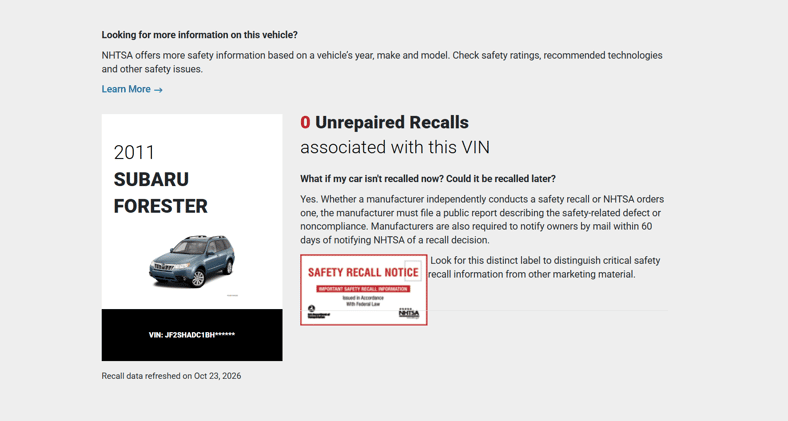
For demonstration, I entered my own car’s VIN to show you what the results would look like. My car’s clear, but that’s because I did my due diligence. When I bought this car back in 2018—already seven years old at the time—running the VIN was the very first thing I did to confirm whether the previous owner had addressed any open safety recalls.
They hadn’t. Like millions of others, my Subaru was caught up in the massive Takata airbag recall. Instead of the clean “0” shown above, my report flagged an open safety recall with a chilling defect description: “defective inflators capable of rupturing during deployment and spraying metal shrapnel directly toward the cabin occupants.”
Because I purchased the vehicle through a private sale, I never received the official recall notification letter mentioned on the results page. The previous owner hadn’t taken care of it, which placed the responsibility on me to track it down and get it fixed. Once I got it fixed, that “1” turned into a “0.”
This is why regular VIN checks are essential, especially for pre-owned vehicles. Even if you’ve owned your car for years, safety campaigns can be issued a decade or more after your car rolled off the assembly line. Now, you can download NHTSA’s free app, SaferCar (here’s the Google Play Store link), which will alert you automatically if your car’s been recalled (after you enter its information, of course).
Step 3: If You Saw a “1”, Schedule a Service Appointment ASAP
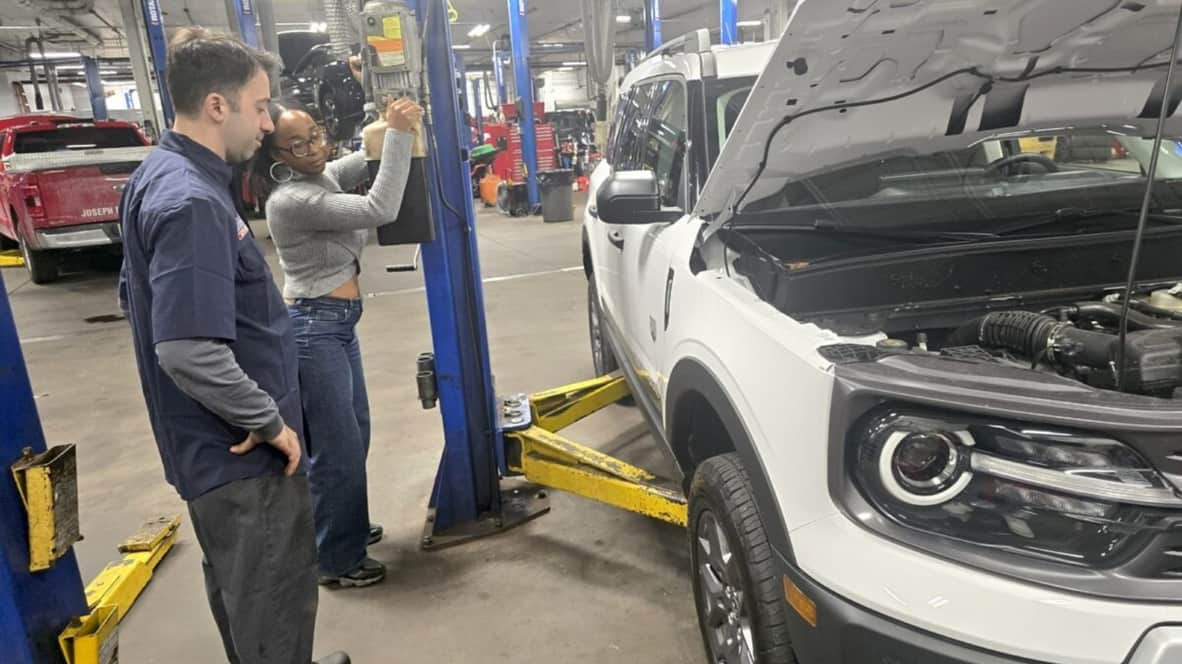
Seeing an active safety recall attached to your car can be unsettling, but getting it resolved is pretty straightforward. By federal law, safety recall repairs must be completed free of charge by an authorized dealership—regardless of whether you purchased the car new from a showroom, pre-owned from a used car lot, or from a private buyer (like I did).
Here is how to get the appointment scheduled smoothly and ensure the service department handles it right the first time:
- Contact your local dealership’s service center. It can’t be a specialty shop or your uncle’s repair shop. It has to be at a dealership to verify it’s been done. And, if you take it anywhere else, it won’t be free, and no one can guarantee the faulty parts were replaced with the updated ones. When you call the service department, say, “Hi, I’m calling to schedule an appointment for an open safety recall on my car.”
- Have your verification details handy. In order for the service advisor to confirm your car has an active safety recall, they’ll need your car’s VIN. On your results page, it’ll show you what’s called a campaign number. Keep that handy, too, just in case.
- Always call—don’t book online. While many dealerships offer online scheduling tools, calling the service department directly is the better route for recall work. We recommend this because, depending on the safety recall, getting an appointment can take a while. So, to see how long you’ll be in line, ask this: “Do you currently have the parts in stock to complete this recall, or do they need to be ordered before I bring the car in?” This simple question saves you from dropping your car off only to learn hours later that it sat in the lot waiting on a shipment.
- If you’re expected to wait a while, ask about a loaner.If the recall is a multi-hour or multi-day job, ask whether the manufacturer or dealer can give you a complimentary loaner vehicle, rideshare vouchers, or a shuttle service while your car is being repaired. For severe safety notices—such as “Do Not Drive” or “Park Outside” advisories—manufacturers often authorize dealerships to arrange towing and provide alternative transportation until the recall repair is done.
Lastly, once the technician completes the service, ensure the work order explicitly states that the safety recall campaign was performed and resolved. Keep this receipt in your records. It serves as your official proof of repair if you ever sell, and it guarantees you can clear the open status with your state DMV if your registration renewal ever requires proof of recall completion.
Step 4: Be Wary of Upsellers
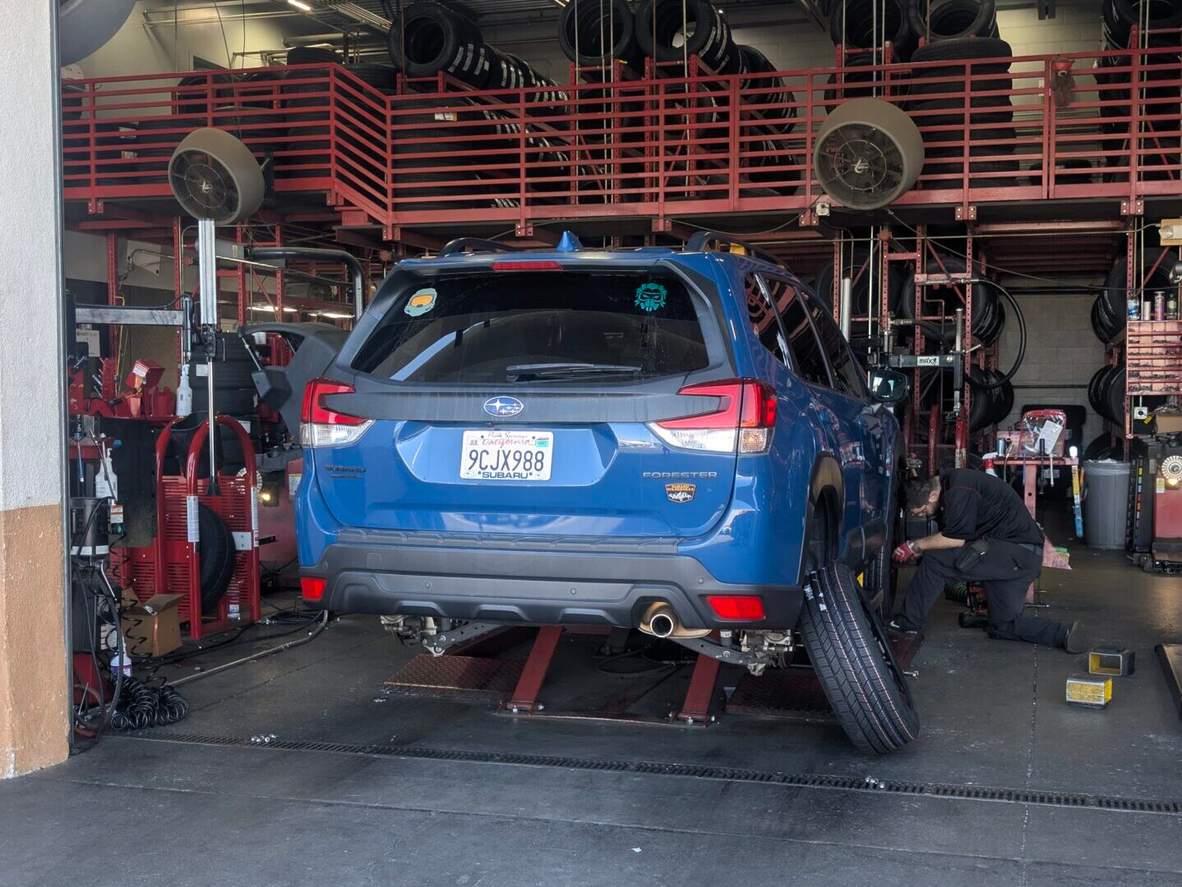
This one comes from my husband’s experience as a Subaru Master Technician, who worked with commission-hungry service advisors: be very wary of upselling. The entire dealership is aware that you’re not paying a dime for the service done to your car. And, unfortunately, some may see this as an opportunity to make some of that time and money back.
During safety recall repairs, dealerships routinely perform a “multi-point inspection” while doing recall work. If they call mid-day with a list of recommended fixes (cabin air filters, fluid flushes, brake pads, oil changes, tire rotations, etc), you are fully entitled to say: “Thanks for letting me know, but let’s stick to the recall repair today.”
And there you have it—running your car’s VIN and checking for active safety recalls is an easy, free, and relatively quick way to make sure you’re driving a safe car. Like my own experience, you can truly never know whether or not your car’s been recalled unless you double—or triple—check your car’s information.
Mentioned In This Article:recallssafetySafety recalls