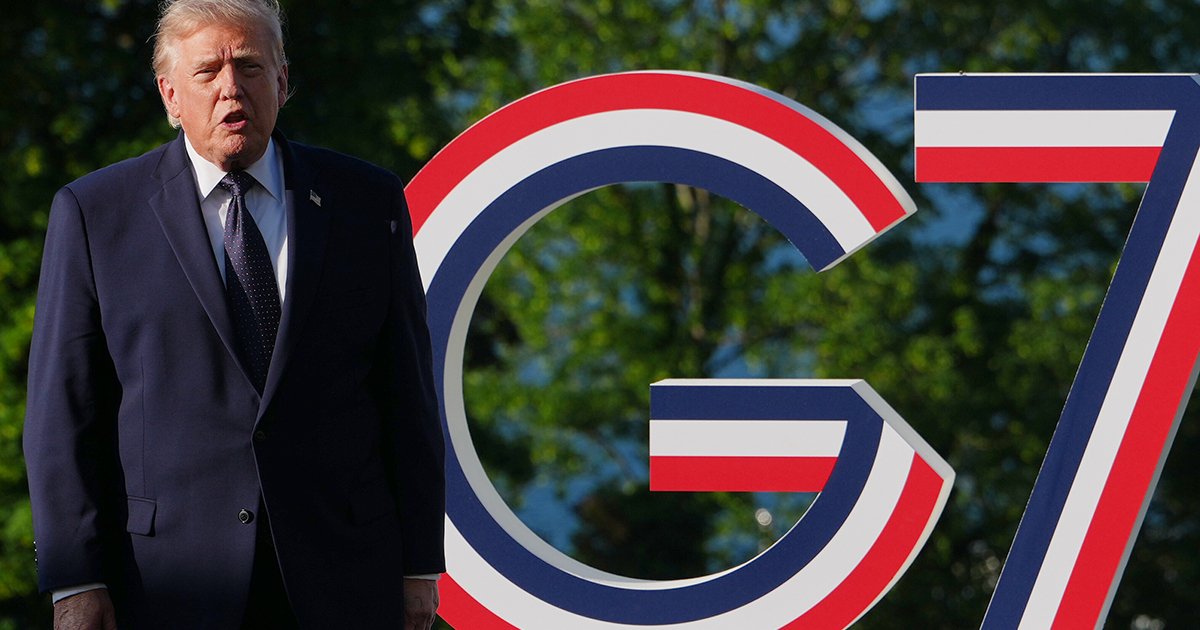
President Donald Trump arrives at the G7 summit in Evian-les-Bains, France on June 15. (Julia Demari Nikhinson/AP)
key takeaways:
- At the G7 summit on June 15, European leaders questioned President Donald Trump’s claim that the Strait of Hormuz would be fully reopened by June 19.
- The dispute reflects uncertainty over mine clearance logistics, conflicting US and Iranian accounts of the interim agreement, and concerns about security conditions and toll-free passage.
- Officials plan to sign an agreement on June 19 and develop a de-mining framework, although the timeline is unclear and deployment depends on the final agreement and the terms of the ceasefire.
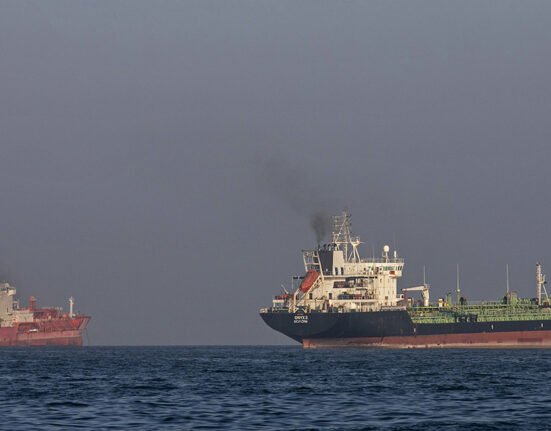
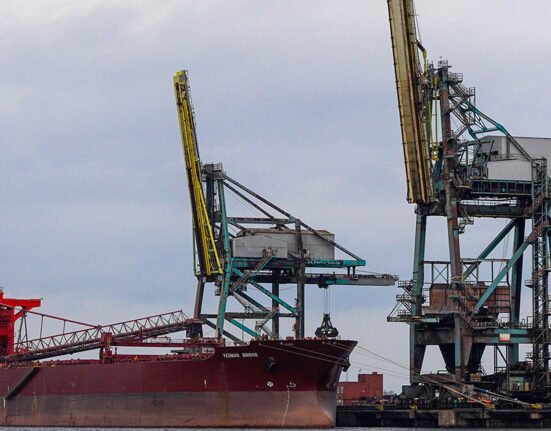
President Donald Trump continues to reiterate that the Strait of Hormuz – through which one-fifth of the world’s supply of oil and liquefied natural gas normally flows – will reopen by June 19.
But on the sidelines of the Group of Seven summit, where Iran was likely to dominate the June 15 dinner talks, it is clear that his European allies do not share his optimism. They disagree that trade can reopen by the end of the week, as Trump promised, and they have practical questions about what was actually agreed before committing to de-mining missions and patrols.
There are serious difficulties in finding a common position among the group on how to deal with the situation in Iran, according to a G7 official who spoke on condition of anonymity to discuss internal dynamics. Some are hoping for a joint communique, which has proven elusive during the Trump era.
Even Italian Prime Minister Giorgia Meloni, who for the most part has avoided artfully provoking Trump, said her country’s contribution is conditional on a cessation of hostilities in Lebanon, where Israeli forces have carried out attacks in recent days. She’s not alone in questioning Trump’s accelerated timeline.
It doesn’t help that even within Trump’s own administration, there are key figures who did not promise that navigation at critical chokepoints could return to normal at the flick of a finger.
A senior US official said traffic in the waterway will increase over time, and it could take up to two weeks for shipping to increase significantly – and even longer to return to levels seen before the US and Israel attacked Iran in February. There are mines in the strait that still need to be cleared, and shippers have varying risk tolerances when it comes to navigation in Hormuz, the official said.
The official said the memorandum of understanding between the US and Iran would make clear that the strait would remain open toll-free for 60 days, and the US would hope that this provision would make it into the final agreement. The fact is that free navigation, once taken for granted, is now a topic of conversation that hasn’t even begun.
Oil industry leaders have told the White House and the broader Trump administration for months that allowing tolls to be charged for safe passage through the Strait of Hormuz would be untenable for the U.S., according to a person familiar with those discussions, who spoke on condition of anonymity because they were private. The White House knows where the industry stands, the person said.
While both the US and Iran said they had reached an interim agreement to reopen the strait, without any official document, they have offered different details of what it says.
“The way Iran describes it is terrible, the way we describe it makes sense to me,” said Senator Lindsey Graham (R-S.C.), a close Trump ally. “Let’s look at it and see what it really is.”
Officials are scheduled to sign the agreement in Switzerland on June 19. US officials have offered varying timelines for when the full text will be released, with Trump saying by the end of the week at the earliest and another senior US official saying within the next two days. Vice President J.D. Vance is expected to represent the administration at the signing.
Bloomberg previously reported that G7 leaders will decide on a framework for demining the waterway, which will also include agreement by Iran and other parties involved. European leaders are planning to seek Trump’s approval for the mission to the G7.
The problem they face is that Trump has minimized their role and the difficulties they face in trying to help.
“Ships are starting to go out now, it will be fully reopened on Friday,” Trump said at the leaders’ summit in Evian on June 15. “They’re hunting a little bit for some of the mines that they’ve already found, but it’s – essentially the ships are starting to go out now.”
Furthermore, Bloomberg previously reported that the deployment would not begin until a final agreement is reached between the US and Iran that restores full and unimpeded commercial navigation rights as well as a permissive environment for military assets in the strait.
“For Canada to come to the negotiating table, Canada will need a permanent ceasefire,” Canadian Foreign Minister Anita Anand told reporters at Parliament in Ottawa on June 15.
German officials are warning that it could be a matter of weeks rather than days, as any direct involvement would require an international mandate. And clearing the mines could prove complex and time-consuming.
It is unclear how many mines are in the strait or even whether any were initially laid. Iran has repeatedly said it has mined the narrow waterway. In mid-March, Britain said that it appeared that Iran had done this, while the US said that this was not the case.
Making sure the strait is clear will be a painstaking task, said Caitlin Talmadge of the Massachusetts Institute of Technology. If Iran provides whatever information it has about the placement of the mines, the work will move forward faster, he said.
He said European countries have substantial mine-clearing capabilities. But those ships would be in poor condition if hostilities resumed.

Mark Hill, CEO of PCS Software, examines what “agent AI” means for modern fleet operations. Tune in by going above or RoadSigns.ttnews.com.
“The purpose of mine clearance operations is to operate in a permissive environment,” he said. “If Iranian attacks resume, the ships and operators involved may be vulnerable, particularly dedicated mine countermeasures ships that typically do not have the ability to defend themselves.”
Despite their objections, the Europeans proceed with their plan.
French President Emmanuel Macron and British Prime Minister Keir Starmer have led an effort by U.S. allies to draw up a plan to help reopen the strait in the event of a final peace deal. More than 15 countries have committed equipment and personnel to the mission.
As host – and this is his last G7 as leader – Macron is invested.
“This is a matter of great importance for peace, for the whole world, and it will reopen Hormuz,” Macron said. “This will provide peace in Lebanon. And so we are ready to take our fair share of the burden and be part of the commitment of the international community.”
Written by Michael Nienaber, Alberto Nardelli, Andrea Palaciano and Josh Wingrove