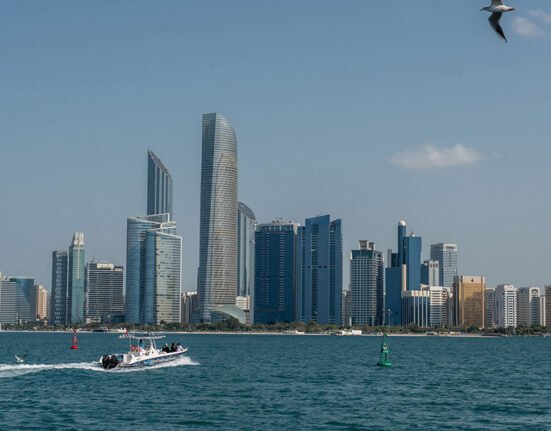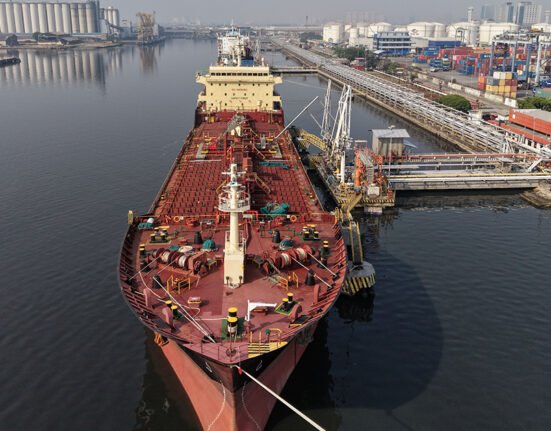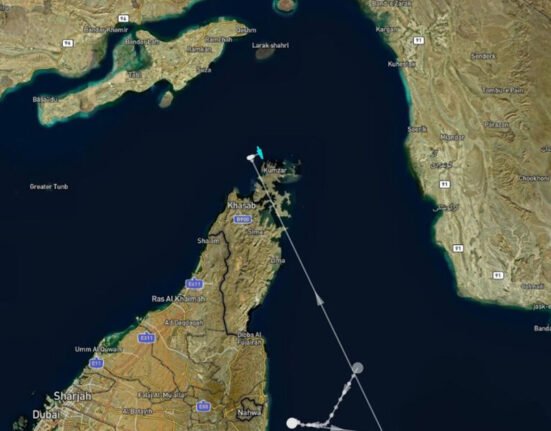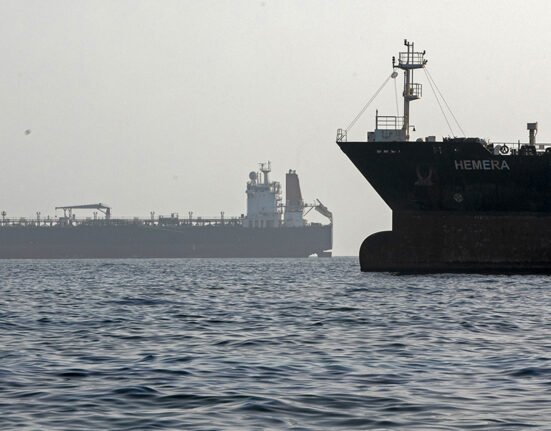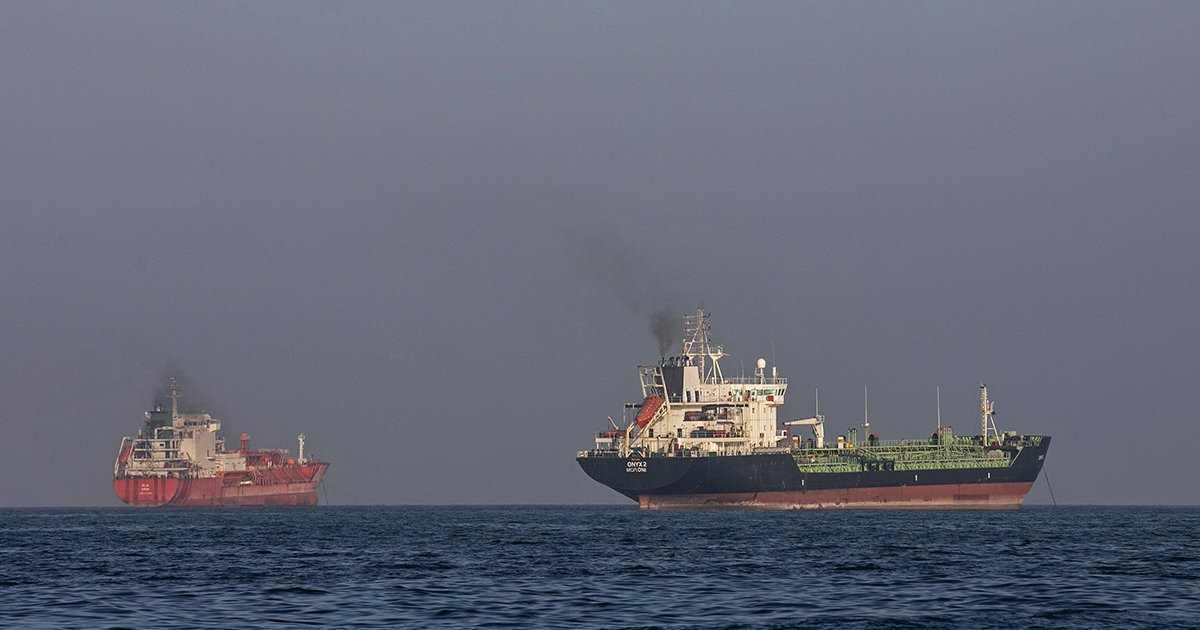
The ships will remain anchored in the Strait of Hormuz near Iran’s Larak Island on May 16, 2026. Photographer: Majid Saeedi/Getty Images
| Update:
key takeaways:
- A US-Iran deal intended to reopen the Strait of Hormuz within days has been met with caution by shipowners and traders, with many saying they would need more details to assess whether safe transit is possible after months of false starts. a wit
- The waterway handles vital global oil and gas flows, but transit remains well below the pre-war average of about 135 per day and hundreds of ships are still stranded.
- Industry groups said improving traffic will depend on safety assurances, mine clearance and coordinated vessel movements, with congestion in the narrow strait increasing risks.
Within days of the US-Iran agreement aimed at reopening the Strait of Hormuz, many of the world’s top shipowners, traders and oil producing countries have sought clarity about the terms of the agreement which is crucial for the global economy.
Some energy executives in the Persian Gulf said they have been flooded with inquiries from buyers about whether they can now extract oil through the waterway. Shipping executives and traders said they needed details on what the agreement would mean before they could commit to transit again.
Read more: It may take several months for oil and gas supplies to return to normal
While President Donald Trump posted on social media that ships are starting to pass through the strait, there are still questions that need to be answered. A senior US government official warned that the mines would need to be removed, and cautioned that, while traffic should increase significantly soon, a return to pre-conflict transit will take more than a few weeks as some owners take a caution-first approach. The deal is to be signed on June 19.
Despite the uncertainty, one key detail is that both sides have agreed that there will be a 60-day period in which ships will be able to pass without tolls – even though what will happen after that is unclear. Brent oil futures dropped nearly 5% on news of the agreement.
As well as the question of mines, uncertainties also include whether ships would be required to report to authorities in the region, who would monitor safety, and whether both the US and Iran would give clear and unambiguous assurances that shipping is safe.
“From the bridge and the engine room where we are sitting right now, it looks very different from what might be said in the headlines,” said Angad Banga, CEO of The Caravel Group, a maritime conglomerate that owns Fleet Management Ltd., one of the world’s largest ship management companies. Currently many of its crews are stranded in the Persian Gulf. “We’ve seen positive signs before, and I think ultimately that’s what matters.”
traffic remains uneven
A total of 29 verified vessel crossings covering crude, refined products, LPG, chemicals, methanol and general cargo movements were recorded through the Strait of Hormuz between 10 and 14 June. Activity was concentrated on June 11 and 12, while on 23… pic.twitter.com/Ju6TZ0rvzk
– Kepler (@Kpler) 15 June 2026
Iran’s semi-official Fars News Agency reported that the future administration of “navigation services” in the strait would be determined by Iran and Oman.
Shipping flows through the Strait of Hormuz are significantly lower than pre-war levels, although increasing numbers of oil tankers and other vessels have been transiting the waterway under the cover of darkness in recent weeks. These flows have emerged due to a US plan to help ships navigate off the coast of Oman. Following the announcement of the deal with Iran, many shipping officials still said they would take a wait-and-see approach before resuming transit, citing previous false dawns and the risk posed by mines.
BIMCO, the top trade group for owners, said it is important to understand what safe routes are, the mines have been cleared, and there must be “credible assurances” from both Iran and the US before traffic can return to pre-conflict levels.
That uncertainty, combined with the number of ships that need to pass through, means it will take time to free the Persian Gulf ships that in some cases have been stuck there since the conflict began on February 28.
Mitsui OSK Lines said close coordination with governments and insurance companies would be necessary before rerouting ships through the strait, while Nippon Yusen KK said normalization of traffic depended on what was laid out in the agreement. Container giant A.P. Moller-Maersk A/S said it was too early to assess what impact the interim peace deal would have on its operations.
Another US official said that while traffic has already increased significantly, they expect normalization within 30 days, and that by June 19 there should be 40 to 50 transits on the Omani route.
limited visibility
There was little visible ship activity in Hormuz in the hours following the news.
Disha, a liquefied natural gas tanker, was heading towards the Gulf of Oman. An oil supertanker that was sanctioned for its role in carrying Iranian barrels headed for the Persian Gulf.
“Shipowners range in risk appetite – the Japanese, Koreans and Chinese are less open to higher risk, while the Greeks have a different appetite – so we may see some gearing up,” said Anup Singh, global head of shipping research at Oil Brokerage Ltd. But the rest of the market at large is still seeking more details and assurances before moving forward.

Mark Hill, CEO of PCS Software, examines what “agent AI” means for modern fleet operations. Tune in by going above or RoadSigns.ttnews.com.
Traffic through the strait has slowed dramatically since the US and Israeli attacks began in late February, down to a fraction of the pre-war average of about 135 transits a day. Some oil and gas producers have found solutions to send tankers, sometimes with US support or through government-to-government negotiations, but total crossings are still low.
Of the hundreds of ships idling in the Persian Gulf, about 300 are loaded and waiting to cross at a moment’s notice, according to Muyu Xu, a senior crude oil analyst at commodity intelligence firm Kpler. On the other side in the Gulf of Oman, about the same number are empty, waiting to be ferried back to major export terminals. About 250 are operating in the Persian Gulf, also ready to begin picking up cargo for any potential outbound voyages.
The exact count of ships seen may change as ships that have turned off their transponders resume transmission. Electronic interference that has complicated tracking in the field over the past month should also be reduced.
In theory, even a temporary peace deal should free millions of barrels of oil trapped for months in the Persian Gulf. In practice, there would still be a long list of obstacles – including potential problems such as the need to remove barnacles from ship’s hulls, and the need to ensure that crews are in position and ready to sail.
However, security remains the primary concern for now, as purported deals in past months have ended with Iranian forces firing at or seizing the ships.
Fars reported that once the 60-day free transit period ends, Iran will begin charging for security, navigation, environmental and insurance services. The news agency said it would work closely with Oman to coordinate traffic.
A US official said the strait could operate under alternatives to the pre-war, toll-free status quo, without elaborating. Another US official said the US position is not a toll.
Managing the greatly increased flow of traffic through the waterway will be another headache, even if other concerns subside.
The narrow width of the strait – only 24 miles wide at its narrowest point, with shipping lanes only two miles wide in each direction – increases the risk of ships colliding if they start racing for the exit. The picture is complicated by the fact that electronic interference and irregular use of transponders can misrepresent true locations.
“They say the strait is open, but do I report to CENTCOM or do I liaise with Iran – and is it OK to have relations with Iran, because so far they have said that anyone who gives even a penny to Iran faces sanctions,” said Pankaj Khanna, CEO of Hedmar Maritime Holdings Corp. Will not done.”
Written by Weilun Soon, Alex Longley, Grant Smith and Josh Wingrove