Published on June 27, 2026 03:00 am
You may have pain in your upper back after cycling. Or your knees start barking whenever you climb uphill or hit the trails for running. Perhaps your neck strains every time you swing your bag over your shoulder. In other words, pain occurs with movement. Even if it’s not always debilitating, it still sucks.
A number of factors can cause your body to ache when you run, but for outdoor athletes or people who exercise, it often happens when your muscles, tendons and other tissues become overloaded, say. Tom WaltersAn orthopedic physical therapist and author Rehab Science: How to Overcome Pain and Recover from Injury.
Take trail running or hiking, for example. They’re not high-impact activities – after all, you’re not lifting extremely heavy weights while running – but outdoor athletes often perform these activities at very high volumes, covering dozens of miles a week. Walters explains that your tissues need to be strong enough to handle all endurance tasks, and when they aren’t, Pain and injury may occur.
Fortunately, doing some strength exercises can reduce this discomfort by increasing your tissue capacity, which refers to How much force or impact your tissues and muscles can withstand Without getting injured. Stretches can also help promote overall mobility and recovery in tired muscles.
We asked Walters for a roundup of strength moves and stretches to help you enjoy your normal activities with less pain in seven key areas of the body, as well as red flags that need to call a physical therapist (PT) or another doctor.
The following exercises and stretches are for mild pain, not severe or acute pain. If, on a scale of 1-10, your pain is a 3-4 or less, it is considered mild pain. If it’s 5 or above, it’s moderate to severe pain, and these exercises are not for you; You should consult your doctor or PT. Additionally, if you’ve just had a serious injury that causes sudden pain, you should see a doctor, says Walters. You should also see a PT if your pain doesn’t get better after two to three weeks, gets worse at any time, or comes with other symptoms like numbness, tingling, or incontinence (poor control over bladder or bowels).
7 movements and stretches for pain relief throughout the body
If you’re currently experiencing mild pain, Walters suggests doing these movements every day. They work great when warming up before exercise, he says, but you can also do them separately from your workout. He adds, even if you’re not currently experiencing pain, it’s still great to do these exercises once or twice a week to help reduce the chance of future pain and injuries.
necessary equipment
To perform the exercises listed below, you will need:
- dumbbell
- foam roller
- A staircase or access to stairs
1. Lower back pain
Move: Bird Dog
Lower back pain is incredibly common, with most people experiencing it at some point in their lives. Cyclists, in particular, may be more susceptible to it, as on the bike they adopt a forward leaning posture (which involves bending the lower back for prolonged periods of time) which can lead to stiffness and pain in the area.
This exercise helps in reducing lower back pain in two ways. Method One: Doing Bird Dog moves the lower back into extension (as opposed to flexion), which improves overall mobility. Another way: Bird Dog also gently activates and strengthens the lower back muscles, which can help reduce pain caused by prolonged flexion.
(FYI: Flexion means bending the joint, and extension means spreading it. So, if you bend your knee, it’s flexion. If you straighten your leg, it’s extension.)
“This is a good exercise for many back pain problems,” says Walters. “Almost everyone can start with this and feel better.”
how to do it:
- Start on all fours with your wrists under your shoulders and knees under your hips. Engage your core.
- Inhale, then exhale while extending your right arm and left leg. Pause, then return to all fours.
- Inhale, then exhale while extending the left arm and right leg. Pause, then return to all fours. This is a representative.
- Continue alternating the above pattern for 10 to 15 reps. Do three sets.
- Keep your core engaged throughout to minimize movement in your torso.
2. Upper back pain
Move: Thoracic Extension on Foam Roller
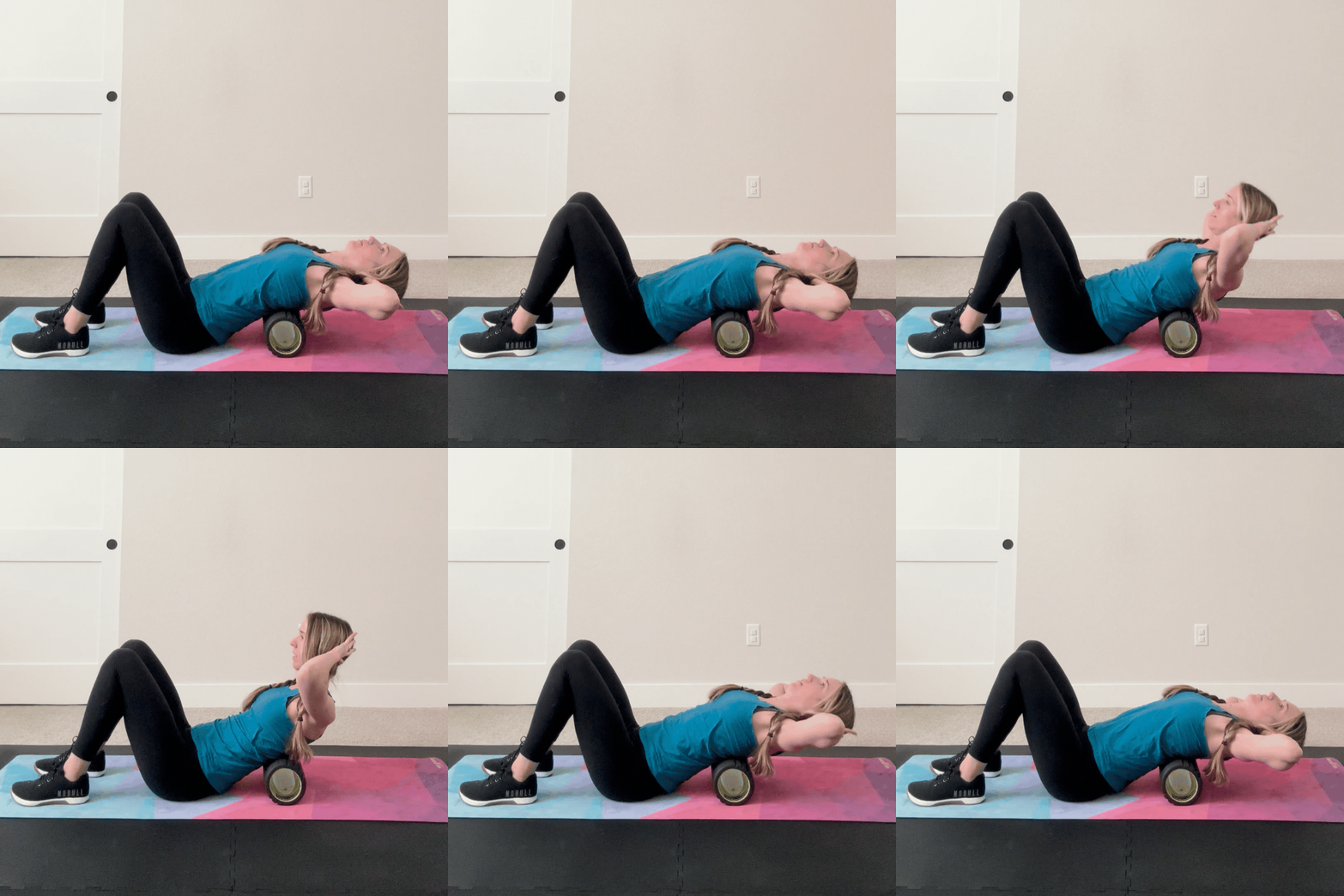
Upper back pain can occur when that part of the spine is kept in a rounded position for a long time. For example, when you’re hunched over the saddle straps during a long ride, or staring at the ground while running or hiking on a technical trail.
In those scenarios, moving the thoracic spine (the technical term for the middle and upper back) into the opposite position (extension) “is one of the most helpful things you can do to reduce pain,” says Walters. This foam roller-assisted stretch does just that.
how to do it:
- Lie on the ground with knees bent, feet flat on the floor and a foam roller placed perpendicular to your spine. The foam roller should be placed under your back, between your shoulder blades and in the middle of the back.
- Place your hands behind your head, or place them on your chest to support your neck.
- Lean your middle and upper back over the foam roller and hold for 10 to 20 seconds. Try not to arch your lower back too much, but instead arch the part of your back that is in contact with the foam roller.
- Repeat for two to four holds.
3. Shoulder pain
Move: Side-to-side dumbbell external rotation
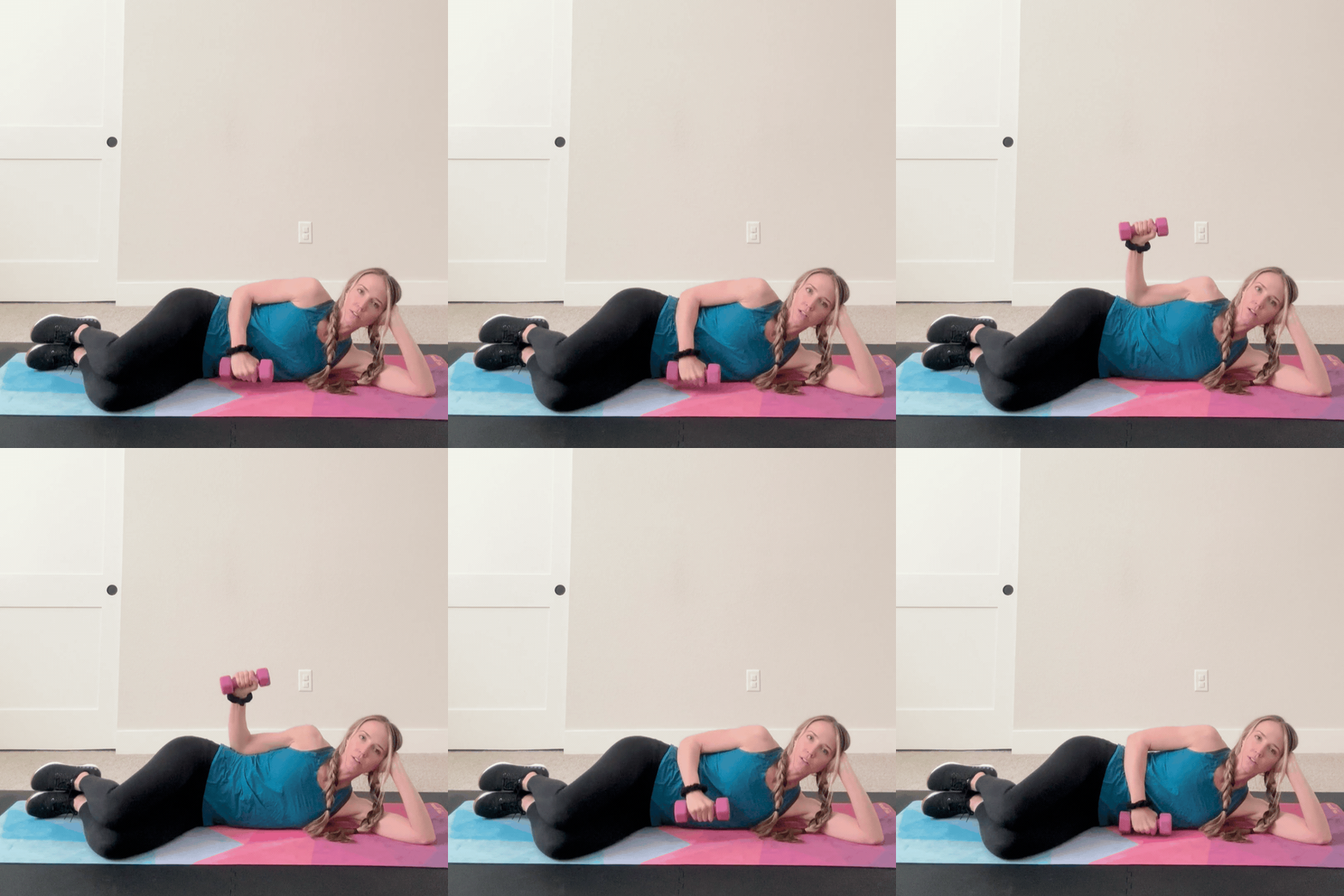
Your rotator cuff is made up of four muscles that help keep the shoulder joint in its normal, neutral alignment, explains Walters. When these muscles lack strength or endurance, they’re not able to do their job effectively, and other nearby structures — like the labrum, the shoulder joint capsule, or other tendons — can take on extra stress as a result, leading to shoulder pain, he says. In the outside world, shoulder pain can be especially common among swimmers, rowers, and racquet sports players, says Walters.
This exercise targets the two muscles of the rotator cuff and is one of the top moves that can “reduce a variety of shoulder pain,” says Walters.
how to do it:
- Lie on one side and bend your upper elbow at your side, bending it 90 degrees so that your hand is near your stomach. Hold a light dumbbell or other type of external weight (such as a water bottle) in that hand. You can also start with just bodyweight. This is the initial position.
- Keeping that elbow at your side, bent to 90 degrees, rotate your arm away from your body as far as you comfortably can. Pause, then return to starting position. This is a representative.
- Do 15 reps, then switch sides and repeat.
- Complete three sets.
It’s okay if your range of motion is limited with this exercise at first. Focus on working within a range that doesn’t cause pain and, over time, gradually increase that range.
4. Neck pain
Move: Neck Flexor Isometric Curl
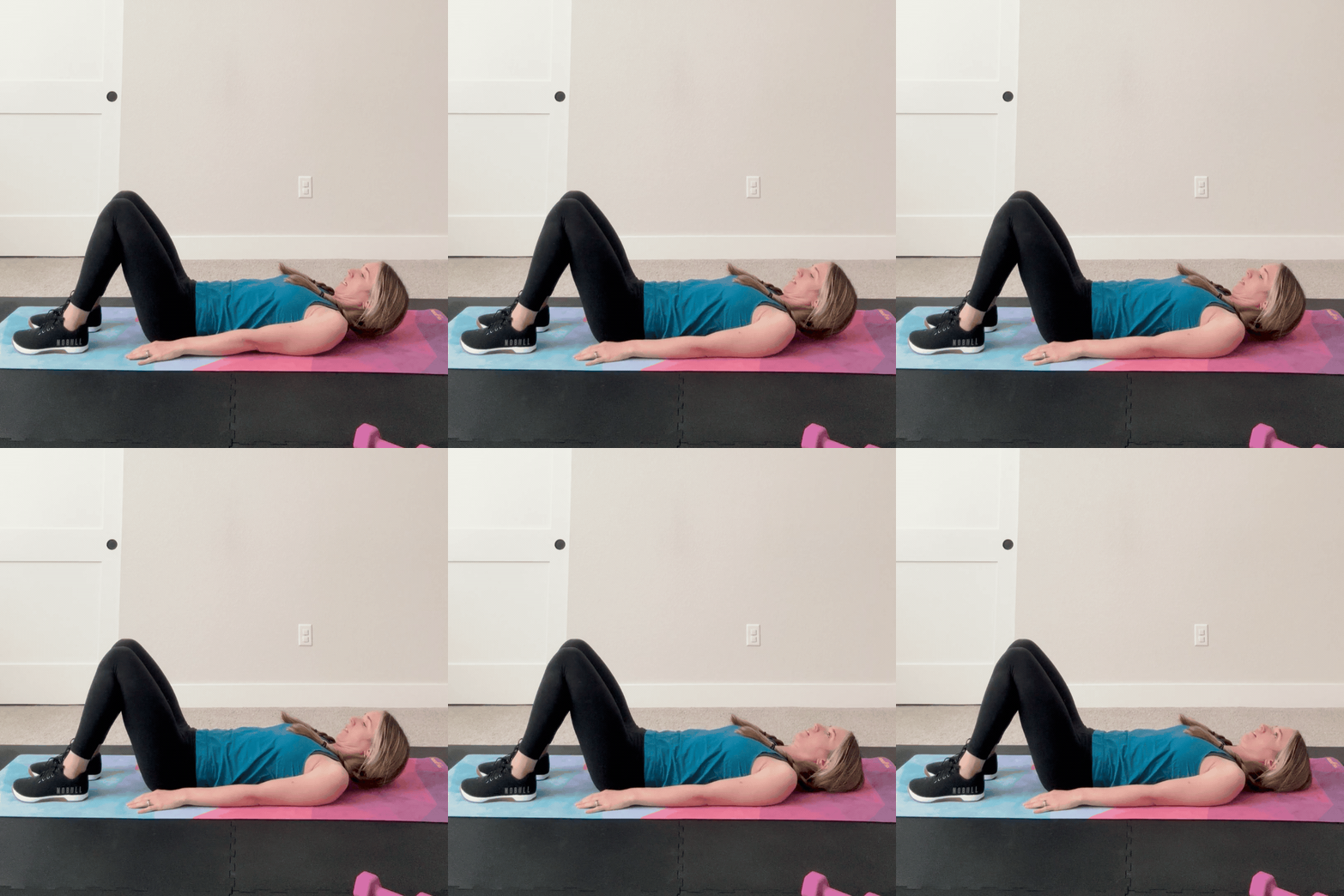
Most of us overuse our neck extensors (the muscles in the back of the neck) – especially when we tilt our head forward while cycling or look toward the ground while hiking or running – but we neglect our neck flexors (the muscles in the front of the neck). Walters says weakness in neck flexibility can increase the likelihood of generalized neck pain.
He explains that the neck flexor isometric curl takes the neck out of extension, changes the stress on the neck and targets the neck flexors to improve neck strength potential. Both of these benefits can reduce neck pain.
how to do it:
- Lie on your back and bend your chin in such a way that your chin becomes double. Holding your chin, lift your head until it clears the ground. Think about your hair still touching the ground, but your scalp elevated.
- Stay in this position as long as you can.
- Do 3 to 5 reps, holding for as long as you can. Try increasing the hold time gradually.
In people who don’t have neck pain, the average hold time is about 40 seconds, but if you have pain, you may only be able to hold for five to 10 seconds at first, which is perfectly fine.
5. Knee pain
Move: Lateral Step-Down
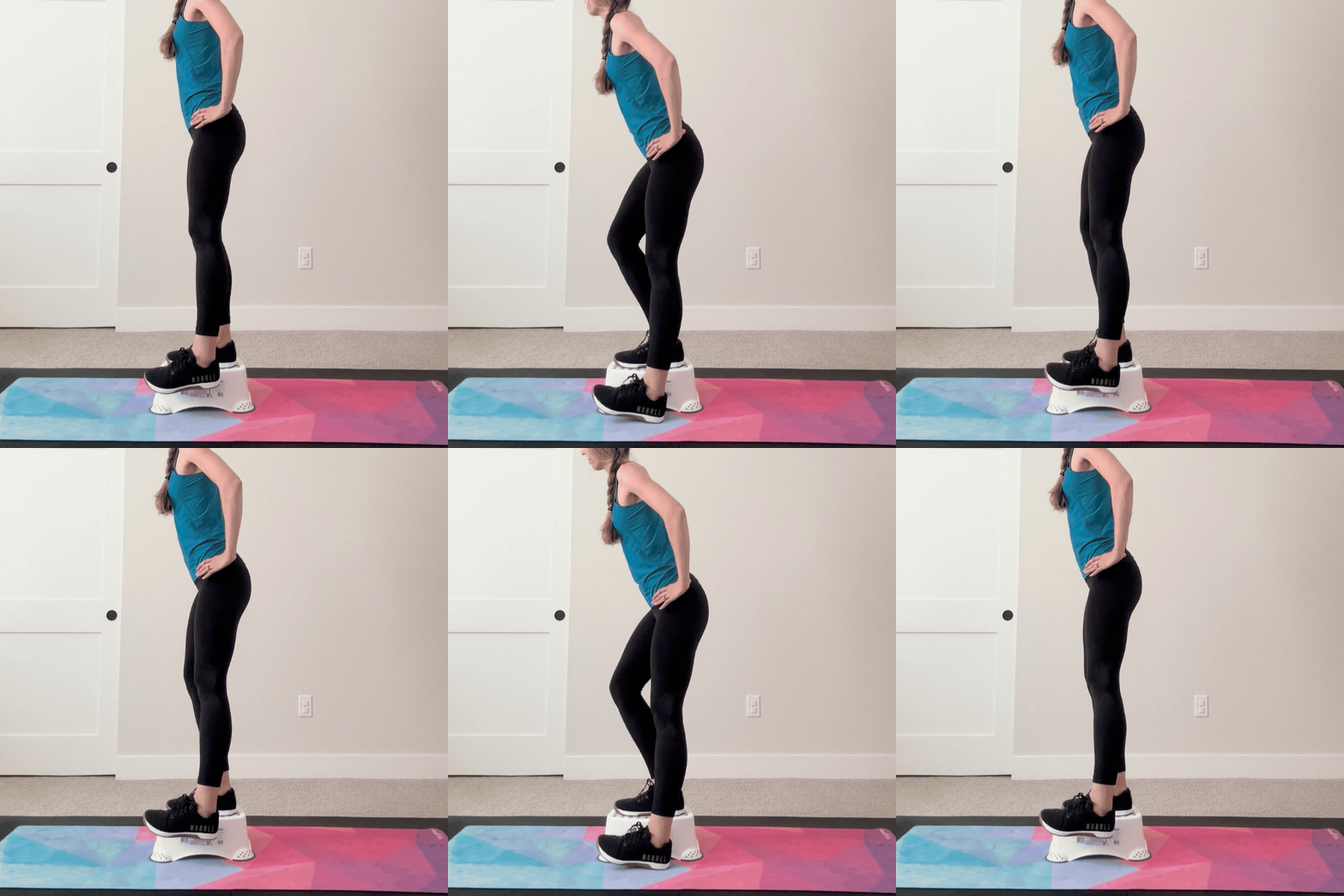
Knee pain can be really common among hikers, runners, and cyclists. Strengthening the quads and glutes can help reduce discomfort, as these muscle groups help to stabilize the knee joint and protect it from excessive stress. The lateral step-down exercise targets both the quads and glutes.
When you do this, make sure your pain remains in the mild range, which Walters describes as a 3 or 4 on a scale of 1 to 10. To stay in this range, you may not be able to complete the move with a full range of motion — and that’s OK, he says. Work within the range that feels comfortable and then gradually increase it over time as your symptoms improve.
how to do it:
- Stand sideways on a step or low exercise bench and plant the foot that is experiencing knee pain firmly on the step, with that knee slightly bent and the other leg/feet resting on the floor. Lean your trunk slightly forward to help engage your glutes. This is the initial position. (As your pain subsides, you can adjust your trunk angle to be more upright.)
- Bend your grounded leg to sit in a mini-squat, lowering yourself until you touch your opposite heel to the floor.
- Pause, then press through your grounded foot to return to the starting position. This is a representative.
- Do 15 reps, then switch sides and repeat.
- Complete three sets.
- Gradually increase to 25 reps per side.
6. Foot pain
Move: Calf Stretch
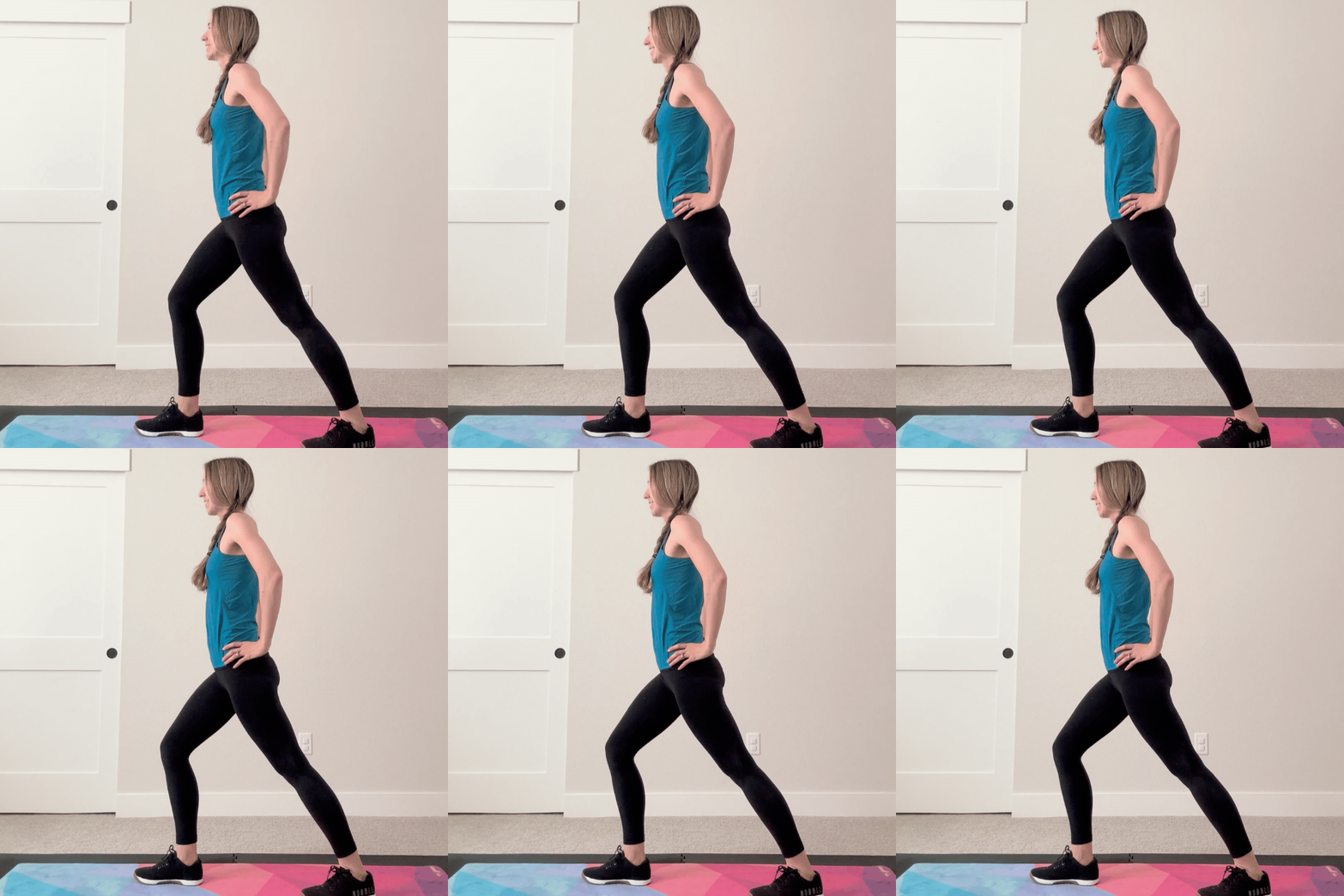
Many outdoor athletes experience plantar fasciitis, which involves irritation and deformity in the thick band of tissue on the bottom of the foot (called the plantar fascia). Walters says shin stiffness is one of the top factors that predispose people to plantar fasciitis. This is because tight shins limit your ankle dorsiflexion (the ability to pull your toes toward your nose), which in turn puts more force on the plantar fascia.
This stretch helps lengthen tight calves, which can reduce stress on the plantar fascia.
how to do it:
- Start in a stance with one foot several feet back, both feet forward. Keeping your back leg straight, bend your front knee slightly.
- Lean forward and press your back heel into the ground to feel a stretch in the shin of your back leg.
- Wait for 15 to 30 seconds, then change sides.
- Do two to four holds on each side.
7. Foot pain
Move: Calf Raise
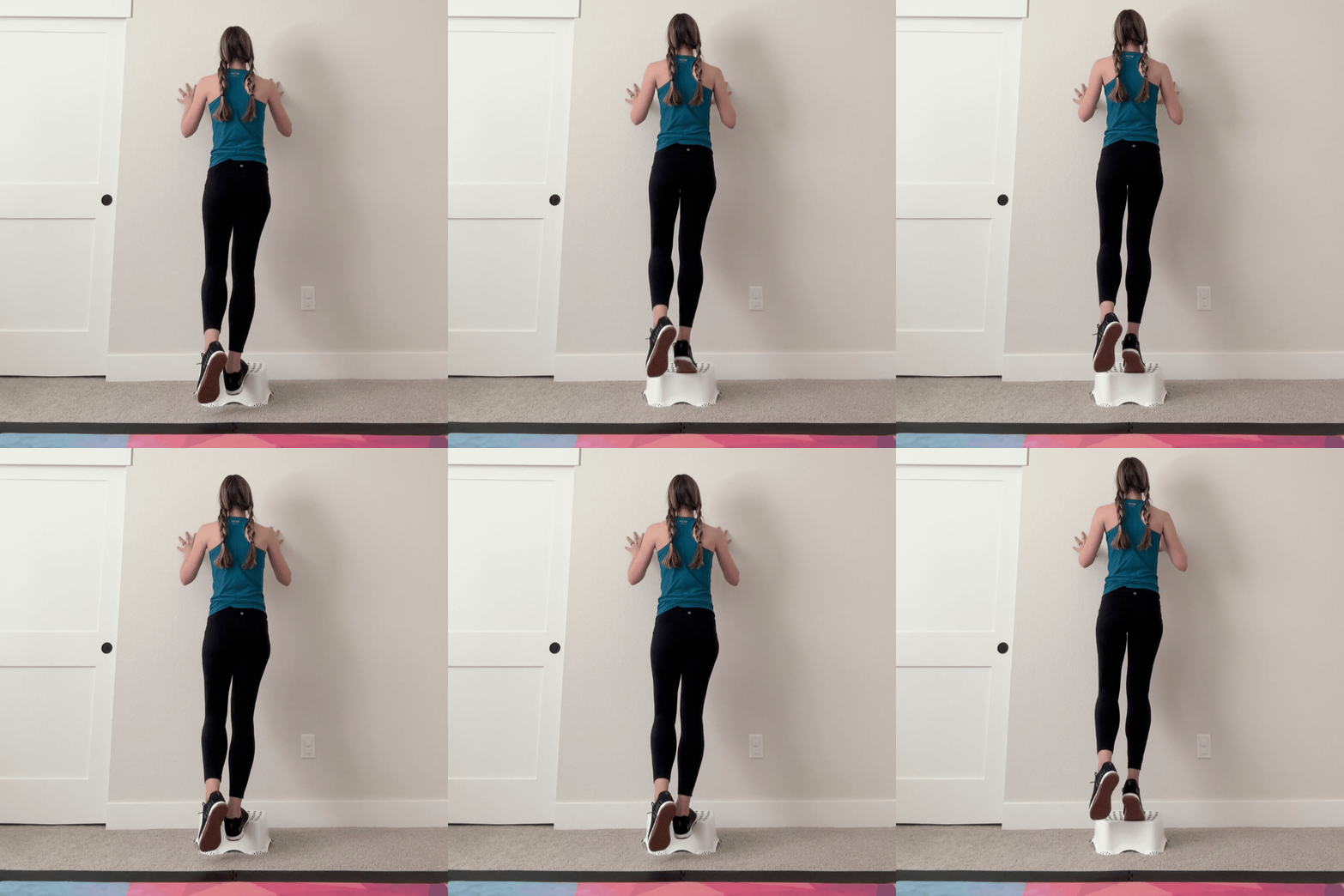
Many runners and hikers who come to Walters’ clinic suffer from Achilles tendon pain, which can occur when they overload the tendon by running too many miles.
Single-leg calf raises help strengthen the calves and Achilles tendon, increasing the load-carrying capacity of those tissues. In fact, calf raises are “probably the best exercise you can do for pain in the ankle area,” says Walters. If single-leg calf raises are too intense, start with double-leg calf raises and then move on to weighted double-leg calf raises.
how to do it:
- Stand on a high staircase facing the wall with your feet together. Lift one foot off the ground and drop the opposite heel off the edge of the step. To maintain balance, lightly rest your hands on the wall. This is the initial position.
- Press the front of your foot into the ground to lift your heels straight up. Pause at the top, then slowly return to the starting position. This is a representative.
- Perform 15 reps on each side to start, and complete three sets. (The goal is to eventually do 25 reps on each side per set.)
- Once 25 reps per side seems easy, increase the challenge by holding a dumbbell in one or both hands.
want more Outside Health stories? Sign up for the Bodywork newsletter.