

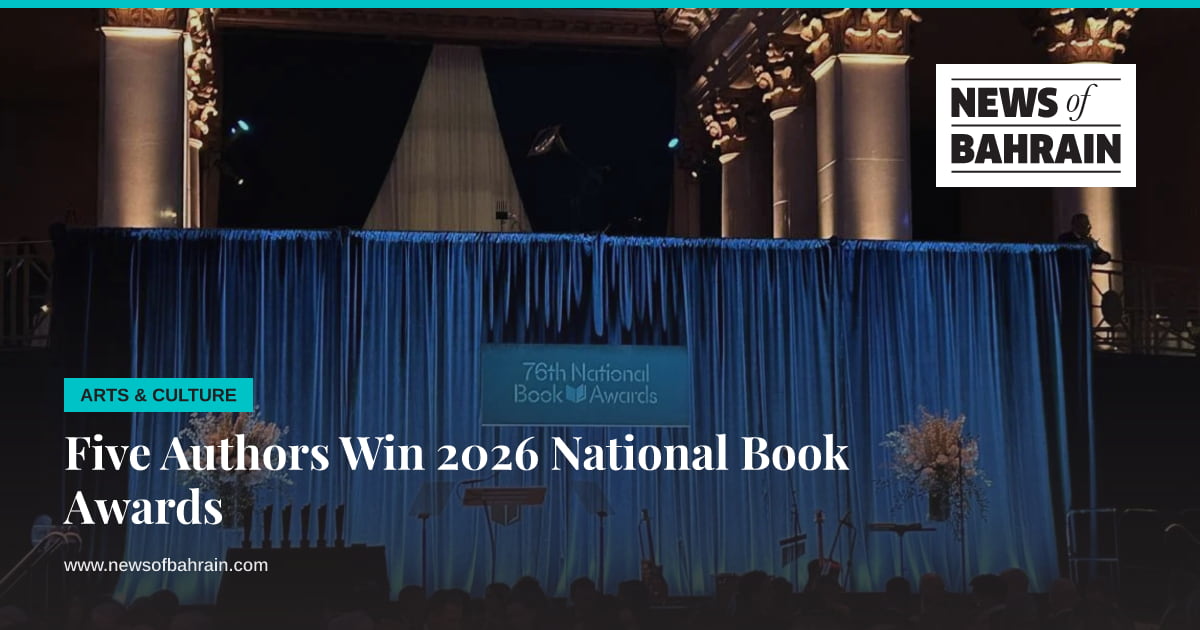
The publishing world converged on Cipriani Hall in lower Manhattan on November 18 for the 77th annual National Book Awards, where AI, book bans, and geopolitics loomed large in remarks by the night’s presenters and winners.
Musical guest and Crying in H Martauthor Michelle Zauner kicked off the ceremony with a stripped down performance of her song “Be Sweet” before introducing the evening’s host, Kyle MacLachlan.
MacLachlan, who made his literary debut earlier this year with the memoir Fictional Selves (Crown), opened with a passage from Holling C. Holling’s Paddle-to-the-Sea—a childhood favorite, and the first of several excerpts from the 1941 children’s book he would read throughout the night. MacLachlan credited his early love of reading to the public library in his hometown of Yakima, Wash., where he got his first library card and took a class on the Dewey decimal system. (“How many of your past hosts have done that?”)
MacLachlan cracked wise—alleging that he was in fact
MacLachlan cracked wise—alleging that he was in fact the Min Life of Mby Rachel Cusk, that that Dungeon Crawler Carlhad previously been Dungeon Crawler Kyle—while also acknowledging that this is “not an easy time for the publishing industry,” citing the threat of AI, corporate consolidation, supply chain issues, and the “neverending fight against censorship” in libraries and schools. “No wonder you’re drinking so much,” he joked.
Jason Reynolds presented the first honor of the evening, the Literarian Award, to Dr. Perri Klassfor her work at the intersection of children’s literacy and pediatric medicine. Klass is the director of Reach Out and Read, a childhood literacy program that works through the medical system by having doctors and nurses encourage parents to read to their children and provide them with free books.
“We serve the children and families who have too often been left out of the picture books,” Klass said of the program, which she noted helped serve over 5 million children this year. She thanked her late parents for reading to her as a child, concluding, “Books change lives, and maybe the world.”
Kiran Desai then presented the 2026 Medal
Kiran Desai then presented the 2026 Medal for Distinguished Contribution to American Letters to Salman Rushdie, acknowledging that his oeuvre—comprising 17 works of fiction as well as well as essays, memoir, and reportage—has become more relevant as attacks on freedom of speech have intensified. “The cost of his courage has been too high,” she said, alluding to the knife attack he suffered in 2022, “and yet he has never faltered.”
The audience rose to their feet in a standing ovation when Rushdie took the stage. In his brief remarks, he acknowledged the august company he now keeps as a recipient of the lifetime achievement award. He paid tribute to more than a dozen previous winners, including Joan Didion, Ursula K. Le Guin, Arthur Miller, Toni Morrison, Philip Roth, Eudora Welty, and “dear friend” Don DeLillo, who he invited the audience to celebrate ahead of his 90th birthday on November 20. He also thanked Random House and his agent Andrew Wylie—his “longest relationship,” he said, at 40 years. He largely eschewed talking about himself, but did marvel at the journey from his birth 79 years ago in Bombay under British rule, to standing onstage in New York City with a prestigious medal around his neck. “If that’s not magic realism,” he said, “I don’t know what is.”
The first award of the night, for young people’s literature, went to the nonfiction book The Fight of Our Lives: AIDS in Americaby David Levithan and Gabriel Duckels(Knopf), who both donned red ribbons on their lapels. Duckels said the duo’s aim was to “write a history of HIV and AIDS that didn’t oversimplify or generalize,” in order to illustrate “a legacy that all young people deserve to understand.”
Levithan followed up with an impassioned tribute
Levithan followed up with an impassioned tribute to queer writers of children’s and YA literature, especially as book bans continue to disproportionately target LGBTQ+ titles. “There are far more people who want our voices to be heard,” he assured, declaring that queer authors will “not let [book banners] use AI to filter or delete us.”
The prize for translated literature went to Centroeuropaby Vicente Luis Mora, translated from the Spanish by Rahul Bery (Bellevue). The Spanish author praised Bery’s work to bring his novel—in which a 19th-century Prussian village is upended by the discovery of numerous buried corpses—to anglophone readers, joking, “If you want to translate something from Spanish or Portuguese into English, he’s the guy.” Meanwhile, Bery thanked Bellevue and U.K. publisher Peninsula Press, for taking a chance on a book that is “outside what I imagined as a mainstream publishing success.” He concluded that translating Mora’s “fiendishly difficult, experimental technique” was a “very human” task that, for now, couldn’t have been done by AI.
Brenda Hillman’s12th collection, Still House in the Desert: An Eco-Contemplation (Wesleyan), was the recipient of the poetry award. “Thank you for keeping poetry in your lives, not just at weddings or funerals,” Hillman asked of the audience, noting that she has been writing poetry for 65 of her 75 years on the planet. She then motioned to the press tables in the back of the venue, asking the media to consider poetry for best book lists. She thanked her publisher, remarking that “university presses don’t always get all the credit that they deserve,” and her husband, the poet Robert Hass, with whom she said she now shares matching National Book Awards.
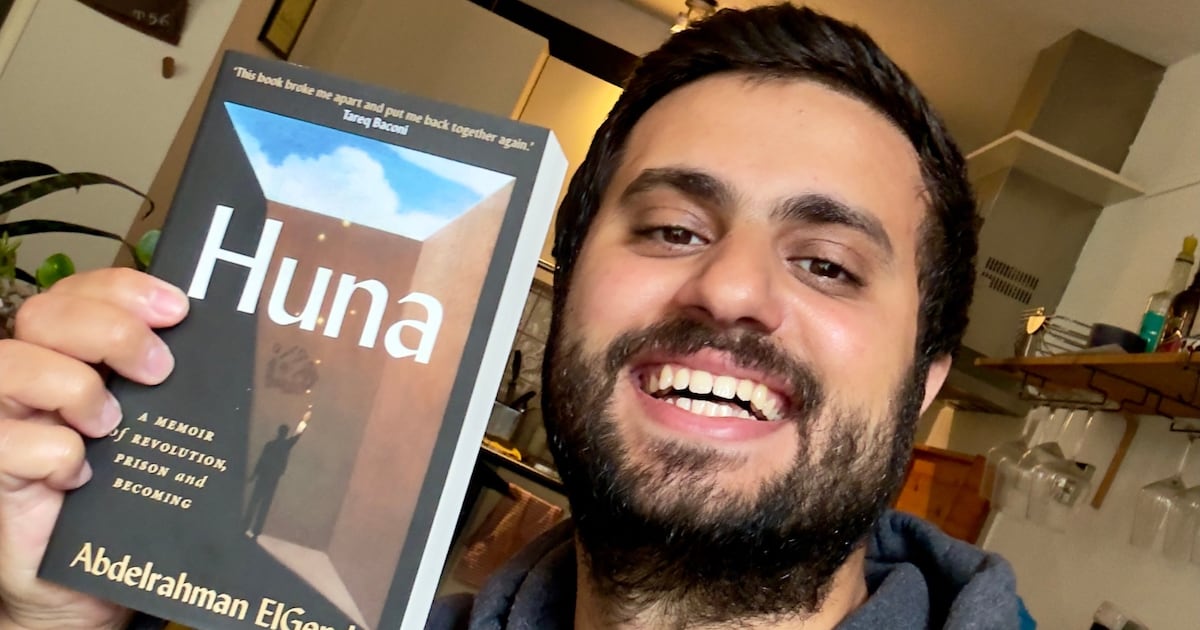
The prize for nonfiction went to Huna:
The prize for nonfiction went to Huna: A Memoir of Revolution, Prison, and Becoming (Hogarth) by Abdelrahman ElGendy, who was absent from the ceremony due to visa issues he chronicled in a New Yorkeressay earlier this week. (The New York Timessubsequently raised questions about his eligibility for the prize, which the National Book Foundation dismissed.) Hogarth editor Helen Thomaides accepted the honor in his stead, lamenting that the author is “not able to return even as a celebrated visitor and it’s ultimately our loss as a nation.”
Thomaides then read a statement from ElGendy, whose memoir recounts his experiences as a political prisoner in post-revolutionary Egypt. “If you’re listening to this,” it began, “then a yearslong dream of mine has come true, and I’m not there to live it with you.” He mourned the “friendships that might have bloomed in this room” were he able to attend, but kept the focus on world politics.
“Whatever attention this moment draws” he wrote, “I wish to redirect to the Palestinians still being massacred by U.S.-funded Israeli bombs, to the more than 60,000 political prisoners still behind the bars of of Egypt’s military dictatorship bankrolled by the U.S. government, to the tens of thousands of souls disappeared in ICE concentration camps. This is for you, for us.”
The final award of the night, for fiction,
The final award of the night, for fiction, went to Hannah Lillith Assadifor Paradiso 17 (Knopf), about a Palestinian man displaced by the 1948 Nakba. The novel, she said, had its “origins at my father’s death bed,” and over the course of writing it she “experienced deep personal grief and unimaginable collective grief.”
“I watched cancer ravage my father’s body and genocide ravage his people and their children,” Assadi said. “And perhaps this is the Palestinian story on this Earth—so beautiful, so painful. And isn’t that story all of ours?”



2 Comments