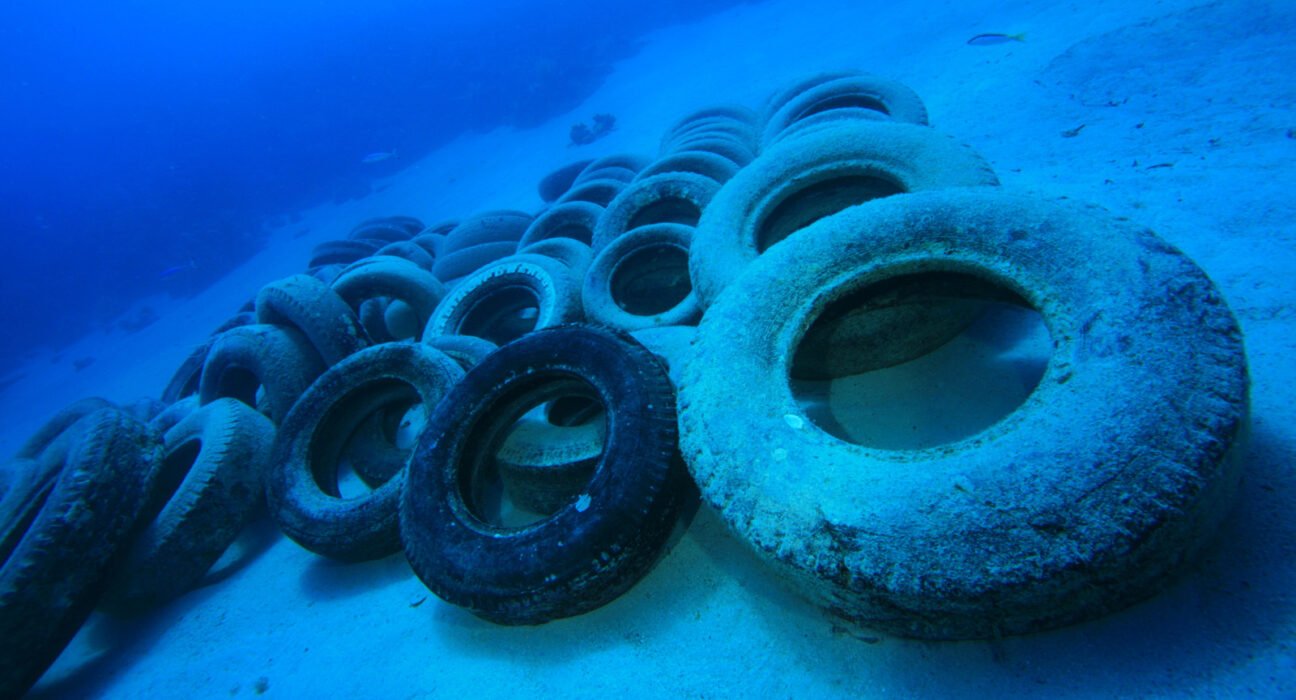
Do you think Florida is wild now? of course you do. Otherwise, we wouldn’t be able to share so many stories of Florida people’s anarchy in pubs. But try to imagine Florida in the 1970s. The Sunshine State was a completely different place, but no less capable than some idiots thought. In the early 1970s, an ecological operation sought to create artificial reefs off the east coast of Florida. Instead, the initiative created an underwater vulcanized rubber wasteland with little marine habitat value. And dumping millions of discarded tires off the coast of Fort Lauderdale, Florida might seem like a crazy idea, but the minds behind this madness swore there was more to it than just ridding the Floridian grounds of Goodyears.
Have you ever heard of artificial reef? Their construction is the reason why the US Navy has a tendency to deliberately sink its unwanted ships. Well, the good folks at Broward Artificial Reef Incorporated decided the way to dispose of ugly, used and unwanted tires while encouraging marine life to flourish off the coast of Florida was to organize a volunteer navy and submerge the rubber. Let’s just say it didn’t go according to plan. In fact, the move was an environmental disaster whose effects lasted decades after the dumping.
Good intentions, disastrous results

Now, artificial reefs are not a new concept. In fact, in the early 1970s they weren’t even new. As early as the 18th century, people were sinking objects with the intention of stimulating marine life. Keep in mind, those efforts weren’t focused on environmental causes. It was all about fishing. Fast forward two centuries, and the fishermen were still there, this time trying to increase game fish populations east of Fort Lauderdale, Florida. Enter Ray McAllister, director of Broward Artificial Reef Incorporated and professor of marine engineering at Florida Atlantic University.
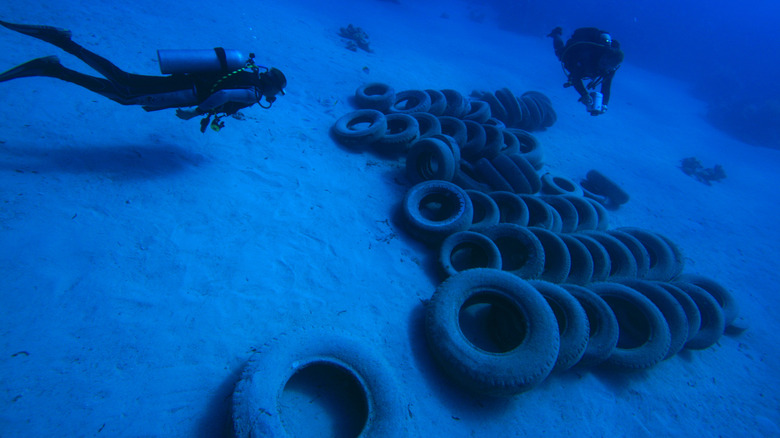
McAllister – one of the founding members of BARINC – obtained US Army Corps of Engineers approval to build a giant artificial reef as part of the Osborn Reef project. To accomplish the task, BARINC assembled a volunteer flotilla of over 100 privately owned boats, which joined forces with the USS Thrush to dump over two million tires in thousands of bundles. It probably seemed like a good idea at the time, but much to the dismay of McAllister, BARINC, and the Goodyear Tire & Rubber Company, the initiative failed. badly. Yes, He Goodyear – One of the few tire brands still making tires in the US.
Very little marine life – coral or fish – paid any attention to the tires. Worse, the nylon and steel couplings that held the tire bundles together failed over time, allowing current to flow through the tires. Combine this with storm activity, and the misguided tires were free to have their best destructive effect against the existing coral. If that wasn’t bad enough, some of the tires came to rest on nearby coral, inhibiting further growth and harming marine populations.
A tough idea to retire again
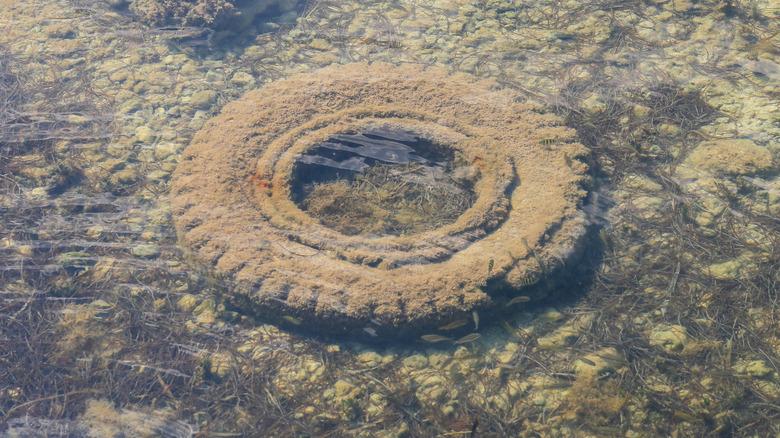
So, what started as a thoughtful strategy turned into a tire-based tragedy. How bad was it? William Nuckols, one of the coordinators involved in the cleanup effort, said CBS News that tires were a “constantly dying coral-destroying machine”. Needless to say, the removal and cleanup process is going smoothly. Between 2007 and 2009, U.S. Navy, Army, and Coast Guard divers recovered approximately 72,000 tires from Osborn Reef. according to Florida Department of Environmental ProtectionCleanup efforts have rid the devastated site of more than 586,942 tires and have executed a $5 million contract with Schlueter Wessel Management & Consulting to continue the cleanup. Still, the total number of tire removals is projected to drop to less than 1 million by 2033. This is going to take some time.
Get this: This isn’t the first time people have tried and failed to create artificial reefs out of tires. Decades ago, the state of Virginia submerged tires to create artificial habitats similar to the Floridian effort. There was little respect for this initiative and in the Category 3 hurricane of 1998, tires came loose and were scattered on various beaches in North Carolina. If that wasn’t enough, New Jersey scientists had the bright idea of submerging 1,000 or more tires, this time encased in concrete. In that case, pieces of tires washed up on the beaches of the Garden State. While most states have (thankfully) completed tire reef initiatives, the cleanup after these well-intentioned but weak ideas is an ongoing process.