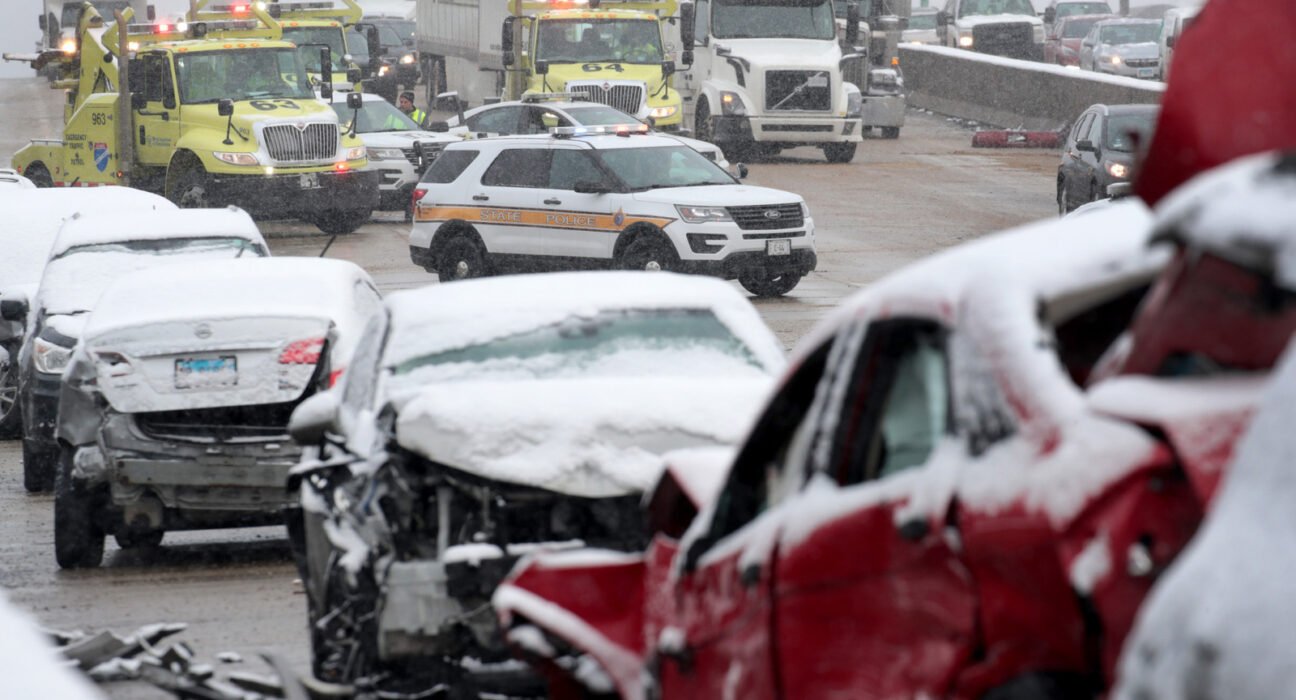
A secondary accident is one where, let’s say, you get rear-ended in stop-and-go traffic on the highway. This forces your car into the adjacent lane, where traffic is moving faster. Then, someone pulls up next to your car because you were pushed into that lane. Yes, that would be very bad.
A secondary accident can also be caused by someone not following the move-over law, meaning, an accident has already occurred, cars are already parked on the shoulder, and EMS or tow-truck is attending that accident. A secondary accident is a driver stopping a person caring for them. This is also terrifying and means that the towing industry is one of the deadliest forms of employment in the country.
Fortunately, by 2023, most secondary accidents Federal Highway Administration Studies, are non-fatal. The administration investigated 5,461,044 primary accidents in 10 states. It sorted through all those crashes, then examined where states had reported secondary crashes. Researchers tried to prove that secondary accidents occurred on the same route, within a close time frame, and within about a mile of the actual primary accident, as it is not a true secondary accident if it does not coincide with the first accident. That analysis showed that those primary crashes resulted in only 15,488 secondary crashes. This means that secondary accidents are incredibly rare. The rate of primary wreck per accident did not exceed .81 in any of the states studied.
Also, one of the main findings of the study was that “the majority of secondary crashes (71%) had no obvious injuries, and less than 1% of secondary crashes involved fatal injuries.” That said, there are contributing factors that can make even that rare secondary crash more serious, such as higher speeds, involvement of larger trucks, or fewer lanes.
Speed kills, and so do trucks

It is not hard to understand that a car accident, or secondary accident, involves kinetic energy. Or, simply, speed kills. A 2020 study published by International Journal of Environmental Research on Public Health Found that increasing speed limits could lead to more fatal accidents. Every 1% increase in the speed limit increases the chance of a serious secondary crash by 2.6%. Researchers attribute this not only to the obviousness of the added force, but also to reduced reaction times for drivers.
But there’s another factor to consider: traffic. This study, and a separate, 2019 article in the journal, Physica AShow that higher traffic volumes are more likely to cause secondary accidents. Both previous studies focused on Chinese traffic. This may differ from US traffic. However, a study of 2025 Eastern Transportation Alliancewhich tracked secondary crashes in Maryland, Virginia, Tennessee and Florida also found that more traffic increases your chances of having a secondary crash. The researchers found about a 5% to 6% increase in the probability of a secondary collision based on data from Virginia and Florida, although only a 2.5% increase in Maryland. Still, more volume equals more secondary pileup.
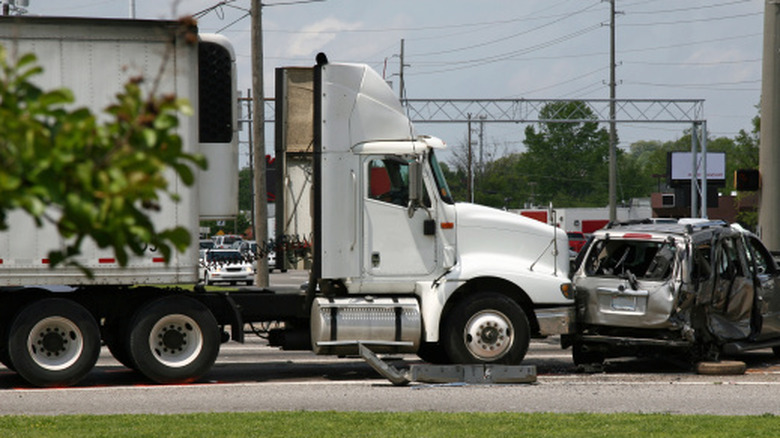
And there’s another risk that occurs when an 18-wheeler is involved in a traffic accident. While limited to the above study in the International Journal of Environmental Research on Public Health, when a truck is in the mix of a secondary crash, the consequences for anyone in the passenger car are more likely to be serious.
More lanes and wider shoulders lead to fewer secondary accidents
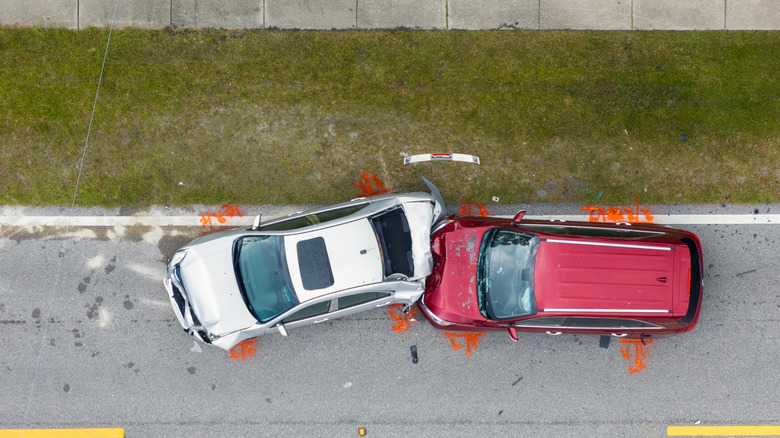
You don’t have to be a genius to know that sometimes, you really shouldn’t do “your own research.” Legitimate science requires rigor. But in terms of reducing secondary accidents, common sense makes the formula relatively simple. And research confirms this. A 2017 study in the journal, Accident Analysis and PreventionFound that the wider shoulder is not only safer for EMS personnel dealing with accidents, but also reduces the chance of secondary accidents. And it also has a related effect, which is that wider roads with more lanes are safer.
Again, this is quite logical. Think of a divided highway. If there are two lanes in each direction, an accident in one of those lanes suddenly reduces the carrying capacity by 50%. But with three lanes in one direction you will only lose a third of the capacity. On a three-lane highway, you likely have more options to avoid the accident in front of you if you are right behind that accident.
The study cited above found that roads with more lanes have fewer secondary crashes: two-lane highways have 73% more secondary crashes than roads with three or more lanes. a 2014 Security Research Journal The New Jersey Turnpike study found that closing more than one lane of traffic increased the risk of a secondary crash by a staggering 4.8 times. This is a statistic that should encourage you to always heed the life-saving three-second buffer driving rule.