AI adoption is accelerating across enterprises, with organizations integrating artificial intelligence into everything from customer interactions and software development to critical business operations. However, deploying AI tools is only one part of the equation.
Businesses must also understand how these systems function, whether their outputs can be trusted, who is accountable for their decisions and whether their investments are delivering measurable results.
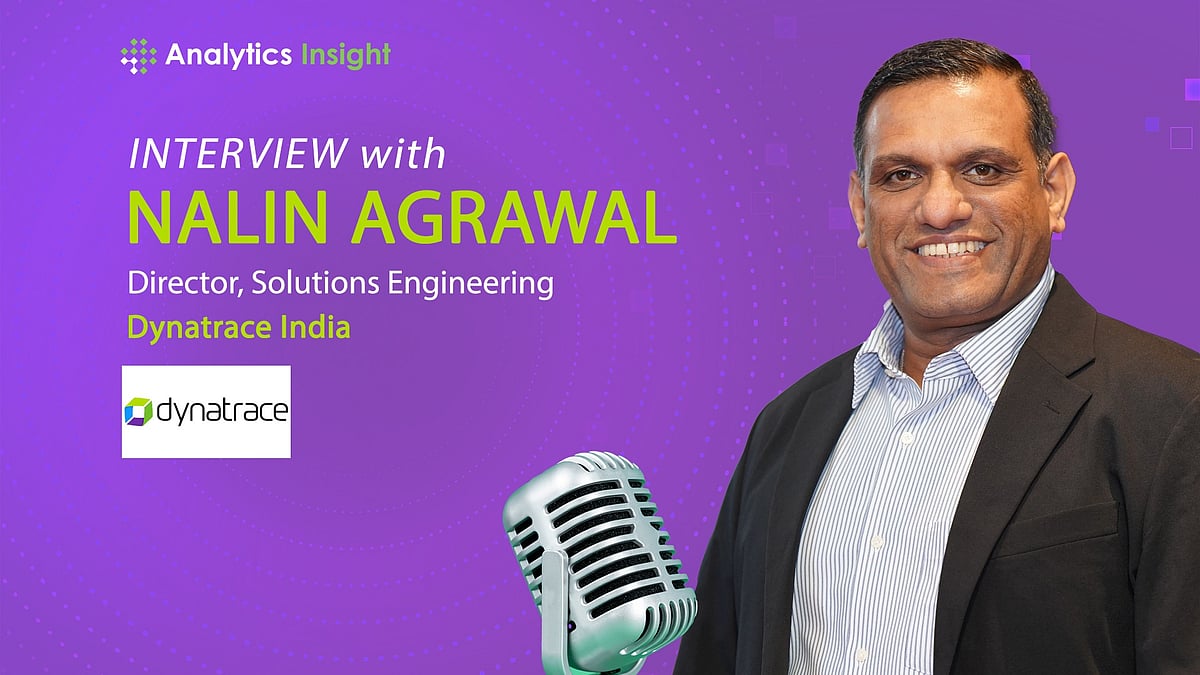
In today’s episode of the Analytics Insight Podcast, host Priya Dialani speaks with Nalin Agrawal, Director, Solutions Engineering, Dynatrace India, about what it takes for organizations to become truly AI-ready.
Nalin elaborates on why simply knowing the statistics of AI adoption does not tell anything about organization’s readiness and highlights the increasing significance of AI observability to spot visibility issues, monitor model behavior and understand how the input data affects AI outputs.
Additionally, the podcast addresses how organizations could tie their AI spend to real-life benefits, including higher productivity, customer acquisition, efficiency gains and app reliability. Nalin covers the factors that the leadership needs to consider before deploying AI in their organizations.
What does enterprise AI readiness mean?
AI Readiness in the enterprise involves having the capability of a company to implement, monitor, regulate, and measure AI systems. This goes further than implementing AI technologies and making use of them more often. Companies need to ensure that their AI tools are trustworthy, secure, responsible, and can generate results.
Why is AI adoption alone not enough to measure enterprise readiness?
The metrics for AI implementation show how often the employees work with AI or how many AI initiatives have already been implemented. Nevertheless, the metrics cannot prove that these implementations yield any tangible benefits. The organizations also need to assess such things as accountability, security, governance, efficiency, and so on.
What is AI observability, and why is it important?
AI observability enables firms to comprehend the behavior of AI applications over their lifespan. AI observability offers visibility of prompts, models, retrieval data, tools, agents, and the responses generated by them. This enables companies to find out about the problems in performance, errors in output, change in user behavior, and reasons for certain responses from AI systems.
How does India’s DPDP framework affect enterprise AI deployment?
The Digital Personal Data Protection framework of India requires that data protection responsibility becomes an important factor in the use of artificial intelligence technologies. Attention should be given to data lineage, consent management, transparency, security, auditability, and privacy of sensitive personal data. AI observability will allow companies to know how data flows through their applications.
How can businesses measure the ROI of their AI investments?
AI value is measurablefficiency, minimized manual efforts, operational effectiveness, and application reliability. It’s also necessary for a company to look at things like infrastructure spending, model efficiency, governance, and risk management in order to gauge whether AI is providing real value