Driving the winding roads and long tunnel up into Yosemite National Park, Mark O’Loughlin was awestruck.
A veteran who served as an infantry squad leader with the 3rd Battalion, 5th Marines at Camp Pendleton, he hadn’t wanted to be outdoors much since leaving the Marines in 2018. But Yosemite felt so welcoming, if not a little unreal, he said.
“Once you come through that tunnel and it opens up and you see Half Dome and just this valley,” he said of the late-summer trip with a group of Southern California veterans. “It just looks fake, like your brain doesn’t really process what you’re looking at. It’s just out of this world.”
A lifelong San Diego resident, O’Loughlin, 30, had never been to Yosemite.
- Forty veterans from Southern California went to Yosemite National Park in September to help with the Yosemite Climbing Association’s Facelift effort. As part of the project, the veterans, who served at local bases, picked up trash, worked on trails, and repaired park infrastructure. (Photos courtesy of RFV Eco Warrior Project.)
1 of 10 Forty veterans from Southern California
1 of 10
Forty veterans from Southern California went to Yosemite National Park in September to help with the Yosemite Climbing Association’s Facelift effort. As part of the project, the veterans, who served at local bases, picked up trash, worked on trails, and repaired park infrastructure. (Photos courtesy of RFV Eco Warrior Project.)
Expand
But he recently got the chance to rediscover nature’s wonders when he joined the Yosemite Climbing Association’s annual Yosemite Facelift. He was there as part of a veteran-led stewardship deployment meant to build community around cleaning up the national park, its trails, and its infrastructure.
Coordinated through the Recycle For Veterans Eco Warrior Project, with chapters throughout Southern California, the effort sent 40 military veterans, many who served at local bases such as Camp Pendleton, Twentynine Palms, and Miramar, to the national park for the five-day event.
Kyle Hansen, a Marine veteran who medically retired
Kyle Hansen, a Marine veteran who medically retired after a 2017 training accident at Camp Pendleton, founded the nonprofit seven years ago. Hansen focuses on bringing purpose and a sense of community back to service members from all branches of the military, helping them transition to civilian life and find employment. He sees environmental stewardship as an ideal way to achieve this.
“I understand how difficult it can be to rebuild your sense of purpose after your military service ends,” Hansen said, adding that when veterans leave the military, many lose a clear mission, a team, and the sense that their contribution matters. “For me, environmental stewardship has become a way to keep moving forward through trauma while doing something useful for the world around me.”
And he is not alone. Across the nation, veterans’ groups are increasingly embracing the protection of public lands as a sort of “second tour of duty.” Environmental stewardship gives them a chance to use their technical know-how, discipline and motivation for public service, while also reclaiming something they lost after separating from the service and preserving their training mindset.
On Veterans Day, retired U.S
On Veterans Day, retired U.S. Army infantry officer Lt. Gen. Jeff Buchanan, a 37-year combat veteran, will be the face of a newly launched organization, Veterans For Public Lands.
The organization, with advisors from the Marines and Navy who served in Southern California, is launching a national campaign to recruit its first class of “public land defenders.” The website will go live on Veterans Day, and ways to connect will be shared on social media, with a focus on California, Arizona, Colorado, Oregon, Washington, and Montana.
“The oath that we swore to protect and defend the Constitution didn’t stop when we took off the uniform,” Buchanan said, adding that the first guardians of the nation’s two oldest parks were Buffalo Soldiers in Yosemite and a Cavalry regiment at Yellowstone National Park. “We want to continue to defend these places that we served to protect, these public lands and waters. It’s very important to us and part of our identity as a nation and, individually, it’s important to us as places to heal.”
The idea of the military protecting public lands
The idea of the military protecting public lands is not new, Buchanan said, but now he and others want to leverage veteran voices to make a difference. Also not new are threats to public lands, he said, pointing out that every time a national park was created — Yosemite, Yellowstone, the Grand Canyon — local resistance was high.
“We’re concerned about the threats to all of these lands we share,” he said. “We think we have a voice that is adamantly non-partisan. We’re just trying to protect our national heritage.”
Safeguarding public spaces also resonated with Hansen. While the Recycle For Veterans Eco Warrior Project has worked locally to clean and care for beaches, trails and wetlands, Hansen, 31, of Mission Viejo, said he came up with helping the national parks this year partly as a tribute to the country’s 250th birthday and as a way to further the idea that the obligation to serve doesn’t end when the uniform comes off.
It evolves into a continued responsibility to steward
“It evolves into a continued responsibility to steward our country, strengthen our veteran communities, and preserve the public lands that help define our nation,” he said. “America’s public lands need committed stewards, and veterans need meaningful opportunities to continue serving.”
He expects next year to include visits to Joshua Tree National Park and the Channel Islands and local outreach efforts are planned around Southern California over the next few months, Hansen said.
“As a father, I want my daughter to experience these places,” he said, “and understand that protecting them is a responsibility we share.”
For veterans, especially those in the infantry, getting
For veterans, especially those in the infantry, getting into nature can help them decompress, bond and maintain a deep sense of purpose.
“Getting to know Kyle and (Jake Slocum, a director for the Eco Warrior Project), I realized we’re missing this whole subset of the population,” said Katie Getz, deputy director of the Yosemite Climbing Association. “We have veterans involved, but not represented as a veteran group. It kind of changed the way I saw what we were doing entirely. I realized it is a community and a community of like-minded people, and the veterans group just makes sense.”
Getz said she was impressed by the veterans’ can-do attitude, their drive to get projects done, and their organization.
She said, they also helped her better understand
And, she said, they also helped her better understand the mental health benefits a project like Facelift Yosemite can provide.
“It was really cool how they brought that to light, and I think it’s a very beautiful extension of service they’ve provided in a very different way throughout the years,” she said.
This year’s event gathered nearly 11,000 pounds of trash, Getz said, and 1,625 volunteers contributed 15,000 volunteer hours. While the outreach benefits the veterans, it also helps the National Park Service, which has seen budget cuts and staff reductions since January 2025.
Veterans were set up at five campsites
Veterans were set up at five campsites in the park’s Upper Pines campground; one serving as their own chow hall. And Slocum’s father, Mark, a chef who flew in from the East Coast, volunteered to manage the camp kitchen and prepare meals for the team.
“Every day we would wake up, have breakfast, and then grab big burlap sacks and head out to pick up trash at a designated area or along a road in the park,” said Jake Dixon, a Purple Heart-decorated retired Army Ranger. He also helped out during wellness programs when the vets had downtime. “One day was set aside to help restore an amphitheater that hasn’t been used in decades because of flooding. We donned respirators and ear protection and got to sanding.”
Also participating was Zac Zickgraf, 32, who served as a combat engineer at Camp Pendleton from 2012 to 2016 with deployments in 2013 and in 2014.
I didn’t have a framework to deal
“I didn’t have a framework to deal with life,” he said before being recruited. “Being a Marine instilled in me discipline and a sense of purpose, and it gives you one hell of an ego.”
When he got out, he had a difficult transition — a common story — so he started school at Saddleback College and took advantage of opportunities offered at its Veteran Reet Center exposed him to the world of veteran mental health. A career path emerged, first at the North Orange County Vet Center, then with the Veterans Administration, and now Zickgraf is a licensed therapist in private practice in Irvine
What impressed him about Hansen’s organization, Zickgraf said, is that its programs address mental health struggles while also putting veterans to work.
It’s the only program I’ve seen
“It’s the only program I’ve seen that is actually taking veterans out and making them useful,” Zickgraf said, adding that sense of purpose meshes with a quote he saw years ago at the North Orange County Vet Center that still rings true. “It said, ‘Veterans don’t long to reunite with one another to rehash old war stories and memories, but they do it because it reminds them of a time when they were their best selves.’”
“I thought that was a brilliant thing,” Zickgraf said. “What makes service members proud and gives them the confidence, self-esteem, and the connectedness is through service in the military, and I don’t believe the service should ever end.”
“With any clients I ever worked with, there’s an element of being useful to other people and bringing goodness to the world,” he added. “That is essential for health, well-being, and adjustment. So if you take veterans who, at the peak of their lives, are willing to put their lives on the line in service to something greater than themselves, like, yeah, you can take that person fishing, but that’s not going to do the deeper healing.”
That’s why being useful to an organization committed
“That’s why being useful to an organization committed to bringing goodness to our environment is so profound,” he said. “It’s different from what other organizations do by indirectly improving mental health.”
The recent trip also gave veterans opportunities to reach within themselves and connect more deeply during nightly fireside chats, where Zickgraf said some veterans broke down. And, being in the natural environment, he said, has been shown in studies to have a tremendous healing effect on struggling veterans.
“When we went to Yosemite, this was the first time some veterans had ever seen El Cap or Half Dome,” he said. “It’s the first time they slept under the stars while not on fire watch. The first time they had a hot, cooked meal rather than an MRE.”
For a lot of service members, especially those
“For a lot of service members, especially those in combat arms, their exposure to nature was not cute,” he said, adding that he had no interest whatsoever in hiking or camping after the Marines.
Dixon, of Newport Beach, who served with the 2d Ranger Battalion from 2007 to 2014, did three combat deployments to Iraq and four to Afghanistan.
“I saw my fair share of the fight, had to take lives, lost close friends, and was wounded myself,” he said. “Every day for the rest of my life I will wrestle with the morality and the lingering effects of one event or another that took place over those seven years.”
Now, back out in nature, Dixon said he
Now, back out in nature, Dixon said he has experienced the positive impact of the outdoors. He now works as the fly-fishing director with The Ranch Foundation, a national veterans nonprofit organization.
The group’s mission, he said, is to provide camaraderie and a sense of purpose for veterans and, with that, incorporate fly fishing and other holistic experiences such as jiu-jitsu, equine therapy, and breath work to preserve their mental health in ways that aren’t as accessible through the VA.
When Hansen asked him to volunteer during the veterans’ outing to Yosemite, Dixon said he was all in.
During breaks in the cleanup
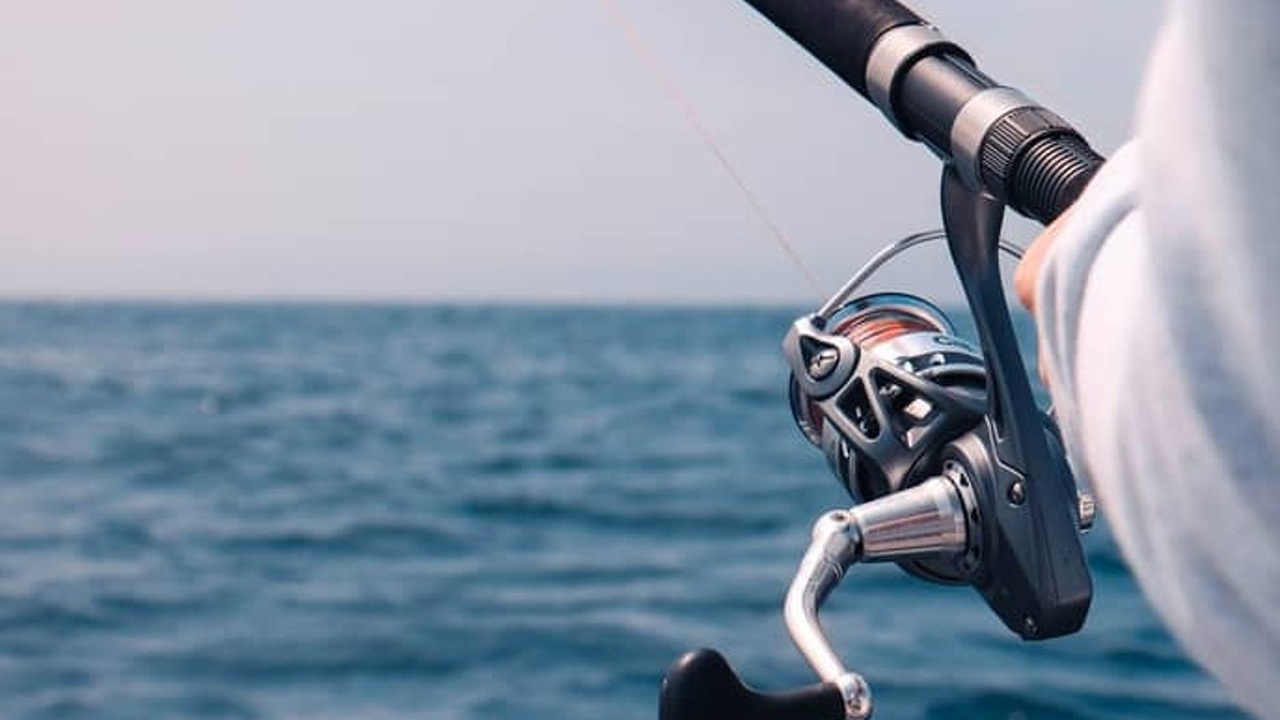
During breaks in the cleanup or in the evening, Dixon took veterans to different parts of the park to get them on the water and try their hand at fly-casting.
“Many of them were able to put their first trout in a net in one of the most beautiful places on Earth,” he said.
“The mission in Yosemite was simple, but it’s quite powerful,” said Dixon, 39. “Every American has a duty to protect and preserve our public lands. Bringing veterans together and giving them the opportunity to do so in a place as special as Yosemite Valley is where rebuilding that sense of purpose comes in. It can be considered a lifetime achievement and a worthy memory — it certainly is for me.”
For O’Loughlin, whose favorite president is Theodore Roosevelt,
And for O’Loughlin, whose favorite president is Theodore Roosevelt, reconnecting with nature, standing where Roosevelt stood so many decades before in the Yosemite Valley was overpowering and healing, he said. It also brought him into a group with others who are, again, loving nature while continuing on for a greater purpose beyond their own.
“It just gets everyone together,” he said. “Really, you don’t know. There’s always the statistic: 22 veterans a day kill themselves, and this trip could have saved a veteran’s life, you know?”