Headfox Tarmac Helmet Review: Giving The Traditional Motorcycle Helmet A Tech Upgrade
Utkarsh AgarwalNov 05, 2026
With built-in Bluetooth, navigation, a subwoofer and LED lighting, the Headfox Tarmac tries to make everyday riding more convenient
A helmet’s first job is to protect your head. There should be no compromise on that. But what if it could also take care of your music, phone calls and navigation without having to install a separate Bluetooth device? That is essentially what Headfox is trying to offer with the Tarmac.
Priced at Rs 6,999, the Tarmac is a full-face smart helmet with integrated Bluetooth connectivity. I have been using it for around 15 days, and what I find interesting is that Headfox has tried to bring together features that most riders would otherwise need separate accessories for.
Modern Design
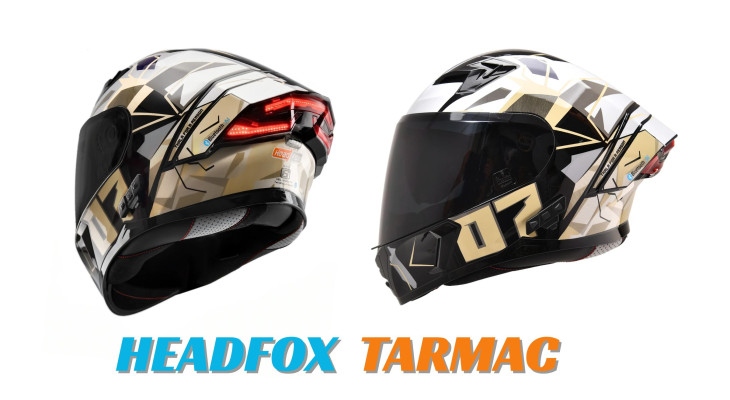
At first glance, the Tarmac looks like a fairly conventional full-face helmet, but the integrated LED beacon gives it a distinctive appearance. It gets four lighting modes, which add to its visual appeal while offering an additional visibility feature.
However, the real highlight is the Bluetooth system. You can connect your smartphone to the helmet for music, hands-free calls and navigation instructions. For someone who regularly uses Google Maps while riding, this is a useful feature. You don’t have to keep looking at your phone mounted on the handlebar every time you need directions.
Headfox has also included Tri-Mode Audio, which offers Internal Audio, External Audio and Dual Audio Output. There is a built-in subwoofer as well, something that is not particularly common in this price segment.
I like the idea of having everything integrated into the helmet. There is no additional Bluetooth unit sticking out from the side, and you don’t have to worry about separately installing speakers. It makes the overall setup simpler.
Of course, I would recommend keeping the volume at a sensible level. In Indian traffic, being able to hear horns, emergency vehicles and your surroundings is just as important as hearing navigation instructions.
Comfort & Fit: An Important Part of the Experience
A helmet can have all the technology in the world, but if it is uncomfortable, most riders will eventually stop using it. This is particularly important in India, where many people wear helmets for extended periods in hot and humid conditions.
The Tarmac uses Adaptive Comfort Padding, which is designed to gradually conform to the rider’s face shape over approximately 14 days of regular use. Having used it for over 15 days, I found that the padding settled in well and the helmet felt more comfortable with regular use. The fit became more natural over time, which is particularly important when wearing a full-face helmet for longer durations.
The helmet weighs approximately 1,500 grams. While this is not particularly unusual for a helmet with integrated electronics, riders who prefer lighter helmets may find the weight noticeable, especially on longer rides.
One limitation, however, is the size availability. The Tarmac comes in Medium, Large and XL sizes, with no Small option. A wider range of sizes would have made it accessible to more riders.
Safety Should Remain The Priority
This is perhaps the most important aspect of any helmet, and it should never take a back seat to technology or design. The Headfox Tarmac comes with both DOT and ISI certifications, which is reassuring, particularly for buyers who may be evaluating it as their primary riding helmet.
Having used it for over 15 days, I also appreciate that despite all the electronics and additional features, the Tarmac retains the basic full-face helmet format. The fit, padding and chin strap are important parts of the overall experience, and these are things I would pay attention to before considering any of its smart features.
Bluetooth connectivity, music, navigation and LED lighting are nice additions, but they should never influence the most important buying decision: how well the helmet fits and protects your head. A smart helmet is, first and foremost, a safety product.
Is It Worth Rs 6,999?
This is where things get interesting. At Rs 6,999, the Tarmac is not an inexpensive helmet. There are more affordable Bluetooth-equipped alternatives in the Indian market, including offerings from established helmet brands. Ather’s Halo, for instance, is priced at Rs 4,999.
However, the Tarmac brings together Bluetooth, navigation, multiple audio modes, a built-in subwoofer and LED lighting. If these are features you will actually use, the price becomes easier to justify. The company also offers a one-year warranty on the Bluetooth system and electronic components.
But there are a few things I would have liked Headfox to address. More detailed information about battery capacity, charging time and playback duration would also help buyers make a more informed decision.
Verdict
After spending over 15 days with the Headfox Tarmac, I think it is an interesting option for riders who want something more than a conventional helmet. One of its biggest strengths is that it manages to combine technology with a design that genuinely stands out. The LED beacon gives it a distinctive look, and it is certainly a head-turner when you are out on the road. It doesn’t look like just another helmet with a Bluetooth unit attached to it.
At Rs 6,999, it is not the most affordable option in the market. However, the integrated Bluetooth, navigation, built-in subwoofer and multiple audio modes make it a compelling package. I particularly like the convenience of having these features built into the helmet rather than having to install a separate communication system.
So, if you are a regular commuter or someone who enjoys weekend rides and wants a helmet that looks different while offering useful technology, the Tarmac is worth considering. But remember, a smart helmet is still a helmet first. Get the fit right, ride responsibly and treat the technology as an added convenience rather than the main reason to buy one.

Utkarsh Agarwal
BW Reporters
As Editorial Lead of BW Auto World, automotive vertical of BW Businessworld, & Special Correspondent for BW Businessworld, Utkarsh operates at the centre of a rapidly evolving automotive & technology landscape, where the story extends beyond products to business, policy, and shifting consumer behaviour. His work spans product reviews, executive interviews, and feature stories that track and interpret the forces shaping India’s automotive & technology sector.
Alongside his core automotive & tech coverage, he also brings prior experience in political, lifestyle, and travel content creation.