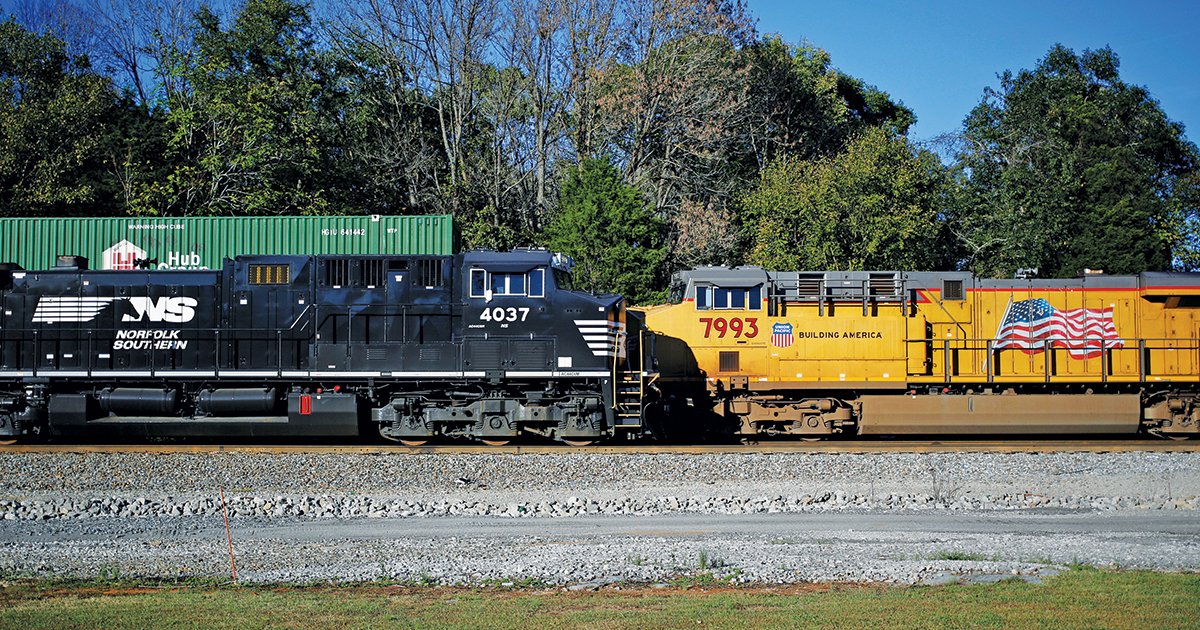
Norfolk Southern and Union Pacific freight locomotive in Burnside, Ky. (Luke Sherratt/Bloomberg News)
key takeaways:
- Union Pacific secured Canadian National’s support for its proposed $85 billion acquisition of Norfolk Southern through concessions announced on July 23.
- The merger would create the first American transcontinental railroad and critics say it would control more than 40% of rail traffic.
- The Surface Transportation Board is reviewing the deal and has ordered additional information by the end of the month before moving forward.
OMAHA, Neb. – Union Pacific struck a deal with Canadian National to secure the rival’s support for its proposed $85 billion takeover of Norfolk Southern Railroad.
The deal to build the nation’s first transcontinental railroad has been divisive within the industry because it would concentrate so much market power in the hands of one company that it would control more than 40% of all rail traffic and reduce the number of major freight railroads in the United States to five.
BNSF, CPKC and CSX railroads all strongly oppose the merger, but Canadian National has now said it will support it after winning concessions from Union Pacific.
The U.S. Surface Transportation Board is just beginning to review the proposed $85 billion merger, but it has asked for more information from the railroads by the end of the month before moving forward. Some are excited by promises of faster cross-country delivery, while other companies, primarily in the chemical and agricultural industries, are concerned about higher rates and the potential for service problems.
UP CEO Jim Vena stated that he believes these agreements with Canadian National will address many of the competitive concerns with the merger as will allow CN to be able to serve any customers who will see significantly fewer shipping options following the merger. And CN would take over Norfolk Southern’s ownership of smaller railroads in St. Louis and Kansas City to ensure that the merged railroad would never control most of those operations.
“It’s actually more attractive today than it has been before,” Vena said while discussing Union Pacific’s second-quarter earnings on July 23. “We think we have a strong case.”
Canadian National would also gain access to tracks between St. Louis and Kansas City and a major rail yard in Kansas City, helping that railroad compete better for business to and from Mexico, while Union Pacific would have the ability to move more traffic around congested tracks in Chicago.
“As the rail industry contemplates significant structural change, it is essential that customers continue to benefit from meaningful competition and choice,” said Tracy Robinson, CN President and CEO.
The Surface Transportation Board will review the deal under a tough new standard, adopted in 2001 after a series of disastrous rail mergers in the 1990s that caused shipment delays of weeks or months. According to these untested rules, any merger of the six largest railroads must be in the public interest and demonstrate that it would increase competition. When the Surface Transportation Board approved the first major rail merger in more than two decades three years ago, it used a less stringent standard to allow Canadian Pacific’s $31 billion acquisition of Kansas City Southern.