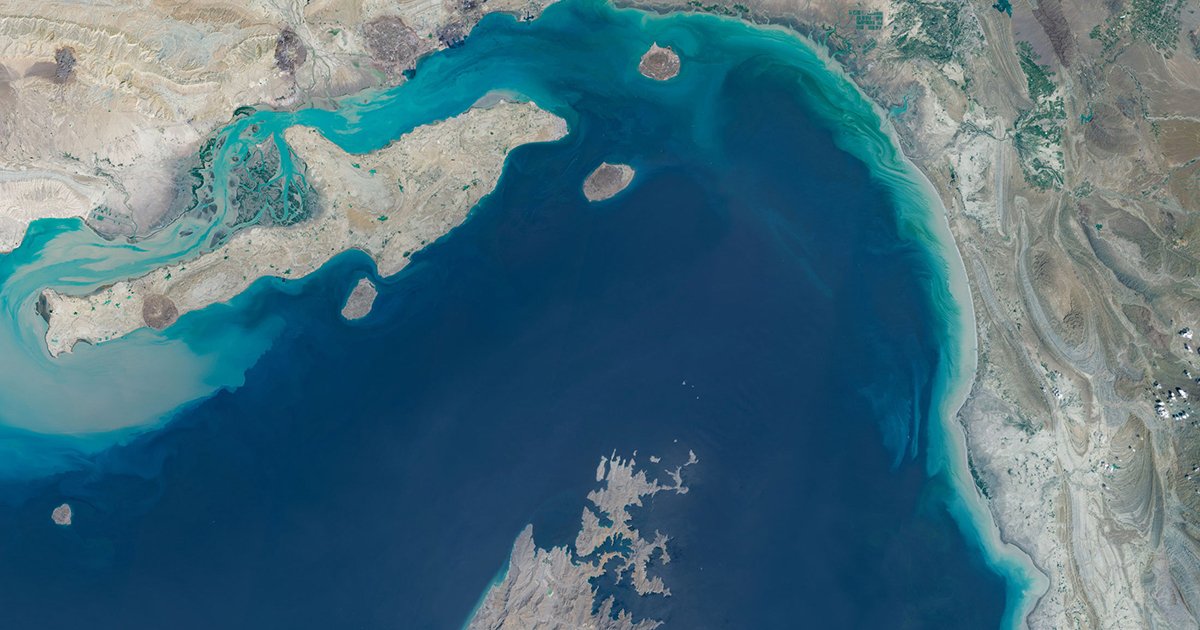
Strait of Hormuz. (Maps4media/Bloomberg)
key takeaways:
- On July 14, President Donald Trump canceled a plan to charge ships a 20% cargo fee for transiting the Strait of Hormuz, citing promised Gulf investments.
- The conflict threatens global trade as about one-fifth of the crude oil and natural gas traded passes through the strait and the attacks disrupt shipping.
- US attacks and Iranian counter-attacks resumed as mediators sought to revive ceasefire talks and the US agreed to reinstate the blockade on 15 July.
Dubai, United Arab Emirates – US President Donald Trump on July 14 backed away from a plan to charge ships to use the Strait of Hormuz and said Gulf countries would instead invest in the United States. Another wave of American attacks on Iran, and Iranian attacks on shipping and American allies, soured the interim peace agreement.
That agreement was intended to reopen the waterway that is vital to world energy supplies and buy negotiators time to permanently end the war. Instead, fighting has once again engulfed the region, threatening the global economy and alarming commercial airlines.
Now the focal point of the conflict is the strait, through which one-fifth of the total trade of crude oil and natural gas passes in peacetime. During the war Iran effectively closed the route by attacking and intimidating ships – a strategy that proved to be its greatest strategic advantage. It sent prices of oil, fertilizers and other commodities soaring at a time when world leaders were already struggling to address rising costs.
Iran has recently attacked ships passing through the strait on a route overseen by US forces outside Tehran’s control, carrying out tit-for-tat attacks. The US has threatened to reopen the strait by force – but experts say that would require a much larger force, if not thousands of ground troops.
Trump says he’s replacing tariffs with Gulf investments
On July 13, Trump said the US would reimpose a blockade of Iranian ports and begin charging ships the equivalent of 20% of their cargo to defray the cost of securing the strait. He backed down on the fees a day later, with the blockade set to be reimposed in the coming hours.
“Based on highly productive conversations with Middle East leadership, I have decided to replace the 20% United States countervailing duty with trade and investment deals that various Gulf states will make to the United States,” Trump said on social media.
The president said the investment “will be massive”, although it is unclear whether these will be new commitments relative to what Trump announced after a trip to the Middle East last year.
Attacks and counter-attacks resume
The US military’s Central Command said it struck several areas of Iran, targeting “coastal defense systems, missile and drone sites and maritime capabilities”. Iran acknowledged the attacks but did not immediately assess any casualties or damage.
The US military said, “These strikes will continue to impose heavy costs on Iranian forces and reduce their ability to attack innocent civilians and commercial shipping in the Strait of Hormuz.”
– US Central Command (@CENTCOM) 14 July 2026
Iran launched attacks targeting Bahrain, Jordan and three tankers traveling through the strait. Kuwait’s military said it was responding to the airstrike, without giving further details.
Two of these ships belonged to the United Arab Emirates and were set on fire for some time. The International Maritime Organization said two sailors were killed and 14 others were injured in the attacks on the Mombasa and Al Bahiyah tankers. The Emirates threatened to retaliate.
Dutch shipping firm Stolt Tankers said one of its ships was attacked. The attack on Stolt Magnesium near Oman caused a fire in the engine room, but the company said all sailors were safe.
Iran’s paramilitary Revolutionary Guard said Mombasa and al-Bahiyah “ignored repeated warnings.” Iran has targeted ships that use passage through the strait that passes Oman outside its territorial waters.
At least four locations were struck in the Iranian city of Bushehr, located on the Persian Gulf, just hours after the US ended its strike campaign, state-run IRNA news agency reported. The attacks have again raised the possibility that Gulf Arab states are retaliating against Iran without discussing it publicly.
EU aviation body reinstates warning on Middle East flights as fighting resumes https://t.co/6wDYn6wWX1 https://t.co/6wDYn6wWX1
– Reuters (@Reuters) 14 July 2026
The European Union Aviation Safety Agency warned airlines against operating in the airspace of Bahrain, Kuwait, Qatar and the United Arab Emirates, as well as the Gulf of Oman.
It said in a bulletin that “unexpected military developments, combined with the potential use of missiles, drones, fighter aircraft and air-defense systems, pose a high risk to civilian flights.”
Interim peace agreement is in danger
The shootings in recent days had already cast doubt on the interim peace deal – now almost halfway through a 60-day period in which negotiators were supposed to agree on a final deal, also aimed at addressing Iran’s disputed nuclear program and other issues.
But Trump’s pledge to impose a blockade has put it in further danger. Washington lifted the blockade imposed in mid-April under the agreement. The US military said it would resume it in Dubai at midnight on July 15.
Trump’s plan to charge fees would be a change from long-standing US policy and a deviation from recent US promises that the strait will remain open to all without tolls – an offer recently made by US Secretary of State Marco Rubio on a visit to the region.
Under the interim agreement, Iran agreed that passage through the strait would remain free for 60 days – but the agreement left open what would happen after that. Iran claims it has the right to manage traffic through the strait and potentially charge fees. America has disputed that.
Mediators are trying to prevent a return to full-scale war
Regional mediators are still trying to bring the United States and Iran back to the negotiating table, according to two regional officials.
Pakistan-led mediation is working around the clock to reactivate the ceasefire, the officials said, speaking on condition of anonymity to discuss the delicate diplomatic process.

Alex Fraser from Cox Fleet discusses how fleets should respond when a roadside breakdown occurs, testing their safety, compliance and customer service systems simultaneously. Tune in by going above or RoadSigns.ttnews.com.
Meanwhile, Lebanese and Israeli delegations were expected to meet in Rome on July 14 to continue US-mediated talks. Shortly after the US and Israel began war on February 28, the Lebanese terrorist group Hezbollah joined the conflict in support of its ally Iran and began attacking Israel. Israel responded with a ground invasion of Lebanon.
Last month, Lebanon and Israel announced a “framework agreement” outlining the withdrawal of Israeli forces from southern Lebanon in exchange for Hezbollah’s disarmament. Implementation is paused.
Even before fighting intensified around the strait, Israel’s war against Hezbollah in Lebanon had repeatedly threatened to derail the interim agreement. A ceasefire now exists in Lebanon, but it is unclear whether it will hold if the US and Iran return to full-scale war.
Bock reported from Washington. Associated Press writer Sammy Magee in Cairo contributed to this report.