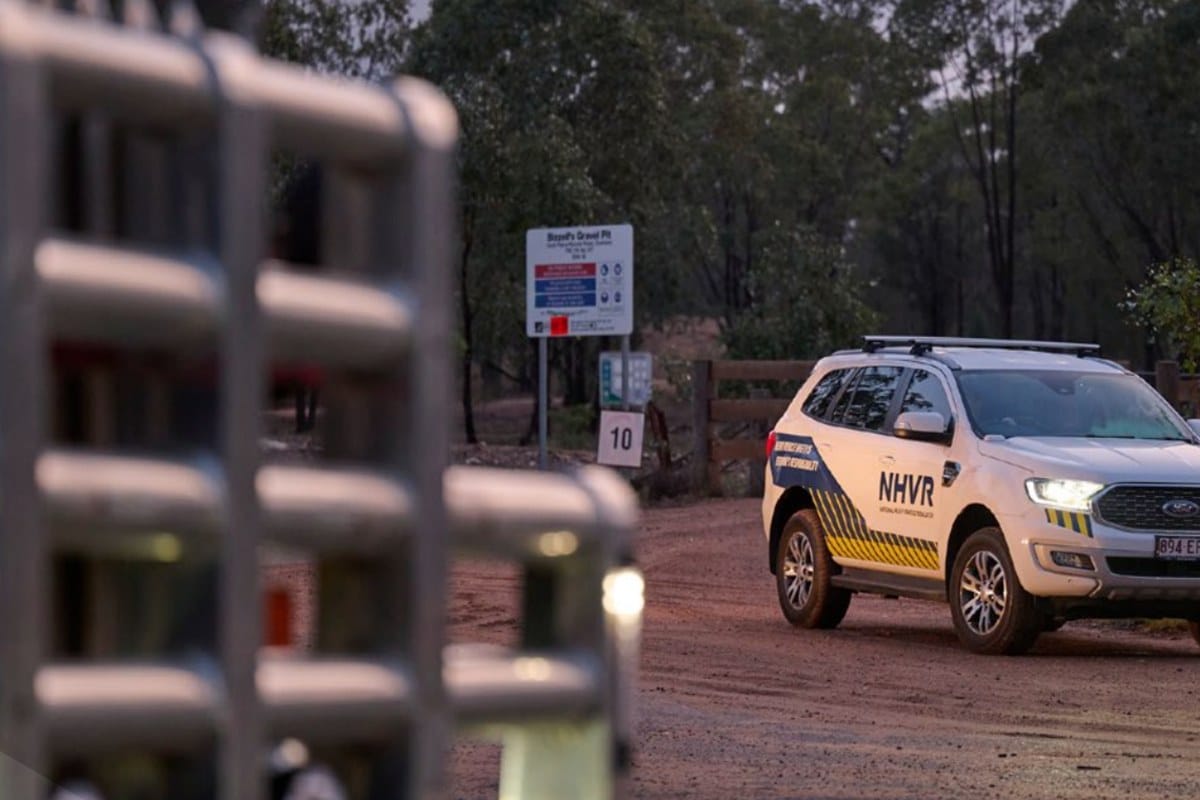
Dangerous speed limiter interference continues to be a rising risk on Australian roads, said the NHVR. Image: NHVR
The National Heavy Vehicle Regulator (NHVR) is urging operators to take action to prevent deliberate interference with critical vehicle safety systems after it said officers found a truck with its speed limiter set to 127km/h.
The regulator said that while some operators have introduced strong safety systems to crack down on the practice, dangerous speed limiter interference – which allows heavy vehicles to travel in excess of 100km/h – continues to be a rising risk on Australian roads.
NHVR Chief Operations Officer Paul Salvati said
NHVR Chief Operations Officer Paul Salvati said it was disappointing that despite extensive education, warnings and enforcement, heavy vehicles were still being detected with altered speed limiters.
“Speed limiters are a critical safety control and deliberately interfering with them puts every road user at risk. There is simply no excuse for this behaviour,” Salvati said.
“Earlier this year the NHVR undertook Operation Quicksilver, specifically targeting speeding and speed limiter interference, with more than 2000 heavy vehicles intercepted nationally.
Despite this targeted enforcement and our ongoing education
“Despite this targeted enforcement and our ongoing education efforts, we continue to find vehicles where these critical safety controls have been interfered with.”
During the operation, the NHVR said it issued the driver of the truck with the 127km/h limiter setting a compliance notice and took enforcement action over two alleged fatigue breaches involving driving beyond prescribed hours and taking insufficient rest.
The regulator said officers also found brake defects on all of the truck’s trailers. It said it issued the Queensland-based operator major and minor defect notices over brake and speed limiter issues.
The NHVR has also welcomed operators taking proactive
The NHVR has also welcomed operators taking proactive steps to strengthen compliance and prevent speed limiter interference, showing the role industry can play in driving safer behaviour.
After one of his drivers was caught with an altered speed limiter in a separate incident two years ago, Kerden Haulage owner Damien Radburn took action to prevent further tampering.
After trialling several deterrents, he recently fitted tamper-evident security tags to the speed limiters on his 20 prime movers to prevent drivers interfering with the settings.
Two of Radburn’s vehicles were intercepted during Operation
Two of Radburn’s vehicles were intercepted during Operation Quicksilver, with no issues detected by the NHVR.
“The security tags deter my drivers from changing the speed limiter by making any tampering immediately evident,” Radburn said.
“Heavy vehicles can weigh up to 68 tonnes, and at speed they take significantly longer to slow down or stop.
Making sure these vehicles can’t travel faster than
“Making sure these vehicles can’t travel faster than 100km/h can be the difference between life and death.
“The law is the law. As operators, we have a responsibility to make sure our vehicles are safe and our drivers are doing the right thing.”
The proactive approach has been welcomed by the NHVR.
“This is a good example of an operator identifying a problem, taking responsibility and putting measures in place to prevent it happening again,” Salvati said.
“That’s the kind of proactive approach we want to see across industry.
Operators have a responsibility to set the standard
“Operators have a responsibility to set the standard and drivers have a responsibility to meet it.”
If a heavy vehicle driver is concerned about their safety or feels pressured to drive, they are encouraged to contact the NHVR’s anonymous Heavy Vehicle Confidential Reporting Line on 1800 931 785 or visit the website.