Table of Contents
The race to be the biggest car company in the world is decided by metal moved, not market hype. Our ranking of the top 10 biggest car companies in the world for 2026 is built on global vehicle sales and production volume, the standard measure the industry uses to crown its giants. Toyota Motor Corporation leads again, but the gap behind it is narrowing fast as Chinese manufacturers climb.
The figures below reflect full-year 2024 results and early 2026 projections drawn from company sales reports, global production-volume rankings, and Yahoo Finance market-cap data. Where market value tells a different story than unit sales, we note it. Tesla is the clearest example: the smallest volume in this top ten, yet by far the most valuable automaker on Earth.
How We Ranked These
Our primary criterion is global vehicle sales and production volume for full-year 2024, the most direct and comparable measure of corporate size in the auto industry. We cross-checked company-reported deliveries against independent production-volume rankings. Market capitalization is noted as a secondary data point because it captures investor confidence rather than manufacturing scale. Brands are grouped under their parent companies, so Hyundai includes Kia and Genesis, and Stellantis counts all 14 of its marques. No weighting formulas, no invented scores: volume decides the order.
The Top 10 Biggest Car Companies In The World 2026:
1. Toyota Motor Corporation
Toyota has now held the global sales crown for five consecutive years. The Japanese giant sold roughly 10.8 million vehicles in 2024, and its 2025 output is projected near 11 million units, according to company production reports. Its market capitalization sits around $198 billion, well behind Tesla’s valuation but built on a far larger manufacturing base.
The scale spans Toyota and Lexus, with a deep hybrid lineup that has cushioned the company through the EV transition. While rivals poured billions into battery-electric platforms, Toyota’s bet on hybrids paid off in volume terms, particularly in the United States and Southeast Asia. It ranks first here because unit sales and production remain the most direct measure of “biggest” in this industry.
2. Volkswagen Group
Volkswagen Group delivered about 9 million vehicles in 2024, making it the world’s second-largest automaker by volume and Europe’s largest carmaker. Headquartered in Wolfsburg, Germany, the group carries the broadest multi-brand portfolio of any automaker: Volkswagen, Audi, Porsche, Škoda, SEAT, and Lamborghini all sit under one roof.
Its China joint ventures with SAIC and FAW give it a massive presence in the world’s largest car market, though that position faces growing pressure from domestic Chinese brands. Volkswagen consistently ranks just behind Toyota in global production tables, and the roughly 2.2 million-unit gap between them is the widest margin anywhere in this top ten.
3. Hyundai Motor Group
Hyundai Motor Group sold roughly 7.2 million vehicles in 2024 across Hyundai, Kia, and Genesis, ranking third globally. The group has climbed past legacy rivals including General Motors and Stellantis in recent volume rankings, a shift that would have seemed improbable two decades ago.
Its rise has been driven by strong EV offerings, the IONIQ series and Kia EV6 among them, plus expanding market share in the United States and India. Two high-volume mass-market brands plus a premium marque give Hyundai a structural advantage few competitors can match. The Korean group now sits comfortably in the global top three with no sign of slipping.
4. General Motors
GM remains America’s largest automaker by sales, moving about 6 million vehicles globally in 2024 through Chevrolet, GMC, Buick, and Cadillac. It leads the U.S. market in full-size trucks and SUVs, segments where profit margins dwarf anything in passenger cars.
The company is investing heavily in its Ultium EV platform, though electric volume remains a fraction of its total output. GM’s global footprint keeps it firmly in the top five worldwide, and its commercial fleet business in North America provides a revenue base that insulates it from consumer EV uncertainty.
5. Stellantis

Formed in 2021 from the Fiat Chrysler and PSA merger, Stellantis sells about 5.7 million vehicles annually across 14 brands including Jeep, Ram, Dodge, Peugeot, Citroën, and Fiat. That brand count is the highest of any automaker in this ranking.
The company dominates North America’s truck and SUV market through Ram and Jeep while holding a strong position in Europe’s mass-market segmentucture has proven operationally complex, and Stellantis has faced dealer and union friction in the U.S. Still, its combined volume places it among the five largest automakers globally
6. BYD Company

BYD sold roughly 4.27 million new-energy vehicles in 2024, overtaking Tesla as the world’s top EV seller, and its 2025 sales tracked higher still. The Chinese manufacturer is vertically integrated to a degree no Western rival matches, producing its own Blade Battery packs and semiconductors in-house.
Market capitalization has pushed past $100 billion as the company expands aggressively into Europe, Southeast Asia, and Latin America. BYD is the fastest-growing major automaker on this list by a wide margin, and several analysts expect it to crack the global top five by volume within a few years. Its growth is the single biggest variable in how this ranking looks by 2027.
7. SAIC Motor
SAIC Motor is China’s largest state-owned automaker by volume, selling roughly 4 to 4.6 million vehicles in 2024 through brands like MG and Roewe, plus joint ventures with Volkswagen and General Motors. The MG brand has become a major export name in Europe and Australia, giving SAIC a consumer-facing identity outside China that most state-owned rivals lack.
Its domestic scale is enormous, and the joint-venture structure with VW and GM has historically generated a large share of its profits. Export growth through MG is the number to watch here: European tariff pressure on Chinese EVs will shape how quickly SAIC converts volume into global market share.
8. Ford Motor Company
Ford sold about 4.4 million vehicles globally in 2024, led by the F-Series pickup, America’s best-selling truck for over four decades. That truck franchise alone generates more revenue than many entire automakers.
The company is pivoting toward EVs with the Mustang Mach-E and F-150 Lightning while leaning on commercial and truck profits to fund the transition. Ford has scaled back some EV production targets amid softer demand, a pragmatic retreat that has drawn both criticism and grudging respect from analysts. It remains one of the ten largest automakers worldwide by volume.
9. Honda Motor Co.
Honda sold roughly 3.7 to 4 million automobiles in 2024, and its broader business is larger than cars alone: it is also the world’s largest motorcycle manufacturer, producing over 18 million motorcycles annually. That diversification gives Honda revenue streams most carmakers lack.
Its automotive lineup, the Civic, CR-V, and Accord, remains strong in the U.S. and Asia, and the company is pursuing parallel EV and hydrogen strategies. Honda ranks among the ten largest global carmakers by volume, though its position is the most vulnerable to displacement by faster-growing Chinese manufacturers.
10. Tesla, Inc.
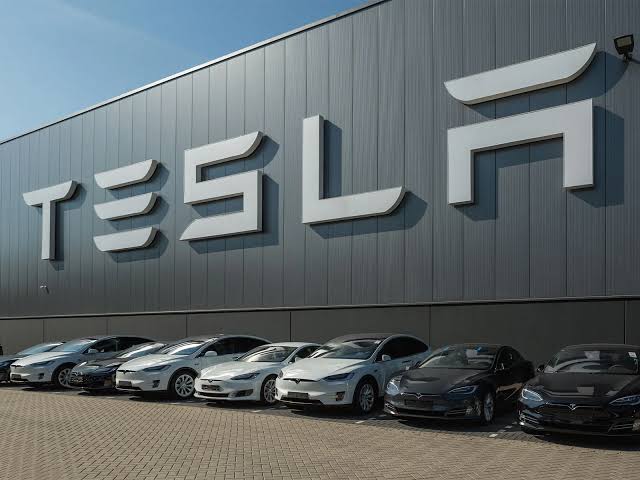
Tesla delivered about 1.79 million vehicles in 2024, down slightly from 2023, the smallest volume of any company in this top ten. Its market capitalization of roughly $1.4 trillion makes it the most valuable automaker on Earth by a factor of several.
That valuation rests on leadership in EV software, the Supercharger charging network, and energy storage rather than unit sales. BYD surpassed Tesla in EV unit sales during 2024, a symbolic shift that has not dented investor enthusiasm. Tesla ranks tenth here on volume but first on market value, a split that captures the difference between manufacturing scale and market expectation.
Three forces will reshape this list over the next few years. Chinese manufacturers, BYD and SAIC chief among them, are converting domestic scale into export volume at a pace the incumbents have not matched. The hybrid-versus-EV split still favors Toyota and Hyundai, whose lineups hedge both ways. And Tesla’s valuation gap over every rival shows that investors are pricing software and energy businesses, not just assembly lines.
For now, the top 10 biggest car companies in the world remain anchored by Toyota’s 11-million-unit scale, with Volkswagen and Hyundai holding the podium. The order below them is where the movement is happening, and 2026 looks likely to deliver at least one reshuffle in the middle of the table.