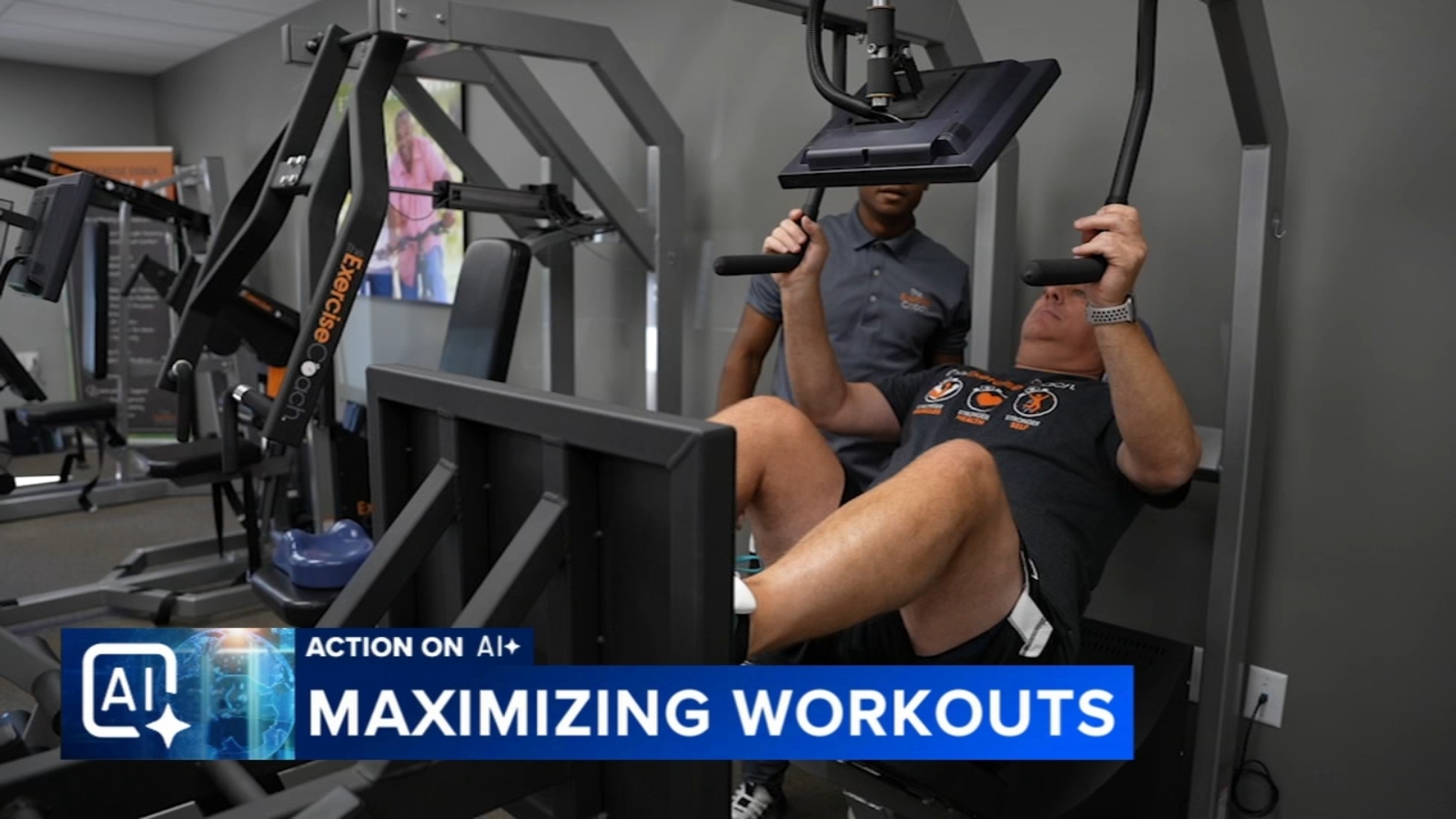
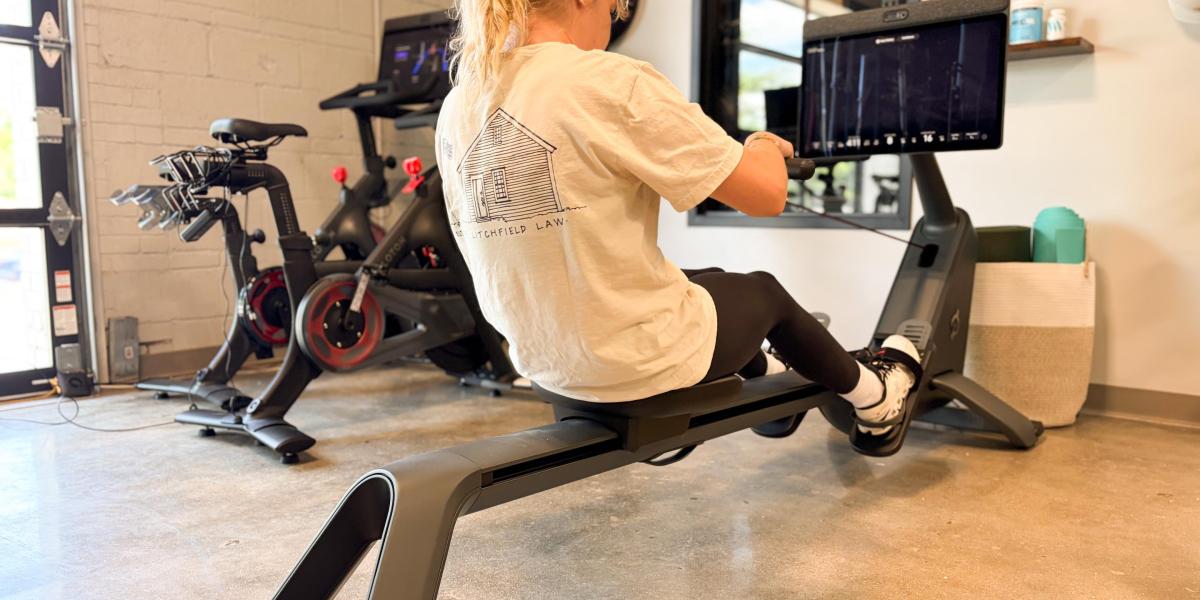
As a golf fitness professional, I spend most of my waking hours writing programs and protocols to help golfers perform better. The moment when a golfer starts to move and feel better, swing better, or post lower scores as a result of one of my programs is my greatest motivation. However, when I step out of my bubble of dedicated clients, the misconceptions and pseudo-science that seem to greet golfers in developing their fitness programs always shock me. Furthermore, this misinformation is stopping golfers achieving these moments of better movement, a better golf swing, or lower scores for themselves.
Indeed, I recently polled golfers on my social media communities for their opinions on golf fitness. Much of the results reflected long standing (and I had hoped long dead!) myths such as weight training reducing flexibility, making golfers too slow or too big to properly execute the swing. Writing this is my attempt to dispel some of the most commonplace fitness myths I see touted to golfers. So without further ado, let the myth busting commence!
Myth No. 1
Golfers shouldn’t lift weights because it will make them tight. This will ruin a player’s ability to swing.
Ah the big one! It amazes me this myth is still quite so prevalent to be honest. After all, look at Tiger Woods’ success since bulking up and massively increasing his strength levels after his Masters win as a lanky 21-year-old.
First of all, research has actually shown that resistance training is one of the most effective ways to develop functional mobility and flexibility. A properly designed strength program, in conjunction with playing golf, is the best way to make your strength and flexibility gains golf specific.
Let’s also not forget about injury prevention. Golf is a much more physical sport than most people think. You only need to look at force plate and biomechanical analysis of the forces on the body during the golf swing to get an understanding of this. Heck, guys are swinging a 44-to-46-inch club at well over 100 mph! Strength training is imperative to staying healthy and overcoming muscular imbalances created by the asymmetrical nature of the golf swing.
Finally, swinging a golf club is one of the most explosive activities in all of sports. Without a strong, powerful lower body, you’ll never reach your full potential.
Myth No. 2
Golfers shouldn’t bench press because it’s not “sport specific.”
In reality, no exercise is truly sport specific. We make the physical attributes gained in the weight room specific by playing golf and learning how to transfer these attributes to the course. Don’t get me wrong; certain exercises are more productive than others. And remember that it is impossible to duplicate the speed, intensity and technique of the golf swing in the weight room, and it’s something that golfers shouldn’t try to do.
The bottom line is that the bench press is a great, multi joint, free-weight exercise for developing strength in the chest, triceps and shoulders. And there’s nothing wrong with that! The chest, back and triceps musculature have been shown by Dr. Sergio Marta in multiple studies to be the most important muscles in the upper body for the golf swing.
I’m not saying that the bench press is the most important exercise for golfers, but it can and should be incorporated into the training programs of most golfers.
Myth No. 3
Olympic lifts are the only way to get explosive.
Olympic lifting is without doubt a great way to develop speed, power, explosiveness and overall athleticism. As countless strength coaches and studies have shown, they improve clubhead speed and lead to greater distance off the tee. While I’m not disputing their effectiveness, I do believe there are other more user-friendly and effective moves to develop power in the golf swing.
The Olympic lifts have a large learning curve and mastering the complex form required can be difficult and time consuming. After all, Olympic lifting is a sport in itself! Olympic weightlifters spend their entire lives practicing these lifts and some of these athletes still never perfect them! Research has shown simpler and much more teachable moves, such as the weighted squat jump bring all the benefits of the Olympic lifts to golfers without the learning curve.
Recent studies into power development in rotational sports have also shown that power is plane specific. That is, you only develop power in the direction of movement in which you are training. The Olympic lifting movements above are sagittal plane dominant (movement is up and down). With this in mind the golf swing, which features movements in the transverse plane (rotation movement) and frontal plane (movement is side to side), should be trained using movements with a rotational and/or lateral nature.
For these reasons I tend to opt for med-ball training, jump drills and lateral jumps to get power training in. Many of these lack any significant learning curve at all, provide great effect and have the happy coincidence of utilising movement in the same plane as the golf swing.
Myth No. 4
Strength training is unsafe for kids.
Parents that wouldn’t hesitate to get their young children involved in sports such as football, gymnastics, basketball and indeed golf often fear that participating in a strength-training program is damaging to their children’s long term health and may even stunt their growth. Nothing can be further from the truth. The fact of the matter is that running, jumping, swinging a golf club and many of the activities our children are involved in daily create loading on their bodies that is up to 10 times greater than most strength training exercises. In other words, the physical demands on a child’s body are far greater on the playground, golf course or running track compared to the weight room.
Parents who don’t let their children participate in resistance training could actually be increasing their children’s risk of injury on the athletic field, as weight training has been shown to have the same injury prevention benefits in children as in adults. Indeed, there have even been campaigns by organizations such as the American Orthopaedic Society for Sports Medicine and the American Academy of Paediatrics promoting the benefits of participation in a properly designed and supervised resistance training program for children.
Prepubescent children shouldn’t lift maximal weights; they should lift weights that can be lifted for at least six repetitions with proper form. Strength training in this manner can be the most potent exercise stimulus for bone and muscle growth and development, as well as improving balance, coordination and kinaesthetic awareness, all of which are vital for a child’s athletic development. In fact, research has shown that young weightlifters have greater bone densities than individuals who don’t lift. The positive benefits of resistance training for bone health, injury prevention and improved athletic performance are far greater than the risks.
Myth No. 5
Lifting weights for high reps is more appropriate for golfers as this will “shape” and “tone” their muscles.
I really have no idea how this myth got started, but its prevalence is amazing. Especially considering it has absolutely zero scientific or factual evidence to support it!
Here are the facts. The main difference between a “lean and toned” physique and a “bulky” physique is the amount of body fat that surrounds your muscles. Basically, the “lean and toned” look that most people desire is a result of having muscle that isn’t hidden under layers of fat. And let’s not forget that the best way to build muscle is through strength training.
More importantly, with regards to training for golf, lifting light weights for high reps affects the musculoskeletal system in such a way as to build local muscular endurance. Muscular endurance specific to the golf swing (usually best developed by simply playing golf incidentally) is of course highly useful to golfers, as our sport requires multiple efforts over a long period of time.
Muscular endurance, however, has little to no carryover to any of the other physical qualities we need to address in order to perform better on the course. Strength, on the other hand, is the mother of all physical adaptations. All other physical capacities, such as power, speed, mobility, balance, muscular endurance and coordination depend on force production within the physical environment. If strength improves, all other capacities improve with it to varying degrees. With this being that case, strength training should form the heart, soul and major basis of your training programs for golf.
Myth No. 6
Golfers need to improve balance and build core strength by training on unstable surfaces.
This one, I have to admit, is my personal favorite! Unstable surface training (UST) has become an integral and expected part of many strength and conditioning programs, particularly in golf. Indeed, magazine covers and articles are abundantly promising a better swing, longer drives and lower scores from a few simple exercises performed on a stability ball.
Claims have been made for the effectiveness of UST for injury prehab and rehab, increasing power in the golf swing, increasing balance in the swing and improving swing mechanics. However, there is no evidence that UST reduces the likelihood of injury or improves performance in healthy, trained individuals.
In fact, studies have found that UST minimised improvements in plyometric and agility tests. Basically, the subjects of these studies who weren’t doing UST made bigger gains in power and speed. The other issue highlighted by the UST research is the specific nature of improvements made by trainees. Put bluntly, classic core work on unstable surfaces, such as stability ball crunches or Russian twists, doesn’t really carry over to anything at all, let alone a complex motion carried out whilst standing, like a golf swing.
Lastly, balance is best trained in the parameters it is to be used. Golf is a game played with both feet on a stable surface and should be trained this way. Additionally, significant anecdotal evidence is beginning to emerge that attempting to replicate sporting tasks on unstable surfaces actually impairs the learning of the skill through competing motor demands. In a sport as technically demanding as golf, this is unacceptable.
How much do mishits matter in putting?
Three Common Swing Faults: Early Extension

Looking for more from GolfWRX?
Get in on the action. Join our free forum community today, or unlock premium perks, member deals, and giveaways with ClubWRX.
*Partner offers are subject to change. Promotional codes and redemption instructions will be accessible once you’ve successfully subscribed.
Instruction
Elliott: To play great golf, you must ooze greatness

You can often sense it before you see the golf swing.
A player arrives at the practice area with enough time to prepare properly. The bag is organized. The warmup has a purpose. Targets are selected rather than vaguely suggested. When that player walks onto the first tee, there is no frantic search for a glove, no apology for what happened on the range and no public prediction that the opening drive is probably headed right.
The player may be nervous. The player may not have brought a perfect golf swing to the course. Still, everything about the way that golfer moves, prepares and makes decisions says the same thing:
I came here to play.
That is what I mean when I say that to play great golf, you must ooze greatness.
Greatness Is Not a Costume
Let’s get something out of the way first. Oozing greatness does not mean pretending to be someone you are not.
It does not mean strutting around the golf course, talking about how good you are or trying to intimidate the other three people in your group. It does not mean copying the walk, mannerisms or expressions of your favorite professional golfer. Empty swagger disappears quickly after two balls find the water.
The greatness I am talking about is quieter.
It comes from preparation, personal standards and the belief that you are capable of handling whatever happens next. It is knowing what shot you are trying to play, accepting the club required to play it and making a committed swing without needing someone else to approve the decision.
It is also honest.
A golfer who “oozes greatness” does not pretend a 5-iron carries 205 yards because that sounds more impressive than pulling a hybrid. Greatness is choosing the club that can complete the job and then swinging it without embarrassment.
That is confidence rooted in reality, which is far more useful than confidence built on image.
Too Many Golfers Wait for Permission
Most golfers wait for the round to give them permission to feel confident.
They want to see the opening drive find the fairway. They need the first iron shot to come off the center of the face. They want an early putt to fall before they allow themselves to stand taller, walk more purposefully and believe it might be a good day.
That gives the first few holes far too much authority.
A poor bounce, one tentative swing or an opening bogey can convince the golfer that the promised good round has been canceled. Shoulders drop. The pace quickens. Conversation becomes increasingly negative. The golfer who walked onto the first tee hoping to play well is soon wandering around the course looking like someone expecting the next mistake.
I have watched this happen with adults, competitive juniors and accomplished players for nearly three decades. The swing may not have changed much at all. The golfer’s presence changed.
Once that happens, decisions become less certain. Targets get smaller. Trouble becomes more visible. The player begins reacting to the score rather than continuing to play the course.
Better competitors reverse that relationship. They bring their standards to the round rather than asking the round to create them.
Your Body Language Is Part of Your Golf Game
The way you carry yourself does not magically square the clubface. Standing tall cannot repair a poor grip, fix an equipment problem or replace meaningful practice.
It can, however, influence the environment in which your skills are asked to perform.
Consider how different the game feels when you walk into a shot with your eyes up, breathing under control and a clear target compared with approaching the ball while shaking your head and replaying the previous mistake.
The technical ability may be identical. The golfer accessing that ability is not.
Golf places us in a continuous loop of preparation, execution, evaluation and response. The quality of that response affects what happens next. When frustration changes your walking pace, breathing, posture or decision-making, one poor shot begins influencing several more.
Oozing greatness means refusing to advertise defeat to yourself.
You can be disappointed. You can be angry. You can recognize that a swing was unacceptable. Great competitors are not emotionless, and I have never believed golfers should walk around pretending not to care.
The difference is that they do not allow the emotion to take possession of the next shot.
Greatness Reveals Itself After the Mistake
Almost anyone can look confident after making three birdies.
I learn much more about a golfer after watching a tee shot disappear into the trees.
Does the player immediately reach for another ball before determining whether the first one is lost? Does he begin explaining the swing to everyone nearby? Does she carry the previous shot into the next decision and compound the problem by attempting something heroic?
Or does the player gather accurate information, accept the new situation and begin solving the problem in front of them?
That is competitive greatness in its most useful form.
Sometimes the great response is an aggressive recovery through a legitimate opening. More often, it is pitching back to the fairway, accepting that bogey is now possible and refusing to turn one poor swing into a double or triple.
Greatness is not always spectacular. On many days, it looks like discipline.
The same principle applies after a missed 3-footer, a poor club selection or a bad break. You are allowed to react, but the reaction needs an expiration point. By the time you reach the next decision, your attention should be there with you.
The course has already moved on. You should, too.
Commitment Is Greatness in Motion
There is something noticeably different about a committed golfer.
That golfer does not stand over a shot still deciding between two clubs. The target has been selected. The wind has been considered. The lie has been evaluated. The player knows the intended trajectory and has accepted the consequences that come with the choice.
Then the swing begins.
This does not guarantee a good result. Golf would be considerably easier if commitment alone produced center contact.
What commitment does is remove unnecessary conflict from the moment of execution. The golfer is no longer trying to hit the shot while simultaneously questioning whether it was the correct shot to attempt.
I see recreational golfers do this constantly. They pull one club while believing they should hit another. They aim at the flag while thinking about the bunker. They make a practice swing for a controlled shot and then attack the ball as though trying to produce maximum speed.
Nothing about the process agrees with anything else.
Oozing greatness means making the best decision available, accepting it and giving the shot a chance to succeed.
Your Practice Must Ooze Greatness, Too
This cannot begin on the first tee.
I can usually tell which players are serious about improving by watching how they practice. It is not determined by how many balls they hit or how expensive their launch monitor might be.
It is found in the details.
Do they select a target before every shot? Do they change clubs and situations? Do they go through a routine? Do they observe the ball flight honestly? Do they finish with a challenge that creates some consequence?
Or do they rake another ball into place before the previous shot has landed?
Greatness in practice means behaving like the player you are trying to become. That requires more than producing attractive swings when nothing is being measured.
Hit the final nine balls on the range as though each represents a hole. Change clubs. Change targets. Step away between shots. Keep a score based on whether the ball finished inside an acceptable window.
On the putting green, do not leave immediately after making one 6-footer. Make the putt again. Then make it from another location. Give yourself something to complete while your attention and nerves are still involved.
You are not merely practicing motion. You are practicing the person who must eventually use that motion.
Establish Standards the Score Cannot Control
Before your next round, identify a few standards that have nothing to do with your final number.
You might decide that you will arrive early enough to prepare properly, select a precise target before every shot and complete your routine regardless of how the round is going. You might commit to walking with your eyes up after mistakes and speaking to yourself the way a good coach would speak to you.
Grade those behaviors after the round.
There will be days when you follow every standard and shoot a disappointing score. There will also be days when you score reasonably well despite showing very little discipline.
Do not confuse the result with the quality of the performance.
A round in which you remain committed, respond well and manage yourself properly is building something that can be used again. A round held together by fortunate bounces and several desperate recoveries may look better on the scorecard, but it offers less to carry forward.
Over time, golfers who consistently meet strong personal standards give their skills a better environment in which to operate.
That is where confidence becomes earned.
Bring Greatness With You
I have coached long enough to know that golfers rarely transform simply because someone tells them to “be more confident.”
They need behaviors that confidence can grow around.
Preparation creates readiness. A clear target creates intention. A consistent routine creates familiarity. A committed decision creates freedom. A disciplined response prevents one mistake from controlling the next several holes.
Those behaviors begin to change how a golfer appears, but more importantly, they change how the golfer experiences the round.
You stop looking like someone trying not to fail.
You start behaving like someone prepared to solve whatever the course presents.
Oozing greatness will not guarantee that you shoot your lowest score. It will not make every putt fall or prevent an occasional loose swing. Golf does not offer those guarantees.
It does make your best golf more available.
Do not wait for an opening birdie to stand taller. Do not wait for the first flushed iron to believe you belong. Bring your preparation, presence and standards with you from the parking lot to the practice area and onto the first tee.
Great golf has to come from somewhere.
Start by becoming the golfer capable of producing it.
Instruction
4 golf lessons to learn from Rory McIlroy and Tom Kim at the Genesis Scottish Open

Watching Rory McIlroy and Tom Kim work their way around The Renaissance Club through two rounds of the Genesis Scottish Open offered much more than an entertaining leaderboard.
McIlroy and Kim each opened with rounds of 65 before adding matching 66s on Friday, reaching nine under and earning a share of the 36-hole lead. They arrived there with different physical tools and different styles of play, which is precisely why recreational golfers can learn so much from watching them.
McIlroy possesses speed and power that few players in the world can match. Kim relies more heavily on precision, strategy and the ability to manage his golf ball. Yet both have demonstrated qualities that translate to golfers at every level.
Here are two lessons from each player that you can take to the practice tee and the course.
Rory McIlroy: Identify Your Scoring Holes
McIlroy said after Thursday’s opening round that he played The Renaissance Club’s three par 5s well, reaching each green in regulation and playing them in four under.
That is an important lesson in course management.
You do not need to attack every hole to produce a good score. Instead, identify the holes that present your best opportunities and play them with purpose.
For McIlroy, the par 5s offer an obvious advantage because of his length. Your scoring holes may look different. They could be shorter par 4s, par 5s you can reach in three comfortable shots or holes where your preferred shot shape fits the design.
Before your next round, look at the scorecard and identify three or four holes where you believe you can be aggressive without becoming reckless.
- Select a tee club that gives you a comfortable next shot.
- Play toward the widest part of the fairway.
- Leave approach shots at yardages you practice regularly.
- Give yourself a realistic birdie putt without forcing the issue.
Great scoring is not always about creating more chances. It is often about recognizing and taking advantage of the right ones.
Rory McIlroy: Use Controlled Speed
McIlroy’s power attracts attention, but recreational golfers should pay just as much attention to how efficiently he produces it.
He does not create speed by lashing at the ball with his hands. His motion is athletic, balanced and sequenced. His body, arms and club work together rather than competing against one another.
Many golfers see a long hitter and immediately try to swing harder. That usually produces more tension, poorer contact and less usable distance.
Try this during your next range session:
- Hit five drives at approximately 70% effort.
- Hit five more at 80%.
- Finish with five at what feels like 90%.
- Note which group produces the best combination of contact, distance and balance.
Most golfers discover that their longest playable drives occur below their perceived maximum effort.
Your goal is not to swing slowly. It is to create speed without losing your structure. Finish in balance, hold your pose and make centered contact the priority. Speed becomes far more valuable when you know where the ball is going.
Tom Kim: Build Your Game Around Precision
Kim does not need to overpower a golf course to compete with the game’s longest players. His success is a reminder that golf rewards control, patience and thoughtful target selection.
That should be encouraging for players who believe additional distance is the only answer to lower scores.
Distance helps, but predictable distance is even more useful.
Begin by learning how far your clubs carry rather than relying solely on their total distance after rollout. Carry numbers become especially important when playing over bunkers, water, slopes or firm ground.
A simple distance-control drill can help:
- Choose a short iron or wedge.
- Pick three targets at different yardages.
- Hit one ball to the shortest target, one to the middle and one to the longest.
- Repeat the sequence three times.
- Change clubs and begin again.
Do not hit every shot at full effort. Learn how changing the length of your backswing, tempo and finish affects the ball’s carry.
A golfer who knows three useful distances with one wedge often has a greater scoring advantage than someone who only knows how far that club travels with a full swing.
Tom Kim: Make the Next Shot Your Priority
Links golf demands patience. Wind, firm turf and uneven bounces can turn a quality swing into an imperfect result.
Players who thrive in those conditions understand that frustration cannot be allowed to follow them from one shot to the next.
This is one of Kim’s most valuable qualities to study. His energy is noticeable, but so is his ability to remain engaged with the shot in front of him.
Recreational golfers often allow one mistake to become several. A poor drive creates frustration, the frustration produces a rushed recovery and the hole quickly gets away from them.
Use this four-step reset after a poor shot:
- Accept it:The shot has already happened.
- Assess it:Determine the lie, distance, wind and trouble.
- Choose wisely:Select the shot you can execute, not the miracle shot you wish you had.
- Commit fully:Give the next swing your complete attention.
You do not need to pretend the previous shot did not bother you. You simply need to avoid letting it influence the decision and motion that follow.
Different Games, Shared Fundamentals
McIlroy and Kim do not play golf the same way, and neither will most golfers who watch them.
That is part of the lesson.
You do not need McIlroy’s speed or Kim’s exact swing to benefit from what they demonstrate. You can identify your scoring holes, produce speed with balance, improve your distance control and become better at resetting after mistakes.
Those skills work in Scotland, but they are just as valuable at your home course.
The next time you play, do not attempt to copy everything a Tour professional does. Choose one habit that fits your game, practice it with a purpose and take it onto the course.
That is how inspiration becomes improvement.
Instruction
Elliott: Remote golf coaching is no longer a backup plan

For a long time, golf coaching had one accepted image.
A student stands on the lesson tee. A coach stands nearby. The coach watches, explains, adjusts, demonstrates and sends the player away with something to work on.
That model still matters. It always will.
But it is no longer the only serious way to coach.
Remote instruction used to be treated like a backup plan. It was something you did when distance, weather or scheduling made an in-person lesson impossible. That view is changing fast, and the combination of FlightScope data and Golf Live’s coaching platform helps explain why.
The lesson tee is still valuable. It just has more competition now.
Coaches Were Right To Be Skeptical
Good coaches are not wrong to ask hard questions about remote instruction.
How do you help a player with grip pressure if you are not standing next to them? How do you explain a backswing position through a screen? How do you know whether a player is actually changing the pattern or just feeling like they are changing it?
Those are fair questions.
In a recent interview, Jordan Vogler, who helps lead FlightScope’s work with affiliates, influencers and creator partnerships, talked about that skepticism during a conversation on FlightScope’s partnership with Golf Live. The most honest part of the discussion was the acknowledgment that remote coaching is not magic. It still requires clarity, communication and a coach who understands what matters.
But once you add reliable video, data and follow-up, the model becomes much more powerful than many old-school coaches may assume.
This Is Where My Own Coaching World Has Changed
This is the story where I can speak most directly from experience.
As a PGA Professional and coach, I still believe deeply in face-to-face instruction. There are things you can see, feel and communicate in person that are hard to fully replace. A player’s setup, rhythm, tension level, comfort, questions and body language all matter.
But I also know this: remote coaching is no longer some watered-down version of a lesson.
When it is done correctly, it can be extremely effective.
That is where the combination of video, communication and FlightScope data becomes so valuable. A player can send swing video from another state. I can look at the motion, listen to what they are feeling and then match that against actual numbers. If the club path is changing, we can see it. If launch and spin are improving, we can see it. If carry distance or dispersion is trending in the right direction, we can see it.
That gives both coach and student confidence.
In many ways, data becomes a form of coaching validation. It tells the student, “Yes, the work is starting to show up,” even before the swing feels completely natural. It also tells the coach whether the plan is working or whether the priority needs to change.
That is a very different experience than sending a student away with one swing thought and hoping they practice it correctly.
Remote coaching still needs a coach. It still needs interpretation. It still needs a plan. But with tools like FlightScope and Golf Live, the conversation between coach and student can continue long after the lesson ends.
That is not a small thing. That is where golf instruction is going.
Data Gives the Coach More Evidence
Video is useful, but video alone can still leave room for debate.
A player may feel like the club is moving more from the inside. The video may show part of the story. But the launch monitor data can confirm whether the path, face, launch, spin or carry numbers are actually changing.
That is where FlightScope becomes such an important part of remote coaching.
The coach is no longer only saying, “This looks better.” The coach can say, “Here is what changed, here is why it matters and here is the number we are trying to keep moving.”
That gives the student a better roadmap. It also gives the coach more evidence.
Sometimes a student does not feel better right away. Sometimes a swing change feels strange before it becomes productive. But if the numbers begin moving in the right direction, the player can build confidence before the final result fully shows up on the golf course.
That matters.
The Best Remote Lessons Still Need a Real Coach
There is a trap in golf technology.
Some people assume more data automatically means better instruction. It does not.
A launch monitor can tell you what happened. It can show club path, face relationship, ball speed, launch, spin and carry. It can reveal patterns that the naked eye might miss. But it still takes a coach to decide what matters most for that golfer.
That is why the FlightScope x Golf Live model makes sense. It is not technology replacing instruction. It is technology giving instruction more structure.
A student can send video. The coach can review the swing, pair it with data, draw lines, record voice notes and give the player a plan. The player can practice indoors or outdoors, then send new swings and new numbers back.
That loop is the key.
Not one lesson. Not one tip. A loop.
Remote Coaching Removes Barriers
One of the biggest strengths of remote coaching is obvious: geography matters less.
A player in New York, like the two I work with, Brevin and Bennett, can work with a coach in Florida- that being me. A junior golfer can send swings during a tournament week. A busy adult can practice indoors after work. A player who feels intimidated at a public range can start in a more comfortable environment before taking the work outside.
That last point is important. Many newer golfers do not love the idea of struggling in front of strangers. They worry about taking up space, hitting bad shots or not knowing what they are doing.
An indoor setup, paired with launch monitor feedback and remote coaching, can create a safer first step. It allows a player to build contact, confidence and understanding before bringing the work to the golf course.
That is good for instruction. It is also good for participation.
The strongest coaching model going forward will not be remote-only or in-person-only.
It will be blended.
There will still be times when a player needs an in-person lesson. There will still be moments when a coach needs to see ball flight, body movement and setup live. But there are also plenty of times when remote coaching can be more efficient, more consistent and more trackable.
The best teachers will not fight that. They will use it.
FlightScope and Golf Live are part of a larger shift in golf instruction. Players want access. Coaches want better information. Technology can help both sides stay connected between lessons, between tournaments and between practice sessions.
Remote coaching is not a lesser version of instruction.
Done well, it is an extension of good coaching. It gives the player a plan, gives the coach better evidence and gives both sides a way to measure progress.
That is not a backup plan anymore.
That is the future arriving on the lesson tee.

Opinion & Analysis1 week agoScratch golfer vs. Tour pro: What does the gap actually look like?

Equipment2 weeks agoForum members react to L.A.B. Mezz.2i pictures

News3 weeks agoCanadian roots inspire Ben Silverman’s hockey stick putter swap

News1 week agoPing G450 drivers hit conforming list along with new mini driver contender

Whats in the Bag2 weeks agoAustin Smotherman’s winning WITB: 2026 Butterfield Bermuda Championship

Equipment2 weeks agoOdyssey unveils all-new TRTL putter lineup featuring high MOI, tour-validated design

News2 weeks agoAlistair Docherty isn’t using a putter grip on his putter

Whats in the Bag3 weeks agoLeBron James WITB 2026 (October)