The Safety Saddle: From Trail Essentials to Pro-Level Armor
If you ride long enough, the mountain will ask for a deposit.
It might be a hidden tree root beneath a bed of pine needles in Telluride, a slick rock ledge that catches your back tire, or a sudden mud bog in Cortez that grabs your front wheel and throws you over the handlebars. Anyone who tells you they’ve never crashed simply hasn’t ridden enough trail.
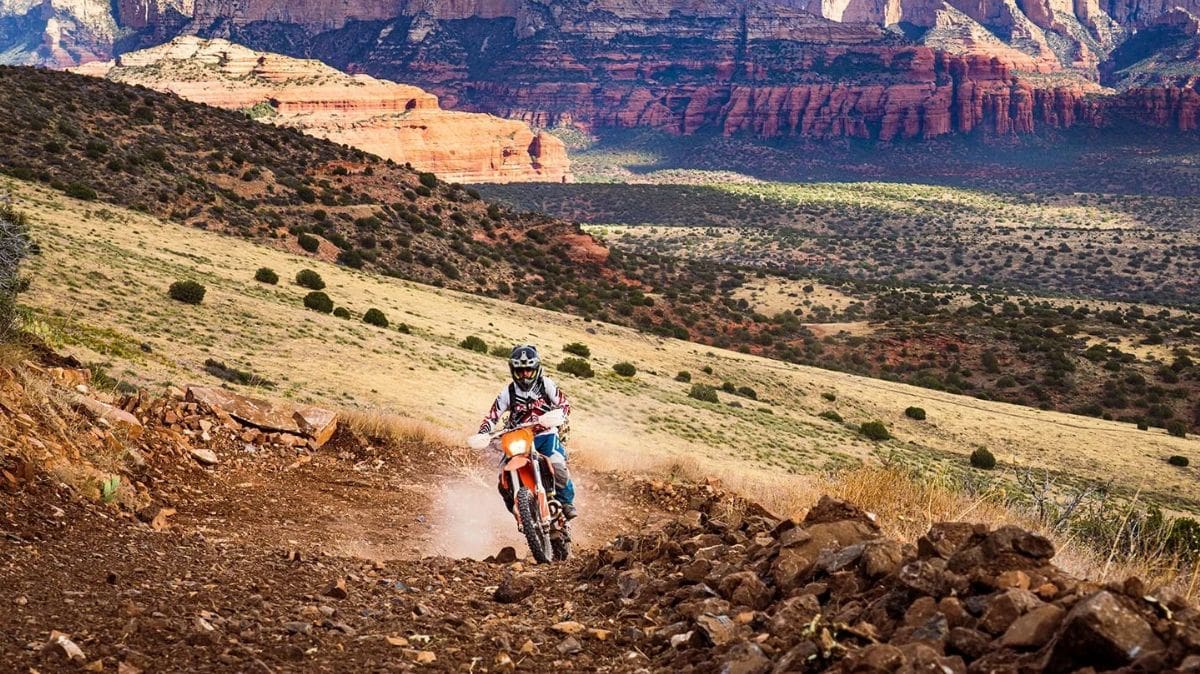
Now that I call Arizona home, November brings what we call “prime riding season”: crisp desert mornings, golden afternoon light, and endless miles of single-track and backcountry roads. From weaving through the saguaros around Sycamore Creek, climbing the rugged trails of Apache Trail to Four Peaks, to taking the long, dusty trek past Lake Pleasant out to the historic town of Crown King, the Southwest offers some of the best riding in the country.
As a 5’3″ female navigating 250-pound machines through mountain single-tracks, I’ve paid that deposit more than a few times. I remember one specific wreck vividly: coming hot down a switchback, hitting a patch of loose shale, and going down hard with the hot exhaust pinned against my leg while my bike lay upside down in the brush. The boys’ engines were already fading into the distance.
In that moment, laid out in the dirt, two things saved me: the sheer stubborn refusal to let the mountain win, and the gear on my body.
Wrecking isn’t a sign of failure; it’s an inevitable part of pushing your boundaries. Whether you are out for a weekend trail ride or lining up at a professional start gate, how you dress for the saddle determines whether a crash is a funny story around the campfire or a trip to the emergency room.
The Trail Essentials: Dressing for the Backcountry
Before you ever touch the throttle on a mountain trail, you need a solid foundation. Trail riding isn’t just about surviving a fall; it’s about endurance, weather protection, and self-reliance when you are miles away from the truck.
Here is what my personal “saddle kit” looks like every time I hit the dirt:
- Helmet & Goggles (With Tear-Offs): A DOT- and ECE-certified off-road helmet is non-negotiable. Paired with a good set of goggles, it keeps branches, dust, and roost out of your eyes. One of the coolest tricks in off-road riding is using tear-offs, a thin, transparent plastic film layered over your goggle lens. When mud, dust, or water splashes across your vision mid-ride, you don’t have to stop and wipe them with a muddy glove; you simply grab the tab on the side and peel a layer off for instant, crystal-clear sight.
- Face Covering (Neck Gaiter or Bandana): Just like cowboys pulling a bandana up on a dusty cattle drive, wearing a breathable neck gaiter or face covering over your mouth and nose is a must on the trail. It keeps you from inhaling and eating clouds of blowing trail dust and bugs kicked up by the riders ahead of you.
- Breathable, Padded Riding Gear: Mountain weather changes in a heartbeat, and wrestling a bike up a rocky climb is a full-body workout. I wear moisture-wicking, breathable riding jerseys paired with durable off-road pants that have built-in hip and knee padding to absorb minor bumps and brush scrapes.
- Gloves & Hand Guards: A solid pair of grip-enhancing gloves prevents blisters and protects your knuckles, while wrap-around hand protectors (barkbusters) mounted directly to my handlebars shield my fingers from whipping branches and keep my brake and clutch levers from snapping if the bike tips over.
- Tall Off-Road Boots: Unlike standard ranch boots, motocross and enduro boots are tall, rigid, and armored around the ankles and shins. They protect your lower legs from flying rocks, crushing weight if the bike lands on you, and, as I learned firsthand, searing-hot exhaust pipes.
- Chest Protectors: Many trail riders also strap on a roost deflector or chest protector to shield their ribs and sternum from rocks kicked up by the rider in front of them.
- The Backcountry Pack: When you’re deep in the Rockies, your backpack is your lifeline. I never leave without a pack equipped with a built-in hydration bladder (CamelBak) so I can sip water without stopping, high-protein snacks to keep my energy sharp, and a basic emergency tool kit and tire repair essentials in case of a breakdown miles from camp.
- Offline Maps & A Flight Plan: Cell service disappears fast once you drop into a canyon or climb above the treeline. Always download offline trail maps (using apps like onX Offroad or Gaia GPS) to your phone before leaving town so you can navigate without a signal. Just as importantly, always let someone at home know exactly where you are riding, and when you expect to be back; it’s the simplest piece of safety gear you’ll ever use.
Stepping Up to the Gate: What the Pros Wear
Once you move from backcountry trails to the high-speed chaos of professional Motocross and Supercross, the stakes and the technology skyrocket. Today’s pro athletes are wearing gear that blends aerospace engineering with AI crash detection.
1. Wearable Airbags (The Game-Changer)
The biggest leap in off-road protection in over twenty years is wearable airbag technology, led by systems like the Alpinestars Tech-Air® Off-Road. Developed in the grueling dust of the Dakar Rally, these lightweight vests sit underneath a rider’s jersey and feature integrated gyroscopes, accelerometers, and AI crash algorithms.
When the sensors detect a high-speed ejection or severe fall, the airbag deploys in milliseconds, inflating around the chest, back, shoulders, and collarbones before the rider even hits the dirt.
2. D3O® Smart Armor
Gone are the days of stiff, restrictive plastic plates that feel like wearing a trash can. Modern pro and trail gear utilizes D3O® smart materials, a soft, flexible orange polymer that moves naturally with your body while you ride, then instantly locks together on impact to absorb and disperse shock. It gives riders maximum mobility on technical climbs while offering heavy-duty impact protection during a wreck.
3. Rotational Brain Protection (MIPS)
Top-tier helmets have evolved far beyond basic foam shells. Pro helmets feature MIPS (Multi-Directional Impact Protection System), a low-friction slip-plane layer inside the helmet that rotates slightly upon angled impacts. This redirects rotational forces away from the brain, dramatically reducing concussion risks.
4. Mechanical Knee Braces
In professional racing, riders routinely launch 80-foot jumps and drag their inside leg through deep, rutted corners. Instead of basic foam knee pads, pros wear custom-fitted, hinged carbon-fiber knee braces (like Mobius or Leatt) that act like external ligaments, preventing hyperextension and devastating ACL injuries.
Tech Built for the Female Frame
For years, women in motorsports had to settle for “shrink it and pink it” men’s gear scaled down and dyed pastel. But as female participation surges across trail riding and the professional WMX circuit, top manufacturers are finally engineering protection tailored to female anatomy.
- Ergonomic Body Armor: Systems like the Alpinestars Stella line feature chest and back protectors contoured specifically for a female torso, ensuring armor sits flush against the body without pinching or restricting breathing during steep climbs.
- Proportionate Fit: Women’s riding pants, jerseys, and knee guards now feature tailored waistlines, narrower straps, and articulated cuts so smaller-framed riders aren’t constantly fighting bunching fabric or slipping pads mid-ride.
Turning Fear into Freedom
Whether you’re pulling up a neck gaiter against the desert dust on the way to Bumble Bee, trusting your boots and hand guards on a rocky climb, packing a hydration bladder for a full day in the Colorado backcountry, or strapping on a carbon-fiber knee brace at a national start gate, good gear does more than protect your bones; it changes your mindset.
When you know your equipment can handle the terrain, hesitation disappears. You look at a steep, rocky climb not as a place to get hurt, but as a challenge to conquer. You hit that electric start, pick the bike back up, and keep moving forward.
Just like a rodeo athlete knows that getting bucked off is part of the ride, every dirt biker knows it isn’t about never hitting the dirt; it’s about having the grit and the gear to climb right back into the saddle for the next eight seconds.
The saddle is open, the trails are calling, and with the right gear, the mountain is yours for the taking. Let’s ride!
The whole month, told well.
A free monthly email, read across Arizona and the West
Every story we publish. Rodeo, country music, and the people behind the Western lifestyle. Plus first word when something big is coming.