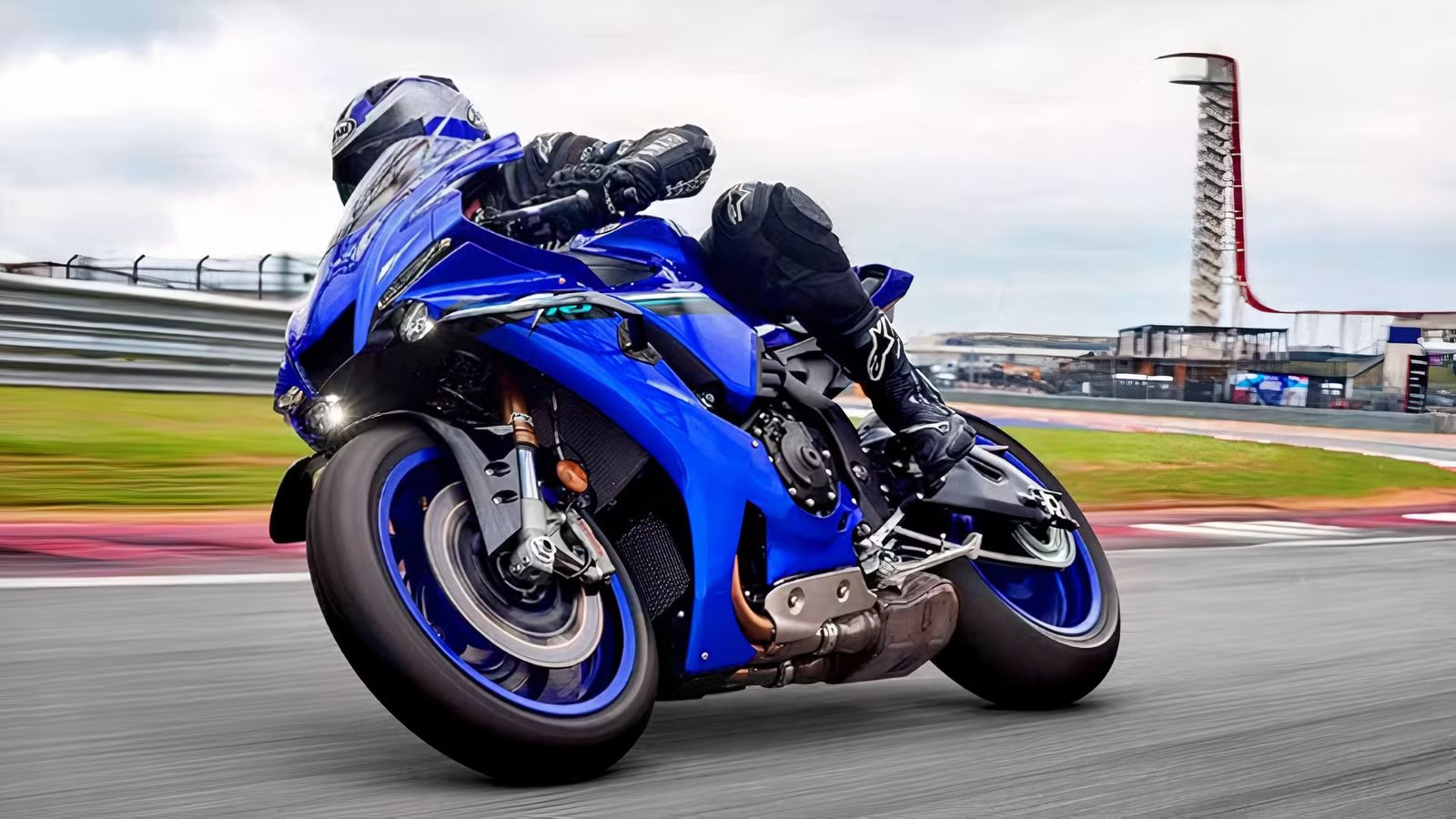
Some motorcycles disappear because they stop being sold, while others disappear because the world around them changes more rapidly than ever before. It’s that strange niche that litre-class superbikes currently occupy. They’re still poster material, still ridiculous in the best way, and still the closest to a race bike with mirrors and turn signals you can buy. But the world they were built for is shrinking. Regulations have tightened, buyers are changing, and the idea of owning a 200-horsepower street missile is becoming less common with each passing year.
The superbike era is slowly coming to an end
For decades, the superbike formula was easy to understand. Big power, very fast bodywork, serious brakes, a controlled riding position, and enough race DNA to make your insurance provider sigh out loud. This was the class that every manufacturer wanted to dominate because winning the superbike wars meant proving that you had the fastest, smartest engineers in the business. Owning one wasn’t always practical, but practicality was never really the issue.
However, that formula now has to survive in a market that is changing much faster than motorcycles. Emissions regulations are becoming stricter, developing electronics has become increasingly expensive, and building a road-legal superbike that satisfies regulators while remaining competitive on the track is not getting any cheaper. At the same time, fewer riders are visiting dealerships in search of full-on sports bikes, making it much harder for manufacturers to justify investing millions in machines that attract increasingly niche audiences.
There is a lot of pressure on superbikes from other segments

The funny thing is that the display did not disappear. It just moved to somewhere more comfortable. Naked bikes now offer litre-bike levels of acceleration without forcing riders to lean aggressively every time they leave the garage. ADVs have become the default choice for riders who want a motorcycle that can commute during the week, commute on the weekends, and tackle the occasional dirt road. Sport-tourers have become fast, smart and packed with technology, while premium retro bikes have figured out how to blend classic styling with thoroughly modern performance.
This has made life more difficult for conventional superbikes. Riders who once dreamed of having the fastest track weapon on the showroom floor now have plenty of options that are nearly as fast in the real world while being much easier to live with every single day. The result is not that performance becomes less desirable. It’s just that buyers have started demanding that performance in motorcycles that don’t demand too many compromises.
Why the Yamaha MT-07 might be the best used bike on Earth?
The Yamaha MT-07 proves that the best used bike isn’t always the fastest or coolest. Sometimes, simpler works better.
Racing still needs monsters, but street doesn’t

This is where things get weird. Racing still needs serious homologation machinery, because manufacturers need platforms that can win on Sundays and look vaguely related to something in a showroom. However, the road doesn’t really require that level of aggression anymore. Most riders can’t use even a fraction of what these bikes have to offer unless they’re on a racetrack, and even then, the bike is probably still waiting for the rider to catch on.
The growing gap between track legends and real-world reality

Modern superbikes are so capable that the usual spec-sheet arguments begin to seem almost silly. The power is very big. Brakes are dangerous. The chassis feedback is surgical. The electronics can manage wheelies, slides, engine braking, launch control and traction with quiet precision that makes the rider seem more adventurous than he is. On the track it’s amazing, but on the road, it also means you’re riding a machine designed for a world of curbs, apexes and medical staff.
Yamaha R1 will definitely be missed whenever it launches

The motorcycle in question is the Yamaha YZF-R1, and if it ever disappears from more markets, riders will talk about it as if they always knew they should have bought one. The road-legal version has already been discontinued in Europe, where it has shifted towards track-only use from 2025. In the US, it is still available, with Yamaha listing the current YZF-R1 at $19,199 before destination and other charges.
The current model is still the superbike that people think of when they hear “R1”. It uses a 998cc liquid-cooled inline-four with Yamaha’s crossplane crankshaft layout, fuel injection with YCC-T and YCC-I, a six-speed transmission, an assist and slipper clutch, and chain final drive. Its 79.0 mm x 50.9 mm bore and stroke, 13.0:1 compression ratio, 4.5-gallon tank, and estimated 33 mpg rating tell you this is no pretense for casual transportation.

|
engine |
998cc liquid-cooled DOHC inline-four, crossplane crankshaft, 16 valves |
|
Production |
198 hp @ 13,500 rpm / 83.2 lb-ft @ 11,500 rpm |
|
transfer |
6-speed constant mesh with assist and slipper clutch, chain final drive |
|
0 to 60 mph time |
about 2.7 seconds |
Europe may have said goodbye, but is America next?

This is an uncomfortable question. Yamaha hasn’t said that American road bikes are going away, and it would be irresponsible to pretend otherwise. But Europe’s move shows how quickly things can change when emissions rules, customer demand and business realities all start pointing in the same direction. The current global situation gives some relief to R1, but does not guarantee a lifetime. Superbikes don’t usually disappear because someone doesn’t love them. They disappear because not enough people buy them.
Kawasaki sports bike that rivals Yamaha R1 at a lower price
This Kawasaki SuperSport closely matches the Yamaha R1 in terms of both specs and racing pedigree.
Why is it impossible to replace R1?

The magic of the R1 isn’t just that it’s fast. A lot of superbikes are fast. What makes it special is that its CP4 engine gives the rider a different kind of connection with the rear tyre. Yamaha describes the Crossplane crankshaft as MotoGP-derived, and the result is a motor that delivers power with a different pulse and a more linear connection between throttle input and drive. It’s not just numbers. There is a rhythm to it.
The hardware is just as serious. The chassis utilizes a sophisticated Deltabox frame, a fully adjustable 43mm KYB inverted fork with 4.7 inches of travel, and a fully adjustable KYB rear shock with the same travel. Braking comes from dual 320 mm front discs with ABS and Yamaha’s Brake Control system, as well as a 220 mm rear disc. The current bike also gets MotoGP-inspired carbon fiber winglets, Brembo Stylema front callipers and a Brembo master cylinder.
|
frame |
Aluminum Deltabox frame with magnesium rear subframe |
|
suspension |
Front: 43mm KYB fully adjustable upside-down fork, 4.7 inches of travel • Rear: KYB fully adjustable monoshock, 4.7 inches of travel |
|
break |
Front: Dual 320 mm hydraulic discs with Brembo Stylema monobloc calipers and Brembo radial master cylinder • Rear: Single 220 mm hydraulic disc |
|
wheels and tires |
17-inch cast aluminum wheels • Front: 120/70ZR17 Bridgestone Battleaxe Racing Street RS11F • Rear: 190/55ZR17 Bridgestone Battleaxe Racing Street RS11R |
|
wet weight |
448 pounds |
Electronics matter because they make the bike usable, not because they make it restrained. Yamaha’s IMU-powered rider aids, ride-by-wire throttle, TFT display, and track-focused control system help transform brutality into something a rider can realistically achieve. But they don’t turn it into a tool. R1 still asks you something. It’s still got that superbike intensity, that low clip-on seriousness, that understanding that every normal road is a little small for what it wants to do.
A formula that has been refined over the years
That’s why it will be so difficult to replace. You can buy something newer, more powerful, more expensive, or more exotic, and you still won’t get the same personality. The R1 sits in a rare spot between Japanese precision and genuine strangeness, thanks in large part to that crossplane engine. It’s polished, but not sterile. It’s advanced, but not isolated. It’s familiar enough to be an icon and strange enough to remain interesting.
The Yamaha YZF-R1 hasn’t gone everywhere, and that difference matters. But Europe’s change to track-only status is a warning light on the dash. The world of superbikes is changing, and the R1 represents one of the last great versions of a very specific idea: a road-legal race-bred machine that doesn’t care whether the modern motorcycle market has moved on or not. That’s why people will miss it when it’s gone.
Source: Yamaha