Some cars become legends. So do some engines, and Bugatti’s W16 is one of them.
The company’s 8.0-litre quad-turbocharged W16 has been one of the great engineering achievements in more than 20 years of road car history.
It powered the Veyron that rewrote the hypercar rulebook, the Chiron that pushed performance forward again, and every major Bugatti that came after.
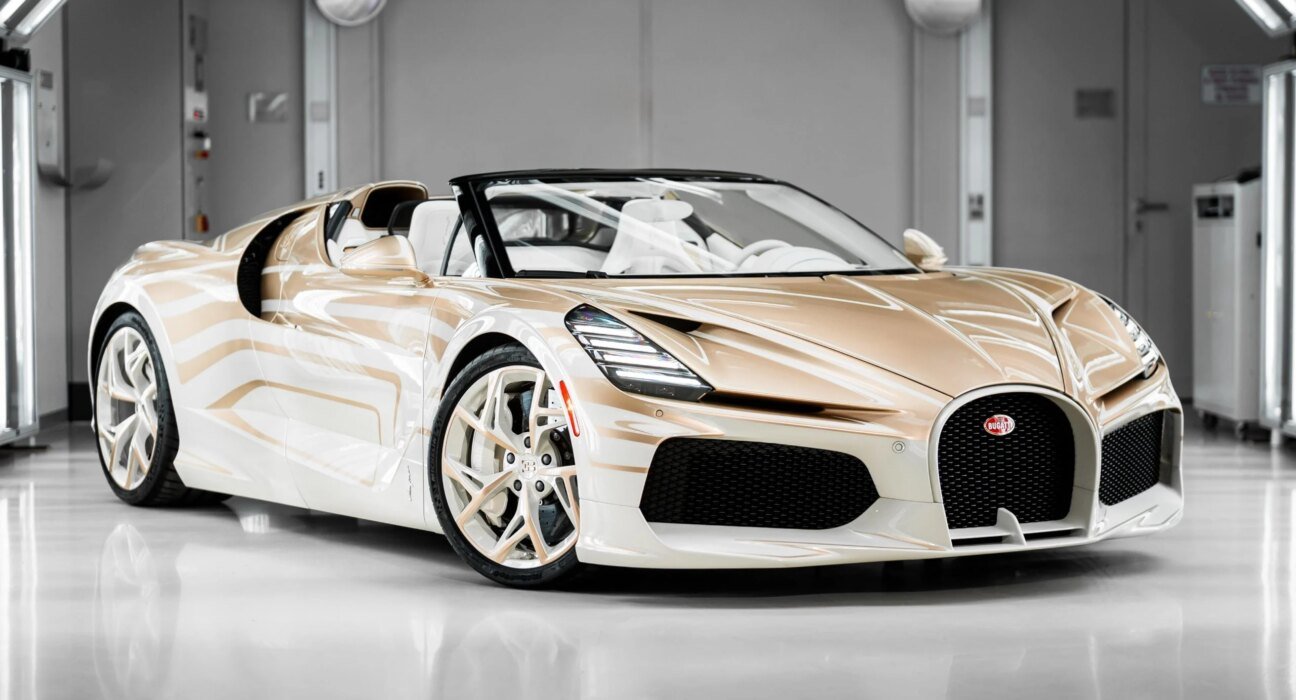
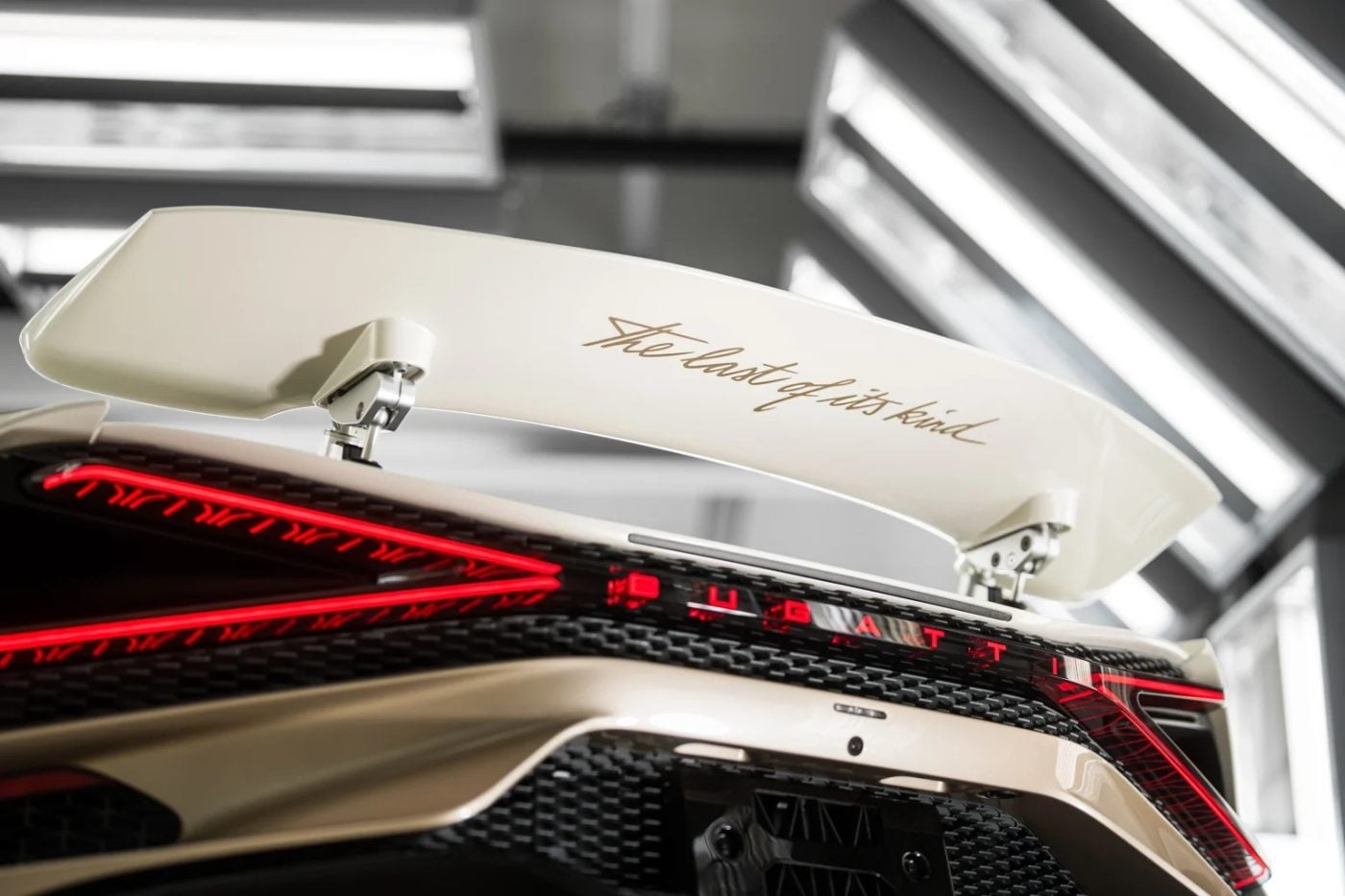
Now that the race is officially over. Bugatti has unveiled the 99th and final Mistral, the last series production car to leave the company’s historic Molsheim atelier with a W16 behind its seats.
Curated news for men,
Sent to your inbox.
Join the DMARGE Newsletter – Be the first to receive the latest news and exclusive stories on style, travel, luxury, cars and watches. Straight to your inbox.
RELATED: How Much Does It Cost to Own and Maintain a Bugatti
the engine that changed everything
When Volkswagen revived the French marque in the late 1990s, it planned to build a car that no one had even thought of. The result was the Veyron.
Launched with 1,001 horsepower, the Veyron became the world’s fastest production car and fulfilled what people expected from a street-legal machine.
Every Bugatti since the Chiron, Divo, Centodesi, Bolide and eventually the Mistral carried that engine.
The W16 itself was unlike anything else on the road. Its unusual W-shaped layout packed 16 cylinders into a surprisingly compact package, and four turbochargers provided serious power without any theatrics. It became a Bugatti trademark, just like the horseshoe grille or the blue paintwork.
RELATED: The Ultra-Rare White Bugatti Chiron Is a Unique Masterpiece

a fitting farewell
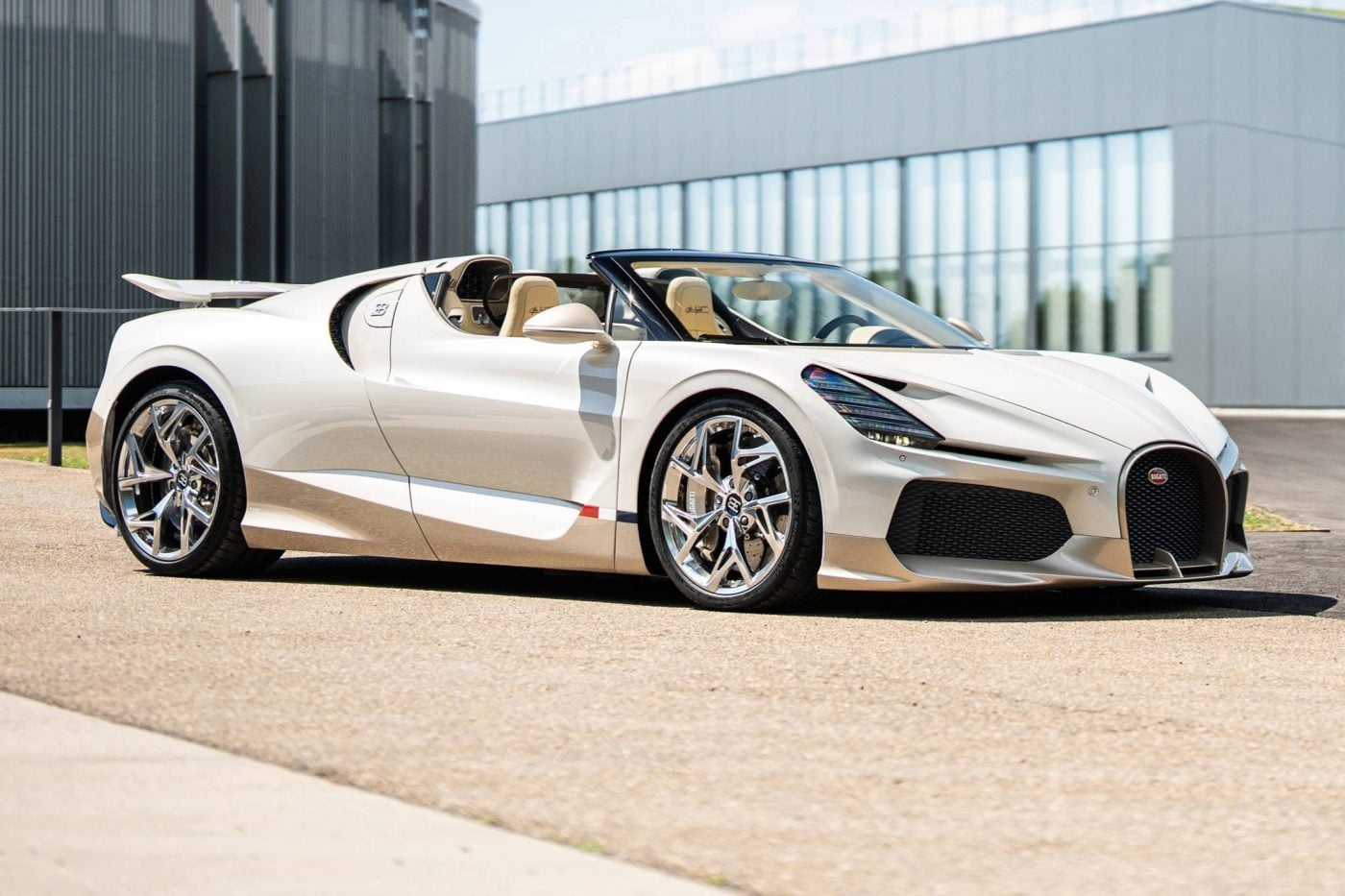
The last Mistral is appropriately named The Last of Its Kind. Finished in a two-tone pearl and sparkle paint job, the roadster gets a magnolia and gray carbon matte leather interior, with Bugatti founder Ettore Bugatti’s signature stitched into each headrest. It’s as much a collector’s piece as it is a hypercar.
However, the real star sits underneath. The W16 now produces 1,578 horsepower and 1,180 lb-ft of torque, enough to launch the open-top Mistral from 0 to 62 mph in 2.4 seconds and on to 282 mph.
That figure is not theoretical. In 2024, a specially prepared Mistral set a world record for the fastest open-top production car ever built. The W16 had one last milestone left, and it achieved that one.
RELATED: Bugatti’s New $6.5 Million Tourbillon Hybrid Breaks Every Rule
An era ends, a new era begins
Bugatti isn’t abandoning big engines entirely. Its next car, the Tourbillon, swaps the turbocharger for a naturally aspirated V16 with three electric motors.
It is the largest technological pivot the company has ever made, forcefully incorporating electric motors coupled to a large engine.
Nevertheless, the W16 will remain unmatched. Few engines survive two decades at the top of the performance world, and even fewer still become cultural icons.
Technically, there is a small drawback. Bugatti says ultra-wealthy collectors can still commission one-off W16-powered creations through its Program Solitaire division, whose first special projects already feature the same engine.
However, everyone else’s work is done. The story ends here. The final Mistral is one of the most remarkable production engines ever made by the auto industry.
Hypercar makers will continue to chase big numbers. They may never make another engine like it.