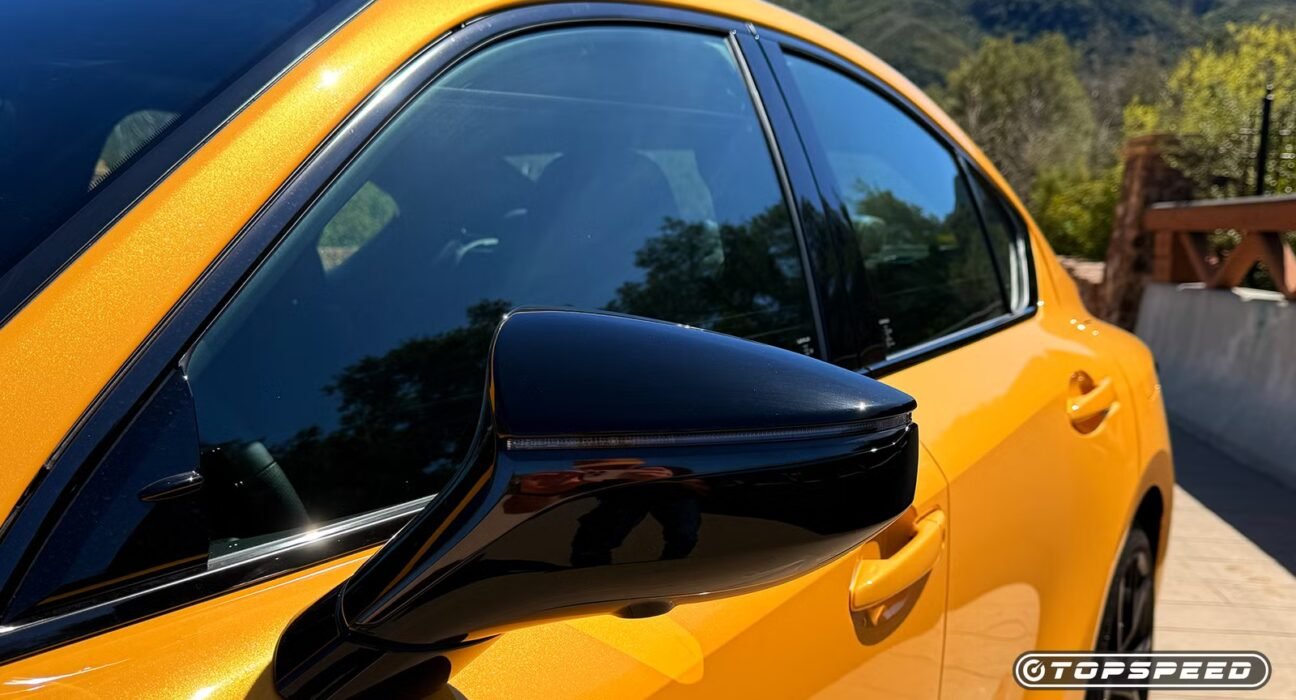
Somewhere on a dealer lot right now there’s a compact sedan that costs less than a loaded BMW 3 Series and revs to 7,100 rpm. Looks like it should wear a muscle car badge. It puts to shame cars that cost more and have flashy logos. And the company that made it pulled the plug on it without even a farewell tour. You’ve almost certainly walked past one and never noticed. That’s more or less the whole point.
Sport sedan forgot how to be fun
Compact performance sedans used to be the default choice of enthusiasts. Then the whole class quietly changed their minds about what matters. Turbos replaced revs. The screen replaced the switch. The numbers on the spec sheet replaced the noise that made you take the long way home.
What did the class sacrifice?

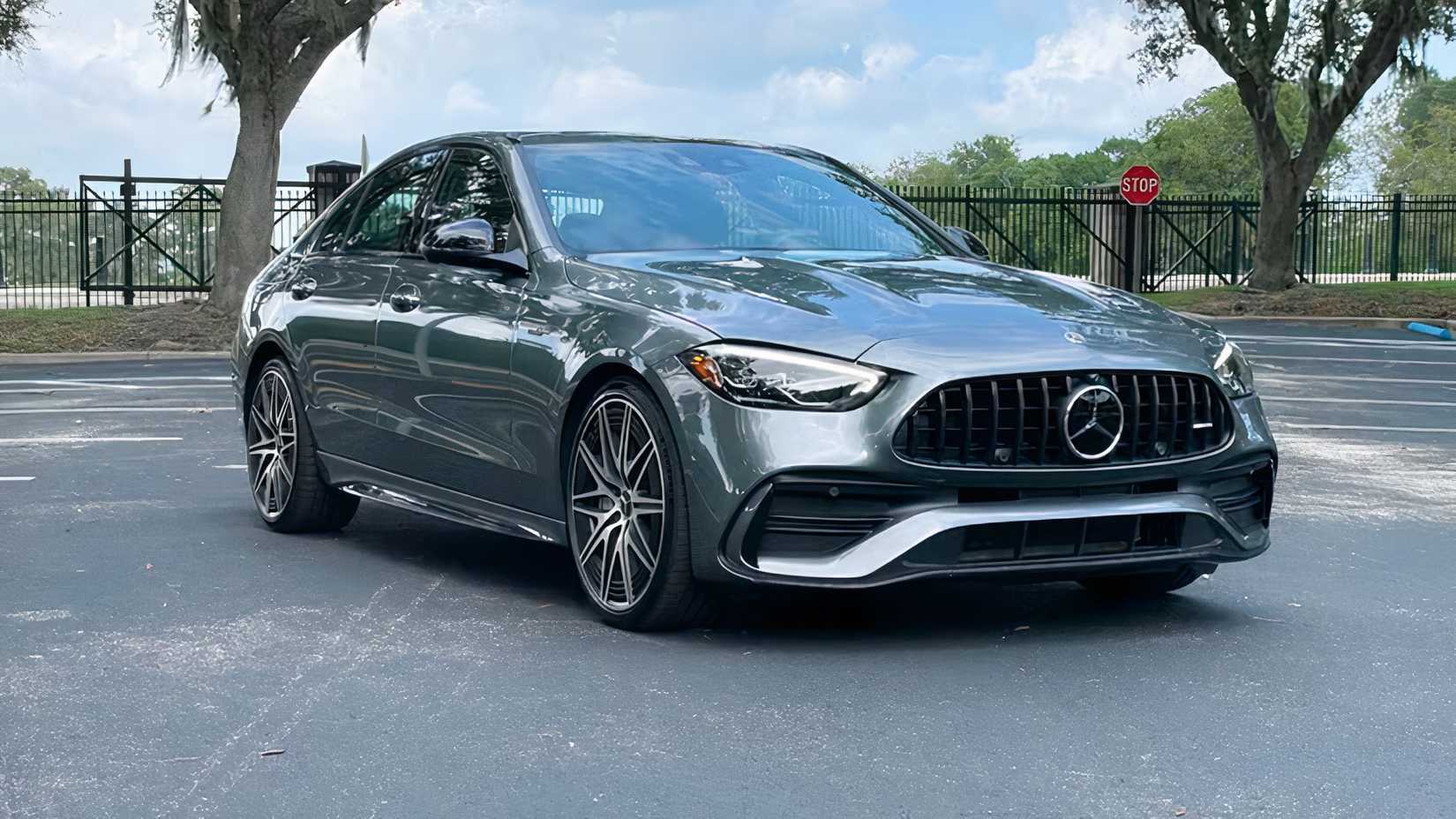
The Mercedes-AMG C43 is a clear example of this. It ran on six cylinders. It now runs a 2.0-liter turbocharged four with an electric-assisted turbo, and it pipes most of its engine noise through the speakers. BMW’s M340i is actually better with a beautiful turbocharged straight-six. Audi’s S4 relies on a turbo V6 that gets the job done without making you feel a thing. Every one of them is fast. Very few of them are memorable. The class formula simplified: more torque, less character, and a big touchscreen to distract you from business.
who refused
One car ignored the memo completely. While all the others were downsized and turbocharged, this one stuck to a naturally aspirated V8. Not a turbo six giving the impression of a V8, but an actual eight-cylinder that makes its peak power just above redline, the way the engine flattens everything out in the same low-down shove before boost. On paper it is slower than some of its rivals. It is dated inside. And this is the most pleasing thing in this segment. It’s also Japanese, which almost no one saw coming.
Meet the Lexus IS 500, the V8 that shouldn’t exist

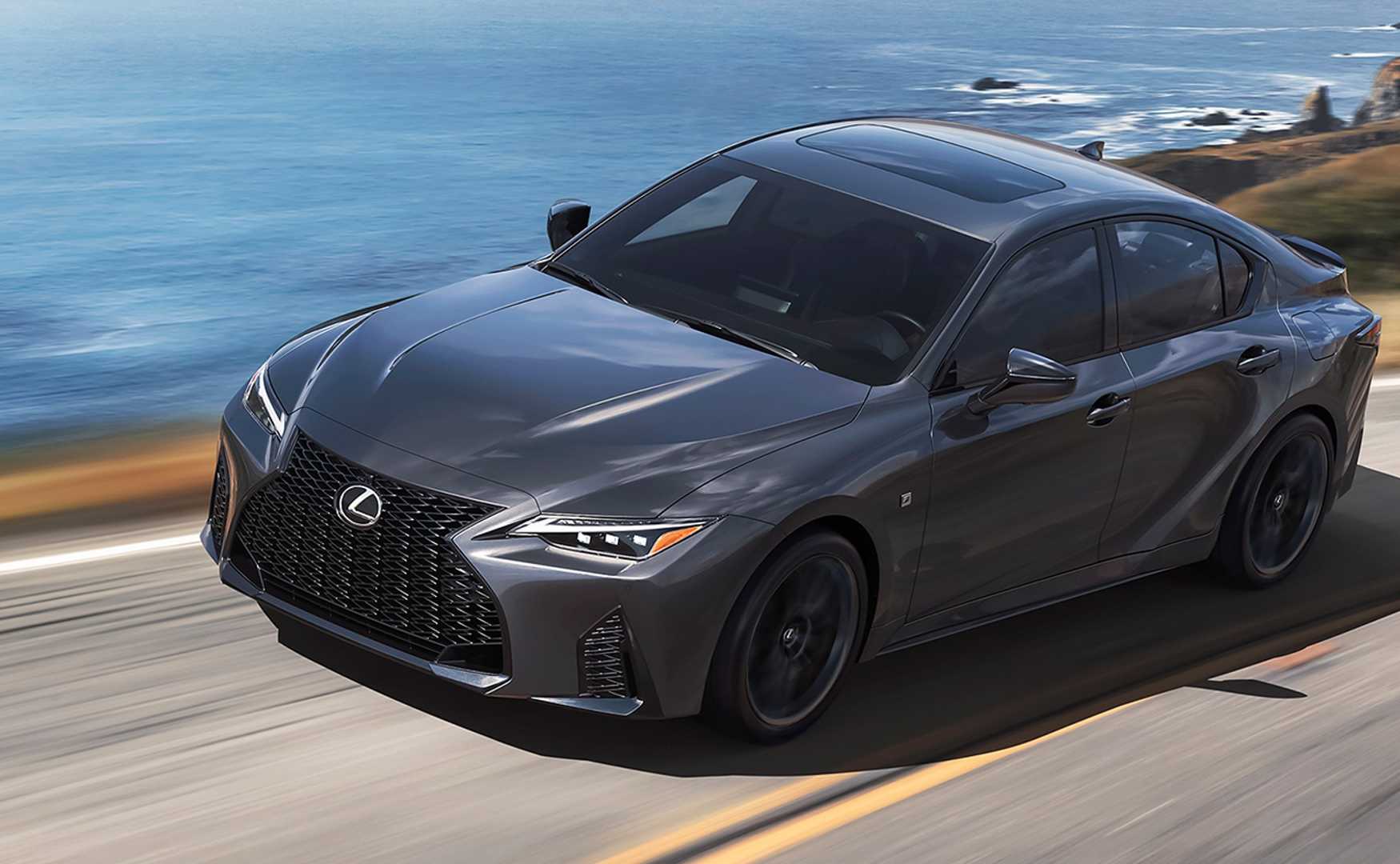
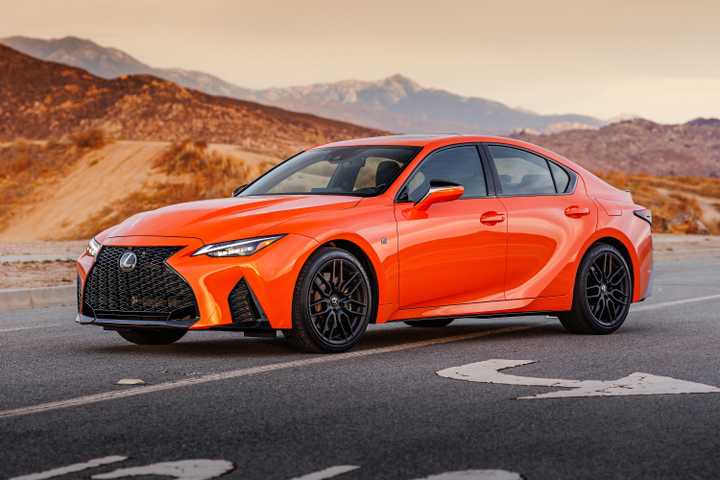
The holdout is the Lexus IS 500 F Sport Performance. Lexus took the 5.0-liter naturally aspirated V8 from the LC 500 Grand Tourer, an engine it calls 2UR-GSE, and put it in the nose of its smallest sedan. The result makes 472 horsepower at 7,100 rpm and 395 pound-feet of torque at 4,800 rpm, sending everything to the rear wheels through an eight-speed automatic, and it feels like nothing else you can buy in this class. We said as much when the IS 500 was first axed.
The engine no one else offers

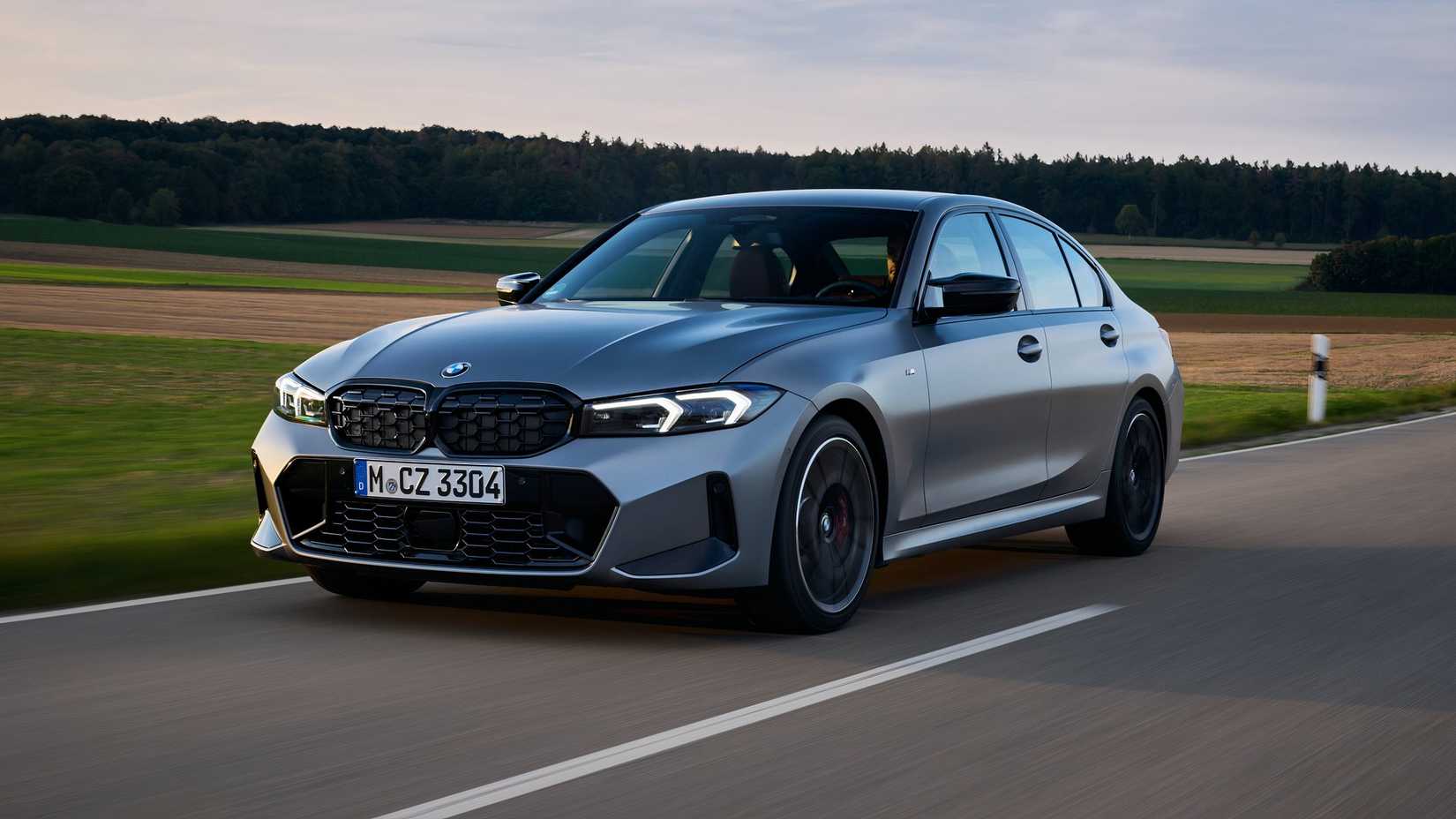
Here’s the entire argument in one sentence: No rival in the segment will sell you a naturally aspirated V8. The C43 exchanged its six for four. The M340i runs a turbo straight-six that, to its credit, sounds great, but it’s still a boosted engine, whose personality is front-loaded and fades as the revs climb. Lexus does the opposite. It pulls harder and feels better the closer the needle spins to 7,100 rpm, and there’s no turbo lag anywhere because there’s no turbo at all. In 2026, that combination is virtually extinct.
Where it wins and where it loses

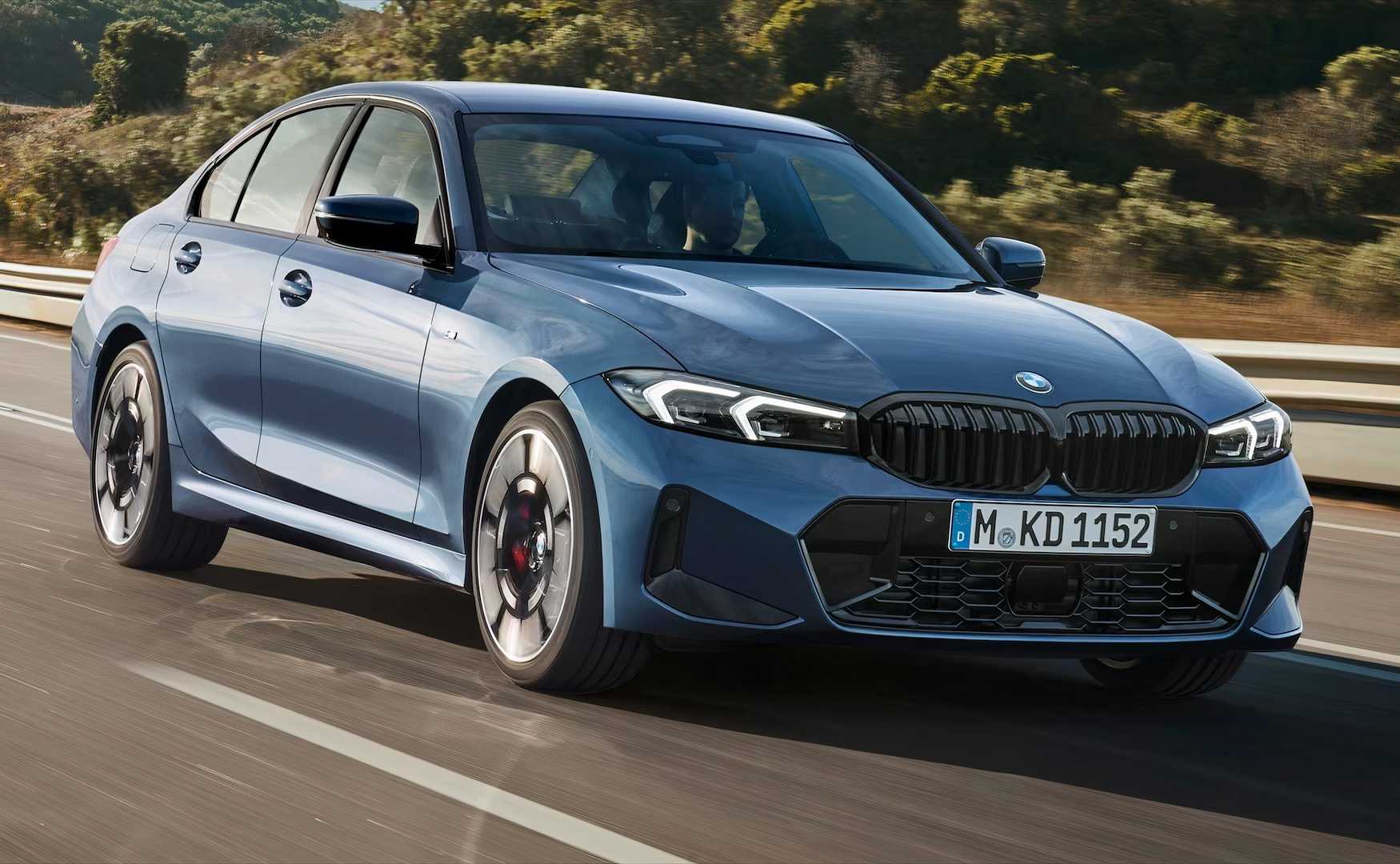
Be honest about the loss first. The M340i accelerates to 60 mph in about 4.1 seconds versus Lexus’ claimed 4.4 seconds. C43 is right in the mix too. The Germans also bring sharper infotainment, a new cabin and more useful rear seats, while the IS rides on a platform more than a decade old. On the spec sheet and stopwatch, the Lexus lags behind.
Now win. For about $59,500, 472 horsepower is plenty of engine value for the money, and it undercuts a comparably equipped M340i on horsepower per dollar. It doesn’t rotate like anything else in orbit. And it hands back the one thing quietly seized by turbocharging: a long, linear, building rush of power tied to a soundtrack you actually want to hear. The Germans won the debate on paper. Lexus wins the drive home. Summarize words for what an enthusiast really feels, and it doesn’t come close.
Why have you never heard of it?
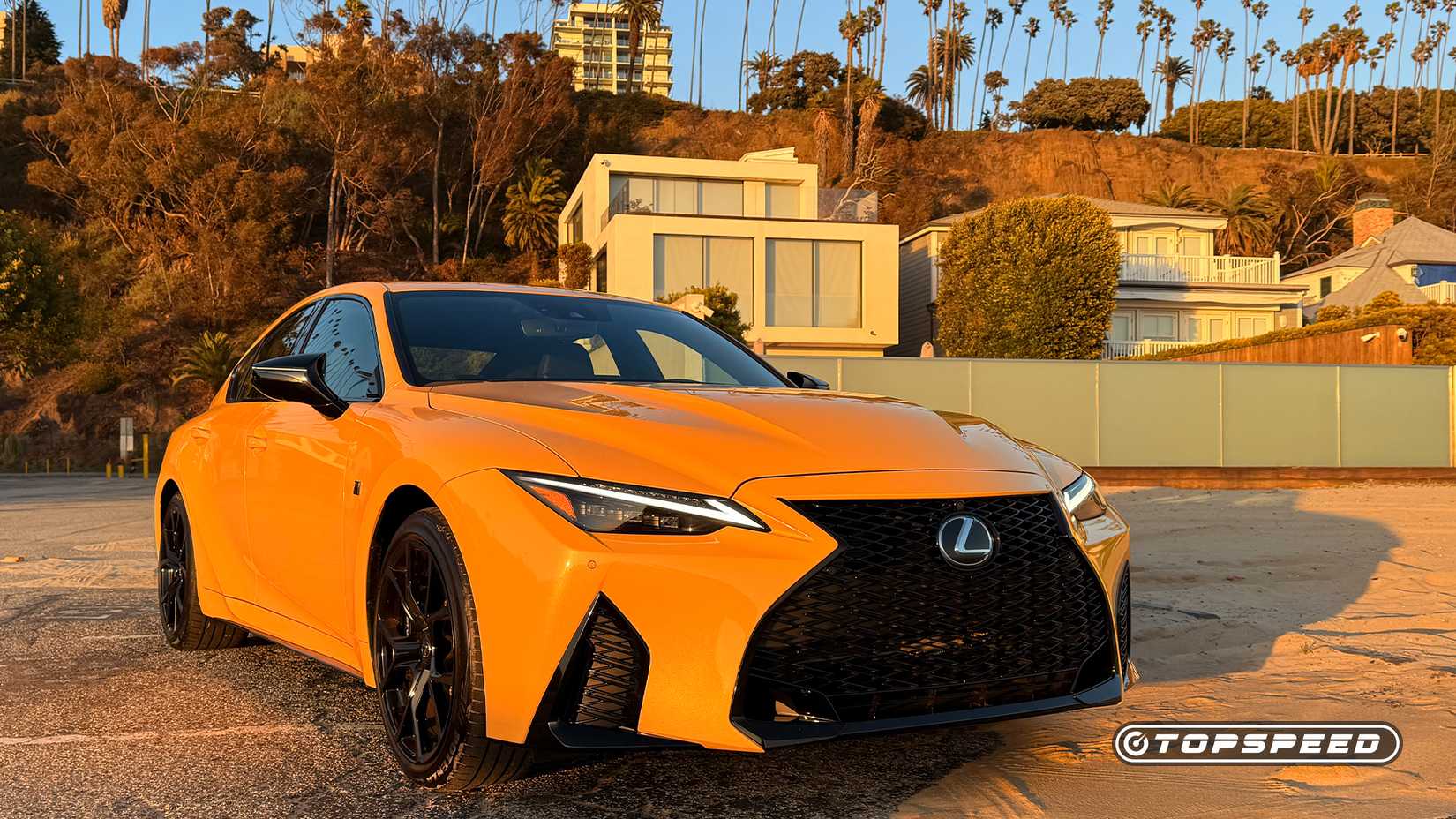
The 472-horsepower V8 sedan should make a headline. This was close to a rumor, and it was no one else’s fault but Lexus. Park the IS 500 next to the base IS, and most people can’t tell them apart. The V8 is hidden behind a set of quad exhaust tips, a small badge and very little else. This moderation is really good if you know what you’re looking for. It is also an occupational poison. Nobody cross-shops a car they can’t lift out of a parking spot, and to most buyers the IS 500 looks like the sensible Lexus they lease from their neighbor.
lexus barely tried
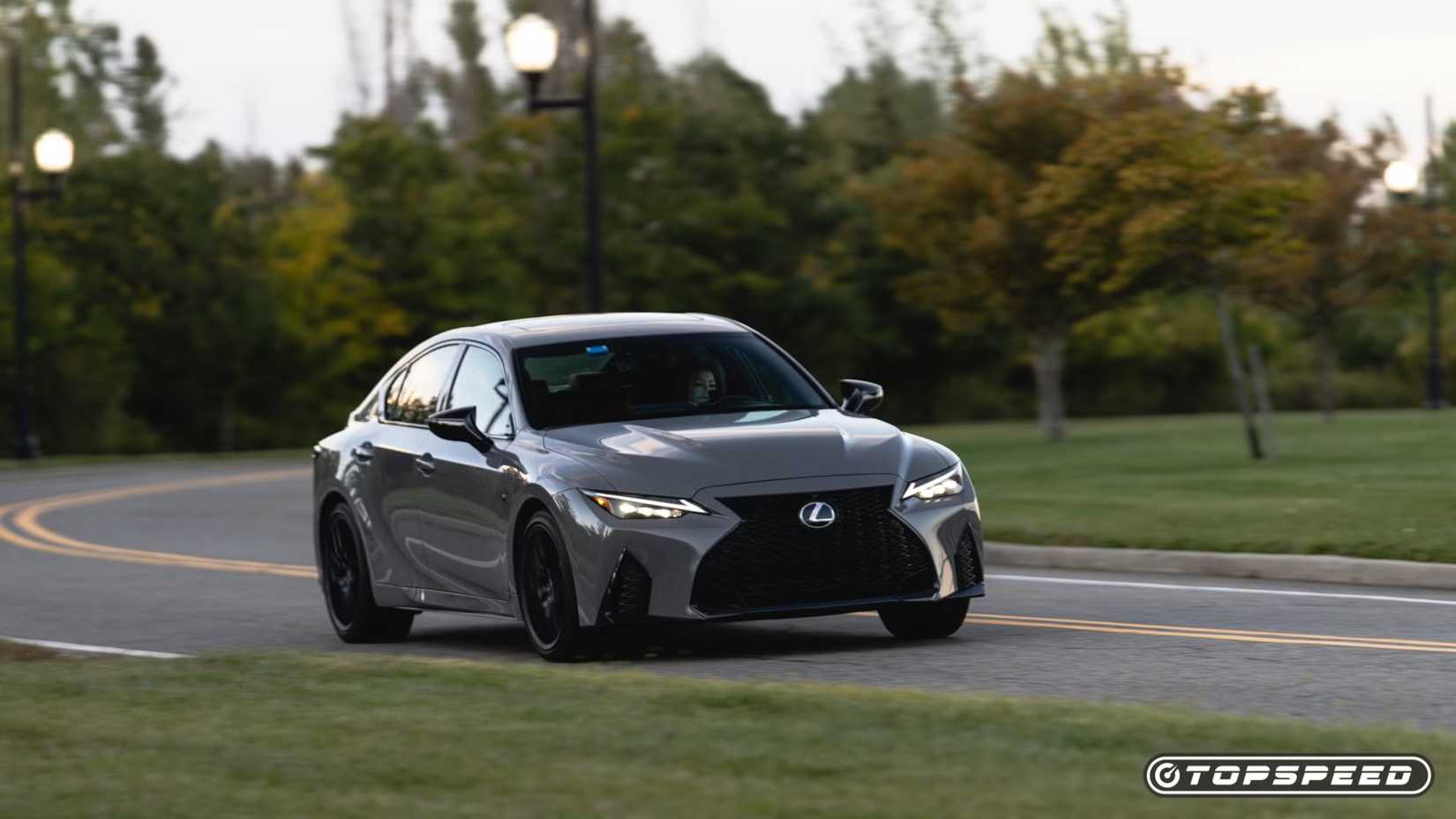
is 500 There was never any real marketing incentive. It sat quietly at the top of the old lineup while Lexus turned its attention and its budget toward hybrids and SUVs. When the end came, there was no proper farewell, only a limited Ultimate Edition and a lineup arranged for 2026. Officially, this reads as a clean business decision. Read it a little carefully, and it seems like this is a car the company was never fully committed to selling. It’s hard not to be embarrassed by a rival who forgot to tell someone it existed.
and now it’s gone

This is the twist that gives its bite to this entire story. The IS 500 hasn’t simply been ignored. It has been closed. For 2026, Lexus refreshed the IS and quietly dropped the V8. The range now features the IS 350 F Sport and F Sport Design, both running on a 3.5-liter V6 that makes 311 horsepower. It is an absolutely pleasant engine. This is not a 7,100-rpm V8. Lexus sees the move as streamlining the lineup rather than any comment on sales, which fits a car it never properly marketed to begin with. Either way, the naturally aspirated V8 compact sport sedan is now extinct, and the IS 500 was the last one to sit.
It makes used items attractive

Everything that went into selling the IS 500 when it was new, the pristine cabin, the price, the near-invisibility, means little in the used market. What’s left is the part that always mattered: a strong Toyota-Lexus V8, rear-wheel drive, and a noise that no one makes anymore. As the rest of the class becomes turbocharged and electrified, the last naturally aspirated V8 in the segment becomes more special. A car that was ignored by the market when it was new can easily become a prey for enthusiasts once it’s gone forever.
The IS 500 is worth chasing now that it’s gone

On paper, the case against the IS 500 writes itself. It’s not like that He It’s significantly cheaper than the M340i and has a top speed of 60 mph. Its cabin is a decade behind the Germans in terms of screens and switchgear. Lexus barely marketed it and then discontinued it, which tells you how much confidence the company had in the figures. Shop with a spreadsheet, and you’ll buy the BMW, drive home, and never think about a Lexus again.
But numbers were never this car’s issue. The IS 500 is for the driver who cares more about how the engine sounds at 7,000 rpm than tenths of a second on the strip, and on that measure, it has no rivals, because there are no rivals left. Everything else in the class was turbocharged, downsized, or quietly died. Remove the new-car price premium that always worked against it, and a used IS 500 becomes exactly what it was always meant to be: the last naturally aspirated V8 sedan in its class, waiting for the arrival of the enthusiasts who ignored it. The Germans conquered the showroom. Lexus wins the long game.



- base trim engine
-
5L V-8 ICE
- base trim transmission
-
8-speed automatic
- base trim drivetrain
-
Rear-wheel Drive
- Base Trim Horsepower
-
472 hp @7100 rpm
- base trim torque
-
395 lb-ft. @4800rpm
- Base Trim Fuel Economy (City/Highway/Combined)
-
17/25/20 mpg
- base trim battery type
-
lead acid battery
- Make
-
lexus
- Sample
-
is 500
Source: Lexus, Edmunds, KBB