The primary motivator for automakers to develop hybrids or hybrid electric vehicles (HEVs), as others would prefer to call them, is efficiency. Reducing the engine load only to where it works most efficiently, and then leaving the electric motor to do the rest, is the perfect recipe for significant fuel efficiency improvements. Just take a look at the hybrids from Toyota and Honda, and they follow this engineering philosophy perfectly.
However, as you’ll also probably notice, hybrid drivetrains are increasingly being used for improved performance. In fact, one positive effect of going the hybrid route is making the vehicle’s entire drivetrain feel more responsive. Depending on the goals of the automaker, the electric motor may make a vehicle more powerful or the electric motor may compensate for a smaller, more efficient engine.
Whatever the case, the age of the performance hybrid has arrived, and you’ll be surprised that it even fits into a vehicle that’s both practical and efficient. However, keep in mind that this article focuses only on hybrids and not plug-in hybrids.
When hybrids were used for demonstration
To understand how we got to this point in the automotive world, we have to take a look at past hybrid models that weren’t built solely for efficiency. Instead, these vehicles have demonstrated that hybrid technology can also make a vehicle faster.
The most efficient Porsche of its time

In 2011, Porsche released S hybrid models of the Panamera and Cayenne. Prior to Porsche’s current e-Hybrid, which is a plug-in hybrid system, the Cayenne S Hybrid and Panamera S Hybrid integrated a supercharged 3.0-liter V-6 with an electric motor mated to an eight-speed automatic. In the case of the Panamera S Hybrid, it had a top speed of 167 mph, as well as a 0-100 km/h (62 mph) time of six seconds – 0.3 seconds faster than the non-hybrid V-6. Porsche’s S Hybrid models feature a parallel hybrid configuration, which is typically used for performance applications rather than the series-parallel systems that Japanese brands typically use in their efficiency-focused hybrids.
With this hybrid system, the Panamera and Cayenne can travel in pure electric mode for about a mile or two, like any typical hybrid today. The Panamera S Hybrid and Cayenne S Hybrid had CO2 emissions ratings of 167 and 193 g/km respectively, the lowest of any Porsche at the time. Similarly, with combined MPG figures of 21 and 25 mpg for the Cayenne S Hybrid and Panamera S Hybrid respectively, they were among the most efficient Porsches. Efficiency while improving performance was the engineering goal for the Panamera S Hybrid and Cayenne S Hybrid.
Through-the-Road Hybrid

Now, you’ve heard of series-parallel and parallel hybrids, but have you heard of through-the-road (TTR) hybrids? TTR hybrids are mostly all-wheel drive (AWD) hybrids, but one driveshaft is driven entirely by electric motors, while the other is coupled to the internal combustion engine (ICE). Although Peugeot’s hybrid systems in the early 2010s were TTR systems, the most common use of TTR hybrid systems is in sports cars. Two of them are sold in the United States, and these are the Acura NSX and the only TTR hybrid sports car in production today, the Chevrolet Corvette E-Ray.
Due to the layout of the TTR Hybrid, the Corvette E-Ray and NSX are front-wheel drive (FWD) cars when running in pure electric mode. The same is the case for two other famous plug-in hybrid sports cars, the BMW i8 and the Porsche 918. The main difference of the TTR Hybrid is its lack of physical connection between the front and rear axles. Thus, they can work independently or in tandem, which is perfect for display applications. For those who are curious, the new Porsche 911’s T-Hybrid system is a parallel hybrid, but since it doesn’t run in pure electric mode, we won’t focus on this model.

Hybrid cars with the best fuel economy in 2026
This full hybrid is the fuel-economy champion among cars that do not require any special charging routine from the driver to achieve maximum efficiency.
This SUV is hybrid MAX-xing

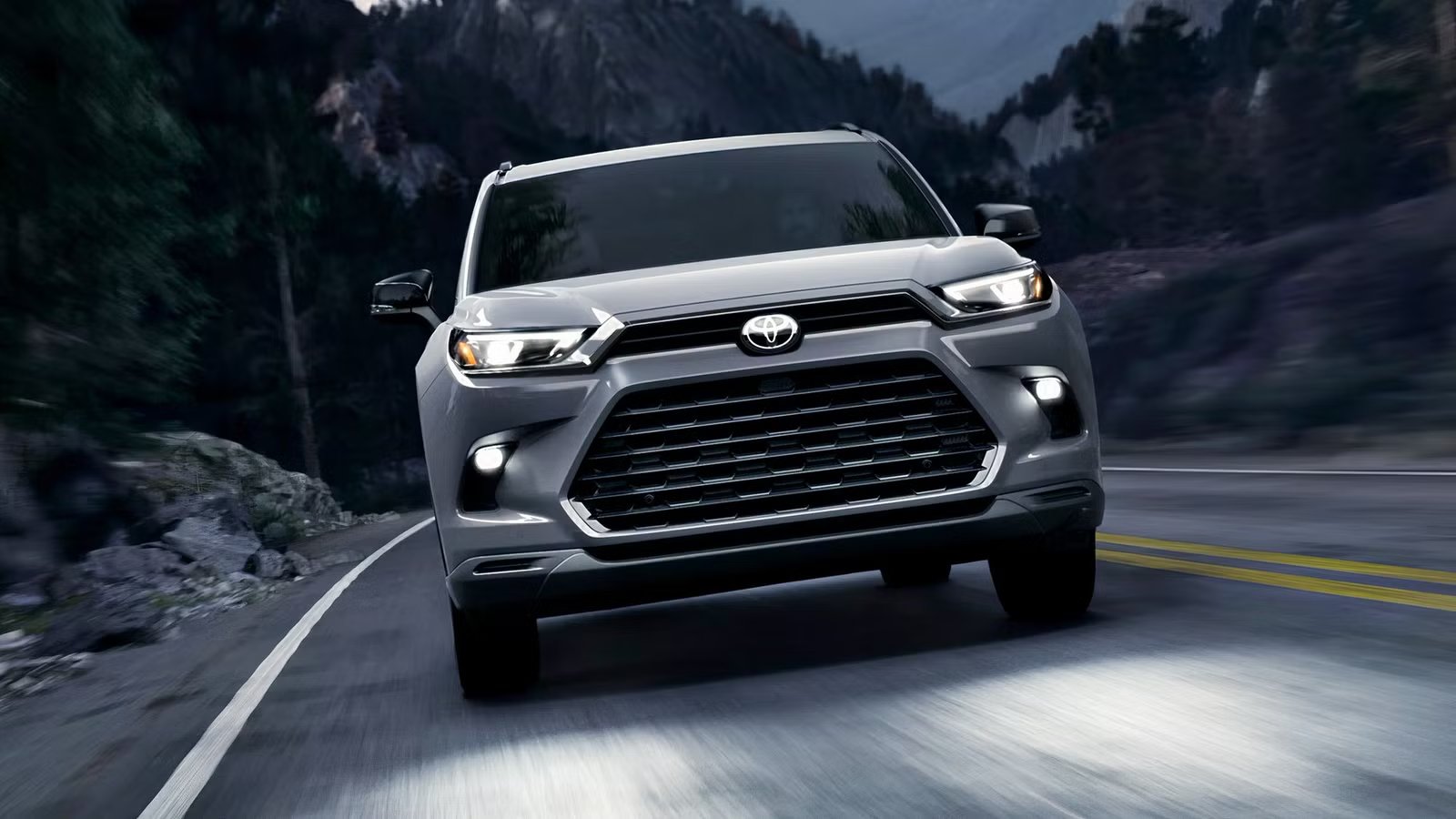
“Maxing” has become a common internet slang among young people, and it couldn’t be more accurate in describing the practical, efficient, yet surprisingly fast SUV for today’s article. That would be the Toyota Grand Highlander Hybrid Max, whose hybrid powertrain combines both efficiency and fast performance.
grand display

At the heart of the Toyota Grand Highlander Hybrid Max is the brand’s parallel hybrid system. Yes, this isn’t Toyota’s usual series-parallel system with an e-CVT, as the Hybrid Max powertrain uses a 2.4-liter turbo four-cylinder, a six-speed automatic, and an electric motor between the two. With a total system output of 362 horsepower, there’s plenty of oomph from this hybrid system. motortrend 0-60 mph was achieved in 5.9 seconds, which is amazing for such a large vehicle.
|
Grand Highlander Hybrid Max |
|
|---|---|
|
powertrain |
2.4-litre turbo four-cylinder hybrid |
|
horse power |
362 hp |
|
Torque: |
400 pound-feet |
|
transfer |
6-speed A/T |
|
driveline |
AWD |
|
Fuel Economy (Combined) |
27 mpg |
And yet, despite its size, weight and performance, Grand Highlander The Hybrid Max has a combined efficiency rating of 27 mpg. That’s three mpg better than the non-hybrid Grand Highlander, but it’s seven mpg less efficient than the 2.5-liter series-parallel hybrid version with the e-CVT. The new Hyundai Palisade Hybrid, also a turbo parallel hybrid, gets 29 MPG with AWD or 34 MPG without AWD, and even better with smaller wheels. However, it has less torque than the Grand Highlander Hybrid Max.
effortlessly comfortable

We’ve already reviewed the Grand Highlander, albeit with its standard series-parallel hybrid system, but the driving dynamics should largely carry over to the Hybrid Max variant. Putting aside the Hybrid Max system for a minute, what you get from this big three-row SUV is an easy-going personality. Yes, it’s a large vehicle, but excellent sight lines from its large windows, plus a steering that’s just right in terms of its weight, make the Grand Highlander anything but cumbersome. Handling isn’t its strong suit, but this is a family SUV; Comfort and ease of driving should be its main priority.
And indeed, drivers and their passengers will love the comfortable ride and quiet cabin. Even under hard throttle applications, the hybrid system remains well throttled. Yes, you will hear the engine noise, but it is not obtrusive in any way. It’s Lexus-like in its refinement, so it’s going to be a great family SUV if you want a stress-free option in terms of driving experience or reliability.
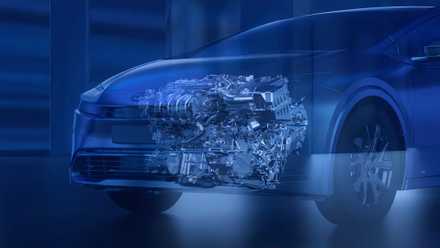
Explained: How Toyota’s hybrid system really works
This is a tricky question because Toyota offers several hybrid systems, but they’re all pretty much the same.
Size and space maximization

One of Toyota’s greatest offerings, the Grand Highlander is a modern minivan in terms of practicality. Thus, the Grand Highlander Hybrid Max is larger in terms of space for all three rows.
Commanding but subtle exterior

But first let’s talk about its exterior design. Since the Hybrid Max drivetrain is reserved for the two top trims, Limited and Platinum, these two variants offer the pinnacle of the Grand Highlander range. And yet, from the outside, you probably won’t be able to tell. Design is highly subjective, but I think we can all agree that there’s really nothing special about the looks of the Grand Highlander. The overall design is exactly what you’d expect from a crossover SUV, but no design details stand out. Again, this is Toyota’s way of making the Grand Highlander appealing to a broader demographic.

Perhaps as a way to make the Hybrid Max model stand out, it has a satin silver trim piece on its front bumper, while the Limited’s 20-inch alloy wheels feature a two-tone finish compared to the silver ones in the standard Hybrid Limited. For the Platinum, it gets gunmetal 20-inch multi-spoke wheels. If you want a more stylish option, we’d happily steer you towards the very uniquely designed Hyundai Palisade or the Kia Telluride, whose bold lines and striking looks make both of them stand out in the segment.
spacious interior
Similarly, the interior of the Grand Highlander Hybrid Max does not offer any distinctive design features. On the other hand, being in the top two trims means there are plenty of features for all three rows, as well as Lexus-like content. The bronze interior trim is a refreshing sight compared to the usual satin silver or chrome details, while genuine leather and ultrasuede are used liberally throughout the interior. Opt for the range-topping Platinum, and you get the option of a brown interior color scheme that’s absolutely stunning on the eyes.

Front occupants get power-adjusted seats with seat heating and cooling, plus there’s also a JBL sound system, ambient LED lighting, two 12.3-inch screens, rear window shades, plenty of physical controls, a powered tailgate, and 13 cup holders. Captain’s chairs are also standard, allowing easy access to the spacious third row. The Platinum trim includes:
-
Heating and ventilation for the rear seats
-
a panoramic sunroof
-
a head-up display
-
A camera-based digital rearview mirror
Source: Toyota, EPA, Porsche