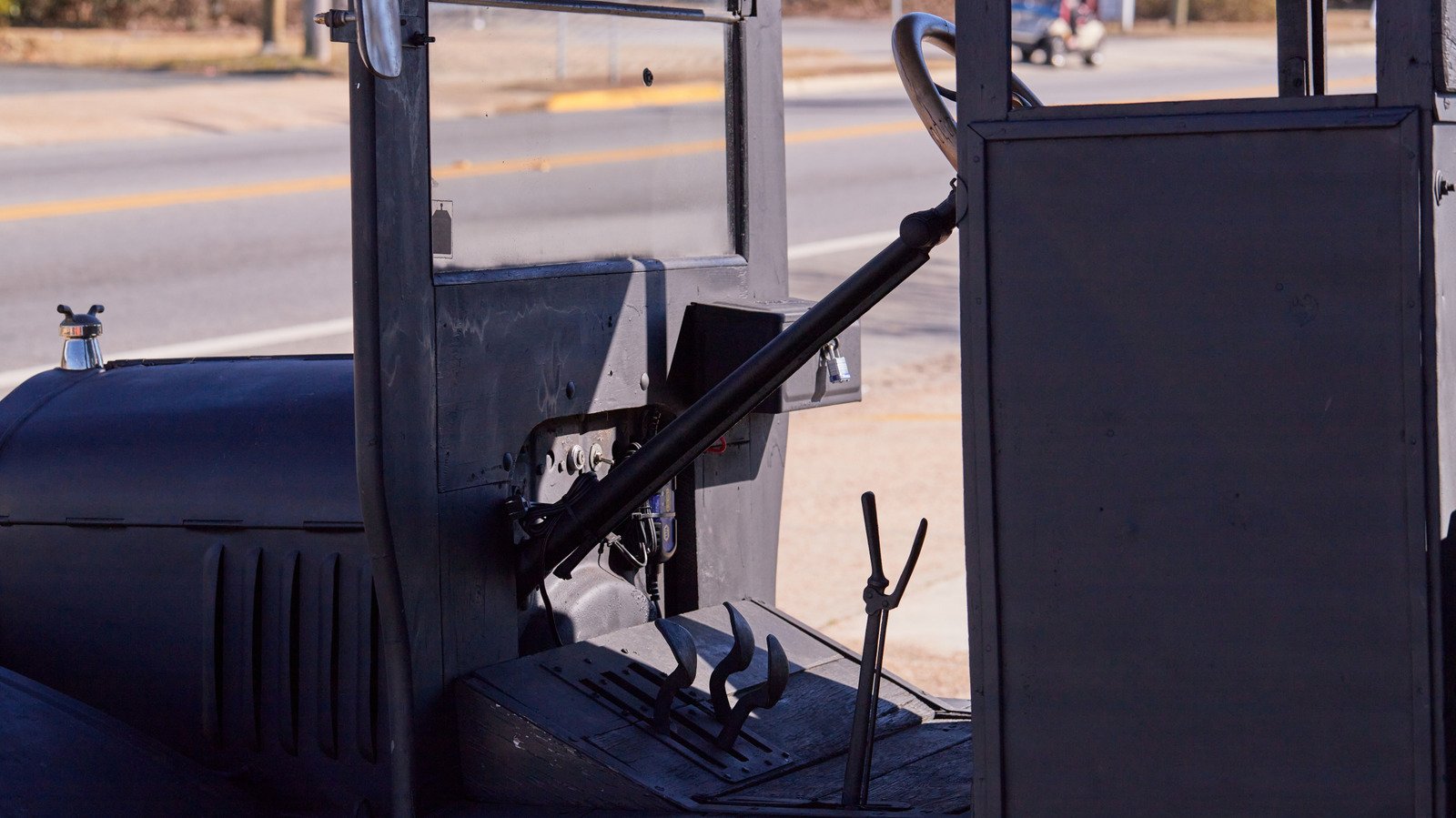
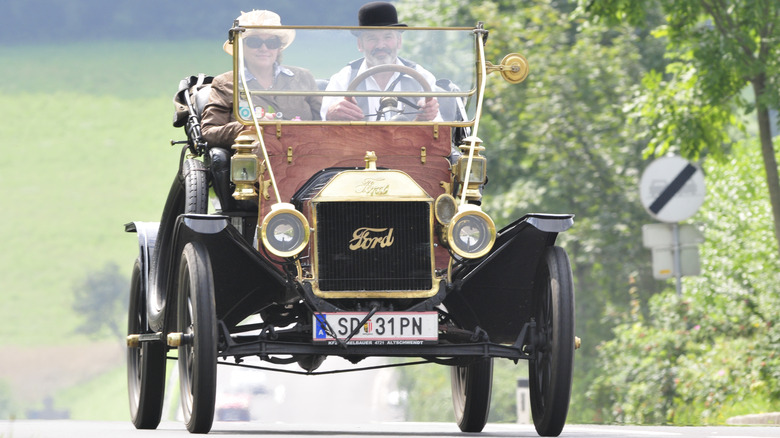
The Ford Model T debuted in 1908 and completely revolutionized the auto industry, lasting nearly two decades. And while Ford has tried to recreate the Model T’s moments of significance in the past – and indeed in the present – with over 15 million units sold, nothing has really come close to it in terms of significance. The Ford Model T wowed America with its simplicity and ensured that it worked well in a wide range of applications.
Naturally, things have moved on a bit by now, and the Model T looks about as complicated as a toy car compared to the hybridized, turbocharged, sensor-crazed infotainment stations we all drive today. This may lead drivers to think that driving an iconic antique is a useless thing to drive behind the wheel, if not a little scary without seat belts, airbags, etc. Well, that’s not at all how it happens.
The transmission is extremely difficult to operate, at least for today’s drivers, as it behaves differently from anything remotely mainstream by modern standards. It is a two-speed epicyclic transmission, with planetary gears, one reverse, three paddles and one hand lever. When on top, the driver may look more like the conductor of a one-man band, but nevertheless, it is the transmission of choice for one of the most popular cars of all time.
How to Operate a Model T’s Transmission
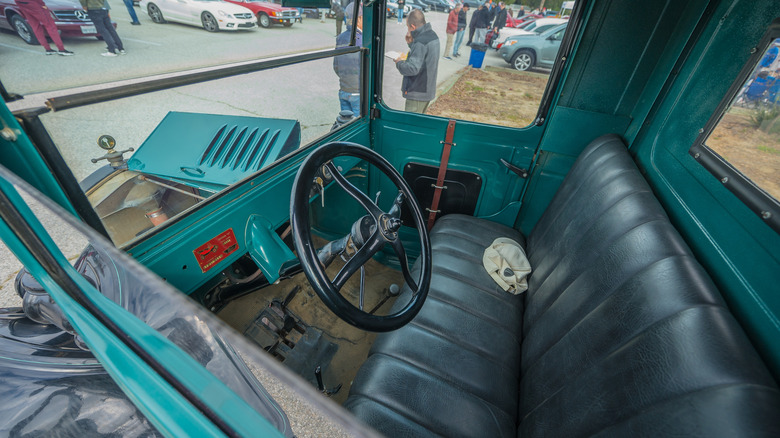
For anyone who finds themselves behind the wheel of Henry Ford’s most iconic creation, here’s what they need to know and what to do. That planetary transmission has two speeds, one high and one low, plus a reverse gear. All are controlled by three pedals on the floor; The left pedal controls the forward gear, the center pedal provides reverse, and the right pedal is your brake.
Inside the transmission are the planetary gears and brake bands. Which gear the driver gets depends on which part of the gearset is locked by the brake band. Each brake band corresponds to one of the above pedals. Simple so far, right?
Pressing the left pedal to the floor engages a lower gear, which is ideal for starting. Lifting the paddle up fully engages high gear. The right-hand pedal is the brake, but instead of acting directly on the wheels, depressing said pedal tightens another brake band around the transmission’s brake drum, slowing the car.
The central pedal controls reverse, and since there is only one speed, the process is quite simple. To complicate matters further, the speed was increased by means of a hand lever.
It wasn’t that complicated at that time
With one transmission, and all that for only two speeds, it might be easy to assume that millions of motorists were too afraid to get behind the wheel of their new Ford for fear of the complex design. There is actually some truth in this, but it relates to a pre-planetary Ford design, which was a sliding-pinion crash transmission. This involved sliding rotating gears into each other, combining them with great drama; Many owners opted to pay drivers instead.
Henry Ford knew that, to change the world with affordable cars, he had to find a more accessible solution. Their answer was the planetary design that most Model Ts had. Sure, it’s not as easily mastered as the beloved PRNDL, but most buyers at the time of the Model T weren’t really used to anything else. As a result, new owners found that they needed only a few minutes of training to master the task of shifting the Model T.
Ford actually advertised the car as easy to drive for women – a forward move for the era. Today, only enthusiasts of the marque (and now, of course, you) are likely to be familiar enough with the iconic car to take command of it, at least until we get a proper 21st-century Model T.