In the 1870s, tailors in London and Paris raced to redesign the most fundamental garment in a man’s wardrobe: the shirt.
Until then, men pulled shirts over their heads, with fabric that billowed down to their waist. But innovative shirt makers in Paris and London—like Charvet and Brown, Davis & Co.—realized that men wanted closer-fitting shirts. The breakthrough came when they sewed buttons down the front, along with darted seams and shoulder yokes, creating a flattering fit. As a final flourish, they added a stylish collar with pointed tips. And so the button-up shirt came into the world.
Over the next century, it would become one of the most iconic garments of our time. It conveyed good taste, but, perhaps more importantly, social status. A crisp, spotless shirt made it clear that the man wearing it didn’t work with his hands. He belonged to the professional class—what we’d later call a “white-collar worker.” From Tokyo to New York to Mumbai, dress shirts became a uniform at the office.
In a strange twist, the shirt’s original customers
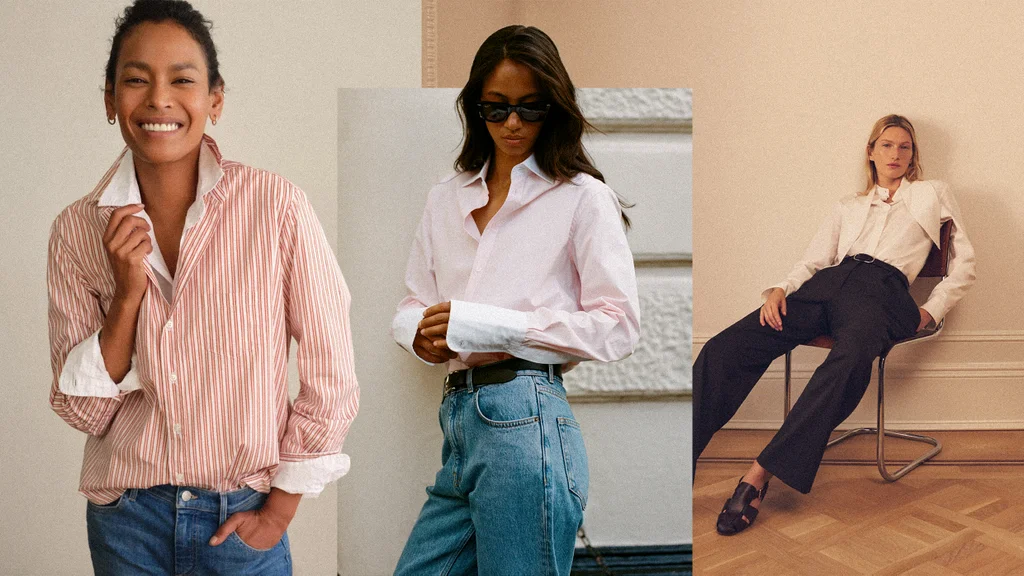
But in a strange twist, the shirt’s original customers have lost interest. Two-thirds of men now forego traditional workwear, opting for polos and t-shirts instead. But button-ups have found a new audience: women, who are dressing more formally even as men are becoming increasingly casual.
Search interest in women’s button-up shirts in the U.S. has more than doubled since 2019, according to Google Trends, and this April, it hit a 10-year high. The timing may not be a coincidence. Last year, McKinsey found that companies are retreating from their commitments to gender equity, giving women less support and fewer opportunities for advancement. As women are forced to advocate for themselves, it makes sense that they’re drawn to a garment historically linked to authority and competence.
The fashion industry is taking note. New labels have entered the market with a single mission of tailoring the dress shirt to the female form. Designers are tackling this issue in different ways: With Nothing Underneath keeps the masculine silhouette but subtly engineers it to a woman’s body, Frank & Eileen turns fine shirting fabrics historically reserved for men into styles that accentuate women’s curves, and TWP perfects the aesthetic of the oversized borrowed men’s shirt.
A century and a half later, tailors are once again racing to redesign the shirt. This time, it’s for women.