

Add preferred source
As of August this year, the number of fitness centers across Taiwan reached 1,172, a record high, with cumulative sales in the first eight months exceeding NT$15.3 billion (approximately $464.4 million), up 11.4% year-on-year. The landscape among the six major municipalities has shifted: Taichung City, with 188 outlets, overtook Taipei City for the first time to take the top spot, while Taoyuan City grew from 70 outlets in 2022 to 136, a 94.3% increase. Industry players attribute Taichung’s rise to population growth driven by the Green Line metro and emerging redevelopment zones, while Taoyuan has benefited from a migration wave from Taipei, New Taipei and Taoyuan. The fitness industry’s expansion is also creating leasing demand for medium-to-large commercial storefronts. Large chain operators prefer full-floor or whole-building spaces, while small and mid-sized and women-only venues favor second-floor-or-above or basement spaces in office clusters and residential neighborhoods. Experts caution that sports venues involve D-1 and D-5 use categories and fire-safety and renovation regulations, which must be confirmed before signing a lease.
Key Elements

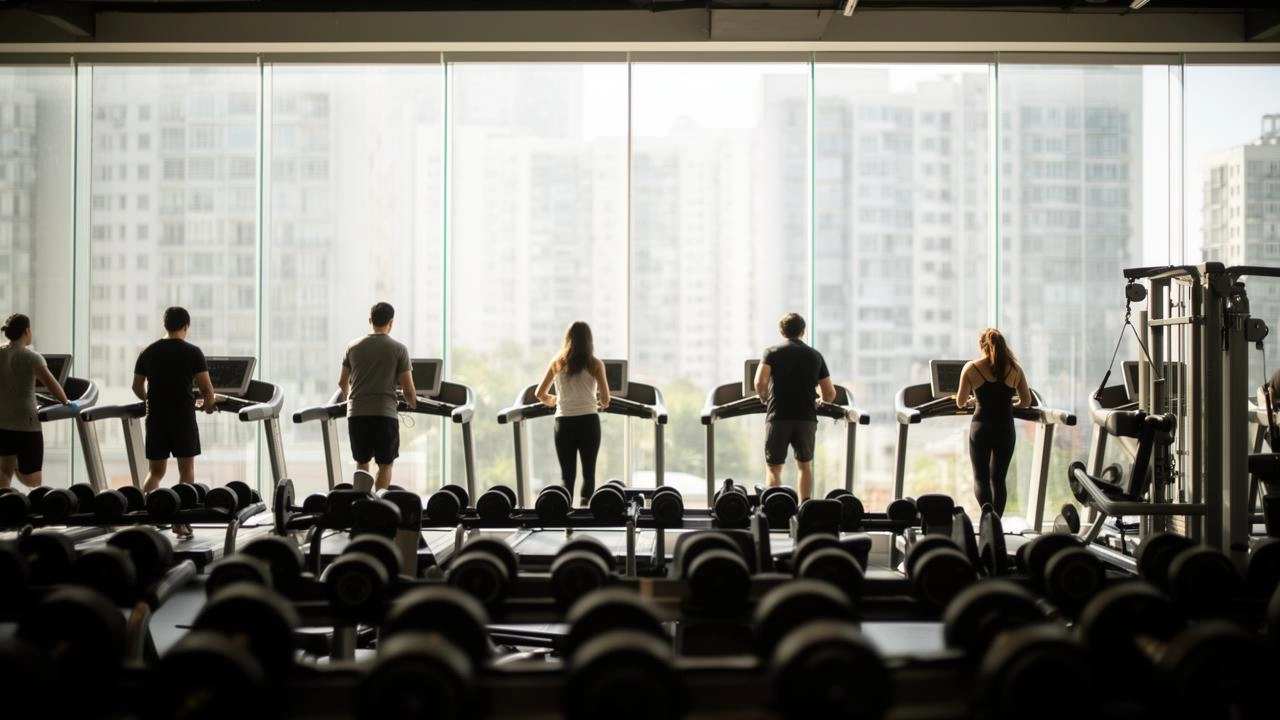
Taiwan’s fitness industry continues to expand in scale, and its store footprint is shifting. According to the Ministry of Finance Department of Statistics’ “Number of Profit-Seeking Enterprises and Sales” data, as of August this year the number of fitness centers across Taiwan had reached 1,172, a record high; cumulative sales in the first eight months of this year exceeded NT$15.3 billion (approximately $464.4 million), up 11.4% year-on-year. Real estate industry players note that fitness venues have become an important source of leasing for medium-to-large commercial storefronts, with Taichung City, at 188 outlets, overtaking long-time leader Taipei City for the first time to rank first among the six major municipalities.
After officially surpassing 1,000 outlets in 2024, the number of fitness centers across Taiwan has continued to climb, rising further to 1,172 in August this year. The competition among the six major municipalities has shifted: Taichung City surged ahead with 188 outlets, displacing Taipei City, which had held the top spot for many years; Taoyuan City grew from 70 outlets in 2022 to 136 in August this year, an increase of 94.3%—nearly double—making it the most improved city among the six.
| Observation Item | Data |
|---|---|
| Number of fitness centers across Taiwan (August this year) | 1,172 (record high) |
| Sales across Taiwan in first eight months of this year | Exceeded NT$15.3 billion (approximately $464.4 million), up 11.4% year-on-year |
| Number of outlets in Taichung City | 188 (first among the six municipalities) |
| Number of outlets in Taoyuan City | 136 (70 in 2022, a 94.3% increase) |
Note: Outlet counts are as of August this year; historical figures are year-end values.
Chang Hsu-lan, chief executive of Taiwan Realty Group’s
Chang Hsu-lan, chief executive of Taiwan Realty Group’s Trend Center, said that people are placing greater importance on health and quality of life. In addition to the public sports centers being established in various locations, many residential buildings have incorporated gyms into their communal facilities planning. In recent years, equipment-based Pilates, pickleball and golf simulators have gained attention, and large chain gyms and various sports training studios continue to open new locations. Fitness venues have gradually become an important leisure amenity in residential neighborhoods.
Regarding the reasons behind Taichung City’s overtaking, Li Chia-ni, manager of Taiwan Realty Group’s Trend Center, analyzed that in addition to the traditional downtown commercial districts, Taichung’s Green Line metro has in recent years connected major living areas, and emerging redevelopment zones have been progressively developed with builders actively positioning themselves, driving residential population growth—with Beitun District showing particularly notable population growth. With diverse living areas and an expanding consumer base, not only has the fundamental base of the fitness market been strengthened, but operators also have more flexibility in site selection.
As for Taoyuan City, Li Chia-ni noted that the area has in recent years become a migration hotspot within the Taipei–New Taipei–Taoyuan living circle, attracting first-time homebuyers and young families. Continued population growth has made regional spending power and lifestyles more diverse, and demand for lifestyle industries such as fitness and leisure has clearly heated up.
The fitness industry’s expansion is also reflected
The fitness industry’s expansion is also reflected in the commercial real estate leasing market. Li Chia-ni said large chain gyms typically require a full floor, or even an entire building or large multi-floor spaces, and mostly target prime commercial districts with heavy foot traffic; having parking facilities is an added advantage. As for the growing number of small and mid-sized fitness centers and women-only gyms, which mainly serve nearby office workers and residents and emphasize the convenience of exercising close to home after work, they prefer office clusters and residential neighborhoods. Their space requirements are relatively flexible—they do not necessarily need prime ground-floor storefronts, and spaces of around 100 ping on second floors or above or in basements are equally favored by operators, bringing new leasing opportunities for regional medium-to-large storefronts.
However, not all commercial storefronts are suitable for operating fitness venues. Chang Hsu-lan cautioned that the building use categories for sports venues mainly involve D-1 and D-5, each with different fire-safety and renovation regulations depending on the venue’s purpose and equipment needs. Before leasing a site, operators should first confirm whether the land-use zoning, building use category and relevant regulations meet business requirements, lest they discover only after signing that the site cannot legally be used as a sports venue—driving up store-opening costs and operational risk.
From a market perspective, the simultaneous rise in fitness center numbers and sales shows that domestic-demand-driven sports spending remains resilient, and commercial real estate has gained another category of tenant. For landlords, large chain brands offer long-term, full-floor leases that help absorb large spaces; for regional storefronts, small and mid-sized venues and women-only gyms fill the demand gap for non-prime spaces such as second floors and above or basements. However, fitness venues involve fire-safety and building-management regulations, and confirming compliance before leasing remains key to whether a store opening can proceed smoothly.
Once added, BigGo Finance appears first in Google Search Top Stories, so you get the broadest, most up-to-the-minute, and most comprehensive global financial news first.