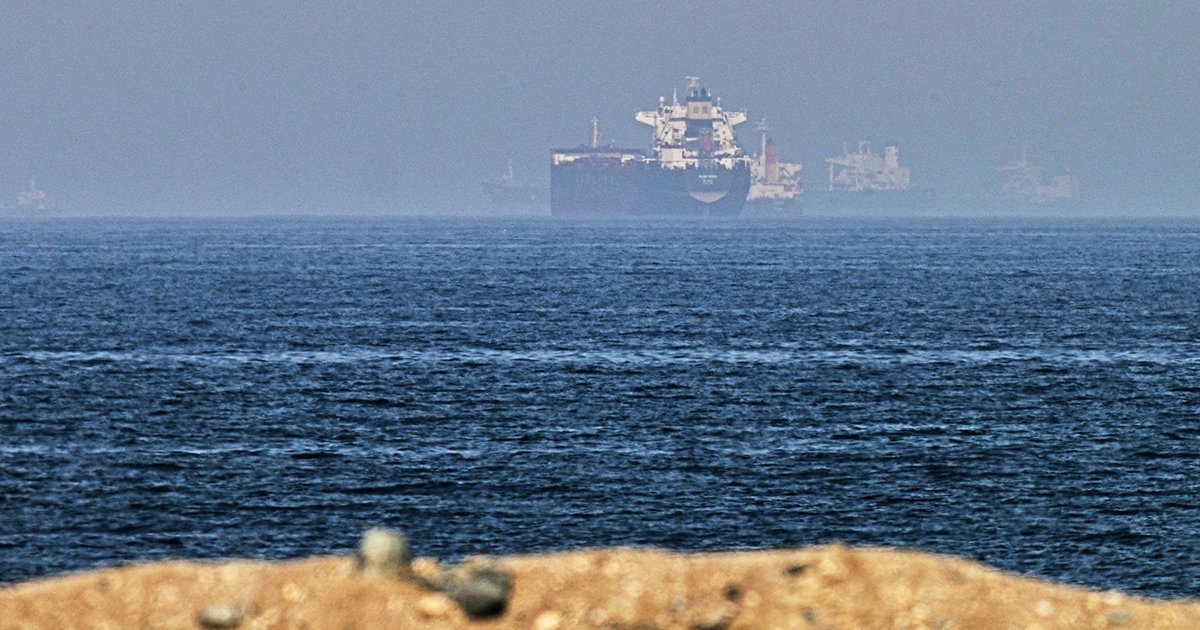
Cargo ship in the Strait of Hormuz in May. (Fatima Shabair/AP)
key takeaways:
- Shipowners showed mixed willingness to transit the Strait of Hormuz after President Donald Trump said the US armistice with Iran expired on July 8.
- Uncertainty matters because tanker availability and safety risks could disrupt the flow of crude and drive up shipping costs, which could push earnings to more than $340,000 a day.
- Future oil flows will depend on the decisions of major tanker operators and the evolving security situation as the US attacks and potential tensions with Iran continue.
Shipowners painted a mixed picture of their willingness to continue transiting the Strait of Hormuz just hours after President Donald Trump said the US armistice with Iran was “over.”
Of five owners surveyed by Bloomberg whose ships have transited the crucial conduit for energy flows in recent weeks, three said they were assessing whether the transit was still safe, while two said they had not yet changed their policies.
When it comes to oil flows, much will depend on the approach of Sinocor Group, the largest owner of supertankers in the world and a major player in Hormuz traffic since the conflict began. One of the company’s ships was attacked on 7 July and three ship brokers working with the company said they had not been updated about its current status while in transit.
The risk of a return to full-scale war appeared to be increasing, with Trump warning on July 8 that the US would likely launch further attacks on Iran and resume a blockade of the country’s ports.
Under these circumstances, how much crude continues to flow through the waterway, and what impact it has on global oil prices as a result, may depend on the decisions of the narrow cadre of shipowners willing to enter the Strait of Hormuz.
The two owners who had previously sent ships to Hormuz showed some desire to continue. Their ships passed through the waterway under the cover of darkness, hours after the US resumed attacks on Iran, according to ship-tracking data compiled by Bloomberg.
On July 8, visible traffic was silent on the Omani side of the Strait of Hormuz – a shipping corridor that has become the primary alternative to Iranian-controlled waters. Amidst increased tensions, ships may be more likely to transit without broadcasting their locations. The tendency for some tankers to exit the Persian Gulf as convoys has also made the daily total volatile.
Benchmark tanker earnings, which reflect the cost of entry into the Persian Gulf, rose to more than $340,000 per day on July 8, up $50,000 from the end of the previous week. The marker has been highly liquid since the start of the Iran war and is prone to large fluctuations.
Higher shipping costs would be a new headache for Gulf producers already struggling with a shortage of vessels wanting to enter the Strait of Hormuz. Last month, Iraq had to reduce production in some fields because it could not find enough ships to load its goods.
Written by Alex Longley, Grant Smith and Jack Wittels