All those old cars sure look good, but there’s one thing new cars absolutely beat them at: crash safety. Over the past 30 years, drivers have benefited from features like airbags, traction and stability control, and passive assists like collision avoidance systems and automatic emergency braking.
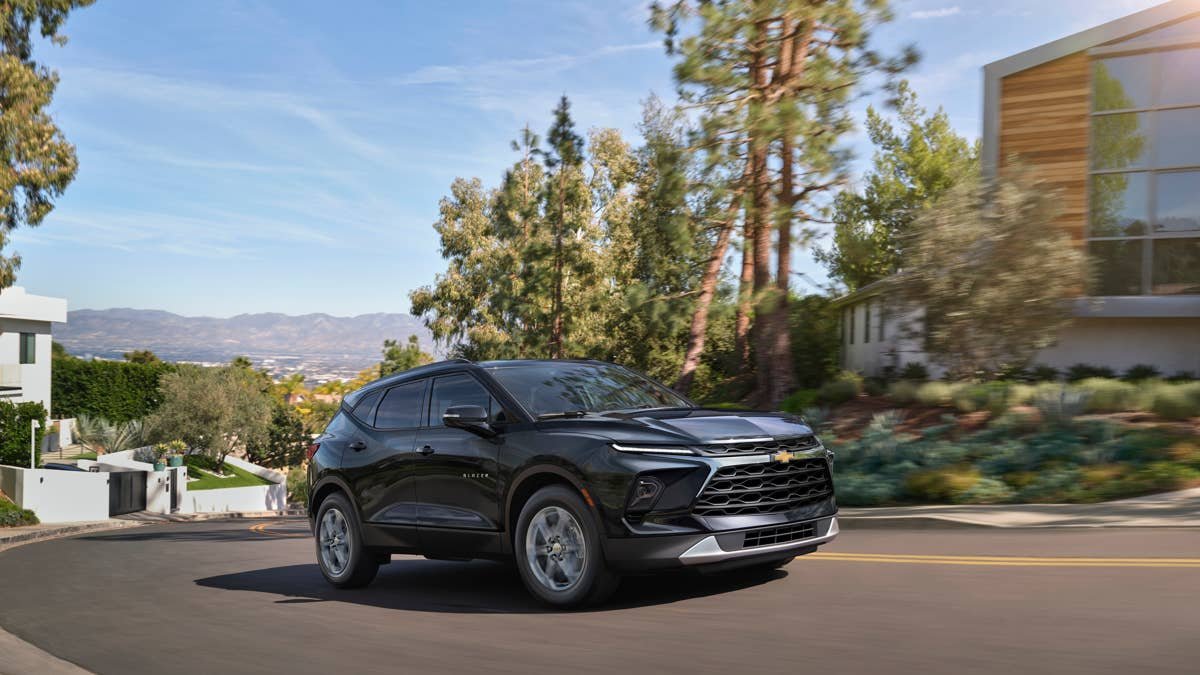
The per capita road death rate in the US has fallen in 20 of the last 30 years, and to mark those 30 years, the IIHS showed how much safer cars have become over that period. To do this meant crashing a new and an old Chevrolet Blazer to show how much safer the new cars are than their older counterparts. As you can see below – the results are shocking.
The test itself is the IIHS’s moderate-overlap front crash test, where two vehicles traveling 40 mph or less collide head-on. Watching the video, it’s clear that one of the biggest advances in technology is how rigid modern cockpits are now. The 1996 Blazer is bent like papier-mâché, while the 2026 Blazer has hardly any distortion from the impact.
The cabin of the ’96 Blazer also distorts on the passenger side, leaving little to no room for the driver, even before you take into account that the steering column and dash have to go somewhere. The professional diagnosis of the IIHS is that at these speeds, with approximately 40% frontal overlap, the driver of the ’96 Blazer would have suffered “serious, potentially fatal injuries.”
chevrolet
In the 2026 Blazer, the lack of deformation not only saves the life of the driver but also reduces injuries to the driver and other occupants in such an accident. In modern cars, the bracing ensures that the kinetic energy of the impact is directed around the rear of the car and the passenger cell, which is kept incredibly rigid during a crash. The end result is a stark contrast to the fate of other Blazer drivers. The IIHS says this driver “may have walked away with bumps and bruises.”