
Podcasting takes a lot of work. Planning, recording, editing, creating assets, uploading, promoting. The list goes on. And for most podcasters, a large portion of that time is spent on tasks that feel repetitive.
That’s why we built the RSS.com API. This gives you the ability to connect your RSS.com account to other tools and automate the parts of podcasting that waste your time. Below are three ways you can put it to work today.
Like to watch? Watch our video walk-through with our publicist Joe Casabona here:
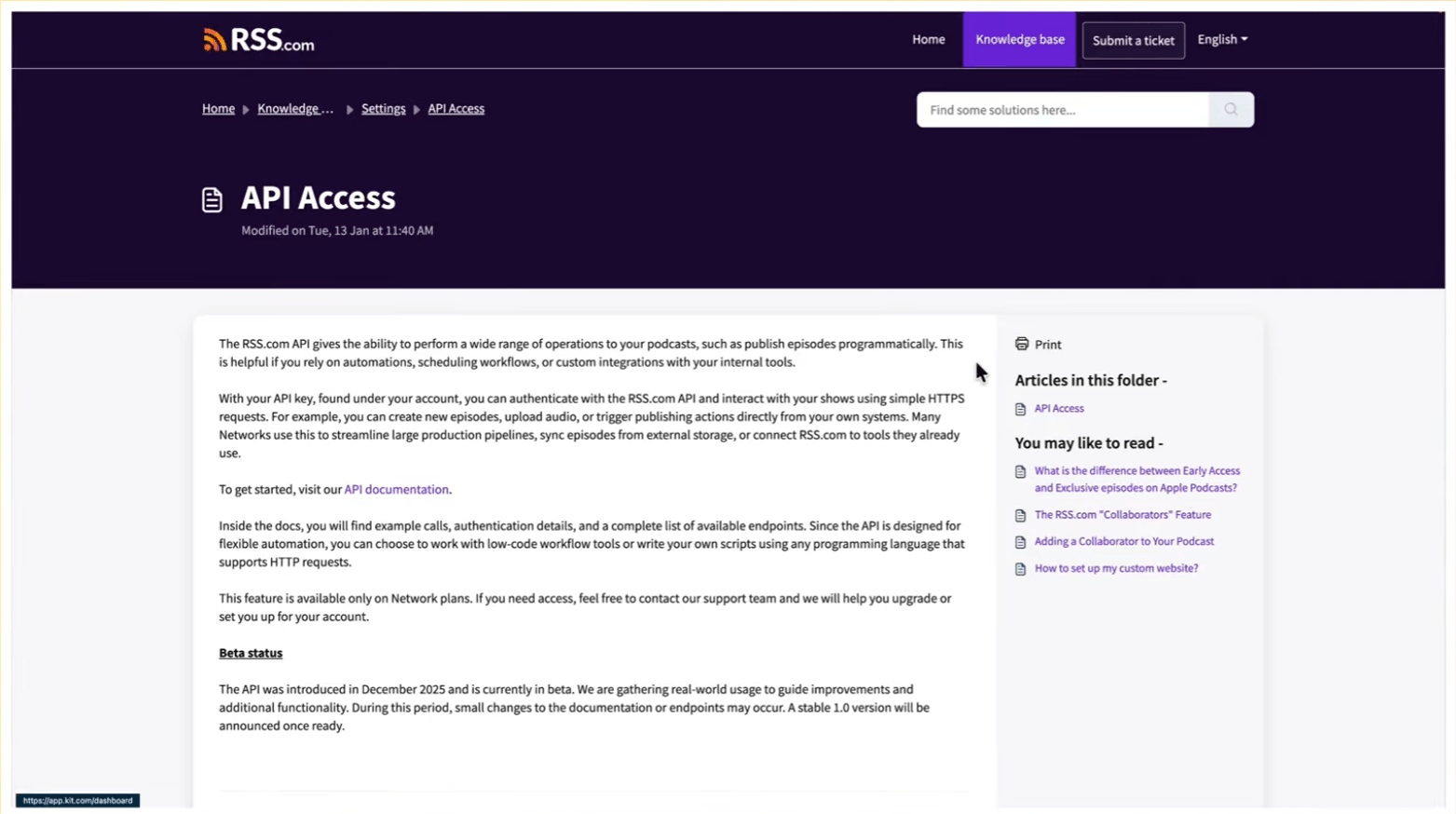
Before we get into the workflow, here’s a quick look at what the API supports.
You can use it to upload audio, create and retrieve episodes, pull podcast data, generate transcripts and chapters, manage categories, and more.
Essentially, any action you take inside your RSS.com dashboard can be triggered or automated by an external tool or a program you create yourself.
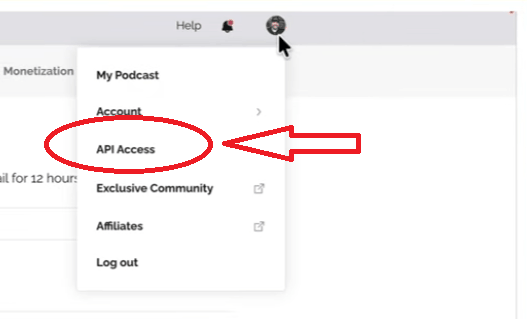
To get started, you will need an API key. Go to your RSS.com account, click on your profile photo in the top right and go to API Access.
From there, you can create up to 10 API keys.
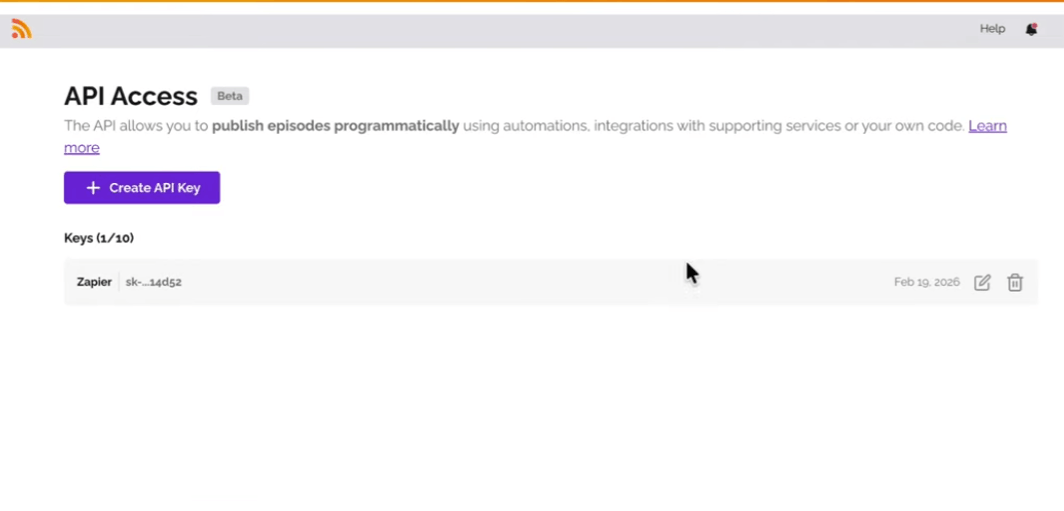
Name each one based on the tool you’re connecting it to so you can keep track.
Workflow 1: Clean and upload audio with Auphonic
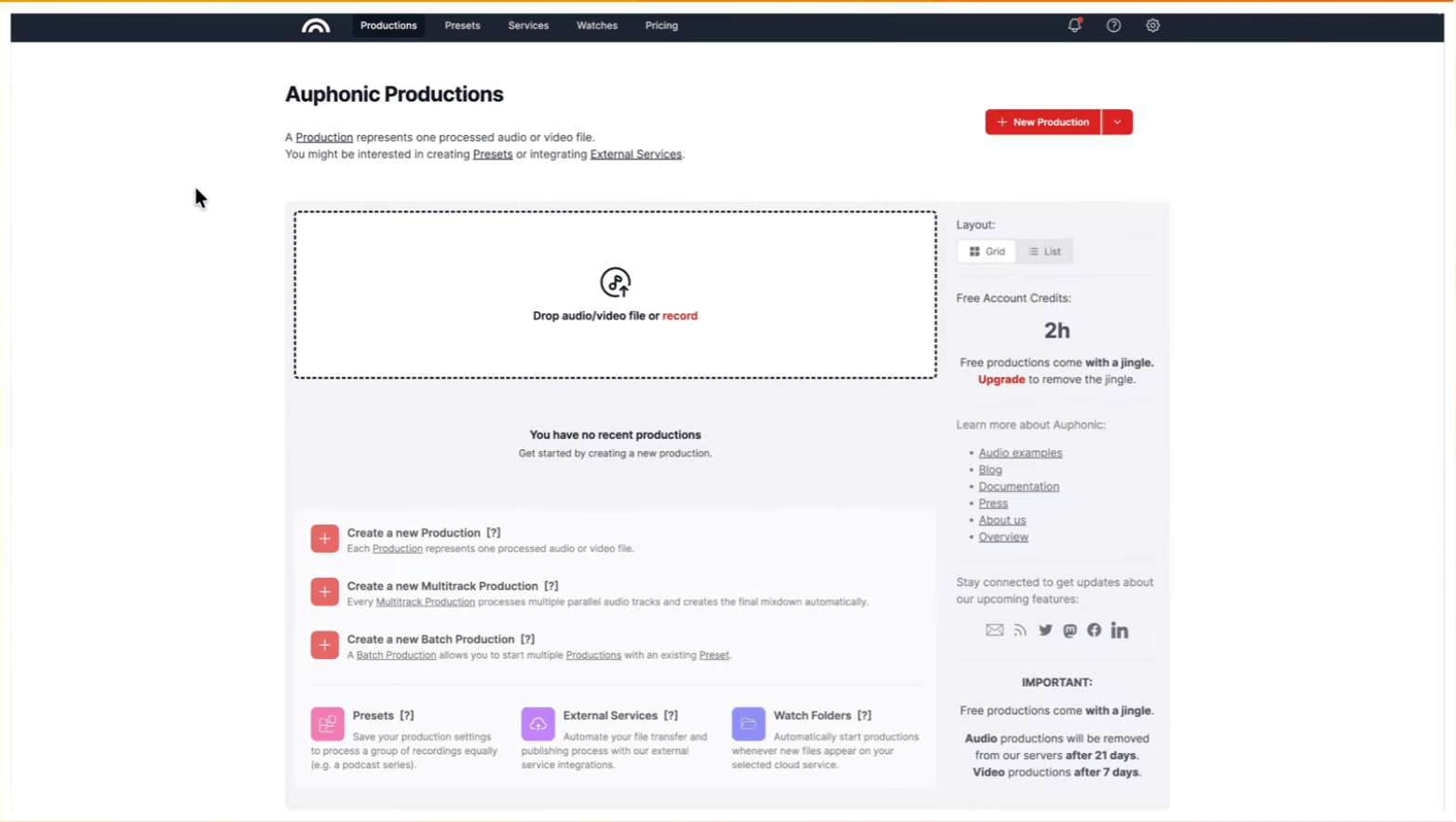
auphonic is an audio processing tool that uses AI to level your sound, remove background noise, and clean up your recordings. This is a solid option for those who want to skip the manual editing step in software like Logic Pro or Audacity.
Auphonic now supports RSS.com as an external service. This means you can process your audio and send it directly to your RSS.com account without leaving the Auphonic dashboard.
Here’s how to set it up:
- In Auphonic, go to External Services
- Find the Videos/Podcasts section and select RSS.com
- Enter your account name and paste your RSS.com API key
- Once saved, Auphonic will automatically pull your podcasts
Workflow 2: Automate the entire process with Zapier
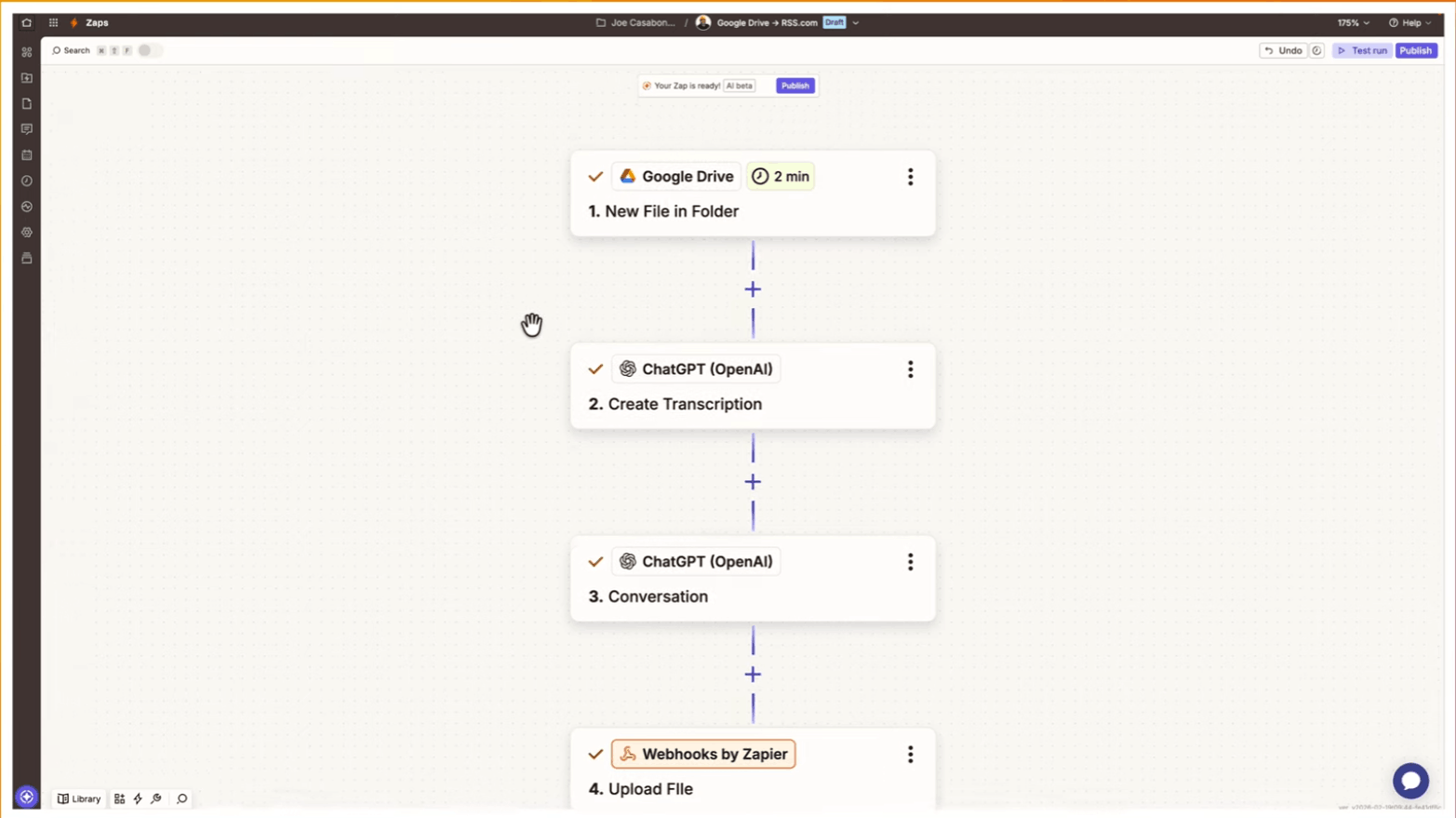
This requires a little more technical know-how, but it’s worth it if you want to automate your workflow from start to finish.
using the ZapierYou can create a multi-step automation that takes an audio file from Google Drive and turns it into a published episode on RSS.com with minimal manual input.
Here’s a basic flow that Joe has set up with his account:
- First, Zapier looks for a new file in a specific Google Drive folder
- When it finds one, it sends the file to the RSS.com API to create a transcript, passing the file’s download URL and your API key via the X-API-Key header.
- The API returns an audio upload ID, which you use in another API call to create and upload an episode. You can pull the title and description from a separate stage, like a ChatGPT call, and include them in the episode creation request.
- Once the zap runs, you’ll see the new episode appear in your RSS.com dashboard, being processed and ready to go.
This workflow is the soup-to-nuts option. It handles the full production pipeline without you having to log into multiple tools.
Which workflow is right for you?
If you’re focused on audio quality and clean recordings, start with Auphonic.
And, if you’re comfortable working with APIs and want to automate your entire workflow, the Zapier setup gives you the most control.
All three use the RSS.com API to remove manual steps from your process. The goal in each case is the same: more time is spent on creation, less time on the busy tasks surrounding it.
You can find the complete RSS.com API documentation by linking here.
Are you ready to upgrade your podcast workflow? Launch your free podcast on RSS.com today!