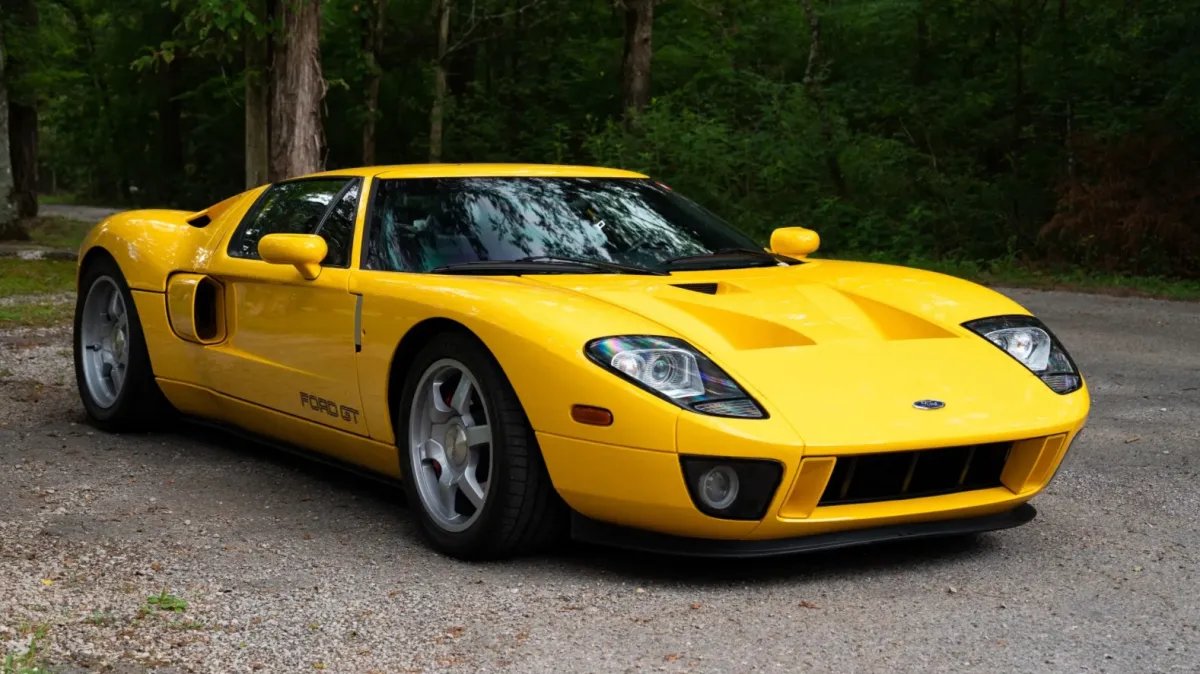
As a road tribute to the GT40 that gave Ford a Hollywood-worthy victory over Ferrari at the 24 Hours of Le Mans, it’s not surprising that the Millennial Ford GT looks great in racing stripes. So good that almost every customer ordered their GT from them. But the original owner of this 2006 model is now being auctioned online dupont registryDared to be different.
According to the listing, this is one of only two 2006 Ford GTs that came out of the factory in Speed Yellow without the stripes. It’s certainly strange not to see them running across the hood. After all, the GT40 concept that kicked off this generation of GTs surprised everyone at the 2002 Detroit Auto Show with yellow paint and black racing stripes, even though that combination is more closely associated with the later GT40 Mark IV rather than the 1966 Le Mans-winning Mark II that inspired this car’s styling.
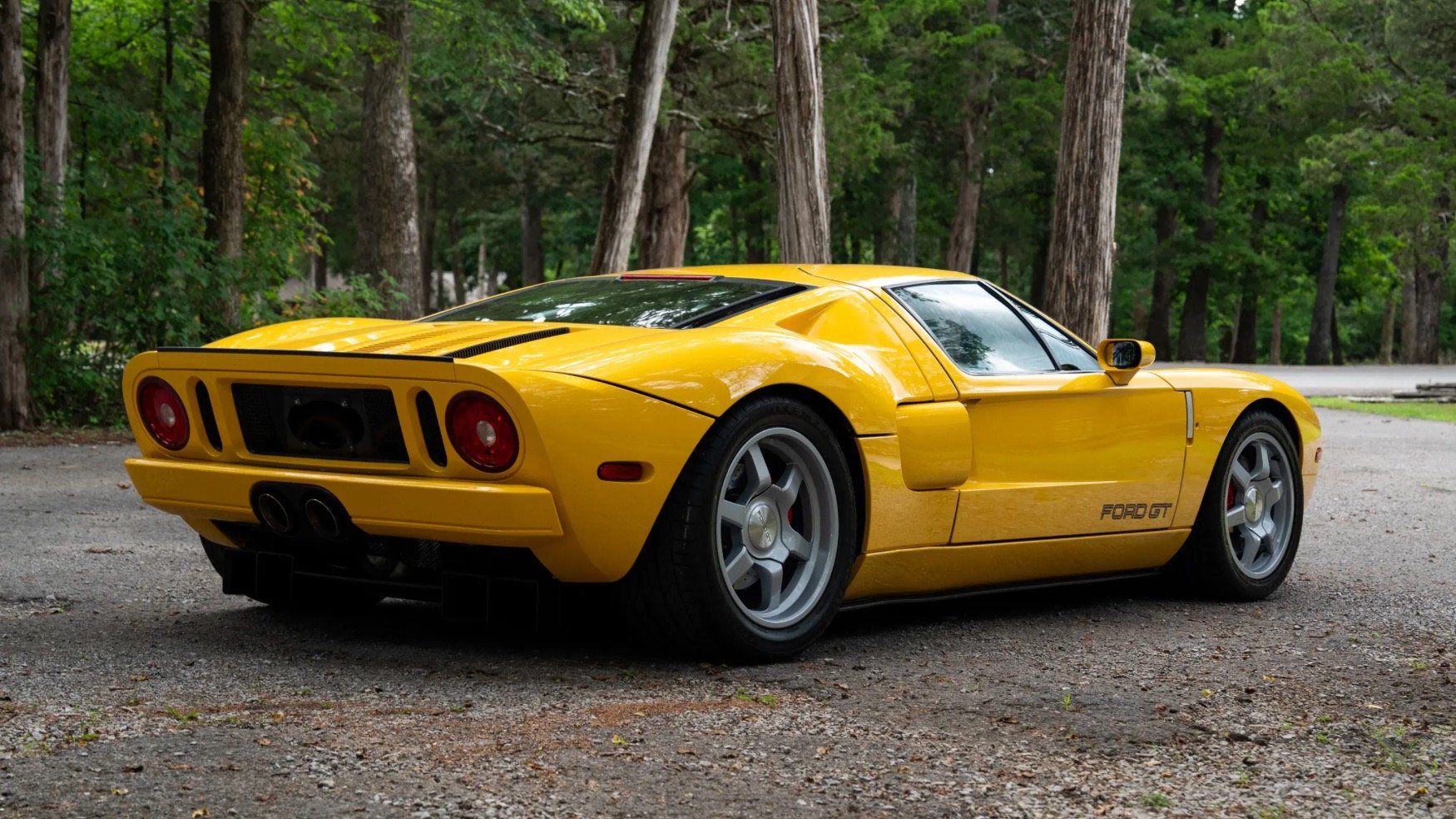
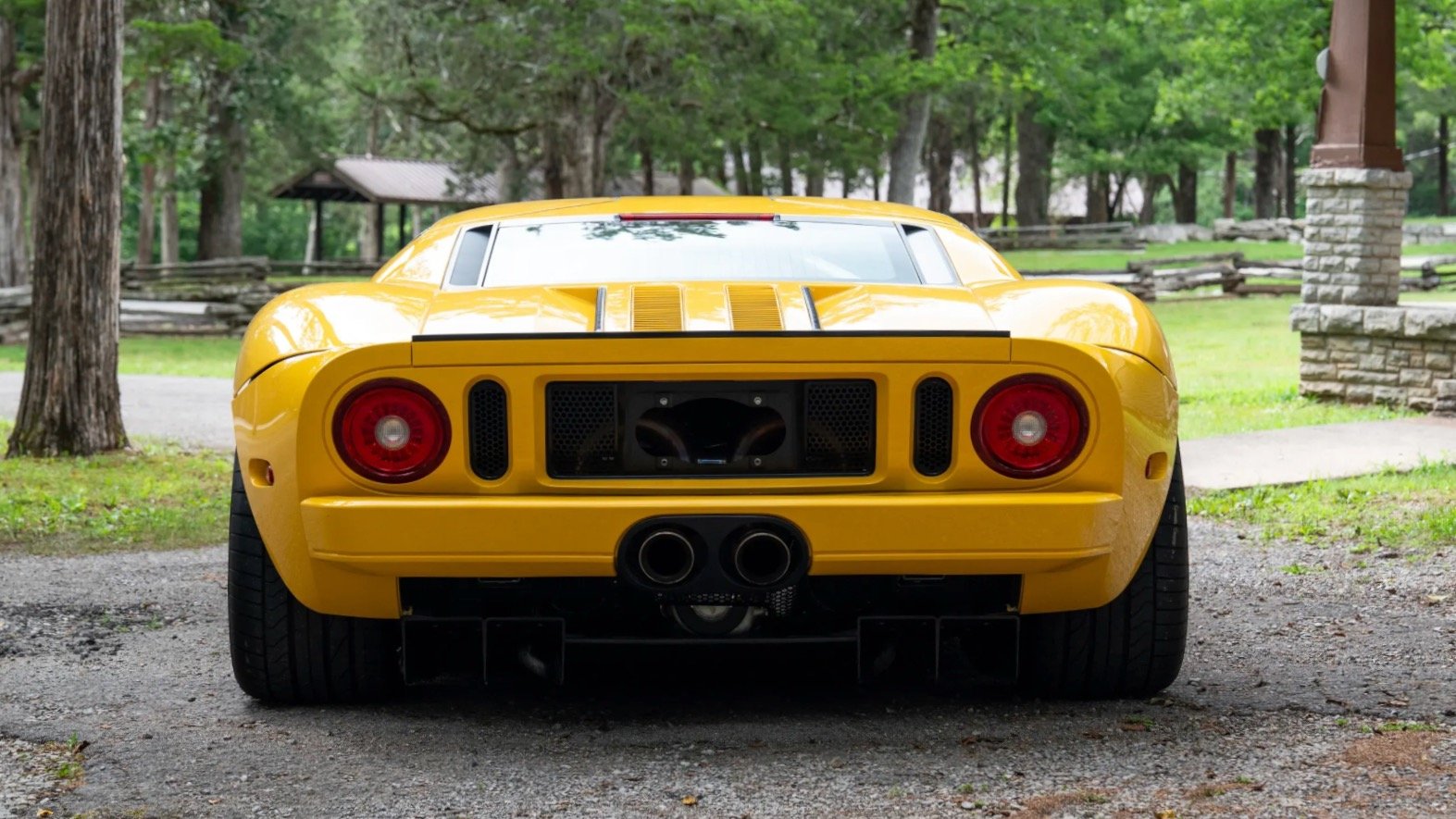
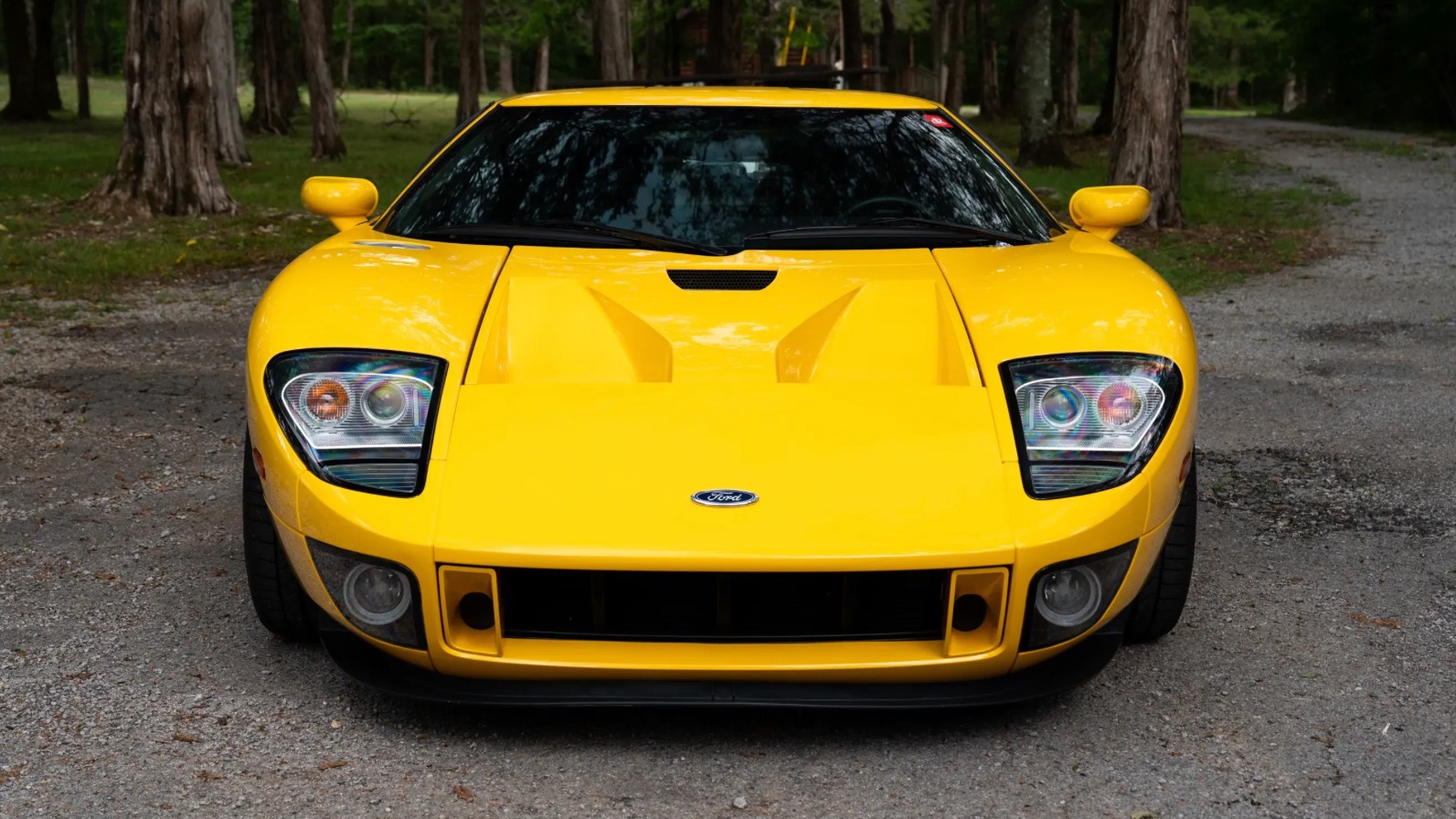
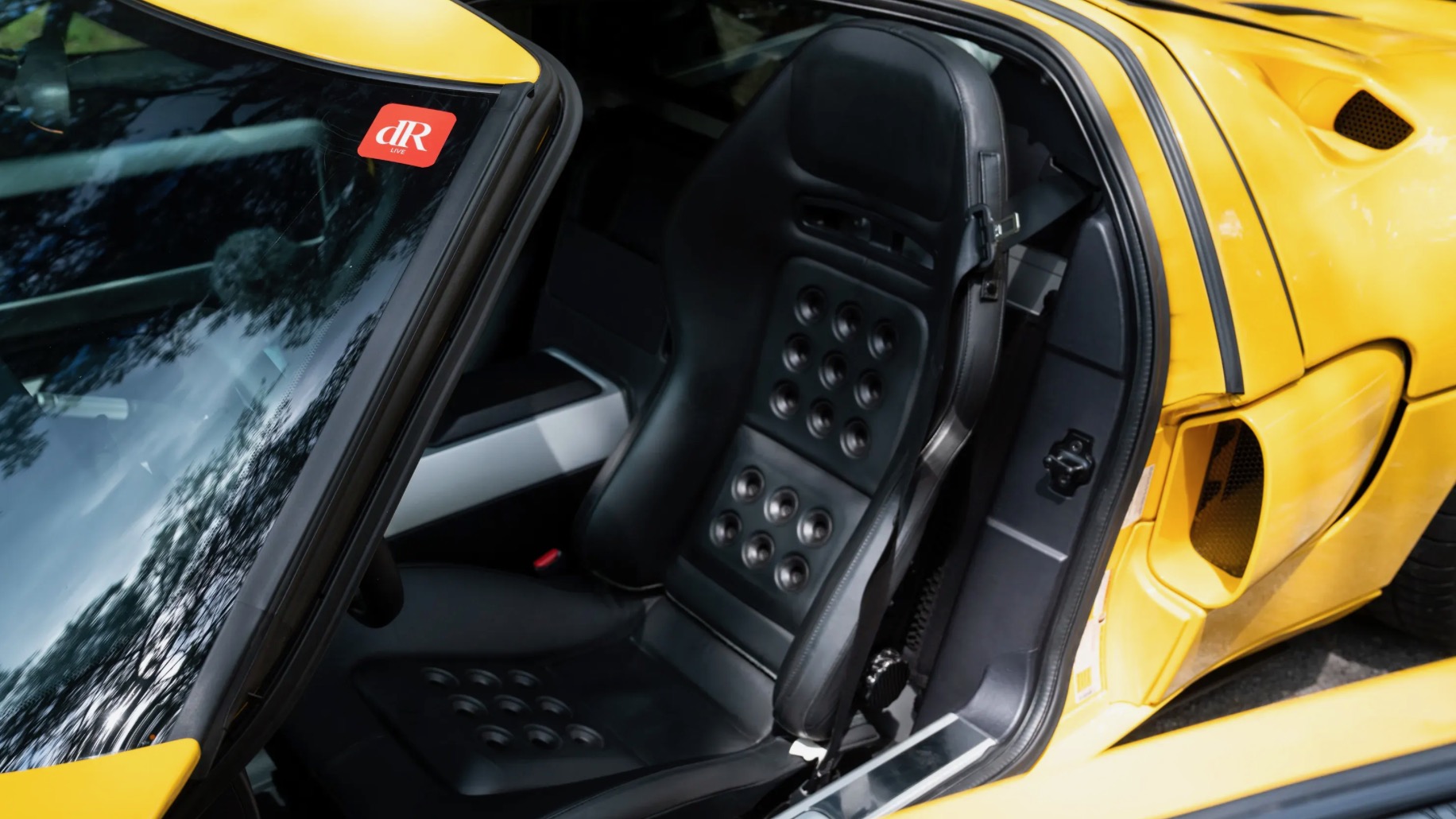
This car also has the more common black leather interior and red brake calipers, which were an option from the factory. It was originally sold by Davis Ford in Connellsville, Pennsylvania, but is now located in Tennessee and was shown to have 8,734 miles at the time the auction catalog was published. In between, it was registered to three private owners in Florida, Oklahoma, Texas and Colorado.
The GT combined retro styling with specifications that are still influential today. A special aluminum spaceframe chassis is covered with aluminum body panels, and it is powered by a supercharged 5.4-liter V8 that produces 550 horsepower and 500 pound-feet of torque. This theoretically made the GT capable of accelerating from zero to 60 mph in 3.3 seconds, but the conventional six-speed manual transmission meant driver skill was a factor. The top speed of 205 mph made the GT one of the fastest road cars of its time.
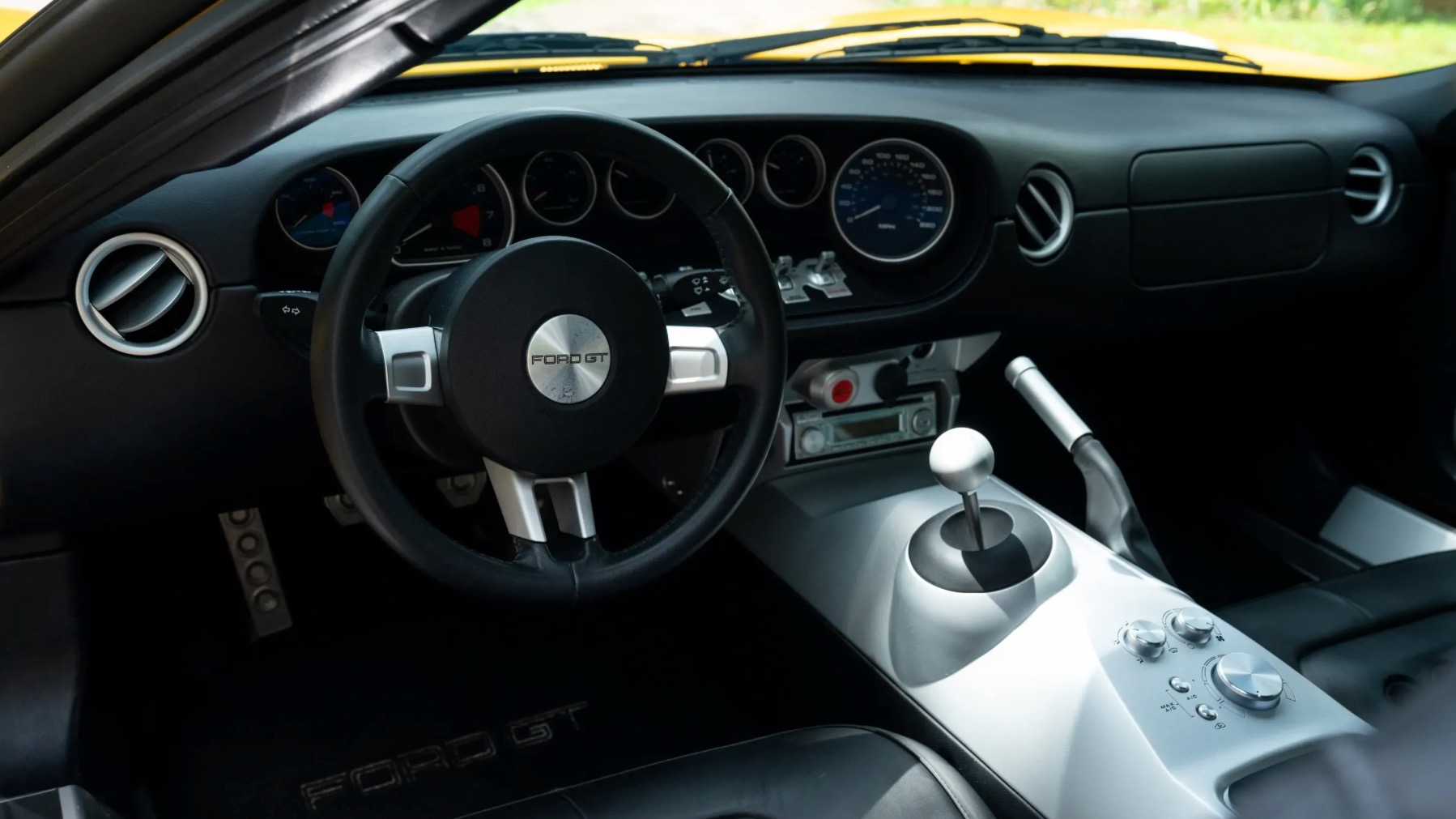
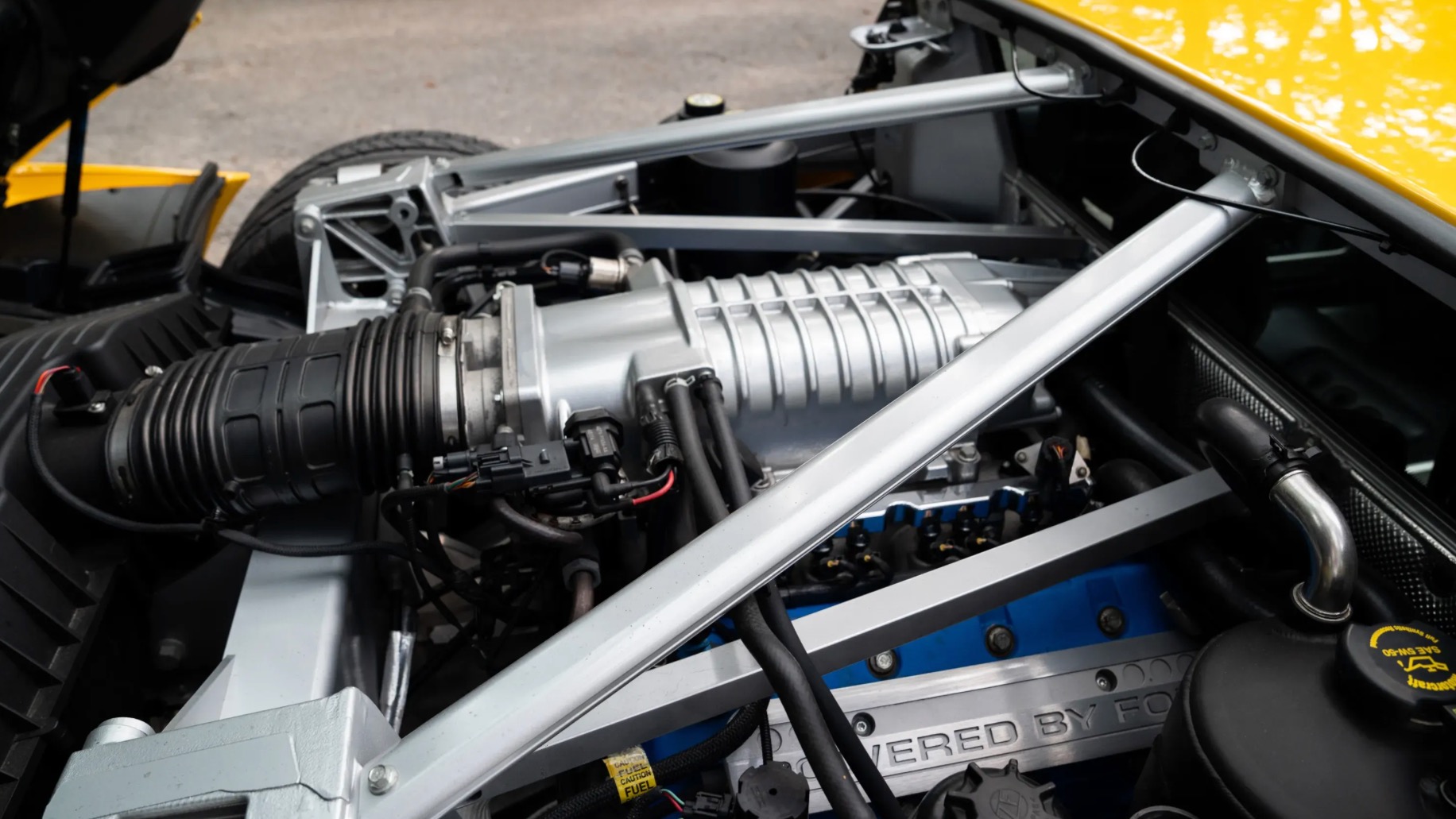
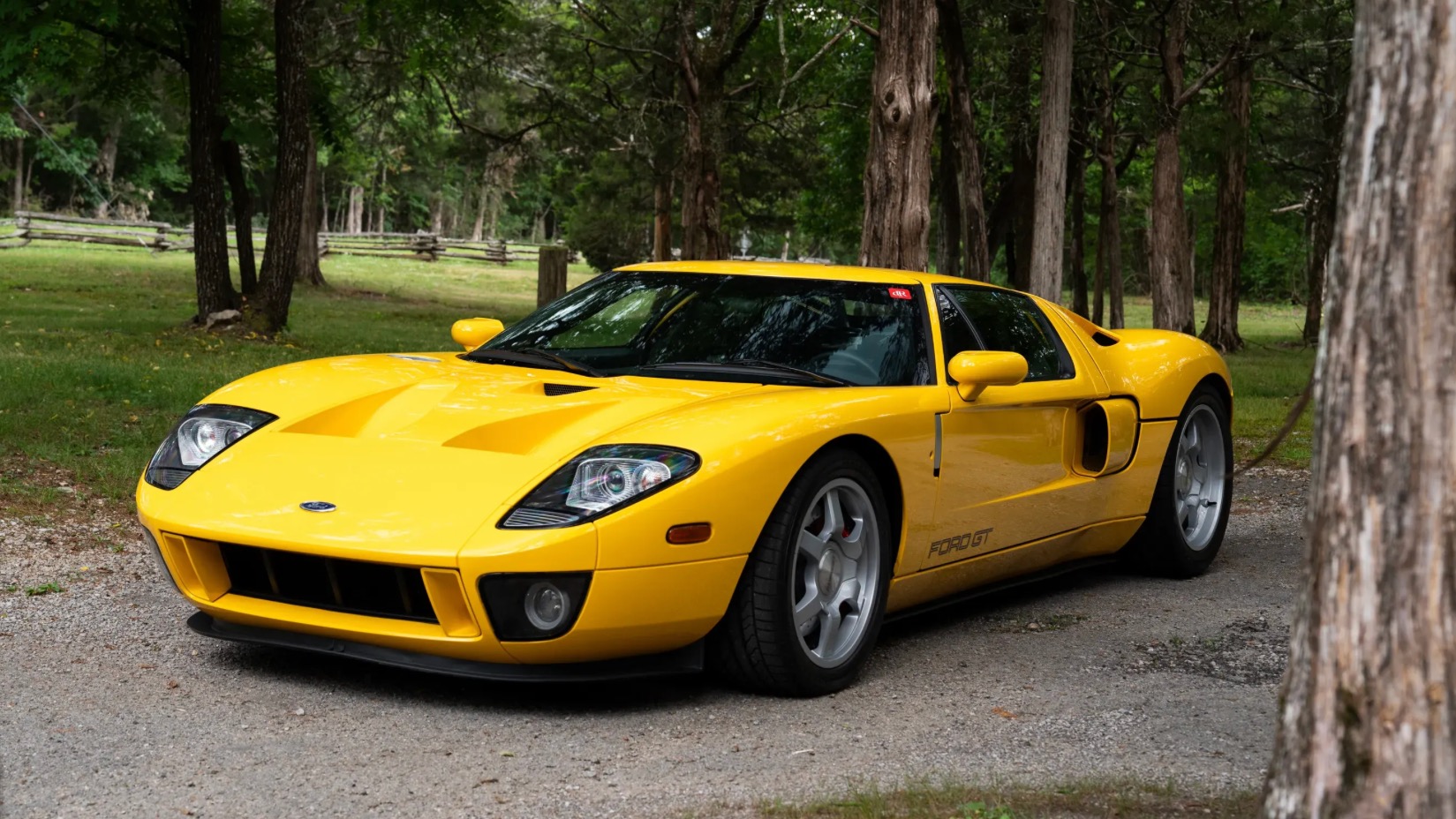
A total of 4,038 examples of this generation of GT were built as 2005 and 2006 models, although production actually spanned the 2004 to 2006 calendar years at Ford’s Wixom Assembly Plant in Michigan. Production was deliberately kept low, and Ford screened potential owners, creating the blueprint for the second-generation GT road car that arrived nearly a decade later.
Ford flipped the script with the successor GT. While the first generation GT road car was never officially raced (although some were converted into race cars), the second generation car was designed to give Ford a class win at the 2016 24 Hours of Le Mans to commemorate the 50th anniversary of the GT40’s first win. The new car used radical aerodynamic styling and a twin-turbo V6 to deliver that victory and a PR message that Ford was maintaining over time, even if it didn’t tug at the heartstrings like the retro GT.