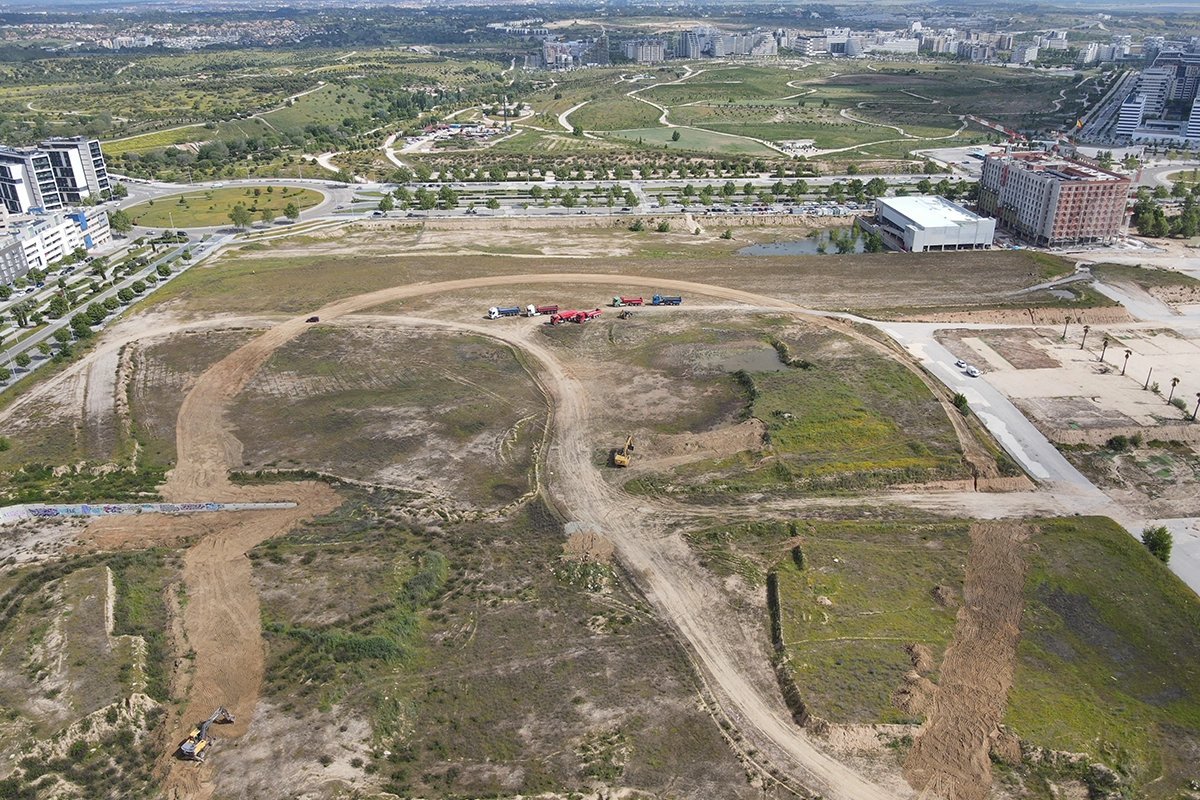
Sirens are ringing across the world of Formula 1 as Madrid’s much-anticipated street circuit construction is thrown into chaos, with just three months to go until the lights are on for its inaugural Grand Prix. The clock is ticking faster than ever, and the global racing community is watching with increasing concern.
The brand new Madring circuit, spanning 5.47 kilometers in the busy north-east of the Spanish capital, is more than ready for the high-octane showdown set to take place in just a few weeks from now. Planners envisioned this urban monster stretching around the IFEMA exhibition centre, featuring two high-speed straights and a daring turn, ominously dubbed ‘Monumental’, where F1 machines are propelled to reach speeds of 340 kilometers per hour. The circuit is poised to become the new home of the Spanish Grand Prix, replacing the prestigious Circuit de Barcelona-Catalunya, which will now share hosting duties with Spa-Francorchamps on a rotational basis. But as things stand, the only thing that is in race is the construction crew’s deadline.
This is no ordinary track switch. The decision to move the Spanish Grand Prix from its traditional home in Barcelona is seismic, signaling a new era for Spanish motorsport. For decades, the Circuit de Barcelona-Catalunya has served as a proving ground for legends and a pilgrimage site for fans. Now, with the possibility of a Madrid debut, expectations have reached fever pitch. The urban layout promises breathtaking speed and constant spectacle, with fans and teams eager to see how the world’s best drivers will navigate the concrete canyons and adrenaline-pumping corners. But with the grandstand incomplete and critical infrastructure still in limbo, concern is turning into outright worry.
The stakes are huge—for both Formula 1 and the city of Madrid. Hosting a Grand Prix is more than a sporting event; It is an economic engine, a global showcase and a logistical challenge of enormous complexity. The successful launch of Madring will establish Madrid as a major player in the international motorsport sector, attracting millions in tourism and investment. Conversely, any wrong move could lead to embarrassment on the world stage, nightmares for teams and safety concerns for drivers. The motorsport world and the city’s proud residents are keeping an eye on the progress of the construction site.
F1 officials have so far kept their public statements to a minimum, but insiders report increasing pressure behind the scenes. The buzz is deafening – fans are desperate to taste the promise of the new circuit, while teams privately grapple with the challenge of preparing for a race weekend on a track that is little more than a blueprint of concrete and steel right now. Organizers have not yet issued a formal comment, but the tension is palpable. A spokesman said, “We are confident that Madring will be ready on time and will be successful in the race like no one else.”
What happens next will define not only the future of the Spanish Grand Prix but also Formula 1’s appetite for bold, urban innovation. If the construction teams are successful, the world will witness a road race that could rival teams like Monaco and Singapore in terms of spectacular performances. If they fail, the consequences could be disastrous – delayed races, furious sponsors and a black eye on the sport’s reputation. The countdown is on and the tarmac is still unfinished, one thing is certain: the drama has already begun long before the first engines start rolling on the streets of Madrid.
Don’t miss a second with the new app where you can watch live timing of MotoGP, Formula 1, NASCAR, IndyCar and much more: just press – Here (Free for all users)