Engineers have been playing this game for as long as motorcycles have existed. They want bikes to be light, strong, and stiff, but physics usually demand compromises somewhere along the way. Steel is strong but heavy. Aluminum is light but can withstand only so much abuse. Titanium is fantastic as long as one doesn’t have to pay attention to the manufacturing budget. Every frame, swingarm, wheel and engine case on the road today is the result of engineers’ decisions about what tradeoff causes the least harm.
That’s why people are using phrases like “super alloy” about a new material coming out of Australia. on researchers Monash University Recently it has developed what they are calling the world’s first large-scale “refractory high-entropy alloy” or RHEA. Headlines focus on the fact that it is reportedly twice as strong as steel and three times as strong as aluminum. Those are impressive numbers, but they don’t really explain why materials scientists are excited. The real story is happening at the atomic level, and it’s much weirder than just joining strong metals together.
Most of the alloys we use today follow a fairly familiar recipe. Steel consists mostly of iron with some additional materials added to improve specific characteristics. Aluminum alloys also work in a similar manner. Titanium alloy also. Typically a dominant metal does most of the work while small amounts of other elements add strength, corrosion resistance, heat tolerance or durability. Metallurgists have spent decades refining these recipes and have become very good at it.
The problem is that traditional alloys are generally stronger, making it harder for the atoms to move around. Small defects, grain boundaries and microscopic bumps are deliberately introduced to prevent the metal from deforming under load. It works, but it’s often a balancing act between strength and toughness. Pushing too hard in one direction can cause the material to become brittle. This is great if you are making a drill bit. It’s less good if you’re making a motorcycle wheel that has a dent the size of Nebraska.
This new alloy takes a different approach. Instead of being a single main component, it combines titanium, hafnium, tantalum, niobium and zirconium in approximately equal proportions. It is known as a high-entropy alloy, where the atoms are arranged in a much more complex way than in conventional metals. Think of it like a well-organized parking lot replaced with complete chaos, except that chaos somehow makes everything stronger.
However, success was not all about the ingredients. According to the researchers, the slow, low-temperature manufacturing process allowed the atoms to arrange themselves into highly ordered nanostructures with remarkably few defects. This is the part that scientists are paying attention to. Rather than relying primarily on imperfections and bumps to gain strength, materials derive some of their properties from their underlying architecture. In simple terms, it’s less about what’s in the metal and more about how the atoms arrange themselves once they get there.
Photo by: Monash University
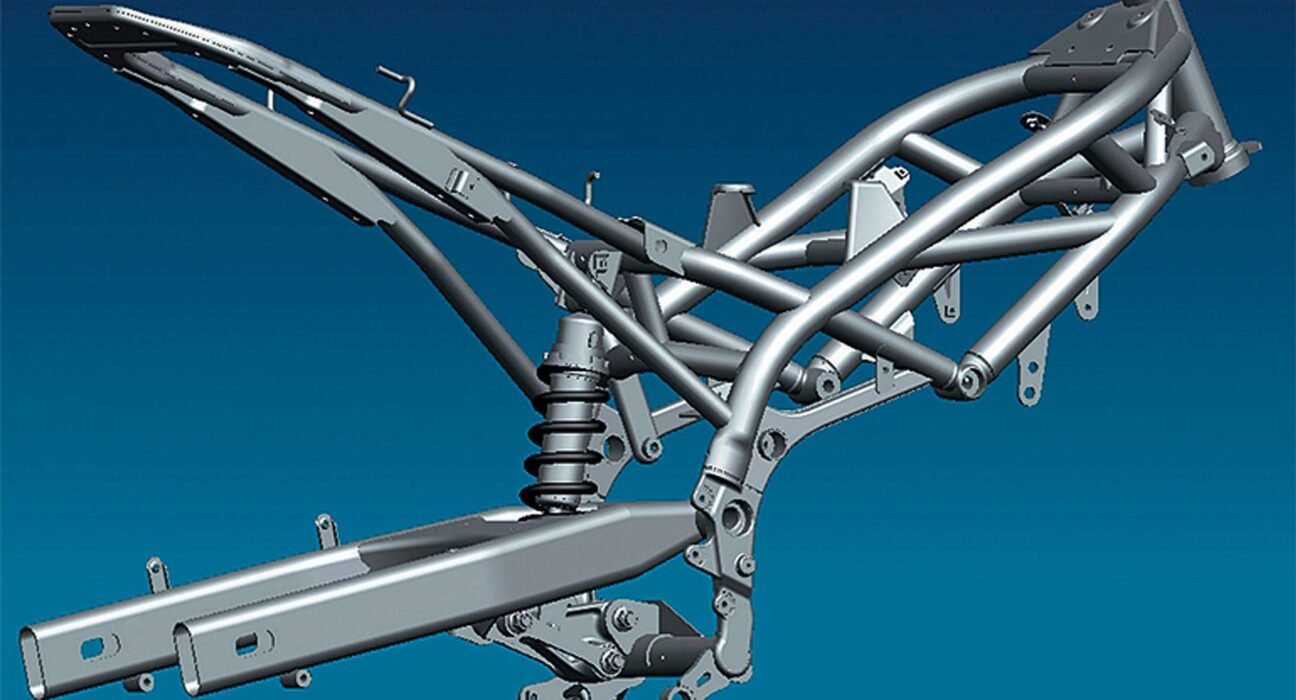
For powersports, this is where the imagination starts to run wild. Lightweight motorcycle frame. Strong adventure bike wheels. Tough UTV suspension components. Battery housings for electric motorcycles that don’t require as much material to perform the same function. The alloy contains some expensive elements, so no one should expect to see it in next year’s entry-level dual-sport. But if the manufacturing process proves scalable, the big discovery may not be this specific alloy at all.
There may be a realization that the next generation of content will not come from inventing new content. They would come from teaching atoms entirely new ways to arrange themselves. This is a huge deal compared to any other strong metal.