‘Don’t need to copy F1’: MotoGP boss on street races, Adelaide and Phillip Island’s last lap
Martin crashes in chaotic sprint | 01:03
Matt Clayton from Fox SportsOctober 25th, 2026 6:22 am
Sunday morning at Phillip Island, like a great many Sunday mornings through the Australian Grand Prix’s tenure on the MotoGP calendar, will start the same way for Carlos Ezpeleta.
Every MotoGP qualifying, practice and race LIVE and ad-break free from lights out to the chequered flag. New to Kayo? Start Your Free Trial Today >
It’s a short drive, in duration, from a house in the small towns that dot the island off the Victorian mainland to a cliffside on the edge of Bass Strait that, for all its challenges, is home to one of the world’s great motorsport tracks.
TALKING POINTS Marquez explains aggression, Aprilia’s misery, Aussie steps up
SPRINT REPORT ‘On the limit’ champ wins bare-knuckle Phillip Island brawl
It’s a protracted drive that, like
But it’s a protracted drive that, like it is for anyone who has been to the far-flung Australian destination that hosts a global sporting series, is punctuated by pot holes and roadkill, meandering traffic and mud, and people gritting their teeth to make the best of a commute that has, for nearly four decades, never really evolved.
“Understand this is not an inconvenience for me, because it’s my job and I love it,” MotoGP’s deputy CEO tells Fox Sports in an exclusive interview on the eve of the Island’s 30th and final Grand Prix on Sunday before the Australian round of the world championship moves to a brand-new city circuit in the parklands of Adelaide next November.

“The Australian Grand Prix Corporation [event promoters] are great partners, and there’s always talk about the circuit and there’s a lot of love for it, but it’s more for the layout. They’re two different things, the layout and the track, and the layout is of course great for motorcycle racing. But there are challenges [with Phillip Island] that I’m not sure are humanly possible to avoid.
Even with a huge investment at government level
“Even with a huge investment at government level … it’s not like ‘fix this’ or ‘fix that’, it’s a complete overhaul of the destination, not the circuit, a couple of roads or parking, building a highway all the way to the Island. Realistically, we know that’s not going to happen, and we understand that.
“There was a conversation around the infrastructure here, the paddock, the pit lane, the tunnel, everything. To be fair on Victoria, there was the consideration and interest to invest in those, but then there are other [problems] you can’t really solve.
“If you ask if the [Phillip Island] layout built value and credit to stay longer [on the calendar], the reality is that opportunities like Adelaide hadn’t come up before. They’ve come up now because the sport has evolved, has grown and it’s bigger, so that’s why there’s more interest.”
INSIDE MOTOGP’S CITY STREET-RACE FUTURE
The announcement in February this year
The announcement in February this year that the Australian Motorcycle Grand Prix would move from Phillip Island, routinely mentioned with the same reverence as Mugello in Italy as first or second on any list of the world’s greatest motorcycle tracks, to what was termed a ‘street circuit’ in Adelaide was an overnight bombshell that was a decade in the making, if you looked in the right places.
THE ISLAND’S GREATEST MOMENTS Local legends, races that changed MotoGP … and a seagull named Gavin
VICTORY, MISERY, IRONY Miller reflects on Island rollercoaster ride as finale looms
MotoGP agreed what was, at the time, an unusually long 10-year deal with the Island in 2016 to give the Australian Grand Prix the lead time and security it required to make long-overdue improvements to a facility, outside of the spectacular 4.4km-long ribbon of race track, needed significant investment in infrastructure to even come close to, let alone meet or surpass, the standards of the other stops on the calendar.
We know what happened next
We know what happened next. Nobody disagreed that the circuit needed change; who footed the bill was the sticking point. One event became the next became the one after. There was always next year. The track was so good that it could survive based solely on its approval rating.
Right?

When that’s put to Ezpeleta, the conversation – understandably, given MotoGP’s investment in making it work – skews towards Adelaide. South Australia wanted in, and had a bold vision. No, MotoGP hadn’t been held in a city setting before. But Adelaide felt they could pull it off. Ezpeleta, mindful of Australia’s globally-renowned reputation for hosting international sporting events on a grand scale, listened.
“Australia does live sporting events probably like no other country does them,” the Spanish executive says.
What we’re doing in Adelaide and the project
“What we’re doing in Adelaide and the project we’re putting together, from a technical point of view of just putting that project up and taking it down, I’m not sure we would have ever trusted that process anywhere else in the world. If this was other places, I’m not sure we would have felt as great about this.
“Before the deal was closed and announced, there was significant work that went into the track design, a feasibility study, any number of items we needed to feel comfortable with. But you very quickly understand who is on the other side of the table. They have to be very trustworthy for you to consider something this ambitious.
“Our focus right now is Adelaide, and it will be a flagship race for us on the calendar for a long time. And it could be a blueprint for this to possibly happen in more places around the world. But starting off with safe hands in Australia, with very competent people who do live events really well … it gave us the credibility to be able to do this project.”
Pressed on whether Adelaide will become the base
Pressed on whether Adelaide will become the base camp for a changed schedule of events that prioritises similar city-style races at the expense of some of the signature circuits that make up the calendar, Ezpeleta pumps the brakes.
“It’ll be more based on opportunity, because you can’t really chase these things,” he reasons.
“In time, and when we’ve come to grips with how to operate something like [Adelaide], I’m sure it’ll become easier and I’m sure there’ll be more cities calling. Adelaide will be very proud to have done it first before anybody else. But I don’t see these types of events being more than Adelaide in the short-term, and I don’t see them being more than a handful of races maximum even in the very long-term, either.
You need the infrastructure, the space, the capacity
“You need the infrastructure, the space, the capacity to build and the technology, and it’s very different. The calendar, I feel, is more likely to go through geographic evolution. There’s 22 rounds, we’re full now. We have 14 in Europe and eight not in Europe this year, we have 13 and nine next year. That probably changes to a 50-50 [ratio] or even more overseas than in Europe within the next five years. But saying that, I still think most of them will be at permanent circuits.”

No matter your topic of choice, social media isn’t anyone’s idea of a sensible place to go for rational informed commentary at the best of times. So every time something – anything – changes in MotoGP, you can either be part of the discourse or not. Regardless, there’s a common theme.
Ever since Liberty Media, Formula 1’s owners, finalised its acquisition of MotoGP’s commercial rights holder Dorna Sports in July 2025, the American media company has become the piñata MotoGP fans take a stick to when changes they don’t like are made, rightly or wrongly, justified or not.
Ezpeleta is aware of the noise
Ezpeleta is aware of the noise. When asked to best describe to MotoGP fans what Liberty wants to do with MotoGP, he’s clear on what Liberty won’t.
“What Liberty doesn’t want is to change the sport … it’s important to say that,” he says.
“We have a huge global fan base, our fan base is really engaged, but we want to service that better than we do now. We want to give them more content and better ways to engage with the sport, make it easier for them to connect with the riders and the teams.
Attracting a new audience to MotoGP
“Attracting a new audience to MotoGP and a new demographic, of course we want that. Any sport would. But we don’t want to change the sport, because it doesn’t need changing. As we continue to work on the discoverability and visibility of the sport, it will work to service all types of fans – the hardcore, the not-so engaged, the new fans. We just want to bring the sport to more people … we want to evolve from, say, a racing company to building a global sports entertainment brand. But that will never come at the cost of the sport.”
Title chase blown open after crash | 06:52
Next year represents one of the biggest changes to the series in a generation, with brand-new 850cc machines replacing the 1000cc bikes that have raced since 2012, Pirelli usurping Michelin as tyre supplier after a decade, a change to the race weekend format that brings in separate qualifying sessions for sprints and Grands Prix, a rebooted grid where just five of this year’s 22 riders will continue with the same teams, and two new venues – Buenos Aires and Adelaide – coming on-stream.
Quizzed if that ability to service the multiple streams of fans comes down to better stories or better storytelling, Ezpeleta pauses.
“I’d say both,” he says.
Fans can have a hard time with change,
“Fans can have a hard time with change, in any sport, but I feel that’s good. If [the sport] wasn’t good, then we would already be in a bad place. As the MotoGP fan that I am, I love that people have this … protectiveness over the sport, they sport they love. That’s completely fair. But we also have incredible experience in running the sport, and any changes we’ve made with the format, the bikes, have always come with a level of resistance, but with time, everybody loves it.
“We and Formula 1 are two different sports. We don’t need to copy Formula 1. We’re proud of the sport we built. We will continue to focus on the sport, next year with the new regulations that will improve the racing, improve the safety, improve the format.”
Adelaide’s MotoGP debut, when Australia next hosts a round of the series after Sunday’s Island swansong from November 12-14, clearly won’t be the next time Ezpeleta sets foot in the South Australian capital; indeed, the executive will make a flying visit this week in the lead-in to next weekend’s Malaysian Grand Prix at Sepang.
But next November is a week he has circled on his calendar.
From February’s announcement, news about Adelaide has been
From February’s announcement, news about Adelaide has been gradually released, the most visible of which came in August when the first renders of the 15-turn, 4.13km, proposed $96 million were made public.

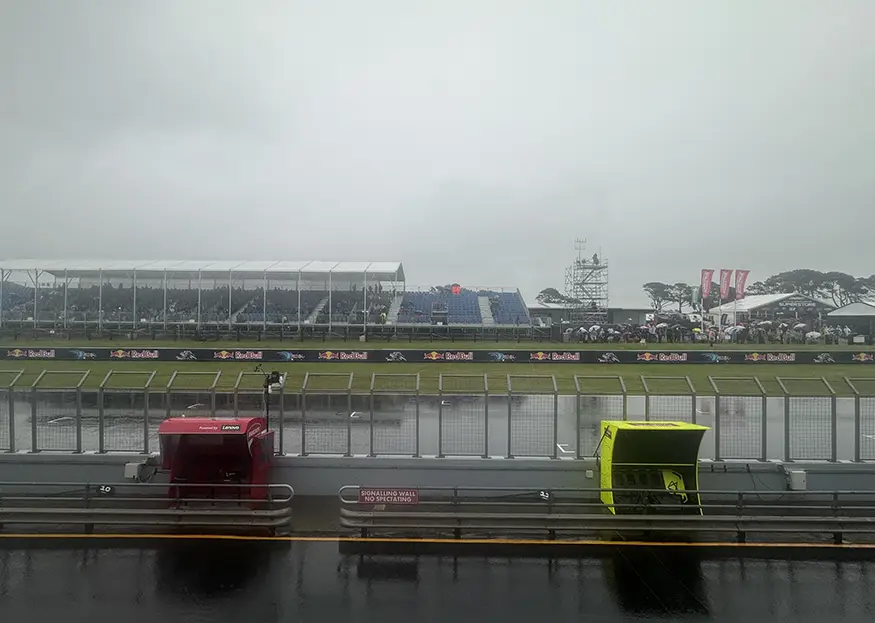
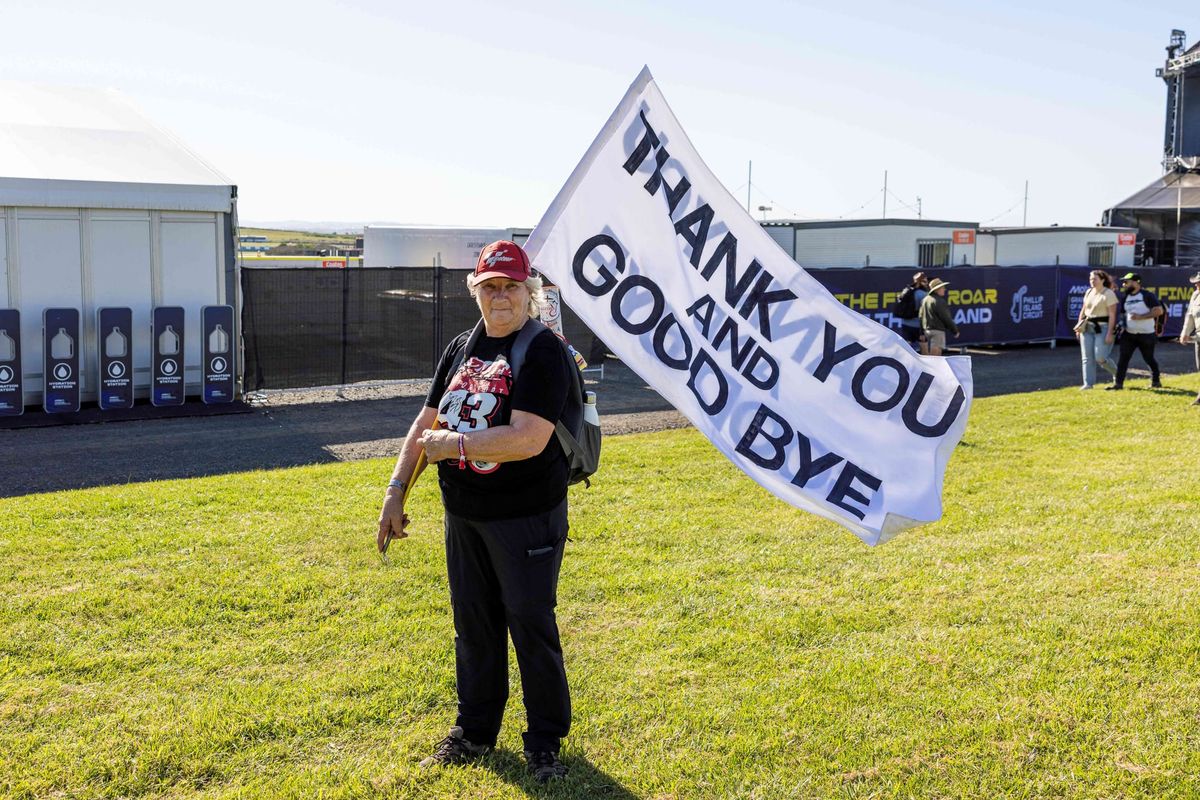
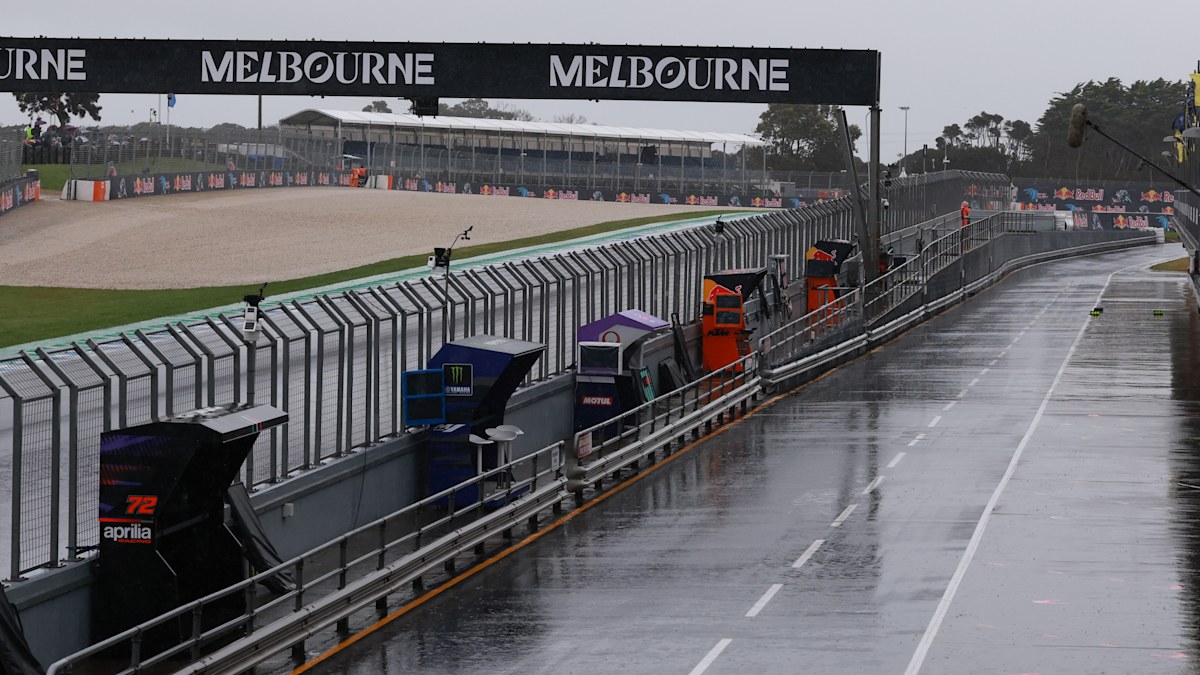
Adelaide is MotoGP’s toe in the water to bringing racing to the people. The people, of course, have come to Phillip Island this weekend – 45,858 of them were present for Saturday’s sprint in what was very on-brand Phillip Island weather – and Sunday’s race day is a sellout despite an even more grim forecast, the Aussie fans clearly agreeing with Australian rider Jack Miller’s sentiment that the Island’s last roar should be a “farewell, not a funeral”.
But for many years, the Island has hosted one of the sport’s lowest-attended races. In 2025, a year where MotoGP had its biggest-ever annual attendance (3.6 million fans across 22 races), the Island was one of five tracks that didn’t hit 100,000 fans across a three-day weekend (91,245), two others being the equally-remote Honda-owned Motegi in Japan (90,096) and Silverstone in the UK (99,328), the British Grand Prix lacking a home rider to hang their promotional hat on.
Projections from the South Australian Motorsport Board expect
Projections from the South Australian Motorsport Board expect the Adelaide round’s debut to double that 2025 Phillip Island number; for his part, Ezpeleta is looking forward to the opportunity for potential fans interested in MotoGP but reticent to make the trek to Phillip Island for myriad reasons to get their MotoGP feet wet in a city setting.
The on-track offering will do the rest, he feels.
“The perception that MotoGP is only for people who ride motorbikes is not the case,” he says.
“When we can bring the sport into the centre of a city and make all of that available to everybody, it’s going to be an amazing experience to be there. Everybody that walks into a MotoGP circuit for the first time and sees the bikes blast past, you get the goosebumps. I see it when we bring people in for the first time. It’s really fun to watch them have that look on their face that’s ‘OK, now I get it’.
What the riders do, how athletic it is,
“What the riders do, how athletic it is, these riders are racing with heart rates of 170-175 beats per minute average for the whole race … you have to be able to tell all of those stories to be able to engage with a new fan base that sees it.
“It’s an ambitious journey for us and it’s not without risk, and it’s just something we’re not used to. But credit to South Australia for their vision and ambition with this, because it’s going to be really spectacular to see this come together.”
On a personal level, Ezpeleta is looking forward for the entire paddock, which will pack down at Phillip Island for the final time on Sunday afternoon, to be able to see what Adelaide has promised to deliver in 13 months from now.
It’s going to be mouth-opening for everyone,
“It’s going to be mouth-opening for everyone, the riders and the teams,” he says.
“We are a travelling family of 1500-2000 people, and at a normal event at a new [permanent] circuit, maybe 10 per cent of those people want to walk, run, cycle a lap of the track. But in Adelaide, everyone is going to do it because of how impressive the setting will be.
“The city, the buildings, the vegetation, the trees … for everyone, it’s going to be unlike anything we’ve ever done.”