McLaren has eased the challenge with a revolutionary new twist: an upside-down rear wing, set to make its debut at the Austrian Grand Prix, that could overturn the Formula 1 technological arms race.
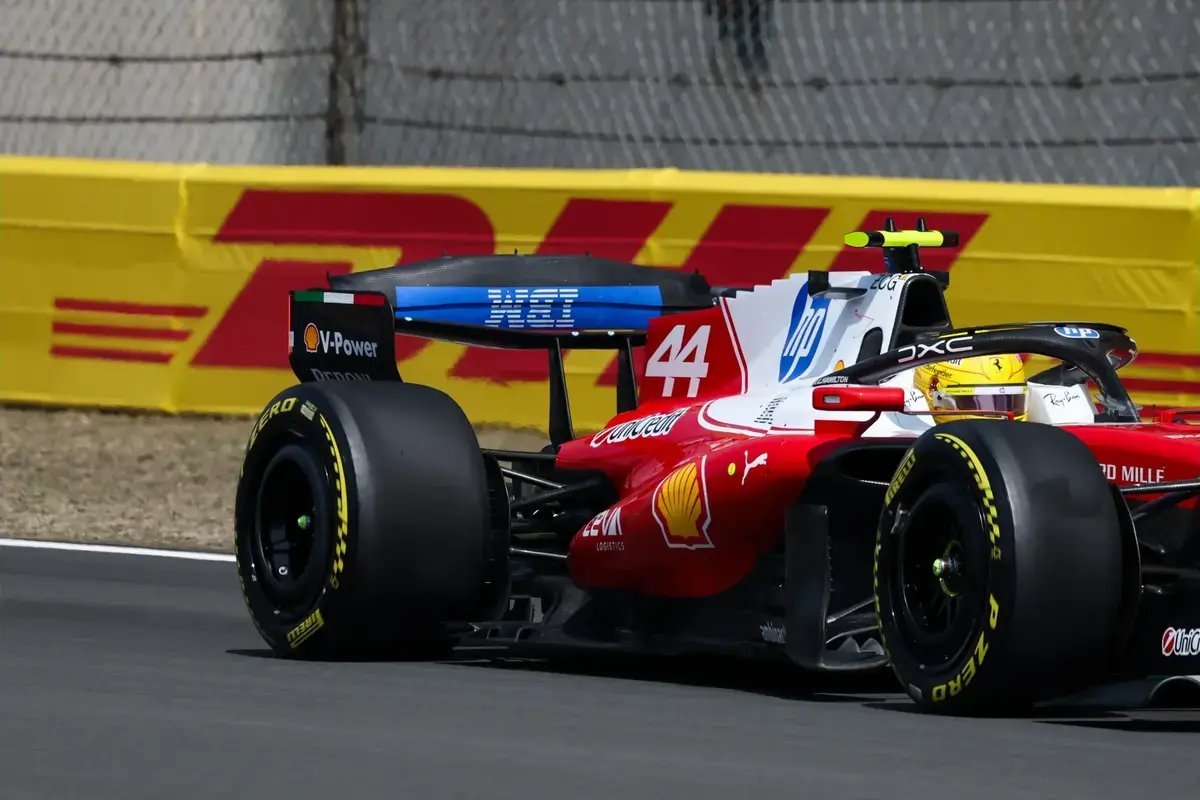
In a bold statement of intent, McLaren announced it will deploy an “experimental rear wing” – widely believed to be an inverted design – during Friday’s crucial free practice session at the Red Bull Ring. This innovation is reminiscent of recent headline-grabbing stunts by Ferrari and Red Bull, who have toyed with the upside-down wing concept in their continued quest for aerodynamic superiority. Ferrari shocked people after revealing a 180-degree rotating rear wing during winter testing, while Red Bull introduced their take on the concept at the Miami Grand Prix, each chasing every last millisecond of lap-time advantage.
For McLaren, the Austrian Grand Prix isn’t just another race weekend – it’s a proving ground for a potential game-changer. The team, currently riding a wave of momentum after significant upgrades in Miami and Canada, is determined to close the gap on championship leaders Mercedes and newly resurgent Ferrari. However, the new rear wing is strictly a test item right now; It will only be visible in Friday practice, as the team collects critical data before making any decisions about a full-scale deployment later in the season.
The stakes couldn’t be higher. For a team that is back in the championship conversation, every technical gamble matters. Neil Holladay, McLaren’s technical director, set out the strategy with clinical precision: “We’re always looking to make improvements that add performance and lap times to the car. For this event, we’ve focused on small detail updates around the rear corners of the car, as well as an experimental rear wing that will run throughout Friday’s session. While the overall package is lighter than some of our recent updates, these developments are all part of our season-long development path, and wherever we are, “Can continue to look for every lap time opportunity.”
The fierce competition on the grid front has never been more intense. Ferrari’s SF-26 is receiving praise from rivals, with McLaren team boss Andrea Stella and reigning world champion Lando Norris openly praising it as the benchmark chassis in the sport. The Italian squad’s own inverted rear wing sent shock waves through the paddock and forced every major team to reevaluate their aerodynamic playbooks. Red Bull, never to be outdone, responded in Miami with its own version, albeit with a different operating philosophy.
McLaren’s decision to test an inverted wing underlines how tough the race for development has become in 2024. Every team is looking for marginal profits, and the line between a successful innovation and a technological dead end is very thin. The British squad’s Austria preview made it clear: “As part of this continued momentum, the team will make minor detail refinements on the rear corners of the MCL40. In addition, we will test an experimental rear wing during Friday’s free practice sessions.”
What happens next could reshape the story of the championship. If the inverted wing delivers the expected performance boost, McLaren could introduce a full-scale version at future grands prix – a move that would force Mercedes, Ferrari and Red Bull back to the drawing board. But if the design falters, it falls back on the constant cycle of development and analysis that defines modern F1.
The technological war is increasing. With each practice session, the stakes get higher and the pressure increases. The Austrian Grand Prix is no longer just a race; It’s the battleground for innovation – and McLaren has fired the latest shot.
Don’t miss a second with the new app where you can watch live timing of MotoGP, Formula 1, NASCAR, IndyCar and much more: just press – Here (Free for all users)