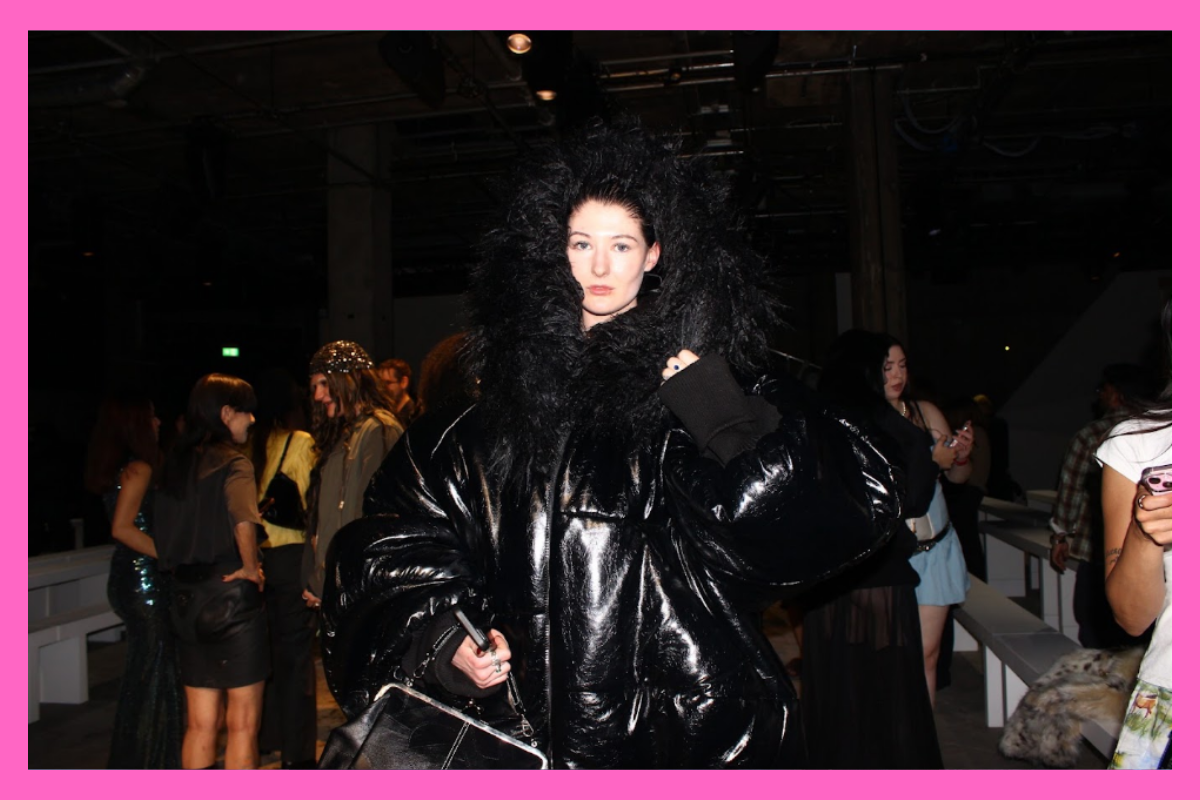
London designer Liza Keane is pushing the boundaries of contemporary fashion with Hungry Hearts, her Autumn/Winter 2026 collection presented during the London Fashion Week in February 2026. Blending subversive femininity, sculptural leatherwork and underground culture, the collection explores the darker sides of desire, identity and human vulnerability through clothing that challenges conventional ideas of luxury.
At the heart of the presentation is a cinematic fashion film directed by Keane and Vitali Akimov. Featuring an erotic dancer, a black metal guitarist and a pill pusher, the film follows three characters who live by different personal codes but share the same underlying hunger. The project brings together provocative storytelling and experimental design, while reflecting the label’s commitment to upcycled and deadstock materials.
Liza Keane Explores Desire Through Hungry Hearts
The Hungry Hearts concept centres on desire as a force that can shape behaviour, identity and relationships. Its three characters inhabit contrasting worlds, yet their shared longing connects them beyond their outward differences.
The film’s tagline, ‘Watch them feed it, cage it, become one with it’, suggests a progression from satisfying desire to attempting to control it before eventually embracing it. This theme gives the collection a psychological dimension, inviting viewers to consider the tension between restraint and surrender.
Rather than presenting desire as straightforward glamour, Keane explores its contradictions. The result is a fashion narrative that draws on underground culture while examining the impulses that can make people feel both powerful and exposed.
Sculptural Leather and Physiological Armour
Keane’s design language extends beyond conventional garment construction. Her London-based label works across womenswear and menswear, using fabric and leather as sculptural materials to echo the body’s natural contours.
In an August 2025 interview with 10 Magazine, Keane’s approach was described through the idea of ‘subversive femininity’, while the designer’s own term, ‘physiological armour’, captures the tension between sensuality and protection. Her garments are designed to function like second skins, combining body-conscious forms with structures that suggest psychological defence.
Keane trained at Central Saint Martins and developed a practice that merges sculpture with fashion. As discussed in 10 Magazine, she uses clay and leather to experiment with pattern cutting and mould-making, translating sculptural ideas into wearable pieces. This process allows silhouette and texture to take precedence over decorative excess.
The collection’s emphasis on tension, thresholds and polarity reflects the label’s broader interest in the body’s contradictions: seduction, fragility and strength. Clothing becomes a way to explore how people present themselves while protecting their vulnerabilities.
The Creative Team Behind the Fashion Film
The film gives Hungry Hearts a visual narrative beyond the garments themselves. Keane and Akimov directed the project, with Akimov also credited for cinematography and camera work. Edward Beau Kelso handled lighting, while Alexey Leontev was responsible for set design.
Music and sound design were credited to Cold Noise and Artem Slesarev, adding another layer to the film’s atmosphere. Together, the creative roles connect fashion with cinematography, sound and set construction, reinforcing Keane’s multidisciplinary approach.
The film also reflects the designer’s interest in storytelling. Rather than relying solely on a runway presentation, the project uses characters and atmosphere to give context to the collection’s themes. Viewers can watch the official Hungry Hearts film on YouTube.
Sustainable Luxury Through Upcycled Materials
Alongside its provocative aesthetic, LIZA KEANE states that its luxury pieces are made using upcycled and deadstock materials. The label also restricts new textiles to those composed entirely of natural fibres, according to its official London Fashion Week profile.
The collection’s material approach includes leather and tactile moulding techniques, connecting the physical qualities of the materials with the label’s sculptural construction. Upcycling repurposes existing reherwise remain unused
These choices can reduce reliance on newly produced textiles, although the environmental impact of a garment also depends on manufacturing, sourcing, transport, durability and disposal. The label’s stated practices provide a clear sustainability direction, but measurable environmental outcomes would require further evidence.
Liza Keane’s Place in London Fashion
Keane’s Hungry Hearts collection brings together underground references, philosophical questions and experimental craftsmanship. Her official London Fashion Week profile identifies the writings of Georges Bataille and Carl Jung, alongside lived experience, as influences on her work.
These references help contextualise the collection’s interest in desire and the contradictions of human experience. The project does not offer a single interpretation of its characters’ motivations; instead, it uses fashion and film to explore the relationship between the body, identity and personal impulses.
With Hungry Hearts, Keane presents luxury fashion as a form of wearable art, shaped by sculptural techniques and a distinct creative narrative. By combining provocative imagery with material reuse, the designer pushes beyond conventional fashion presentation, placing psychological expression and craftsmanship at the centre of her work.