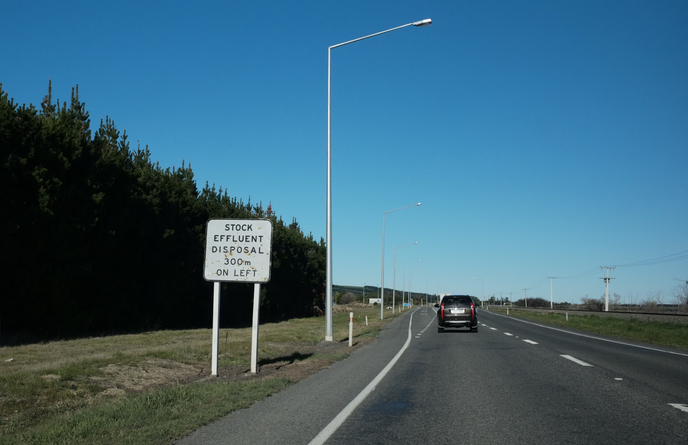
Hawke’s Bay livestock carriers say the rejection of a proposed truck stop and service station hub at Twyford leaves a critical shortage of stock-effluent disposal facilities unresolved.
An independent hearing panel appointed by Hastings District Council declined Hamachek Holdings’ application for the Evenden Energy Centre near the intersection of State Highway 2 and Evenden Road.
The proposed multi-fuel development included a truck stop, stock-effluent disposal facility, truck parking, petrol and diesel pumps, electric vehicle chargers, retail space, a café and a seasonal fruit shop.
National Livestock Transport and Safety Council chair Derek
National Livestock Transport and Safety Council chair Derek Foley says the industry acknowledges the panel’s decision, but the need for suitable facilities remains.
“There are a number of livestock carriers in Hawke’s Bay servicing the East Coast region and across to Manawatū and Wairarapa, and we need suitable stock-effluent facilities,” Foley says.
“There simply aren’t enough in the region, and if we can’t offload at dedicated sites like the one proposed, then the effluent may be dumped on the road once the onboard tanks overflow, and that creates a problem for all other road users.”
According to Local Democracy Reporting, panel chair Kitt
According to Local Democracy Reporting, panel chair Kitt Littlejohn described the proposal as well considered and acknowledged it would meet genuine freight and transport needs.
However, the panel found its benefits did not outweigh national planning protections applying to highly productive land on the Heretaunga Plains.
Environmental group Save Our Plains welcomed the decision, saying it sent a strong message about protecting productive soils from development. Of the 23 submissions received, 15 opposed the proposal, four supported it and one offered conditional support, Local Democracy Reporting said.
Hamachek Holdings director Matthew Lawson said the company was considering an appeal.
Foley says the proposed facility would also have
Foley says the proposed facility would also have provided truck drivers with parking, toilets and other basic amenities along the State Highway 2 corridor.
“Livestock carriers don’t want to dump effluent on the road, but we’re between a rock and a hard place,” he says.
He says the problem can be compounded when livestock is not stood off pasture for long enough before transport, increasing the volume of effluent produced during a journey.
“It’s livestock carriers who get blamed for dumping effluent on the road, and even punished with fines, yet they did not cause stock to be full, nor are they responsible for the failure to permit stock-effluent disposal facilities.
“It’s a lose-lose for livestock carriers.”
Get the TransportTalk newsletterNew Zealand transport industry news in your inbox. Free.
Sign up