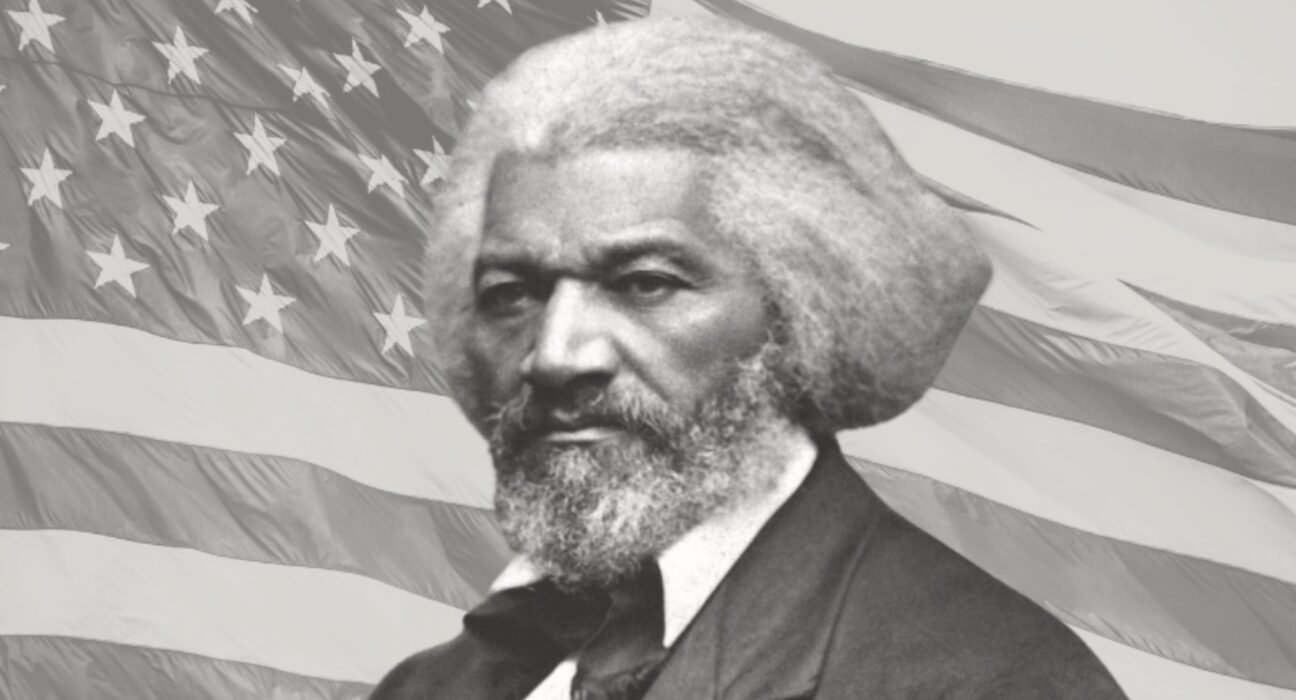
Frederick Douglass’s great speech “What’s the Fourth of July for a slave?” The speech, delivered before a predominantly white audience at Rochester’s Corinthian Hall on July 5, 1852, reflected the contrasts that remain in the nation’s Fourth of July celebrations, then and to this day. The nation’s founding documents may have declared that “all men are created equal,” but more than three million black people were slaves at the time of Douglass’s speech. Douglass’s decision to deliver the speech on July 5 expressed his view that the Fourth was not yet worth celebrating, as the holiday was “more than all other days of the year” for the American slave because, as Douglass put it, “the gross injustice and cruelty to which he is a constant victim.” The Thirteenth Amendment abolished slavery in 1865, but “What to the Slave” tells many readers about the gross injustice and cruelty of a nation that fails to provide equal opportunity and justice for all.
However, that speech may not have been the most compelling or even relevant of Douglas’s speeches for this year’s Fourth of July. A better candidate would be his 1867 “Sources of Danger to the Republic,” which was delivered on several occasions after the Civil War, including as part of a black-sponsored lecture series in Philadelphia. Douglass took stock of the democratic promise of the Founding Fathers, the Constitution, and the Declaration of Independence, and how their concerns anticipate our present moment.
“Sources of Danger” was inspired by Douglas’s anger at President Andrew Johnson, whom he believed had betrayed the promise of Reconstruction by attempting to block all legislation intended to bring about racial equality. Although not given on or around the Fourth of July, this speech shares the spirit of the holiday. Douglass begins with an appeal to “patriotic citizens of the United States,” and, pausing “Fourth-of-July extravagances,” he offers “humble gratitude to the fathers who prepared the country’s founding documents.” (I am quoting from the version that Douglass gave to a black audience in Philadelphia on January 3, 1867.)
As in his more famous Fifth of July speech, Douglas lamented the country’s failure to live up to “the great principles of the Declaration of Independence.” Furthermore, he argues in “Sources of Danger” that the Constitution makes the presidency resemble a monarchy and is thus a threat to democracy. Douglas believes that there are electoral limits on the presidency, which make it different from monarchy. Nevertheless, the President, who has almost unlimited power, “may rule long enough to commit any number of mischievous acts, and thereby defeat the most beneficial measures of our government.”
How was it that a few signers and supporters of the Declaration of Independence could form a government in which a President like Johnson was “endowed with the powers of a King”? Douglas speculates that “the fathers of this republic”, who were born under “monarchical institutions”, retained an unconscious nostalgia for monarchy. That nostalgia led to a significant mistake in the Constitution – elevating the presidency to the position of king – which “must now be corrected.” As he instructs his listeners, “You must either have a completely republican government or you must have a monarchical government, one or the other.” The burden of what might be called Douglas’s no-kings speech is to identify the problem and suggest fixes.
Initially, the problem appears to be Andrew Johnson. Douglas says that the framers of the Constitution failed to anticipate a president like Johnson – a man who was willing to take full advantage of the lack of restrictions on the presidency to become a “one-man power”. But even though Douglas repeatedly mentions Johnson, during the speech he steps back to make a larger case about constitutional failure and more dispassionately present his concerns about the country’s future presidents and prospects.
“King Andy,” illustration by Thomas Nast. From harper’s weekly1 November 1866.
Douglas first draws attention to how the Constitution states “Excessive Protection at the hands of the President.” He believes that the President has access to “hundreds of millions of dollars a year in times of peace and untold hundreds of millions of dollars in times of war.” There are only limited constraints on how he can use the money. He can use it to further his policies or even to enrich himself and assume power over others. Douglas is particularly concerned about how easily the President can distribute the nation’s money “among his political friends.” At this thought, Douglas can only throw up his hands and declare: “What power! What a corrupting power!”
And there’s more: Douglas draws attention to the corruption enabled by the president’s veto power. He is angry that a single person—the President—can overrule a simple majority of Congress MLAs. Douglas says that the idea that presidents always override congressional majorities less than two-thirds is “an absurdity”, as well as an insult to democracy. Douglas is in no doubt what he thinks should be done to address the anti-democratic presidential veto: “I want the old, despotic, and aristocratic power of our government to disappear altogether from our Constitution. It has no business in a republican form of government.” Even in England, Douglas points out, there is no such power invested in the monarchy.
Even though Douglas repeatedly mentions Johnson, during the speech he steps back to make a larger case about constitutional failure and more selflessly presents his concerns about the country’s future presidents and prospects.
Douglas then considers the president’s pardon power as another source of danger. He does not want to eliminate the possibility of pardons, but he sees corruption as an inevitable consequence of the President’s absolute power to grant pardons. During Douglas’ time, he was particularly angered by Johnson’s decision to pardon almost all former Confederate leaders. However, as a political theorist, he looked to the future and was particularly concerned about how unrestricted pardons added to presidential power. With the help of the Constitution, the president’s ability to pardon criminals can be deployed “to win personal friends and cooperation and alliances, rather than to dictate loyal obedience to the laws of the country.”
Among Douglas’s suggestions for limiting presidential power, perhaps the most relevant to our current historical moment is his call to eliminate the President’s ability to conduct “secret diplomacy.” Which puts the country in danger. As Douglas warned, a bad President will select a bad Cabinet, and by the covert diplomatic work of “a bad President and a bad Cabinet”, “this nation may be thrown into the jaws of a terrible war, and rendered utterly helpless.”
Andrew Johnson, who was the immediate focus of Douglas’s criticism, was impeached the following year. Douglas thought he should have been convicted of crimes against black people, but he was impeached for something very different: violating the Tenure of Office Act by firing Secretary of War Edwin M. Stanton. But was impeachment the best answer to the problem? In “Sources of Danger” Douglas emphasizes that broad constitutional change rather than impeachment rituals would help secure the country’s future.
Even in an angry and sometimes despairing speech, such as “The Source of Danger to the Republic,” Douglass retained hope for the future, and called on Americans to secure the nation’s democratic promise. At the conclusion of the speech he says, “Abolish the power of one man everywhere;” “Bend your government towards the people, and away from the power of the individual or of one man.” If Americans are willing to do so by constitutional reform or other means, “you will ensure the permanence, prosperity, and glory of this great Republic.” This is Douglas’s wish and request to us since 1867. As for “What is the Fourth of July to the Slaves?”, he reminds Americans of the still-unfulfilled egalitarian promise of the Declaration of Independence, and there is no better time than the Fourth of July for such a reminder.