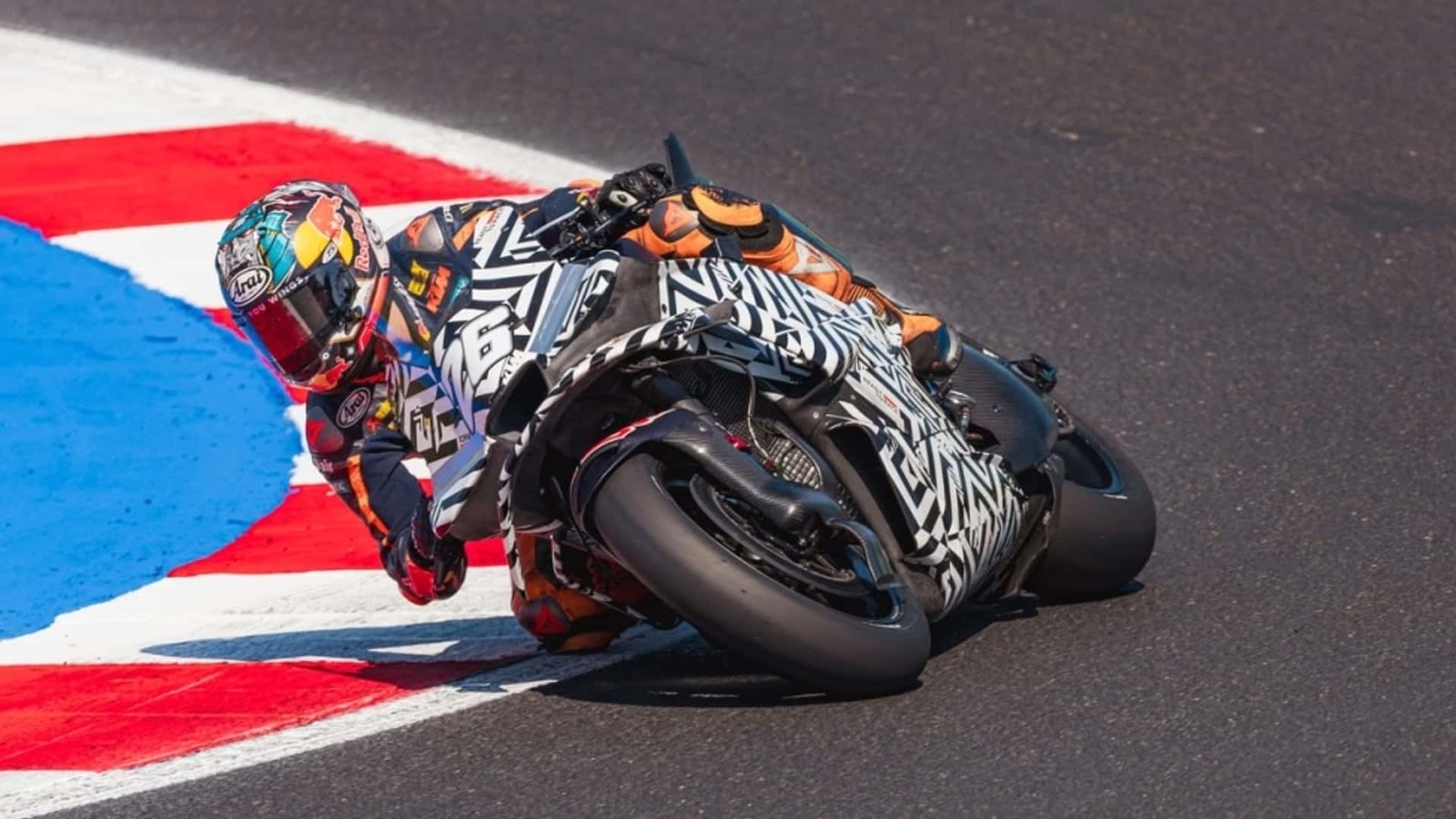
MotoGP recently took to the track at Misano World Circuit Marco Simoncelli to test the highly anticipated 850 cc prototype. And one of those prototypes was from the Austrian manufacturer, KTM, which appeared with a bike wearing an air intake system inspired by the current pioneers of the 2026 season, Aprilia.
Is imitation the sincerest form of flattery?
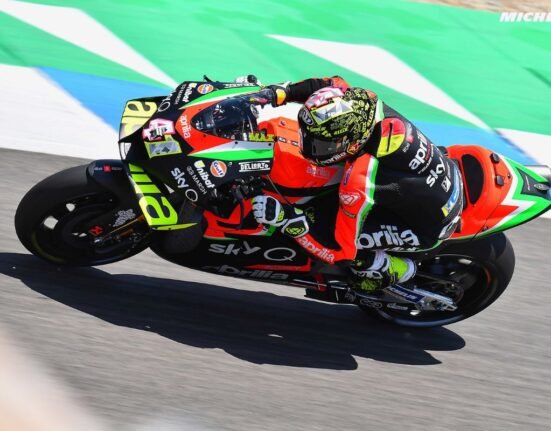
Earlier this year, Aprilia introduced a new intake system on its RS-GP, a Formula 1 concept that was adapted to MotoGP by the Italian manufacturer. It is effectively a copy of the F-duct concept used by McLaren during the 2010 Formula 1 season.
On the McLaren MP4-25, the F-duct system created an air channel at the front of the car that ran through the cockpit to the rear wing. according to motorsport“There was an opening on the left side of the cockpit, and when the driver covered it with his hand, the air flow to the rear wing was stopped (and) depending on the length of the straight, the system allowed the car to reach 10 km/h in maximum speed.”
So, how does it work on a MotoGP bike?
Photo by: MotoGP
Well, Aprilia included small ventilation slots in the front fairing, on either side of the air intake. Just below the rider’s forearm you will find two additional openings that can be covered by the rider’s forearm when he leans straight forward. This results in separation of airflow along the side fairing, which ultimately increases the top speed of the motorcycle.
It was only a matter of time before other MotoGP teams started working with this F1 aero technology, the first of which seems to be KTM, which adorned its 850 cc test bike with an air intake located in almost the same position as the one found on the RS-GP.
The two bikes that KTM were testing at Misano were ridden by Pol Espargaro and Dani Pedrosa, and both wore F-duct systems, although the shape appears to be completely different than that found on the Aprilia – and it is also located away from the front fairing.

Photo by: MotoGP
Bearing in mind that aero components will be limited when MotoGP transitions to 850 cc powered machines next year, it’s no surprise that teams were testing theories and gathering data during the Misano test. And I suspect this trend will continue when MotoGP heads to Brno for the next testing session, although that will be off limits to the media.
With a reduction in power and limited aerodynamic upgrades available, teams will have to be creative to get ahead of their competition, and by creative I mean copying what worked on the previous generation of GP bikes and adapting it to 850cc platforms (insert: sarcasm).