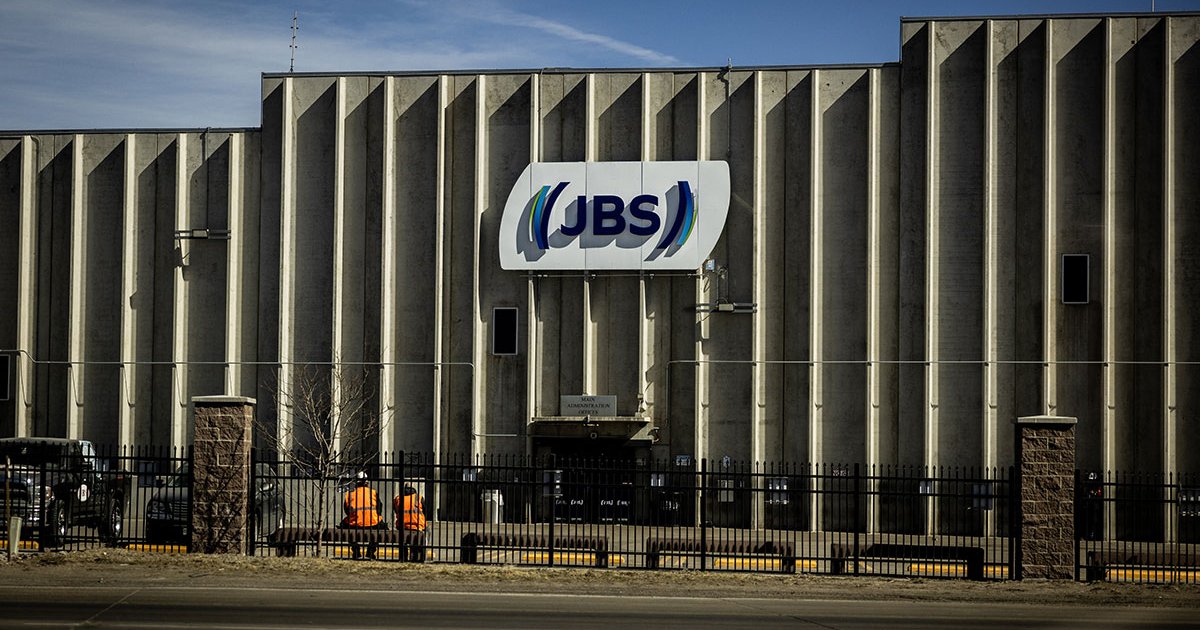
JBS Greeley Meatpacking Facility in Greeley, Colo. (Chet Strange/Bloomberg)
key takeaways:
- JBS NV dropped its 2040 net-zero target covering all emissions and removed Scope 3 targets, reducing efforts to directly control emissions.
- Scope 3 sources such as livestock are responsible for almost all emissions, while Scope 1 and 2 make up about 4% in 2025, leading to criticism over accountability.
- The change follows regulatory scrutiny and an agreement, as JBS plans to continue reporting Scope 3 emissions while focusing on cutting operational emissions through 2050 targets.
JBS NV, the world’s largest meatpacker, is retreating from a 2040 net-zero emissions target, abandoning the target for the indirect emissions that make up the bulk of its environmental footprint.
The company has adjusted its targets in its latest sustainability report to eliminate so-called Scope 3 greenhouse gas production targets, which include emissions produced by all the animals it kills for JBS. That’s because the company has changed its 2021 commitment to reach net-zero greenhouse gas emissions by 2040, which covers all three realms, said Jason Weller, global chief sustainability officer.
Instead, the meatpacker maintained its previously announced target of reducing Scope 1 and Scope 2 emissions intensity by 30% by 2030 compared to a 2019 baseline. It is now also targeting a 70% reduction in emissions at its processing facilities by 2050.
Weller said JBS is “sharpening and focusing” the company on goals it can directly control and measure and “moving away from big sweeping ambitions.”
JBS’s Scope 1 and Scope 2 figures, which track its direct operations and energy use, came to barely 4% of its emissions in 2025. The rest were from Scope 3, almost all of which came from the livestock that meatpackers process and the feed they require. The range of so-called purchased goods and services does not include land use or deforestation.
JBS USA Holdings is ranked 86th on the Transportation Topics Top 100 list of the largest private carriers in North America.
The Brazilian meatpacker has faced criticism over its environmental footprint in the past, particularly during the process of getting a US stock listing approved last year.
Stephanie Dowlen, senior forest campaigner for the Rainforest Action Network, said that JBS “has never had any credible plan to reduce its excessive GHG emissions.” The latest action shows that the company “has no intention of addressing its most significant source of emissions and has also failed to publish on land-use change,” he said.
The company last year called Scope 3 emissions a “significant challenge” because they are “the result of thousands of individual farming operations,” requiring “greater collaboration and innovation across our value chain to achieve meaningful reductions.”
“We’re not saying Scope 3 isn’t important,” Weller said, and JBS will continue to report those data annually. “We need to realign and reposition it in a way that it will be more productive and positive for agriculture, and then we will have a natural uplift to Scope 3.”
The move comes after JBS reached a $1.1 million settlement with New York’s attorney general last fall, saying the company misled the public about its carbon reduction efforts and lacked a viable plan to meet its 2040 net-zero goal.
As part of the change, the company is also abandoning its $100 million investment target in research and development projects to reduce Scope 3 emissions. Instead those funds are “embedded into business” through direct programs, including a program in Brazil that helps small producers comply with environmental regulations and provides access to regenerative production equipment, Weller said.
Initiatives such as a blockchain platform to track suppliers are also underway in Brazil. The company is also maintaining its commitment to not buy cattle that graze on land in the Amazon, in line with Brazil’s forest code, where it has been illegally deforested since 2008, Weller said.
JBS’s environmental impact was the subject of controversy last year as the meat processor sought approval for its listing on the New York Stock Exchange, as environmental activists raised concerns over traceability and greenwashing. JBS, which began trading last June, fell as much as 2.8% on July 8.
While the bulk of JBS revenue comes from operations in the US, the company is also the largest meatpacker in Brazil, where deforestation linked to animal husbandry is a major driver of carbon emissions. Producers earlier in the cattle supply chain – such as cow-calf and stocker operations where animals are raised before reaching direct suppliers – have long been under scrutiny over land use expansion.