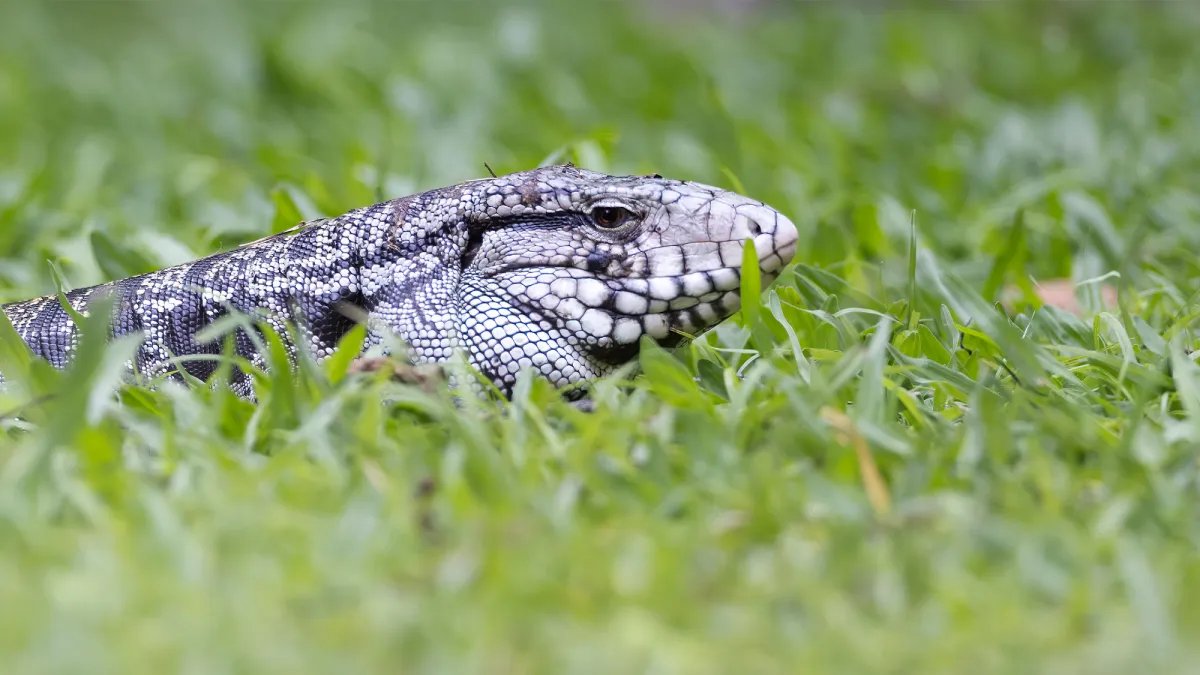
Georgia wildlife officials are warning of an increase in their numbers teguswhich are giant, invasive lizards from Argentina that have been spreading throughout the American South for years. Officials say sightings are becoming more common in parts of Georgia, and they are asking for the public’s help in disposing of the giant, black-and-white lizards.
Although tegus are not as large or abundant as the Burmese pythons found in South Florida, they are still monsters compared to native lizards. The largest tegus can reach up to four feet in length, or the size of some dogs. Like pythons, concerns surrounding tegus arise from their large impact on native food webs.
“Tegus will eat the eggs of ground-nesting birds – including quail and turkeys – and other reptiles, such as American alligators and gopher tortoises,” Georgia Department of Natural Resources Gives warning. “They will also eat chicken eggs, fruits, vegetables, plants, pet food, meat and small live animals.”
The first tegus were seen in Georgia in 2014, and neighboring Florida has had a self-sustaining wild population of tegus since at least 2008. Like many other invasive species, they arrived in the Sunshine State through the exotic pet trade. Most tegus found in the wild today are thought to be descendants of escaped (or illegally released) pets.
Georgia officials currently have no estimate of the number of tegus in the state. But they say reports of larger lizards are becoming more common and they are warning of an “increase” in the number of lizards seen recently. according to an interactive map Maintained by the University of Georgia, at least 56 sightings have been reported over the years, with the highest numbers recorded in Tattnall (16) and Toombs (10) counties.
Georgia DNR biologist Daniel Sollenberger reportedly said, “It’s very difficult to find one of those, let alone count them.” told the news media Over the weekend. “There are probably more possums than tegus, but fewer coyotes (than tegus)”
If accurate, Sollenberger’s estimate would translate to a staggering number of tegus. Georgia is home to hundreds of thousands of coyotes, and a recent study At one site near the Savannah River, more than one coyote was found for every square mile.
Read further: South Florida’s newest invasive threat is a 6-foot-long lizard from Africa
Sollenberger said the DNR is asking the public to do the same kill any tegus and report they find. According to the agency, these lizards can be legally trapped and killed year-round on private property, but additional regulations apply to hunting or trapping invasive lizards in state wildlife management areas. Members of the public can also send reports and photos of tegus through the state Invasive Species Task Force.
“This is what people need to do if we’re going to try to control or prevent this infection,” Sollenberger said.