Literary excellence alone does not guarantee international recognition. For writers working in less widely known languages, translation and access to international literary networks remain crucial.
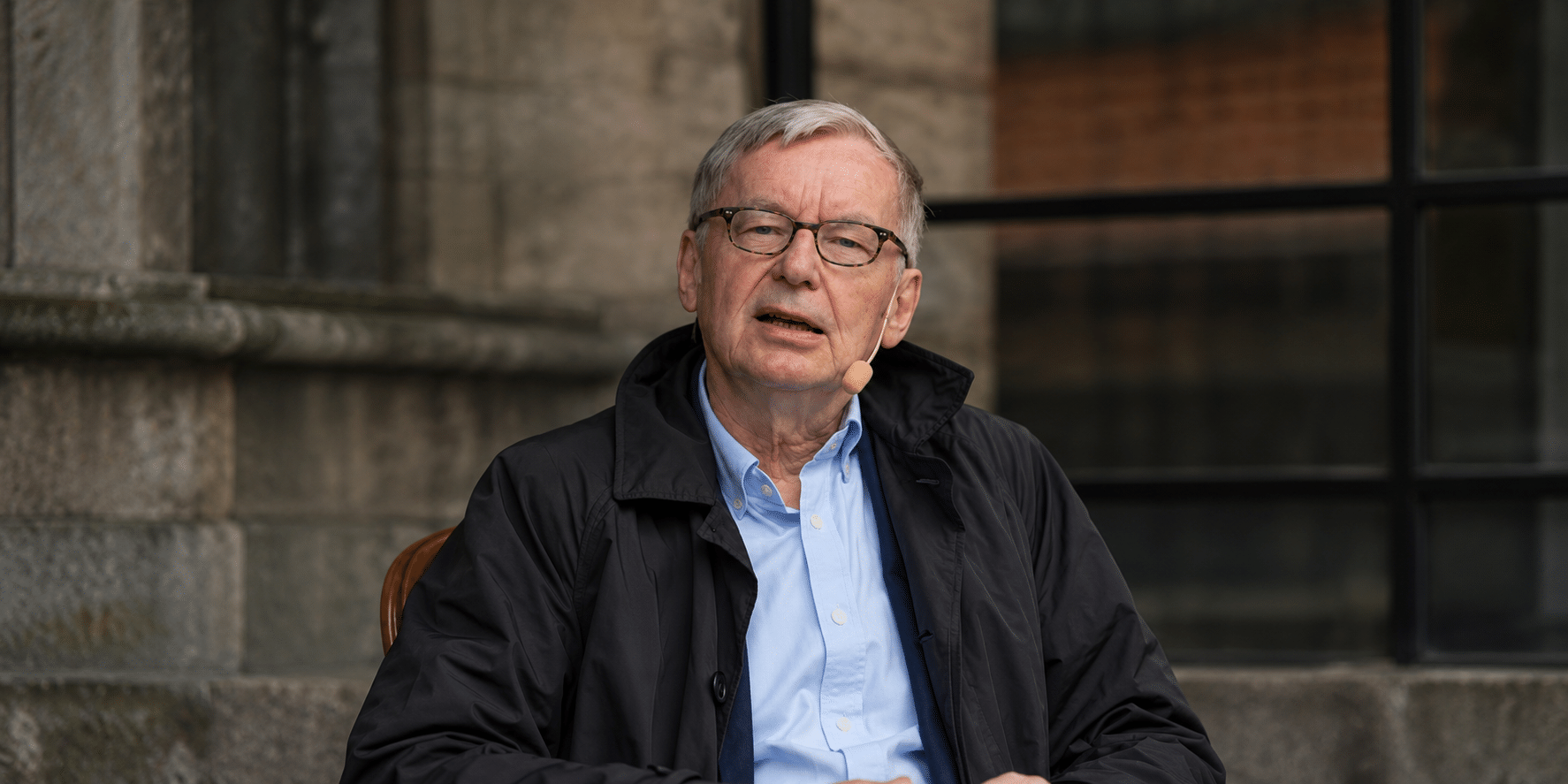
In an interview with The Times of Central Asia, Anders Olsson, Chair of the Nobel Committee for Literature and a member of the Swedish Academy, discusses how the committee approaches literature from underrepresented regions, the importance of translation, and the prospects for Kazakh writers seeking a wider audience.
The interview took place during TCA correspondent Duisenali Alimakyn’s visit to the Swedish Academy in Stockholm in October 2026. Alimakyn also donated 15 books by Kazakh authors to the Nobel Library.
TCA:The Nobel Prize in Literature is among
TCA:The Nobel Prize in Literature is among the world’s most prestigious literary awards. What makes a work worthy of international recognition? Is it artistic excellence, universal themes, the ability to challenge society, or something else?
Anders Olsson: Of course, our aim in the Nobel Committee is always to find a work of artistic excellence that can speak to everyone in this world. The award, therefore, also implies a claim of universal validity.
TCA:Thousands of languages and literary traditions exist worldwide, yet relatively few receive international attention. Does the global literary landscape adequately reflect this diversity?
Anders Olsson: This is always a problem
Anders Olsson: This is always a problem. We have to be attentive even to those languages and literatures that do not gain sufficient attention. On the other hand, translation and translatability are, in one sense, a requirement for the prize. A work must be readable and possible to disseminate among nations.
TCA:How does the Nobel Committee assess literature written in less widely spoken languages? What opportunities do writers from smaller literary traditions have to gain international recognition?
Anders Olsson: Due to a lack of sufficient linguistic skills, we in the Nobel Committee will always have difficulties tracing quality literature in less widely known regions. But we make progress even here, and in the Nobel Committee, each year we start to invite 5–10 experts in literatures of which we do not have sufficient knowledge. They help us to widen the range of our nominees.
TCA:How important is translation to a writer’s international
TCA:How important is translation to a writer’s international recognition? Can an outstanding literary work remain largely unknown because it has not been translated into widely read languages?
Anders Olsson: No, translation is necessary for the prize. But one should also make clear that this claim is relative, since translatability is not a definitive category. You can be surprised by how the ability and willingness to translate change over the years.
TCA:Kazakhstan has a rich literary heritage, including the works of Abai Kunanbayev, Mukagali Makatayev, Ilyas Zhansugurov, and Mukhtar Auezov. What could help Kazakh and other Central Asian literary traditions gain greater visibility internationally?
Anders Olsson: I hope that we will see
Anders Olsson: I hope that we will see nominations of these writers soon. Every year we invite 4-5000 persons around the globe to suggest new nominations for the prize. Hopefully these writers are also, to some extent, translated or translatable. Then they are in the process…
TCA:What advice would you give Kazakh writers seeking international readers? Should they emphasize universal human experiences, preserve their cultural identity, or balance the two?
Anders Olsson: There are no simple answers to these questions. Great art does not follow any rules or general ideas about quality. Often the important thing is to be open-minded to what is happening in world literature, and to stick to your local culture. If your writing is strong enough, it will attain universal value.
TCA:Kazakhstan’s President Kassym-Jomart Tokayev has promoted the idea
TCA:Kazakhstan’s President Kassym-Jomart Tokayev has promoted the idea of a “Reading Nation” (Oqytin Ult), particularly encouraging young people to read. Can government initiatives help strengthen a society’s reading culture?
Anders Olsson: In the Western world, we have similar problems of reading deficiency, especially among young people, and such national initiatives as you mention are on the political agenda. This is also part of our agenda in the Swedish Academy. So you are not alone in this precarious situation.
TCA:With wars, political tensions, technological change, and cultural divisions affecting societies worldwide, what role can literature play in building understanding between nations?
Anders Olsson: I do not think that we should be too optimistic about the role of literature for the improvement of the very aggressive and disorderly world in which we live. Literature is no doubt necessary and will never stop being produced by humankind. To some extent, it can make us wiser and perhaps make us more understanding and open to our fellows on the other side of the border. If that is the case, we can be happy.