Carl Jung, the famous Swiss psychiatrist who founded analytical psychology, drew a line between the ego, your conscious sense of who you are, and personality, the mask you wear to show yourself to others. He warned that trouble usually starts when a person stops wearing the mask and starts considering it as their real face. Why are we talking psychology on the Moto platform? Because there is some relevance in purchasing a particular type of motorcycle which runs on exactly the same fallacy.
You see, the allure of riding one of the Sons of Anarchy bikes, feeling like a part of the infamous One Percenters, compels many riders to choose a cruiser purely for the fantasy persona. This is fine within the law, but the reality of riding a bike like this is very different. Comfort comes first, and before you can finish the first episode of reruns, the rest of the image collapses.
What’s the real price of comfort on a cruiser?
Comfort is not just one aspect or element on a cruiser. It’s made up of a series of things, most of which come into play as distance increases. It starts with the rider’s triangle, which is formed by your body between the seat, bars and pegs. Take the bars too far, and your weight will hang off your wrists; Pull the pegs too far forward, and your spine loses its natural curve and begins to take the brunt of the suspension’s limitations. Finally, a seat that keeps you stuck in one place without any pressure. A cruiser that remains comfortable on long distance trips gets that triangle right.

Then what does the bike do between your body and the road? Rear suspension travel is often overlooked at the time of purchase, which becomes apparent at the first misaligned expansion joint – because a stripped-down cruiser bent for the sake of looks will transfer that bulge straight to your spine. The problem is that all of these factors actually fall into the trap of bobber silhouette riders. Better suspension, a comfortable perch and a comfortable reach are the first things a stylist trims to get that low, mean, ‘gram-ready stance, which is why so many cruisers are built for the look, yet punish you for long rides.
Indian Super Chief is a cruiser built around the rider, not the mirror

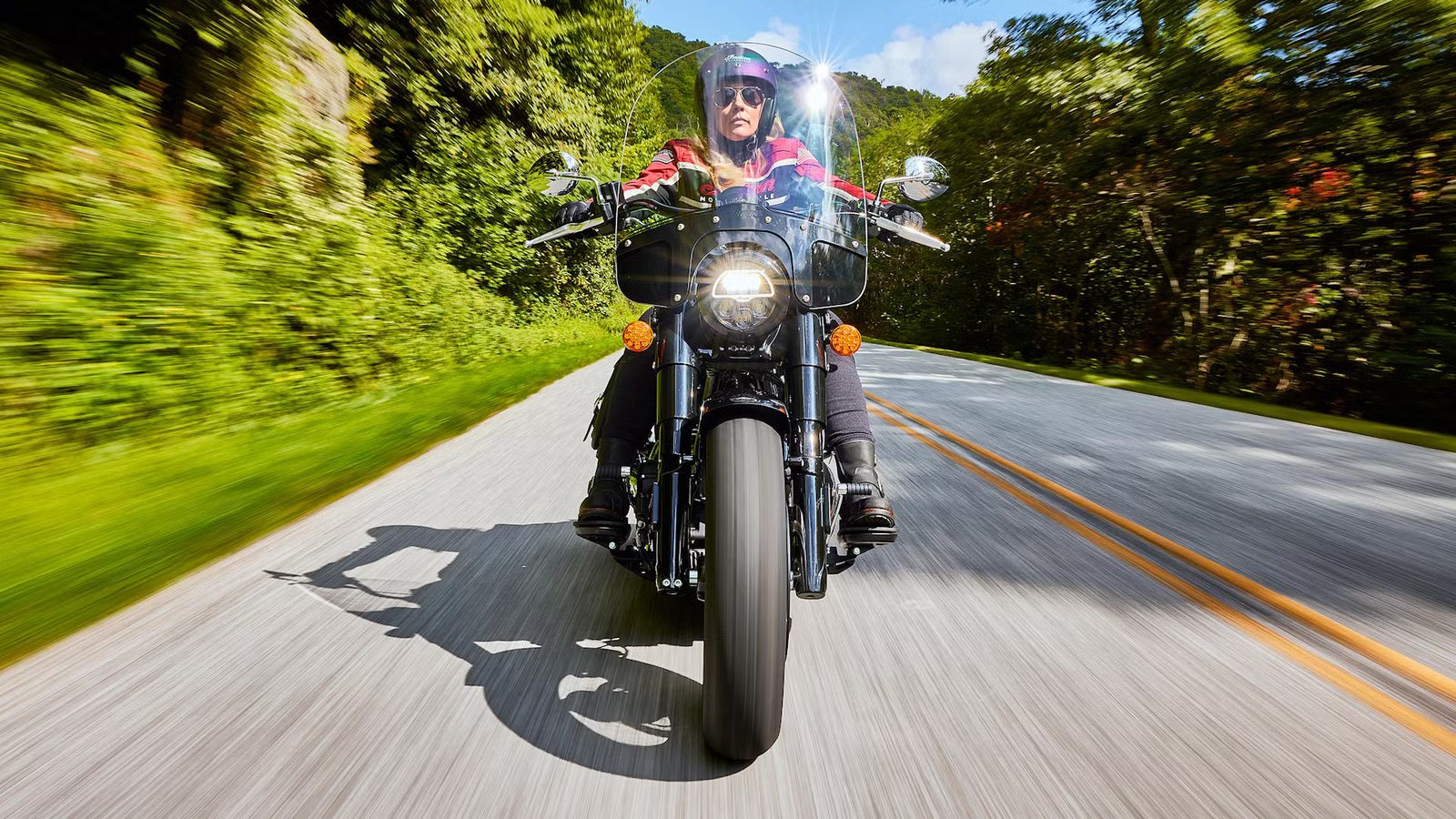
When you are faced with a sophisticated cruiser like the Indian Super Chief, your image, your backbone and your ego stop fighting. Whether you choose it in the shiny chrome Limited trim or the blacked-out Dark Horse look, it will cost you $21,999 – not cheap by any means, but it gives you value for your money. The Super Chief sits on the same steel-tube Chief frame on which the rest of the Indian Heritage line is draped The air-cooled Thunderstroke 116, a 1,811 cc V-twin that gives the bike that low, mechanical, big-American-twin character.

With stripped classic lines, wire wheels and bobbed fenders it looks like a modern bobber in every way. Yet Indian brought along none of the usual ergonomic sacrifices, fitting it from the factory with floorboards instead of pegs, traditional pull-back cruiser handlebars, a touring seat with passenger pad, and a quick-release windshield. Think of the Super Chief as a well-executed hybrid cruiser that basically looks like a weekend-touring bobber.
the engine that shortens distances

The Thunderstroke 116 makes 120 pound-feet of torque, and it puts that power down at 2,900 rpm, so you never have to rev it up to extract performance; Just short-shift and leave it in high gear. The low-end grunt also helps ease long days on the highway. With the engine running hard, that relaxed quality is transferred to your arms and shoulders, leaving them loose because there’s nothing resonating through the bars. A slipper clutch further lightens the lever action and smoothes out downshifts, keeping the bike comfortable as you exit the highway and back into traffic. The four-gallon tank spaces your stops far enough apart between fill-ups that braking feels like a natural part of the ride rather than forced by the bike. You can always count on the Thunderstroke 116 V-twin to get six-figure mileage, thanks to its reliability.
What makes you ride super chief longer

Seat measures 26.2 inches, suitable for everyoneAnd a touring saddle keeps you in a comfortable posture, so your weight is spread out rather than concentrated in one spot. Floorboards let you move your feet around throughout the day instead of locking them in a fixed peg position. The air-cooled V-twin throws some heat onto the rider’s legs in slow traffic, as every big V-twin does, so the bike is happiest on the move, but on the open road, the comfortable rider triangle plays a key role in keeping fatigue at bay.
suspension that actually works

The Super Chief rides 5.2 inches of suspension at the front and 3.0 inches at the rear via dual preload-adjustable shocks, which are modest on paper but tuned to take the edge off sharp hits before they reach you. Preload adjustment helps dial in the ride for solo travel, racing with a passenger, or even loaded-saddlebag hauling, so the rear maintains its composure instead of bottoming out. The 28.5-degree lean angle keeps the floorboards off the pavement through normal turns, so the comfortable setup never limits your fun on the road.
Touring hardware hidden in the bobber silhouette

What’s clever is how little the modern touring kit bothers with the stripped-back look. The windshield is quick-release, so it goes on and off in seconds, letting you change the look between bare bobber profile and a highway configuration, without equipment. Saddlebags are large enough to carry weekend essentials. LED lighting and keyless ignition round out the modern conveniences, and a four-inch Ride Command touchscreen folds GPS, Bluetooth, and ride data into a round housing that still passes for classic gauges at a glance. There are also three ride modes on offer – Tour, Standard and Sport – which retune throttle response.
How does it stack up against other stripped V-twins

The closest factory bobber to the Super Chief (other than his own stablemate, the Chief Bobber) is the Harley-Davidson Street Bob, wearing a different badge. At $14,999, it undercuts the Indian by a wide marginAnd its Milwaukee-Eight 117 makes the same 120 pound-feet of torque at 2,500 rpm, so the engine’s character is fine with that.
It comes with a slim 3.5-gallon tank, mini ape-hanger bars, and no windshield or saddlebags, because the Street Bob is built as a stripped canvas customized by you. So its use is limited, and it sure doesn’t look as complete as Super Chief, let alone as expensive. It’ll certainly hurt your ego in the city, but add some real distance to it, and you’ll be headed to the luggage store in no time.

Then there’s the $15,999 Harley-Davidson Sportster S, the same trend but pushed in the opposite direction. Loads of performance from its liquid-cooled Revolution Max 1250T, an aggressive flat-track stance, a high 2-1-2 exhaust, and a thick front tire – all engineered to look fast. Short races, café meets, even a short blast on a canyon road pays off in personality.
But give it a tour day’s worth of riding and a small fuel tank, no factory windshield or accessories, and aggressive ergos start to feel the wrong way. Super Chief simply refused to give in to the ego boost. It gives you a low, classic profile that attracts attention, but backs it up with legitimate comfort equipment to justify its price. It’s authentic as it is, and the way Jung would have imagined riding it.
Source: Indian Motorcycle