The growth in global manufacturing has had a huge impact on the auto industry. For one, it makes it easier for companies to chase cheap labor around the world in an effort to maximize profits. But there have been a lot of protests, especially recently. For example, nowadays the government is focusing on how to make American-made cars even more American. Remember, the only US-based brands to finish in the top 10 of the 2026 American-Made Index were Tesla and Jeep.
Now, there isn’t that kind of discussion where big rigs are built – yet inquisitive minds still want to know. And it turns out that quite a lot is actually made in this country, including big names like Freightliner, Peterbilt, Kenworth, Mack, Western Star, and International. Talking about international trucks, Volvo also has a big plant in the United States. The other side of the story – and an example of how difficult it can be to analyze a vehicle’s origins – is that foreign companies own many so-called American brands. With this in mind, we’ll try to cut through the clutter and bring out some details, like the brands’ respective Class 8 market share. This way, you can see how things are going for semi trucks in the real world.
kenworth
They say necessity is the mother of invention – well, either that or Frank Zappa – and that’s what made Kenworth. It was founded by Harry Kent and Edgar K. Worthington in 1923 to meet the needs of lumber companies in the Pacific Northwest. Apparently, typical trucks were finding it very difficult to navigate the logging roads in the area, as they were often nothing more than narrow muddy paths. Kenworth came to the rescue, and, during the years that followed, it quickly earned a reputation for innovation.
Kenworth was the first American truck brand to introduce a standard diesel engine, with a four-cylinder Cummins mill capable of delivering 100 horsepower – while its exhaust was routed through the truck industry’s first vertical exhaust pipe. The company will further introduce the first integrated sleeper cab. Recently, driven by the popularity of machines like the T680 – known for its efficiency, style and modern technology – the Kenworth brand captured 15.1% of the 2025 market for Class 8 trucks.
It’s also worth pointing out that the company has maintained its roots in the region where it was born, as it builds trucks in Renton, Wash. Another U.S. plant is in Chillicothe, Ohio, he said, and its engines are sourced from the PACCAR facility in Columbus, Mississippi. In fact, to be clear, the Kenworth brand is owned by PACCAR, an American company that also owns other truck brands like Peterbilt and DAF. Through PACCAR, which oversees the two countries’ operations separately, Kenworth Australia has an impressive business footprint of its own.
peterbilt
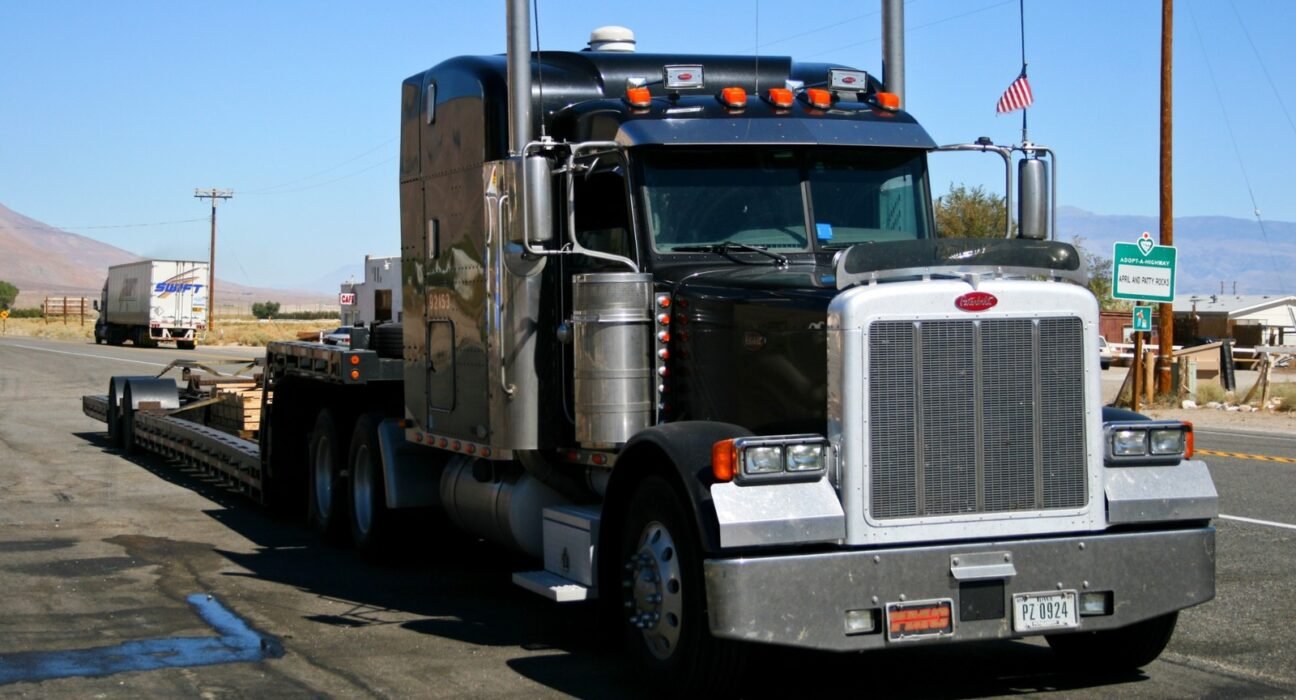
From its origins on the logging trails of the Pacific Northwest to its acquisition by PACCAR, Peterbilt followed Kenworth’s tire tracks closely. Al Peterman – another lumber merchant of the 1930s – was experiencing the same log transportation troubles as the Kenworth team in Washington. They eventually purchased California-based bus and truck manufacturer Fejol Motors in 1939 to leverage its operations to build their own logging trucks. After its completion, PACCAR purchased Peterbilt in 1958.
As a result, there are still some differences between Kenworth and Peterbilt semis, but they may share many components under the skin, including powertrains and even warranties. The two also match up well on the current sales chart, where only a fraction of a percent separates their 2025 market-share levels. Kenworth was at 15.1%, while Peterbilt came in at 15.3% last year. And yes, they share some production facilities, with each using plants in Sainte-Thérèse, Quebec, Canada, and Mexicali, Mexico, for non-US North American markets.
Both Peterbilt and Kenworth are returning to their home markets and also getting in on the sesquicentennial action: Kenworth with a limited-edition TourAmerica paint scheme and Peterbilt with a special edition Model 589. Patriotically inclined customers can rest easy knowing that both brands are made in America. American customers typically get their Peterbilt trucks from the company’s facility in Denton, Texas, which is also the site of Peterbilt’s corporate headquarters.
volvo and mack
Two giants of the international truck scene follow. Mack – founded by brothers Jack, William and Gus – has been producing trucks since at least 1905, with the company producing its first vehicle – a 20-passenger bus – five years earlier. After building its first car in 1927, Volvo got into the trucking game in 1928. Unfortunately for the Mac, its introduction did not prevent it from being purchased by foreign competitors. Renault took full control of Mack in 1990, and Volvo did the same with the French brand in 2001.
Furthermore, the world’s largest Volvo truck plant is actually located in the United States at the New River Valley (NRV) facility in Dublin, Virginia. Spread over 2.3 million square feet, NRV makes trucks for both Mack and Volvo brands. However, the Bulldog brand also produces trucks at its Lehigh Valley Operations in Macungie, PA, and Roanoke Valley Operations in Salem in the same state. Volvo surprisingly makes trucks elsewhere, but so does Mack. The Wacoal factory in Brisbane, Australia builds trucks for both Volvo and Mack alike.
Looking at how they are performing in this country, it looks like the brands’ fate may be drawing closer. Volvo’s Class 8 market share in 2025 ended with 9.1 percent after a 22.7 percent decline in sales. Meanwhile, the only major SEM brand to increase US sales in 2025 was Mac, which grew in popularity by 9.7% and its share increased to 8.7%.
international
International Truck is a relatively new name in the semi industry, at least in one sense. The brand originated with the establishment of International Harvester in 1902. But International had its share of ups and downs, and the company had to sell its agricultural business to Case IH in the 1980s. Its remaining truck operations were then placed under the brand name Navistar.
Nearly 35 years later, Volkswagen-owned Traton Group purchased Navistar to add to its semi truck brands. Of course, through that move, VW also acquired the naming rights to the Scout, a famous international pickup SUV – which will soon be back on the road with electrified assistance. In 2024, perhaps to capitalize on the return of the Scout, Navistar went back to the future by changing its name to International Motors. However, none of these directly affected the brand’s production locations. International continues to build trucks for US customers in San Antonio, in addition to its engine factory in Huntsville, Alabama, and its dedicated bus facility in Tulsa, Oklahoma.
Last year, those factories helped International Motors claim 11% of the Class 8 truck market — albeit with contributions from the brand’s plants in Escobedo, Mexico and Springfield, Ohio. International has since agreed to sell its Ohio plant to Rochelle, a defense contractor, which is expected to take it over after the expiration of International’s contract with the plant, which expires in September 2026.
Freightliner and Western Star
The Freightliner company was founded in 1942 by Leland James for a very specific reason: perhaps following the lead of the defense industry, which had begun making airplanes out of aluminum instead of steel, he wanted to bring the same innovation to building trucks. After all, then, as now, fuel cost was a major factor in trucking, and a piece of aluminum is about 2.5 times lighter than a similarly sized piece of steel.
About eight years later, that dream became reality with the launch of the 1950 Freightliner B42 – a cab-over sleeper truck capable of traveling across the country with a 35-foot trailer. The company built its 100,000th truck in 1972, and will still have about 35.2% of the US market for Class 8 trucks in 2025. In fact, the Freightliner Cascadia is acknowledged as the best-selling truck in its class throughout North America. As far as its US production footprint is concerned, Freightliner currently has plants in Portland, Oregon; Cleveland and Mount Holly, North Carolina; and Fort Mill and Gaffney, South Carolina.
The thing is, despite all its American roots, in 1981, Freightliner became one of several truck brands owned by Germany’s Daimler, which also owns companies like Mercedes-Benz Trucks, Western Star and Setra. For your information, the latter remains a niche player in the big-rig market in this country. While Freightliner’s results led in terms of market share in 2025, Western Star took the lead with about 5.5% of the year’s sales – supported by production in Portland, Oregon and Cleveland, North Carolina.